High-aspect-ratio channels, fabricated with vertical sidewalls and tailored flow geometries, are the non-negotiable baseline for reproducible microfluidic reactions in chemical engineering research. The primary fabrication method that delivers this precision is Inductively Coupled Plasma (ICP) dry etching on silicon, which generates channels between 5 µm and 500 µm with steep walls and depth-to-width ratios that standard machining simply cannot match. Once the platform is in place, choosing among straight, zigzag, column-based, and sine-wave channel architectures directly determines how quickly reactants mix, how long they reside inside the reactor, and how effectively they contact a solid catalyst.
A successful microfluidic reactor selection begins with fabrication that guarantees vertical, high-aspect-ratio channels, then overlays a geometry that deliberately controls laminar mixing and residence time. Yet the true depth of the decision lies in balancing that precision against the material’s chemical resistance, thermal behavior, and how the device is sealed—because a perfect channel profile is worthless if the reactor leaks, corrodes, or cannibalizes its own heat.
The Fabrication Foundation: Aspect Ratio and Precision
When internal volumes shrink to a few microliters, any deviation in channel shape creates flow maldistribution, dead zones, and irreproducible kinetics. The fabrication characteristic that defends against these problems is a high aspect ratio—specifically a large depth relative to width—achieved through processes that produce vertical sidewalls.
Why Vertical Sidewalls Matter
ICP dry etching on silicon remains the gold standard because it anisotropically removes material, leaving walls nearly perpendicular to the channel floor.
This contrasts with wet chemical etching or conventional machining, which introduce sloped or ragged edges that alter the local fluid velocity profile. Vertical walls ensure that the designed hydraulic diameter is exactly what the fluid experiences, making computational fluid dynamics predictions match reality.
The Aspect Ratio Mandate for Heat and Mass Transfer
A high aspect ratio (depth-to-width) intensifies the microreactor’s already extreme surface-area-to-volume ratio.
With more wall area per unit of fluid, exothermic reactions shed heat almost instantaneously, enabling truly isothermal operation even during rapid heat release. In mass-transfer-limited systems, that same wall-proximity shrinks the diffusion path length, so molecules reach a catalyst-coated surface before concentration gradients can widen.
Pushing Beyond Silicon’s Limits
Silicon’s fragility and the need for a cleanroom environment prompt many engineering teams to evaluate metals. While traditional machining of stainless steel with slitting saws caps the aspect ratio around 4:1, switching to aluminum allows deeper channels and higher ratios using the same tooling.
However, aluminum brings its own welding difficulties that often lead to micro-leaks at high temperatures. Stainless steel, when paired with diffusion bonding of stacked thin sheets, bypasses the machining limit entirely: the bonded stack becomes a monolithic block with high‑aspect‑ratio internal channels, no gaskets, and grain‑growth across interfaces that approaches parent‑metal strength.
Channel Geometries: Engineering Mixing and Residence Time
In the laminar flow regime that dominates microfluidics, turbulence is absent—molecular diffusion is the only native mixing mechanism. Channel geometry must therefore be selected to artificially shrink diffusion lengths or introduce chaotic advection.
Straight Channels: The Baseline
Straight geometries offer the lowest pressure drop and a well‑defined residence time distribution. They are ideal when the reaction rate is intrinsically fast enough that diffusion alone prevents gradient formation, or when the primary goal is to study intrinsic kinetics without geometric amplification.
Zigzag Channels: Inducing Chaotic Advection
Introducing sharp bends breaks laminar streamlines, stretching and folding fluid elements. This chaotic advection dramatically reduces mixing time and evens out concentration profiles, which is critical for multi‑phase or fast‑competitive reactions where local stoichiometry defines selectivity.
Column‑Based and Foam‑Based Structures
Packed catalyst powders inside a microchannel often create pressure drops exceeding 10 psi even at low flow rates and act as a heat sink that quenches any sustained reaction temperature.
Column arrays—or engineered open‑foam metal inserts—maintain high void fractions and drastically lower the pressure drop. When these structures are coated with catalyst layers over a buffer coating that passivates the metal, they decouple the reaction zone from the bulk channel walls, allowing the catalyst to remain hot while the channel walls handle heat exchange downstream.
Sine‑Wave Configurations
Sinusoidal channels combine continuous curvature with periodic contractions and expansions. This geometry sustains gentle but persistent transverse flow components, enhancing mass transfer without the high‑energy dissipation of sharp turns. It serves as an excellent middle ground for reactions that require extended residence time yet still benefit from mild advection.
Understanding the Trade-offs in Material and Sealing
Selecting the correct channel profile is only half the equation. The substrate material and the sealing method impose operational boundaries that directly determine whether a research reactor is a precise analytical tool or a source of frustration.
Silicon: Precision at a Cost
Silicon’s cleanroom‑based ICP etching delivers sub‑micron tolerances and perfect sidewall verticality, but the material is brittle and intolerant of thermal or mechanical shock. Any experimental campaign involving high pressure or rapid thermal cycling must consider that a single crack can destroy the entire device.
Metals: The Pragmatic Workhorse
Stainless‑steel microreactors, particularly those formed by diffusion bonding of multiple thin plates, provide high‑pressure and high‑temperature resilience and can be welded to external fittings without micro‑leaks. The trade‑off is higher thermal conductivity, which can conduct heat away from the reaction zone faster than desired. For endothermic or highly exothermic reactions, additional thermal management may be required to keep the channel in its design envelope.
Sealing Integrity Defines the Reactor
Early gasketed designs are notorious for failing under elevated temperatures or pressures, creating bypass flows that ruin kinetic data.
Diffusion bonding solves this by hermetic integration—there is no seal to degrade. Post‑bonding machining must then open headers and ports without compromising flow uniformity, a process verified through grain‑growth inspection across former shim interfaces.
Making the Right Choice for Your Research Goal
Your experiment’s dominant constraint—mixing speed, temperature control, pressure, or optical access—points directly to the fabrication and geometry you should prioritize.
- If your primary focus is fast, perfect mixing for kinetic measurements: Start with a silicon ICP‑etched plate using zigzag or sine‑wave channels. The vertical walls and chaotic‑advection geometry will minimize mass‑transfer disguise and keep residence‑time distributions tight.
- If your primary focus is high‑temperature or high‑pressure reactions with heterogeneous catalysts: Choose a diffusion‑bonded stainless‑steel stack with integrated column arrays or open‑foam inserts. This gives you the structural integrity and pressure‑drop control needed to sustain catalyst light‑off without quenching.
- If your primary focus is rapid prototyping and low‑cost screening: Polymers may be acceptable for ambient‑condition, non‑solvent studies, but expect thermal limits and difficulty in achieving the same aspect‑ratio precision as ICP‑based channels.
- If your primary focus is scaling‑up a lab‑proven reaction to a pilot‑plant modular system: Design a multi‑cell stack with independently fed microchannel arrays; the ability to turn down flow by ratios like 8:1 preserves experimental flexibility from idle to peak throughput.
Every microfluidic reactor choice is a deliberate balance between the precision of fabrication and the realities of your chemical system. The high‑aspect‑ratio vertical channel is the engine’s cylinder bore—geometry decides how the fuel burns, but the block material and gasket decide whether the engine runs at all.
Summary Table:
| Channel Geometry | Primary Benefit | Best For |
|---|---|---|
| Straight | Low pressure drop, defined residence time | Fast kinetics, baseline studies |
| Zigzag | Chaotic advection, rapid mixing | Multi-phase & competitive reactions |
| Column/Foam | Low pressure drop, high catalyst contact | Heterogeneous catalysis |
| Sine-Wave | Transverse flow, balanced mass transfer | Extended residence times |
Ready to scale your research from micro-scale kinetics to pilot-plant operations?
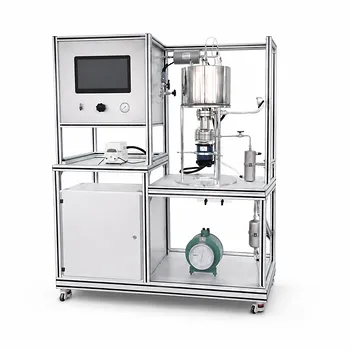
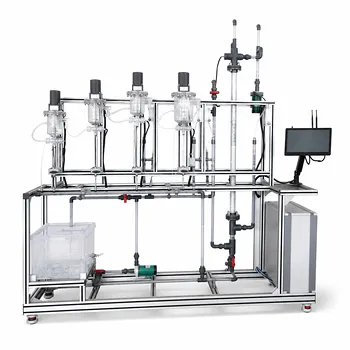
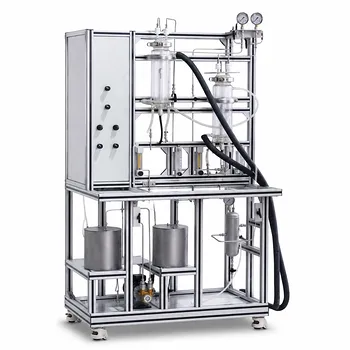
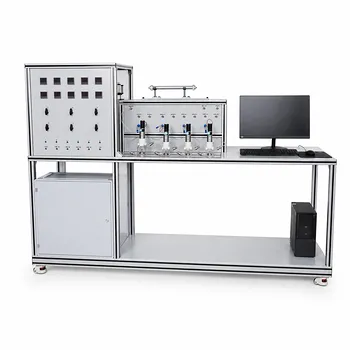
LABPARK provides state-of-the-art Educational and Vocational Unit Operations Pilot Plants in chemical engineering, bioprocess & biotech, and environmental & water treatment. Designed specifically for universities, research institutes, and enterprises, our modular systems bridge the gap between laboratory discovery and industrial application.
Contact LABPARK today to find the perfect pilot-scale solution for your institution!
Related Products
- Micro-Scale Gas-Solid Catalytic Reaction Educational Pilot Plant
- Multi Functional Catalytic Reaction and Reactor Evaluation Educational Unit Operations Pilot Plant
- Fluidized Bed Gas Solid Catalytic Reaction Educational Pilot Plant
- Multi-Reactor Educational Pilot Plant for Reaction Engineering Unit Operations
- Fixed-Bed Chemical Reaction and Gas Dust Tar Removal Unit Operations Pilot Plant
People Also Ask
- Fluidized vs. Fixed Bed Reactors: Comparing Heat & Complexity in Pilot Plants
- Why is a multibed configuration necessary for exothermic reactions? Optimize your pilot plant trajectory.
- Why is thermal management a major challenge in methane oxidative coupling? Reactor Solutions for Pilot Plants
- How does the Mears criterion evaluate transport resistance? Key Guide to Intrinsic Kinetics
- How do reactor pilot plants safely study gas-solid reactions? Master kinetics with thermal & flow control.