Preventing dust explosions is a design responsibility, not an operational afterthought. For pilot plants handling solids in dryers, cyclones, and feed hoppers, the essential precautions form a layered defense: eliminate ignition sources through proper bonding and grounding, prevent explosive atmospheres by using dust-tight containment and inert gas blanketing, and protect against consequences with deflagration venting or suppression. Adherence to standards like NFPA 654 and BS EN 1127 ensures these measures work together as an integrated safety system.
Dust explosion safety in pilot plants is a systemic challenge. A single precaution, like venting, is insufficient. The entire process—from hopper to cyclone—must be designed to minimize dust accumulation, exclude oxygen where possible, and prevent ignition. The ultimate goal is to break the explosion pentagon before it forms.
Understanding the Dust Explosion Hazard
The Explosion Pentagon: More Than Just a Triangle
Traditional fire needs fuel, oxygen, and heat. Dust explosions add two more elements: dispersion of combustible dust into a cloud and confinement of that cloud. A thick layer of dust on a hopper will not explode; that same dust suspended in air inside a cyclone or dryer can. Recognizing this pentagon is crucial because safety design targets each point simultaneously.
The Devastating Two-Stage Explosion
The primary explosion often starts as a small event inside equipment (e.g., a spark in a dryer). This lifts and ignites accumulated dust in surrounding areas, triggering a massive secondary explosion that can destroy an entire facility. In pilot plants, where space is tight and surfaces are many, preventing dust accumulation is the single most effective measure to break this chain reaction.
Key Design Strategies for Your Unit Operations
Containment and Dust Control
Minimizing dust escape and accumulation is the first physical barrier. Design hoppers, conveyors, and cyclones as dust-tight systems operated under negative pressure. Use local exhaust ventilation (LEV) with cyclones or bag filters to capture airborne dust at the source. For processes where containment is difficult, wet processing methods can suppress dust formation entirely, eliminating the dispersion element of the pentagon.
Ignition Source Elimination
Every pilot plant must undergo a rigorous assessment of potential ignition sources. Electrostatic discharge is the most insidious; all metal components must be bonded and grounded to prevent charge buildup. Equipment selection based on the powder’s minimum ignition energy (MIE) determines whether simpler dust-ignition-proof electrical enclosures suffice or whether extra-low-energy spark prevention is needed. Mechanical friction in mills and dryers must be monitored and cooled.
Inerting and Atmosphere Control
For highly combustible powders, oxygen is the easiest element to eliminate. Closed-loop systems using inert gas (typically nitrogen or argon) are essential for dryers and milling circuits. The design for a safe dryer system illustrates this perfectly: gas discharged from the dryer passes through a cyclone separator and filter to remove dust, then a condenser for solvent recovery, and is reheated and recirculated by a blower. A makeup gas system maintains pressure balance and safe oxygen levels throughout.
Deflagration Protection Systems
Even with inerting, assume ignition might occur. Every connected vessel—dryer, cyclone, hopper—must have deflagration venting sized per NFPA 68 to safely relieve pressure, or explosion suppression systems that detect and quench a flame front in milliseconds. In pilot plants where outdoor venting is impractical, containment vessels designed to withstand the maximum explosion pressure offer another solution, though at higher cost.
Special Considerations for Pilot Plants
The Unique Risk of Frequent Changes
Pilot plants are not production lines; they are experimental platforms where materials, parameters, and configurations change often. This variability makes static SOPs unreliable. Safety design must be robust across a range of combustibility scenarios. Implementing continuous oxygen monitoring, fixed grounding cables with interlocks, and easy-to-clean surfaces reduces human-error risk during rapid changeovers.
Housekeeping as a Safety System
The most advanced explosion protection fails if dust accumulations exceed the “no visible dust” threshold. Pilot plant design must facilitate swift, safe cleaning. Certified explosion-proof vacuum systems, rather than brooms or compressed air, should be the only cleaning method. Horizontal surfaces, cable trays, and ducting must be sloped or enclosed to prevent dust settlement.
Understanding the Trade-offs
Inerting vs. Venting: A Cost-Safety Balance
Inert gas systems are capital-intensive and add operational complexity, but they offer the highest protection by eliminating oxygen. Deflagration venting is simpler but requires safe discharge to an unoccupied area, which may not be possible in a laboratory setting. Often a hybrid approach is chosen: inerting for the dryer, venting for downstream cyclones that cannot be isolated from indoor spaces.
The Hidden Pitfall of Over-Relying on Equipment
Venting panels and suppression bottles can lull users into complacency about dust accumulation and ignition source control. No vent will save a pilot plant if a surrounding room ignites a secondary explosion. Design must prioritize prevention (containment, inerting, grounding) before protection (venting)—the hierarchy of controls remains valid: eliminate, substitute, then engineer.
Managing Static in Flexible Pilot Configurations
Temporary hose connections or plastic sight glasses are common in pilot plants but can generate dangerous static charge. Every non-conductive component must be evaluated and replaced with static-dissipative materials. Bonding jumpers across flanges and verifying ground continuity after every setup change is tedious but non-negotiable.
Making the Right Choice for Your Pilot Plant
The right design package depends on your specific risk profile and research goals. Consider these paths:
- If your primary focus is maximum flexibility for research with various powders: Invest in a closed-loop inert gas system with oxygen monitoring and deflagration-resistant construction. The higher upfront cost buys freedom to test unknown materials safely.
- If your primary focus is simplicity and cost-effectiveness for a dedicated single-material pilot line: Rely on dust-tight containment under negative pressure with deflagration venting to an outside safe area, verified through dust explosion testing to set your MIE and Pmax.
- If your primary focus is extreme safety for highly energetic materials with a very low MIE: Adopt a fully inerted, oxygen-free process with explosion containment vessels and strict protocols for cleaning with grounded, explosion-proof vacuums.
Every precaution must be intertwined—remove one link, and the system fails. Design your pilot plant not as a collection of unit operations, but as a single integrated safety system.
Summary Table:
| Strategy | Core Action | Key Methods/Equipment |
|---|---|---|
| Containment | Minimize dust escape and accumulation | Dust-tight negative pressure, LEV, cyclones |
| Ignition Control | Eliminate electrostatic and frictional heat | Bonding & grounding, MIE-rated electricals |
| Inerting | Displace oxygen in closed-loop systems | Nitrogen/argon blanketing, gas recirculation |
| Deflagration Protection | Safe pressure relief or flame quenching | Venting panels (NFPA 68), suppression systems |
Build a Safer Research Environment with LABPARK
Designing safe and compliant solids-handling systems requires expert engineering. LABPARK provides industry-leading Educational and Vocational Unit Operations Pilot Plants in chemical engineering, bioprocess & biotech, and environmental & water treatment. Tailored specifically for universities, research institutes, and enterprises, our systems integrate rigorous safety standards—including advanced containment, inerting, and dust explosion protection—to protect your team and facility.
Ready to configure a secure and high-performing pilot plant? Contact LABPARK today to discuss your project requirements with our engineering specialists.
Related Products
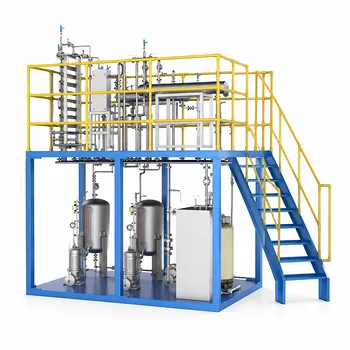
- Solid Waste Pyrolysis and Refining Educational Pilot Plant for Unit Operations
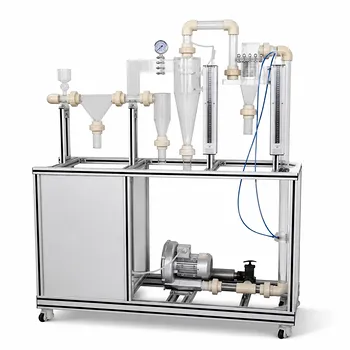
- Gas-Solid Heterogeneous Separation Demonstration Educational Unit Operations Pilot Plant
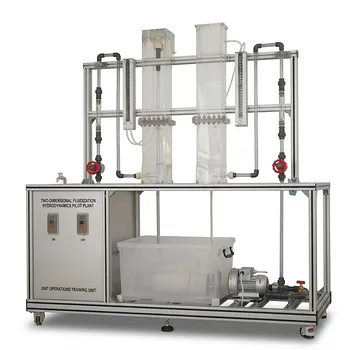
- Two-Dimensional Fluidization Hydrodynamics Educational Pilot Plant for Unit Operations Training
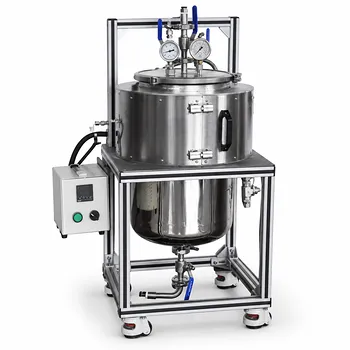
- Hot Filtration Educational Unit Operations Pilot Plant Laboratory System
- Fixed-Bed Chemical Reaction and Gas Dust Tar Removal Unit Operations Pilot Plant
People Also Ask
- How do educational unit operations pilot plants bridge theory and design? Bridge the Engineering Gap
- How do educational unit operations pilot plants address safety and waste management when scaling up?
- When to transition from PID to adaptive control in pilot plants? Key process indicators.
- Why is the chemical plant startup schedule crucial? De-risk scale-up with pilot plants.
- Why Use PTFE & Hastelloy in Chemical Pilot Plants? Prevent Corrosion & Ensure Safety