Dead-end polymerization is not a failure of kinetics—it’s a predictable outcome of initiator exhaustion.
In radical chain-growth reactions, the initiator decomposes into radicals that start chains. When the initiator depletes completely before all monomer is consumed, propagation stops, leaving a reaction forever shy of full conversion. Using polymerization unit operations pilot plants, this phenomenon can be both studied and managed by systematically tuning initiator chemistry, temperature, and—most critically—the way initiator is dosed over time, enabling operators to achieve near-complete conversion without overloading the system.
Dead-end polymerization traps so much potential yield in half‑reacted batches. Pilot plants transform that trap into a controlled testing ground: by using precise, multi‑port dosing and real‑time monitoring, you can stretch initiator activity just enough to consume the remaining monomer—safely, efficiently, and without wasting reagents.
The Kinetic Trap That Causes Dead‑End
Dead‑end polymerization isn’t random; it’s written into the rate equations. For a simple radical polymerization, the instantaneous conversion depends on the ratio of propagation to initiation rates. Once the initiator is gone, that ratio collapses.
The Role of Initiator Half‑Life
Every initiator has a characteristic half‑life at a given temperature.
Azo or peroxide initiators decompose exponentially. If the half‑life is too short relative to the intended reaction time, the supply of radicals dies out long before the monomer is used up.
The limiting conversion becomes a function of the initial initiator concentration and its decomposition rate constant—nothing else can restart the chains.
Temperature’s Double‑Edged Sword
Raising temperature accelerates decomposition and propagation, but not always at the same pace.
A small temperature increase can slash the initiator half‑life dramatically, pushing the system into dead‑end territory earlier while also speeding up chain growth.
Pilot plants make it possible to decouple these effects by testing isothermal and ramped‑temperature profiles, revealing exactly where the tipping point lies.
How Pilot Plants Turn Observation into Control
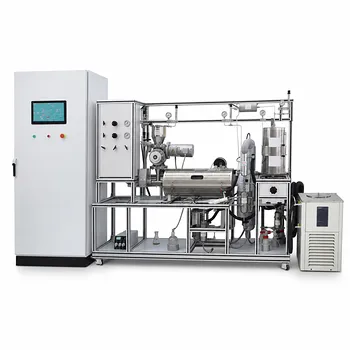
Teaching or research pilot plants aren’t just miniature reactors—they are precision toolkits. Their instrumentation and configurable feed systems let you probe the exact boundary of initiator depletion and then cross it with engineered solutions.
Precise Dosing and Multiple Feed Inlets
The most direct weapon against dead‑end is a metered, continuous initiator feed.
Pilot reactor setups with high‑accuracy dosing pumps and multiple inlet ports allow you to introduce initiator throughout the reaction, not just at the start.
This semi‑batch approach sustains a low, steady radical flux, matching decomposition losses to consumption needs. Operators can even pulse‑add fresh initiator to “revive” a dying polymerization and squeeze out the last few percent of conversion.
Real‑Time Conversion Monitoring
You can’t fight what you can’t see.
In‑line spectroscopy (e.g., Raman or near‑IR) or calorimetric tracking on pilot reactors provides a live signal of monomer concentration and conversion rate.
When the conversion curve begins to plateau unexpectedly—the signature of incipient dead‑end—an automated control algorithm or a student’s manual intervention can trigger a supplementary initiator shot, preventing the batch from falling short.
Coupling Modifier Feeds for Molecular Weight Control
Often, the fear of dead‑end leads to over‑dosing initiator, which crushes molecular weight.
Pilot plants that also feature controlled addition of chain transfer agents (modifiers) allow you to maintain a consistent low‑initiator‑flux strategy while still hitting a target viscosity or average chain length.
By feeding modifier in parallel, you can run near the dead‑end threshold without sacrificing product quality—turning a theoretical constraint into an optimized operating point.
Navigating Safety and Operational Limits
Hunting for the edge of complete conversion invariably brushes against exotherm and pressure risks. Pilot plants are built to engage with these dangers knowingly.
Preventing Exothermic Runaways During Optimization
Aggressive initiator dosing to beat dead‑end can liberate heat faster than the cooling jacket can remove it.
Pilot reactors mitigate this with sensitive temperature alarms (often set only a few degrees above normal), burst disks, and rapid‑acting pressure relief.
Multiple feed points and static mixers in tubular pilot systems also break up hot spots before they propagate, so you can test high‑initiator strategies safely.
Managing Unreacted Monomer and Waste
Another facet of dead‑end management is handling the leftover monomer if you deliberately stop at the limit.
Pilot plants allow for downstream stripping or recycling studies. For instance, after a deliberate dead‑end experiment, operators can measure residual monomer, then test post‑reaction devolatilization steps to recover it—closing the learning loop on both conversion and sustainability.
Understanding the Trade‑offs
No management strategy is free. Using a pilot plant to overcome dead‑end forces you to confront the compromises.
- Batch vs. Semi‑batch complexity: Continuous initiator addition adds hardware and control logic. A simple batch may be dead‑end limited, but it is far easier to scale and validate.
- Molecular weight distribution broadening: Late initiator shots create new chains at high conversion, leading to a heterogeneous mix of chain lengths. Without a parallel modifier strategy, the polydispersity index can rise sharply.
- Cost of instrumentation: Spectroscopic conversion monitoring and high‑precision dosing drives up pilot plant capital cost. You need to justify that investment by the value of the knowledge gained for a specific process.
- Scale‑up fidelity: A metered initiator feed that works beautifully in a 1‑liter glass pilot reactor may encounter mixing delays and dead zones in a 10,000‑liter vessel. Pilot results give you the parameter space, not a plug‑and‑play recipe.
Making the Right Choice for Your Development Goal
How you use a polymerization pilot plant to manage dead‑end hinges entirely on what you value most. Consider these primary scenarios.
- If your primary focus is maximizing monomer conversion: Design a semi‑batch protocol with a continuous, low‑rate initiator feed. Use real‑time conversion monitoring to detect any plateau and trigger a final booster shot, then validate the achievable limit safely.
- If your primary focus is controlling molecular weight and distribution: Pair a conservative, steady initiator feed with a precisely metered chain transfer agent stream. Test ramped temperature profiles in the pilot plant to balance propagation and transfer rates, avoiding a distribution tail.
- If your primary focus is safety and scale‑up predictability: Map the safe operating envelope by running multiple dead‑end limit experiments at different temperatures. Record the exact thermal and pressure profiles, then design your plant‑scale emergency intervention triggers based on clear, data‑rich boundaries.
- If your primary focus is training operators to recognize and correct dead‑end: Intentionally induce dead‑end polymerization at a small scale. Have students vary initiator half‑life and monitor conversion curves, then practice corrective initiator dosing, reinforcing the kinetic theory with hands‑on reaction rescue.
Pilot plants give you permission to fail small, learn fast, and then design your way to the exact conversion and quality you need—no more guessing with full‑scale batches.
Summary Table:
| Strategy | Key Benefit | Main Challenge |
|---|---|---|
| Continuous Initiator Dosing | Sustains radical flux for higher conversion | Adds feed system & control complexity |
| Temperature Ramping | Balances propagation vs. decomposition rates | Increases risk of exothermic runaway |
| Parallel Modifier Feed | Controls molecular weight distribution | Requires precise multi-stream tuning |
| In-Line Spectroscopy | Real-time tracking for prompt intervention | Higher initial instrumentation cost |
Optimize Your Polymerization Processes with LABPARK
Overcoming chemical engineering challenges like dead-end polymerization requires hands-on, high-precision equipment. LABPARK provides premium Educational and Vocational Unit Operations Pilot Plants in chemical engineering, bioprocess & biotech, and environmental & water treatment for universities, research institutes, and enterprises.
Why partner with LABPARK?
- Hands-on Training: Equip students and researchers with industry-grade dosing, thermal control, and process monitoring systems.
- Process Optimization: Safely simulate, test, and refine complex chemical kinetics and thermal safety limits before scaling up.
- Robust & Reliable Quality: Access durable pilot systems engineered to meet the strict demands of academic labs and research facilities.
Take control of your chemical process development. Contact our experts today to find the perfect pilot plant solution for your institution!
Related Products
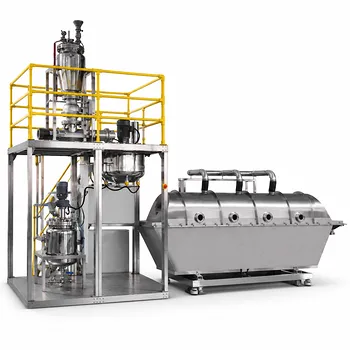
- Polymerization Granulation and Pellet Processing Educational Unit Operations Pilot Plant
- Ethyl Acetate Synthesis Unit Operations Pilot Plant for Practical Training
- Multi-Modal Distillation Unit Operations Training Pilot Plant
- Methanol Synthesis and Catalyst Performance Evaluation Educational Unit Operations Pilot Plant
- Solid Waste Pyrolysis and Refining Educational Pilot Plant for Unit Operations
People Also Ask
- How do educational unit operations pilot plants bridge theory and design? Bridge the Engineering Gap
- How do educational unit operations pilot plants address safety and waste management when scaling up?
- Why Compare Predicted and Experimental Excess Enthalpy? Key to Accurate Pilot Plant Scale-up
- When to transition from PID to adaptive control in pilot plants? Key process indicators.
- Why is the chemical plant startup schedule crucial? De-risk scale-up with pilot plants.