The specific parameters for the gravimetric determination of aluminum in scale samples begin with diluting the sample aliquot to 200 ml, adding 0.5 g of tartaric acid and 15 ml of ammonium acetate buffer-indicator, then neutralizing with 1:1 NH₄OH until a distinct purple color (bromcresol purple, pH 6.8) appears. Precipitate aluminum by adding a 10% alcoholic 8‑hydroxyquinoline solution dropwise in 15–25% excess at 60°C. Filter through a medium‑porosity sintered glass crucible, wash with cold water, dry for 1 hour at 125°C, and weigh as Al(C₉H₆ON)₃. The critical precaution is that if precipitated aluminum exceeds 50 mg, results run high due to adsorbed reagent.
The gravimetric method relies on strict pH control, a measured reagent excess, and an aluminum mass ceiling of 50 mg. Adhering to those bounds prevents systematic positive bias and ensures the procedure remains teachable and reliable in an industrial‑water‑chemistry lab course.
The Complete Protocol for Aluminum Gravimetry
Understanding each parameter protects the analysis from the most common student errors—drift in pH, over‑precipitation, and reagent carry‑over.
Preparing the Sample and Masking Interferences
Scale samples often contain iron and other metals that co‑precipitate. Tartaric acid (0.5 g) complexes those interfering ions and keeps them in solution.
Dilution to 200 ml ensures a manageable precipitate volume. Too little volume leads to a dense, difficult‑to‑filter mass; too much may reduce precipitation efficiency.
The pH Control Point: Bromcresol Purple
The ammonium acetate buffer doubles as indicator matrix. Adding 1:1 ammonium hydroxide until the mixture turns a sharp purple locks the pH at 6.8.
At higher pH, 8‑hydroxyquinoline precipitates as a free reagent; lower pH leaves aluminum incompletely chelated. The purple endpoint is non‑negotiable—it’s the single biggest source of student technique error.
Precipitation Parameters
The 10% alcoholic 8‑hydroxyquinoline is added dropwise to the warm solution at 60°C. This temperature accelerates crystal growth without hydrolyzing the complex.
A 15–25% excess of the precipitant is compulsory. Less risks incomplete precipitation; more dramatically increases the risk of reagent co‑adsorption—especially when aluminum mass climbs.
Filtration, Washing, and Drying
A medium‑porosity sintered glass crucible retains the fine crystalline Al(C₉H₆ON)₃ without clogging. Washing with cold water removes residual reagent while the complex remains virtually insoluble. Drying at 125°C for 1 hour drives off moisture and adsorbed volatile organics to yield stable, stoichiometric Al(C₉H₆ON)₃.
Weighing and Conversion
Weigh the dried precipitate and multiply by the gravimetric factor 0.1110 to report results as Al₂O₃. The factor assumes perfect 1:3 stoichiometry and anhydrous condition; any deviation from the prescribed drying regime invalidates it.
What Can Go Wrong: The Precautions You Must Enforce
Every step harbors a pitfall, but two deserve special attention in a teaching lab.
The 50 mg Aluminum Ceiling
If the aliquot contains more than 50 mg of aluminum, the large mass of precipitate demands a huge absolute excess of reagent. The excess is necessary for completeness, but it also adsorbs onto the crystals, producing a positive bias that washing cannot fully remove.
In an industrial‑water‑chemistry lab course, this is the most likely explanation for “high” student results. Always pre‑calculate the expected aluminum content; if needed, take a smaller aliquot.
Reagent Adsorption and Washing Artifacts
Even within the 50 mg limit, insufficient cold‑water washing leaves adsorbed 8‑hydroxyquinoline. The consequence is an over‑weighing that passes straight through the 0.1110 factor to inflate the Al₂O₃ report.
Conversely, overheating the wash water or drying above 125°C can decompose the complex, causing low results. The 125°C, 1‑hour rule is a carefully balanced choice that avoids both retention of water and thermal decomposition.
Understanding the Trade-offs
The oxinate method is elegant, but it isn’t infinitely robust. Below are the trade‑offs every instructor and student should recognize.
Sensitivity vs. positive bias. The 50 mg limit keeps bias tolerable. Pushing the method beyond that prioritizes detection over accuracy—an unsafe compromise in industrial scale analysis where aluminum levels may signal corrosion.
Precipitation temperature vs. particle size. 60°C yields filterable crystals; higher temperatures risk co‑precipitation of buffer species, while room‑temperature precipitation gives a sludgy, hard‑to‑wash solid.
Buffer‑indicator convenience vs. pH precision. The ammonium‑acetate / bromcresol‑purple combination works brilliantly for a defined range, but it can mask subtle pH drift if students add ammonia too quickly. A pH meter cross‑check is wise when training new analysts.
Gravimetric factor reliability. The factor 0.1110 is computed for perfectly anhydrous Al(C₉H₆ON)₃. Any deviation in drying time or temperature, or incomplete washing, renders this number an approximation. Students must be taught that constant weighing is the only sure sign of dryness.
Making the Right Choice for Your Lab Goal
Your approach to the protocol should shift depending on what you most need to teach or demonstrate.
- If your primary focus is accurate industrial‑scale corrosion monitoring: Strictly observe the 50 mg aluminum limit, verify pH with a meter before precipitation, and use constant‑weight drying to confirm the 125°C endpoint.
- If your primary focus is a smooth, low‑error student laboratory session: Pre‑dilute unknown samples so that total aluminum never exceeds 40 mg, provide a measured excess of oxine solution, and let students weigh only after a supervised 1‑hour drying step.
- If your primary focus is teaching the theory of gravimetric analysis: Walk students through the masking role of tartaric acid, the solubility product of the oxinate, and the statistical effect of excess reagent on co‑precipitation—using the 50 mg rule as the central, calculable example.
Stick tightly to the prescribed pH, temperature, excess, and mass limits, and your gravimetric aluminum analysis will deliver the repeatability and clarity that a teaching laboratory demands.
Summary Table:
| Parameter | Target Value / Condition | Key Precaution |
|---|---|---|
| Sample Dilution | 200 ml | Prevents dense, unfilterable precipitate. |
| Masking Agent | 0.5 g Tartaric acid | Complexes interfering ions (like iron). |
| pH Adjustment | pH 6.8 (Purple endpoint) | Critical; incorrect pH causes incomplete precipitation. |
| Precipitation | 60°C, 10% 8-hydroxyquinoline | Add dropwise in 15–25% excess; keep Al < 50 mg. |
| Drying & Weighing | 125°C for 1 hour | Cool, weigh, and use factor 0.1110 for Al₂O₃. |
Elevate Your Water Chemistry & Chemical Engineering Labs
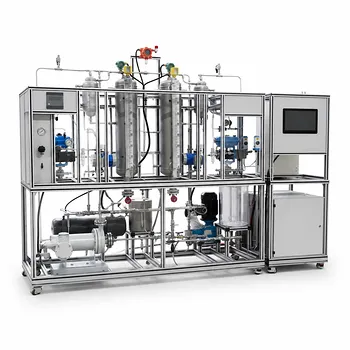
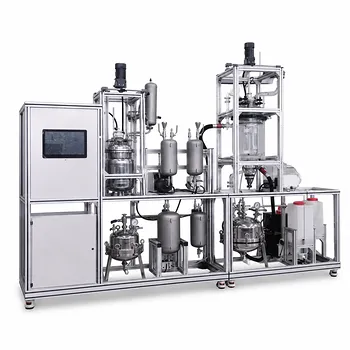
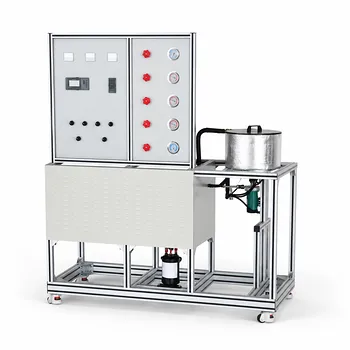
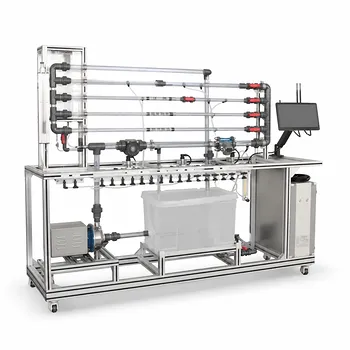
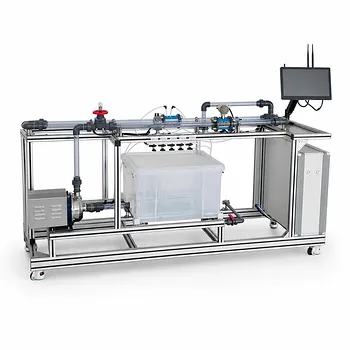
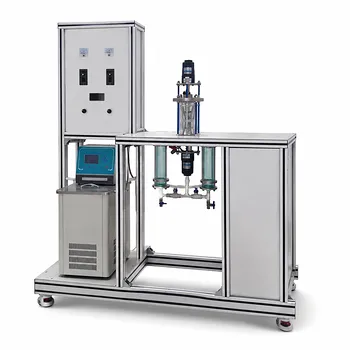
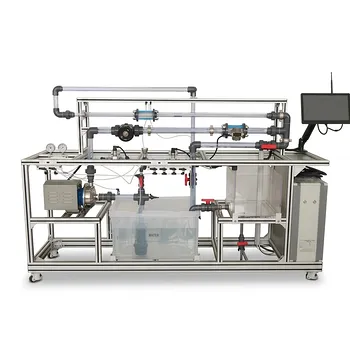
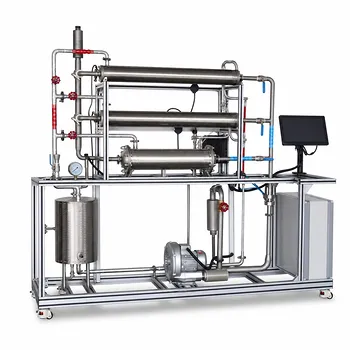
Need to equip your laboratory with professional-grade training systems? LABPARK provides state-of-the-art Educational and Vocational Unit Operations Pilot Plants in chemical engineering, bioprocess & biotech, and environmental & water treatment. Designed specifically for universities, research institutes, and enterprises, our solutions bridge the gap between academic theory and industrial practice.
Contact LABPARK today to request a quote or discuss your laboratory equipment needs!
Related Products
- Alkaline Membrane Water Electrolysis Educational Pilot Plant Unit Operations Training System
- Gallium and Indium Selective Extraction Educational Pilot Plant
- Educational Compression Refrigeration Performance Determination Unit Operations Pilot Plant
- Constant Pressure Filtration Educational Unit Operations Pilot Plant
- Rising and Falling Film Evaporation Educational Unit Operations Pilot Plant
People Also Ask
- How do chemical engineering pilot plants demonstrate electrolysis? Bridge Theory & Industrial Scale
- How do alkaline and PEM electrolysis technologies differ in pilot plant operations?
- Why is the selection of electrode materials critical when configuring or operating educational electrolysis pilot plants?
- Bipolar vs Monopolar Electrolysis: Key Configuration Details to Analyze in Pilot Plants
- Which Electrolysis Pilot Plant Parameters Ensure Safety & Efficiency? Key Controls Explained