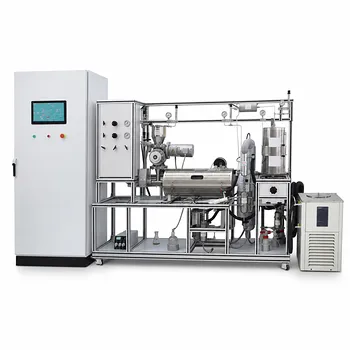
Selecting between thermal, vacuum, and freeze drying for solid materials in a chemical engineering or bioprocess pilot plant is fundamentally a decision about protecting the material’s chemical and physical integrity during moisture removal. The surface-level answer is direct: choose conventional thermal drying for thermally stable bulk solids, switch to vacuum drying when heat sensitivity or oxidation is a concern, and move to freeze drying (lyophilization) only when you must preserve microscopic structure and bioactivity in highly fragile products.
The paramount factor is the product’s thermal stability and structural fragility. In a pilot plant, however, a purely material-centric view is incomplete. The final choice must also reconcile the feed’s physical state, containment requirements, shear sensitivity, and the specific scale-up or educational purpose of the operation.
The Core Material-Centered Decision Matrix
The primary reference makes it clear that the three methods form a hierarchy based on how much thermal and mechanical stress the product can tolerate. This hierarchy dictates the first cut of equipment selection.
Thermal Stability Dictates the Temperature Window
Thermal drying in ovens or belt dryers typically operates below 100°C and suits robust inorganic or organic solids. If a material can withstand these temperatures without decomposition or phase change, thermal drying is almost always the most straightforward and energy-efficient starting point.
Lowering the Boiling Point with Vacuum
For materials that degrade or oxidize at elevated temperatures, vacuum drying is the immediate upgrade. Reduced pressure lowers the solvent’s boiling point, enabling drying at temperatures as low as 60°C. This prevents decomposition while still removing moisture at a practical rate.
When Only Sublimation Will Do
Freeze drying becomes critical for highly heat-sensitive bioprocess products, nanomaterials, and pharmaceuticals. By freezing the material (commonly between -50°C and -10°C) and removing the solvent by sublimation under vacuum, it eliminates the foaming, bubble formation, and structural collapse that occur with liquid-phase drying, preserving microscopic morphology.
Pilot Plant Operational Pragmatics
A pilot plant is not a pure research bench. The material’s sensitivity sets the “what,” but the “how” is governed by practical processing constraints. Supplementary references highlight that the feed’s physical state, containment needs, and shear tolerance transform the selection into a real-world engineering problem.
Matching the Dryer to the Feed’s Physical State
The form of the wet material dictates which dryer topology you can even consider.
- Solutions and pumpable suspensions are best processed in spray, drum, or flash dryers.
- Free-flowing crystalline or granular solids align with fluid beds or rotary dryers.
- Wet cakes or pastes may need agitated vacuum dryers or tray dryers.
Ignoring this mapping leads to performance failures before a single particle dries.
Integrating Mechanical Pre-treatment for Efficiency
Thermal drying is highly energy-intensive compared to mechanical separation. In a well-designed pilot plant line, equipment like hydrocyclones, press filters, or centrifuges concentrate the slurry before it reaches the dryer. This drastically improves overall thermal and process efficiency and is a hallmark of an industrially relevant unit operation.
Containment and Safety Requirements
For toxic, potent, or volatile-solvent-laden solids, the dryer choice becomes a containment decision. Open tray dryers are unacceptable in such cases. Closed systems—conical dryers, filter dryers, or fluid bed dryers with proper sealing—minimize operator exposure and prevent environmental emissions, a non-negotiable factor in modern bioprocess pilot plants.
Shear Sensitivity and Product Attrition
Some materials cannot survive intense mechanical agitation. For shear-sensitive products prone to particle breakage, a tumble dryer (a rotating shell) is preferred over highly agitated conical or filter dryers. Tumble dryers provide gentle, low-shear movement, preserving particle size distribution and final product uniformity.
Critical Operational Nuances of Vacuum Systems
When operating a vacuum drying oven, two safety-driven steps are mandatory: apply the vacuum before heating to avoid dangerous solvent off-gassing, and close the vacuum valve before shutting off the pump to prevent pump oil backflow that would contaminate high-purity samples. These procedures are essential teaching points in any pilot plant curriculum.
Freeze Drying: The Engineer’s Guide to Lyophilization Parameters
For the most delicate bioproducts, freeze drying is not a single-step operation. It is a precisely orchestrated three-stage process, and the pilot plant is the ideal environment to define and validate these stages before commercial scale-up.
The Three Stages of Lyophilization
The process follows a fixed sequence. First, the freezing stage cools the aqueous solution (typically to around -40°C) to convert all water to ice. Second, primary drying removes this ice by direct sublimation under vacuum (0.03–0.3 Torr), with heat supplied to the shelves. Finally, secondary drying strips away the remaining bound water by desorption at higher temperatures, still under vacuum, to achieve the final ultra-low moisture content.
Optimizing the Freezing Step for Uniform Drying
A rational freezing protocol in a pilot plant centers on three parameters.
- Cooling rate: A rate of 0.5–1.0 °C/min prevents phase separation and ensures uniform supercooling within and between vials.
- Final freezing temperature: The shelf temperature must be at least 2°C below the formulation’s solidification temperature, empirically chosen between -40°C and -50°C.
- Hold time: A hold of 1–2 hours for fill depths under 1 cm, and 2–4 hours for 1–2 cm, ensures complete solidification before the vacuum is drawn. Monitoring product temperatures with thermocouples confirms the matrix is ready for primary drying.
Understanding the Trade-offs
No single drying method is without compromises, and a credible pilot plant evaluation must make these transparent.
Thermal drying’s simplicity and low capital cost come at the expense of product quality for anything thermally sensitive. Vacuum drying protects heat-sensitive materials but operates at lower throughput and demands careful leak-tight maintenance and oil-backflow prevention procedures. Freeze drying offers unrivaled structural preservation and bioactivity recovery, yet it is an order of magnitude more expensive, requires much longer cycle times, and demands rigorous process optimization; a poorly designed lyophilization cycle can still cause collapse or meltback. In a pilot plant, the intention to demonstrate scale-up adds another layer: a method that works beautifully in a laboratory tray dryer may fail in a continuous belt dryer, while a complex freeze-drying protocol may be economically unjustifiable at production scale unless the product’s value demands it.
Making the Right Choice for Your Pilot Plant Goal
Your specific objective within the pilot plant should drive the final configuration. Align your investment with what you need to prove or teach.
- If your primary focus is processing a robust, heat-stable bulk solid: Start with conventional thermal drying—a fluid bed, rotary, or belt dryer—and prioritize energy integration with upstream mechanical dewatering to model industrial efficiency.
- If your primary focus is demonstrating heat-sensitive or easily oxidized materials where product purity is paramount: Instrument a vacuum-capable tray or rotary dryer and rigorously train operators on vacuum-before-heating and backflow-prevention sequences.
- If your primary focus is high-value biopharmaceuticals, vaccines, or nanomaterials that must retain native morphology: Invest in a fully instrumented freeze dryer with temperature-controlled shelves and a condenser at <-50°C, and use it to develop the freezing and drying protocols that will define your scale-up recipe.
- If your primary focus is toxic or potent compound handling in a containment-critical setting: Select a closed, vacuum-rated conical or filter dryer that combines drying with filtration and protects the operator throughout the batch cycle.
- If your primary focus is educational versatility in a unit operations lab: Aim for a pilot plant that incorporates both atmospheric and vacuum modes, and if possible, a small-scale freeze dryer, so students can quantitatively map how operating pressure and temperature influence drying rate curves and final product quality.
The most defensible pilot plant drying setup isn’t a single unit picked from a catalog—it’s a thoughtfully assembled suite that allows you to match the stress the material can tolerate with the engineering controls and cost structure that the final process demands.
Summary Table:
| Drying Method | Key Mechanism | Best For | Main Advantage | Limit/Constraint |
|---|---|---|---|---|
| Thermal Drying | Heat evaporation (<100°C) | Thermally stable bulk solids | Simple, cost-effective | Heat damage risk |
| Vacuum Drying | Low pressure evaporation (60°C) | Heat-sensitive / oxidizable materials | Low temp boiling, safe | Lower throughput |
| Freeze Drying | Sublimation (-50°C to -10°C) | Highly fragile bioproducts | Preserves structure & bioactivity | High cost & cycle time |
Optimize Your Unit Operations with LABPARK
Are you configuring a chemical engineering, bioprocess, or environmental pilot plant? LABPARK provides state-of-the-art Educational and Vocational Unit Operations Pilot Plants in chemical engineering, bioprocess & biotech, and environmental & water treatment for universities, research institutes, and enterprises. We help you bridge the gap between theory and industrial practice with robust, customizable equipment.
Contact LABPARK Today to Discuss Your Project
Related Products
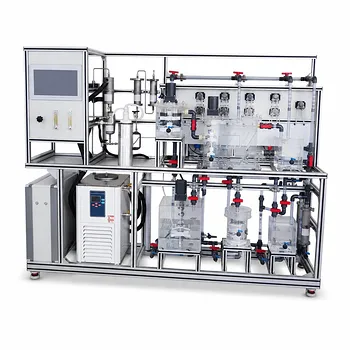
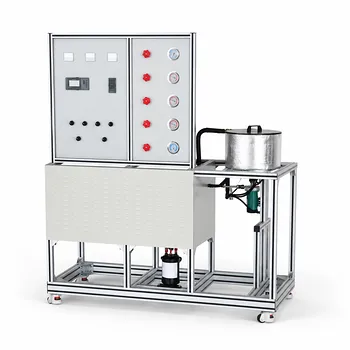
- Multi-Functional Drying Educational Unit Operations Pilot Plant
- Thermal Desorption Exhaust Gas and Tail Water Treatment Educational Pilot Plant
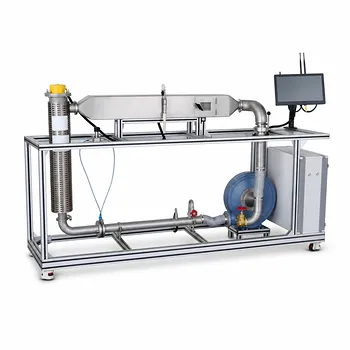
- Circulating Wind Tunnel Drying and Convective Heat Transfer Coefficient Determination Educational Pilot Plant
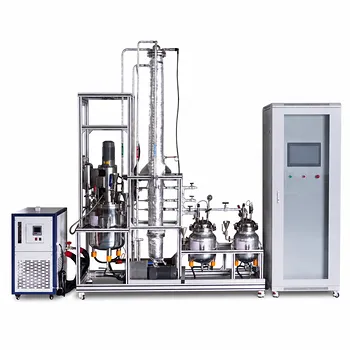
- Multi-Functional Special Distillation Educational Pilot Plant
- Hot Filtration Educational Unit Operations Pilot Plant Laboratory System
People Also Ask
- How to study gasification in pilot plants? Compare exit gas composition & efficiency
- Why is the chemical plant startup schedule crucial? De-risk scale-up with pilot plants.
- How do deviations in estimating latent heat impact pilot plant thermal systems? Avoid hardware mis-sizing.
- Why Use PTFE & Hastelloy in Chemical Pilot Plants? Prevent Corrosion & Ensure Safety
- When to transition from PID to adaptive control in pilot plants? Key process indicators.