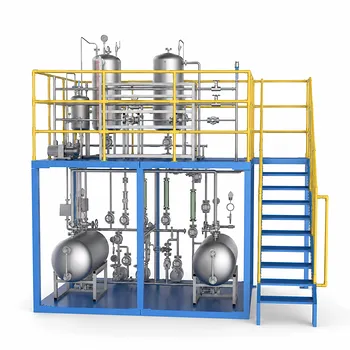
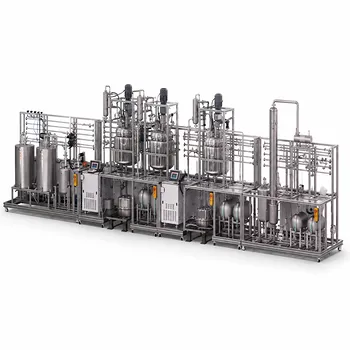
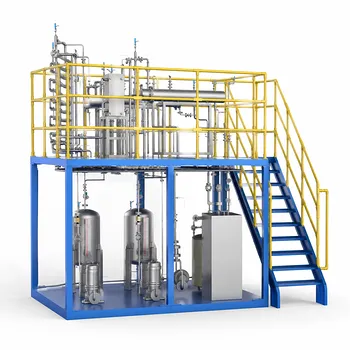
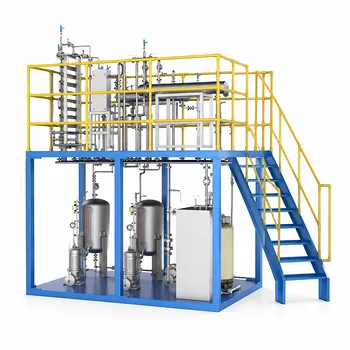
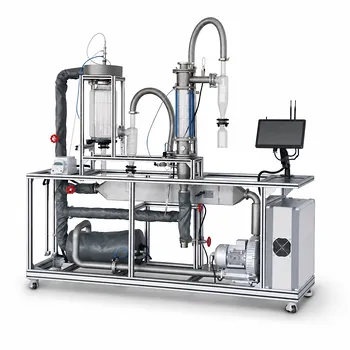
To perform a HAZOP analysis on a multi‑stage unit operations pilot plant, students and laboratory engineers must follow a structured, node‑by‑node deviation brainstorming process. You first divide the plant into logical equipment nodes (e.g., feed system, column trays, reboiler, condenser), then systematically apply guide words to key process parameters—flow, pressure, temperature, level—on every connecting line and vessel. For each credible deviation, you identify causes, assess consequences, verify existing safeguards, and document any missing alarms, interlocks, or procedure changes before marking the P&ID as reviewed.
A rigorous student HAZOP turns a pilot plant from a “machine that runs” into a vivid case study in process safety. The core cycle—select a node, pick a parameter, apply a guide word, trace cause to consequence, and decide if controls are adequate—teaches the industrial methodology while making invisible hazards visible before any experiment begins.
Why the HAZOP Discipline Matters for Pilot Plants
A multi‑stage pilot plant (distillation, gas absorption, liquid‑liquid extraction) compresses real industrial complexity into a teaching‑scale unit. The surface need is a clear procedure; the deep need is building the mental muscle to see every line, valve, and sensor as a possible point of failure—and to evaluate those failures systematically instead of relying on intuition.
The Educational Power of a Deviation‑Centered Mindset
In industry, HAZOP is a formal, team‑based brainstorming exercise. In a teaching laboratory, a student HAZOP simulates that experience: you learn to ask “what if?” using a controlled vocabulary of guide words (None, More, Less, Reverse, etc.) that push you beyond obvious hazards.
From P&ID to Practical Safety Awareness
Laboratory‑scale equipment often lacks the layers of protection present in a full‑scale plant. A student‑led HAZOP forces the team to confront the gaps—for example, realizing that a single thermocouple with no alarm cannot prevent a runaway reboiler if the steam valve fails open.
The Six‑Step HAZOP Loop for a Multi‑Stage Pilot Plant
The procedure recommended for academic unit operations labs distills the industrial method into a repeatable loop. Apply this loop to every piece of equipment and every process line on the P&ID.
Step 1: Select a Specific Equipment Node and State Its Design Intent
A node is a discrete section of the plant: the feed drum, the bottom sump, the condenser, a specific tray section. First, write down what that node is designed to do (e.g., “the reboiler supplies 3 kW of heat to maintain a bottoms temperature of 98 °C and a liquid level between 40 % and 60 %”).
Why this matters: Without a clearly stated design intent, “deviation” has no meaning. A high liquid level is only a hazard if the intent is to keep the level within a safe range.
Step 2: Select a Connecting Process Line and Examine the P&ID Details
Pick one line entering or leaving the node—the steam supply to the reboiler, the bottoms product line, the cooling water outlet. Confirm the line number, size, valve types, and instrumentation shown on the P&ID.
This step ensures you are analyzing actual equipment, not an imagined generic system. Marking the line on a printed P&ID helps track progress.
Step 3: Choose a Process Parameter and Apply a HAZOP Guide Word
Combine a parameter (flow, pressure, temperature, level, concentration, agitation speed) with a guide word (None, More, Less, As well as, Part of, Reverse, Other than).
Examples for a distillation column:
- Flow + None → no steam to reboiler
- Temperature + More → excessive overhead vapor temperature
- Level + Less → low bottoms level exposing the heater
Concentrate on parameters that directly impact safety and product quality in your pilot plant.
Step 4: Identify Potential Causes and Evaluate Consequences
For each deviation, brainstorm the credible causes: a failed control valve, a blocked strainer, a power loss, an operator error. Then trace the immediate and ultimate consequences.
Example: Deviation: No cooling water flow to condenser.
- Cause: Cooling water pump trip or manual isolation valve closed.
- Consequence: Column over‑pressure if vapors are not condensed, possible release from relief valve or gasket failure.
Keep the evaluation factual and focused on the pilot‑scale reality. Small volumes often react faster, making containment failure possible within seconds.
Step 5: Assess Safeguards and Determine if Additional Protections Are Needed
List all existing safeguards—pressure relief valves, high‑temperature alarms, interlock logic (e.g., heater cuts off on low flow). Then ask: are these enough? If a single failure can lead to a serious event, you may need a new interlock, an independent alarm, or a written operating procedure.
This step bridges analysis and action. In a student HAZOP, it’s acceptable to recommend a change that would be implemented before the next experimental campaign.
Step 6: Record Findings and Mark the Checked Lines on the P&ID
Document every deviation, cause, consequence, safeguard, and recommendation in a HAZOP worksheet. Then physically mark the analyzed line on the P&ID with a highlighter or a tracking number. This visual record prevents repeated analysis and shows what remains to be reviewed.
Common Pitfalls to Avoid in a Student‑Led HAZOP
Even with a clear procedure, inexperienced teams frequently hit the same obstacles. Recognizing these trade‑offs accelerates learning.
Rushing Through Parameter Selection
Novices often jump to the most dramatic scenario (explosion) while neglecting mundane but equally dangerous deviations like low flow starving a pump or reverse flow contaminating a feed system. Force the team to exhaust all guide words for a single line before moving on.
Ignoring Auxiliary and Utility Systems
Multi‑stage pilot plants depend on steam, cooling water, compressed air, and vacuum. Analyzing only the main process units while forgetting the utility supply lines is a classic error. A failed cooling water line delivers the same consequence regardless of which side of the P&ID it sits on.
Confusing Causes with Consequences
A common mistake is writing “overpressure” as the cause when it is actually the consequence of a control valve failing. Trace backward until you reach an initiating event (e.g., “steam pressure regulator failed open”) before you can define a meaningful safeguard.
Making the Right Choice for Your Analysis Goal
Students and lab engineers approach HAZOP with different priorities. Tailor the depth of your analysis accordingly.
- If your primary focus is learning process safety fundamentals: Stick rigidly to the six‑step loop on a simple node, such as the reboiler loop, and insist on completing a worksheet for every guide word. Mastery comes from disciplined repetition, not from covering the entire plant superficially.
- If your primary focus is ensuring safe pilot plant operation before a new experiment: Prioritize lines carrying hazardous chemicals or high‑energy utilities (steam, hot oil). Apply all guide words, but accept that low‑risk water lines may need only a brief review if they do not connect to reactive materials.
- If your primary focus is designing training exercises for a cohort: Divide the P&ID into logical nodes and give each student team responsibility for one area. Then combine the worksheets and walk the entire plant together, arguing causes and consequences as a group—this mimics the interdisciplinary debate of a real industrial HAZOP.
A methodical HAZOP turns a multi‑stage pilot plant into a safe, transparent, and profoundly educational tool—exactly as industrial practice demands.
Summary Table:
| Step | Focus Action | Key Objective / Output |
|---|---|---|
| 1. Select Node | Define a specific equipment section | State the design intent and operational limits |
| 2. Examine Line | Inspect connecting lines on P&ID | Verify valves, instrumentation, and layout |
| 3. Apply Guide Words | Combine parameters with guide words | Identify deviations (e.g., More Flow, No Temp) |
| 4. Analyze Consequences | Trace causes to hazards | Determine the impact of the deviation on the system |
| 5. Evaluate Safeguards | Assess existing safety controls | Identify gaps and recommend new interlocks or alarms |
| 6. Record & Document | Log findings in HAZOP worksheet | Mark analyzed lines on the P&ID to track progress |
Elevate Lab Safety and Process Education with LABPARK
Building a safety-first culture in engineering starts with the right equipment. LABPARK provides state-of-the-art Educational and Vocational Unit Operations Pilot Plants designed specifically for universities, research institutes, and enterprises.
Whether you are teaching chemical engineering, bioprocess & biotech, or environmental & water treatment, our pilot plants feature transparent process pathways and industry-standard instrumentation, making them the perfect platforms for realistic HAZOP training and safe, hands-on experimentation.
Ready to upgrade your laboratory? Contact us today to discuss your custom pilot plant requirements!
Related Products
- Multi-Modal Distillation Unit Operations Training Pilot Plant
- Multi-Reactor Educational Pilot Plant for Reaction Engineering Unit Operations
- Multi Pump Fluid Transport Process Piping Unit Operations Training Pilot Plant
- Carbon Dioxide Hydrogen Methanol Synthesis Educational Unit Operations Pilot Plant
- Methanol Synthesis and Catalyst Performance Evaluation Educational Unit Operations Pilot Plant
People Also Ask
- How can energy balance equations for condensers & reboilers be validated experimentally? Guide
- How does catalyst water concentration affect distillation pilot plant design? Key separation train choices.
- What are the primary reflux ratio control strategies? Master Distillation Unit Operations
- How can real-time carbon number prediction improve distillation pilot plants? Optimize control.
- Why is vacuum operation capability an essential feature for a distillation unit operations pilot plant? Unlock Efficiency