Knowledge Chemical Engineering Education What key membrane characteristics are needed for MD? Optimize Your Pilot Plant
Author avatar

Tech Team · LABPARK

Updated 2 weeks ago

What key membrane characteristics are needed for MD? Optimize Your Pilot Plant


The choice of membrane characteristics and operating principles is the non-negotiable starting point for any meaningful Membrane Distillation study. For MD pilot plants, the membrane must be microporous and hydrophobic to prevent liquid water intrusion while selectively allowing only water vapor to pass through. The process is driven by a temperature gradient across the membrane, which causes evaporation on the hot side and condensation on the cold side. Key parameters to investigate include thermal stability, porosity, pore size distribution, and chemical resistance, as these directly determine mass transfer rates and the feasibility of using low-grade heat sources like waste heat or solar energy.

The success of an MD pilot plant hinges on a carefully selected hydrophobic membrane that balances high vapor permeability with robust resistance to wetting, fouling, and thermal degradation. Without a clear focus on these material properties and the driving temperature gradient, the study cannot reflect realistic, scalable MD performance.

The Critical Membrane Characteristics for MD Pilot Studies

Hydrophobicity: The Gatekeeper Against Liquid Intrusion

The membrane’s hydrophobic nature is its most important feature. It ensures that liquid feed water cannot enter the pores, while water vapor easily passes through. If hydrophobicity is lost—through wetting or chemical degradation—the separation fails completely. In pilot plants, this is the first failure point to monitor and guard against.

Porosity and Pore Size: Tuning the Vapor Pathway

High porosity creates more open space for vapor transport, directly increasing the achievable flux. However, the pore size distribution must be carefully controlled. Pores that are too large can trigger premature liquid intrusion, while pores that are too small reduce mass transfer. Pilot studies aim to find the optimal balance that maximizes throughput without sacrificing the liquid barrier.

Thermal Stability and Chemical Resistance: Defending Against the Process Environment

MD relies on a sustained temperature gradient. The membrane must maintain its structure and hydrophobicity under prolonged exposure to hot, often saline, feed streams. Chemical resistance determines whether the membrane can handle cleaning agents, varying pH, and industrial wastewater components without swelling or degrading. These properties directly control the lifespan and maintenance burden in a pilot plant setting.

Operating Principles: How MD Drives Separation

The Temperature Gradient as the Driving Force

Unlike pressure-driven membrane processes, MD depends exclusively on a vapor pressure difference created by a temperature gradient. The hot feed side evaporates water at the pore entrance; the vapor crosses the membrane and condenses on the cold permeate side. This simple thermal drive is what separates MD from reverse osmosis and makes it so attractive for low-grade heat utilization.

Mass Transfer in the Vapor Phase

Inside the microporous membrane, mass transfer occurs by diffusion of water vapor through a stagnant air gap (or a vacuum) held within the pores. The flux is governed by the temperature difference, membrane porosity, pore size, and thickness. In a pilot plant, measuring flux under varying conditions lets researchers validate theoretical models and pinpoint the true mass transfer coefficient.

Flow Configuration and Its Pilot Plant Implications

The most common pilot setup is Direct Contact Membrane Distillation (DCMD), where hot feed and cold coolant flow directly against the membrane surfaces. This configuration is simple to implement and offers high thermal efficiency for educational and research studies. Alternative configurations (air gap, vacuum, sweep gas) trade off heat loss and permeate flux, allowing pilot plants to simulate different industrial scenarios.

Understanding the Trade-offs and Common Pitfalls

The Persistent Threat of Membrane Wetting and Fouling

Membrane wetting—where liquid water penetrates the pores—destroys selectivity instantly. It is often triggered by surfactant-like contaminants or scale deposition. Fouling from sparingly soluble salts or organic matter also degrades hydrophobicity over time. Pilot plants must routinely monitor pressure drops, flux decline, and conductivity in the permeate to detect wetting early. Mitigation techniques studied include feed pre-heating, flow velocity adjustments, and periodic chemical cleaning.

The Balance Between Flux and Longevity

A membrane with extremely high porosity may deliver impressive initial flux but often sacrifices mechanical strength and chemical robustness. Conversely, a chemically resistant, dense structure may limit throughput. The pilot plant is the ideal environment to quantify this trade-off over long experimental runs, informing whether the chosen membrane can meet both performance and durability targets.

Module Geometry: A Strategic Decision

While the core separation principle stays the same, the physical packaging of the membrane—hollow fiber, plate-and-frame, or tubular modules—governs practical issues like pressure drop, fouling control, and effective surface area. Hollow fiber modules give an extremely high surface-to-volume ratio but are difficult to clean once fouled. Plate-and-frame units allow easy inspection and cleaning but come at a higher equipment cost. Selecting the right geometry for the pilot study determines how realistically the results scale to industrial processes.

Making the Right Choice for Your Pilot Plant Study

  • If your primary focus is evaluating waste heat or solar energy: Prioritize thermal stability and a membrane with high porosity to maximize flux even at small temperature differentials.
  • If your primary focus is high-salinity brackish water or industrial wastewater: Select a highly hydrophobic membrane with proven resistance to scaling and chemical attack, and design the pilot to closely monitor the onset of wetting.
  • If your primary focus is long-duration reliability and maintenance scheduling: Opt for a membrane with moderate porosity but exceptional chemical resistance and mechanical integrity, and integrate regular cleaning protocols into the experimental plan.

By matching the membrane’s intrinsic properties to your pilot plant’s operational goals, you transform MD from a theoretical concept into a reliable, scalable separation technology.

Summary Table:

Parameter Core Feature Impact on Pilot Performance
Hydrophobicity Prevents liquid feed intrusion Prevents wetting & separation failure
Porosity & Pore Size Defines the vapor transport pathway Balances high flux with liquid barrier
Thermal & Chemical Resistance Withstands hot, corrosive feed streams Extends membrane lifespan & durability
Temperature Gradient Thermal driving force across membrane Controls vaporization and condensation

Elevate Your Engineering Research with LABPARK

Are you setting up a Membrane Distillation study or upgrading your chemical engineering curriculum?

LABPARK designs and delivers high-performance Educational and Vocational Unit Operations Pilot Plants tailored for universities, research institutes, and enterprises. Our systems cover key domains:

  • Chemical Engineering (including MD & separation processes)
  • Bioprocess & Biotechnology
  • Environmental & Water Treatment

Equip your lab with reliable, industry-grade pilot plants that deliver accurate, scalable data. Contact LABPARK today to discuss your project requirements!

Related Products

People Also Ask

Related Products

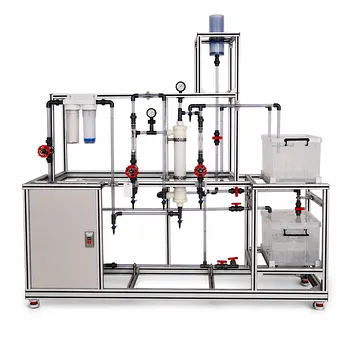
Multi Functional Membrane Crystallization Educational Unit Operations Pilot Plant

Multi Functional Membrane Crystallization Educational Unit Operations Pilot Plant

Integrated bench-scale membrane crystallization pilot plant for engineering education. Provides hands-on training in advanced separation technologies, combining membrane distillation crystallization and process intensification. Features variable scaling vessels, industrial-grade flow control, and interactive digital data acquisition. Customizable for university labs.

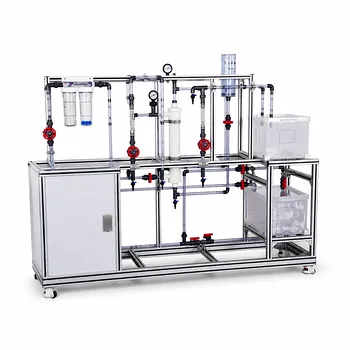
Ultrafiltration Membrane Separation Educational Pilot Plant

Ultrafiltration Membrane Separation Educational Pilot Plant

This ultrafiltration membrane separation educational pilot plant enables undergraduate students to process PVA solutions, study hollow fiber membrane dynamics, and perform quantitative analysis with spectrophotometry for hands-on learning of unit operations and industrial maintenance and membrane cleaning protocols.

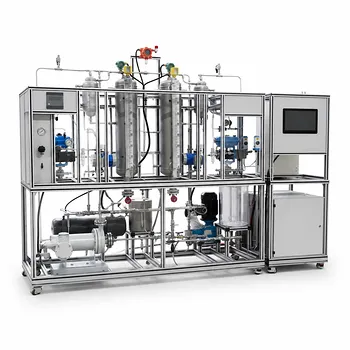
Multifunctional Membrane Separation Educational Pilot Plant with Ultrafiltration, Nanofiltration, Reverse Osmosis

Multifunctional Membrane Separation Educational Pilot Plant with Ultrafiltration, Nanofiltration, Reverse Osmosis

An integrated laboratory bench-scale membrane separation system for higher education engineering labs combining Ultrafiltration, Nanofiltration, and Reverse Osmosis processes. Features industrial PLC control with touch-screen HMI, transparent piping, and academic assessment software. Ideal for chemical and environmental engineering curricula.

Hollow Fiber Ultrafiltration Membrane Separation Educational Pilot Plant

Hollow Fiber Ultrafiltration Membrane Separation Educational Pilot Plant

Explore our hollow fiber ultrafiltration membrane separation educational pilot plant for hands-on learning of industrial ultrafiltration processes, flux analysis, fouling mitigation, and process control. Compact, customizable, and built for engineering labs.

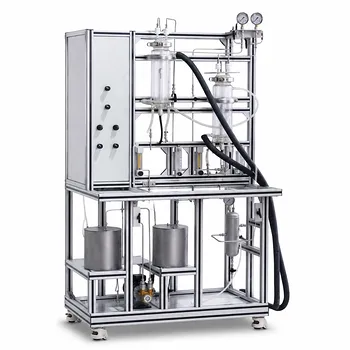
Multi-Functional Special Distillation Educational Pilot Plant

Multi-Functional Special Distillation Educational Pilot Plant

Versatile multi-functional special distillation pilot plant for chemical engineering education. Supports continuous, vacuum, azeotropic, reactive, extractive distillation. Transparent glass columns enable real-time visual observation of hydrodynamics and separation processes.

Photocatalytic Membrane Separation and Degradation Unit Operations Pilot Plant

Photocatalytic Membrane Separation and Degradation Unit Operations Pilot Plant

Bench-scale pilot plant integrating photocatalytic degradation with membrane separation for engineering education. Study advanced oxidation, microfiltration, and hybrid processes using industrial sensors. Features safety light-blocking curtain, low-noise compressor, and durable stainless-steel construction.

Alkaline Membrane Water Electrolysis Educational Pilot Plant Unit Operations Training System

Alkaline Membrane Water Electrolysis Educational Pilot Plant Unit Operations Training System

Hands-on educational pilot plant for alkaline membrane water electrolysis hydrogen production, integrating unit operations training with industrial PLC control, real-time data logging, customizable design, durable 316L stainless steel construction, explosion-proof safety, and modern 5G connectivity for university laboratories.

Multi-Functional Membrane Separation Educational Pilot Plant for Unit Operations Lab

Multi-Functional Membrane Separation Educational Pilot Plant for Unit Operations Lab

The Multi-functional Membrane Separation Educational Unit Operations Pilot Plant is an integrated bench-scale laboratory system designed for teaching undergraduate engineering education. It features Ultrafiltration, Nanofiltration, and Reverse Osmosis modules in a compact, mobile unit for practical hands-on learning.

Continuous Sieve-Plate Distillation Pilot Plant for Unit Operations Laboratory Education

Continuous Sieve-Plate Distillation Pilot Plant for Unit Operations Laboratory Education

Integrated pilot-scale teaching system for continuous sieve-plate distillation studies. Visual demonstration of tray hydraulics, flexible feed positions, and automatic reflux control for hands-on unit operations education in engineering labs. Designed for higher education engineering laboratories.

Continuous Batch Extractive Distillation Educational Pilot Plant

Continuous Batch Extractive Distillation Educational Pilot Plant

Versatile pilot plant for continuous, batch, and extractive distillation training. High-borosilicate glass column for visualizing hydraulics, 15.6-inch touchscreen with data logging, precise reflux ratio control 1-99, and durable corrosion-resistant frame. Ideal for chemical engineering education and process research.

Dual-Mode Rectification Pilot Plant for Practical Training Unit Operations

Dual-Mode Rectification Pilot Plant for Practical Training Unit Operations

Industrial-scale dual-mode rectification pilot plant for chemical engineering practical training. Features real-material and simulated-material operation modes, sieve-plate column with sight glasses for visual observation of hydrodynamics, and customizable SCADA control for safe, hands-on learning of unit operations and mass transfer.

Electrolyte Distillation Purification and Formulation Educational Pilot Plant

Electrolyte Distillation Purification and Formulation Educational Pilot Plant

Integrated bench-to-pilot scale educational pilot plant for electrolyte distillation, purification, and formulation with borosilicate glass construction, PLC automation, touchscreen HMI, and advanced industrial safety features for hands-on chemical process training, ideal for chemical engineering and materials science curricula.

Green Anhydrous Ethanol Refining Practical Training Pilot Plant

Green Anhydrous Ethanol Refining Practical Training Pilot Plant

Advanced integrated pilot plant for university labs demonstrating extractive distillation to produce high-purity absolute ethanol from crude feedstock, featuring multi-column continuous operation, closed-loop solvent recycling, and customizable controls for hands-on engineering education, ideal for chemical engineering training and research.

Ethyl Acetate Synthesis Unit Operations Pilot Plant for Practical Training

Ethyl Acetate Synthesis Unit Operations Pilot Plant for Practical Training

Modular and customizable pilot plant for ethyl acetate synthesis practical training. Integrates esterification reaction, liquid-liquid extraction, neutralization, and sieve-plate distillation unit operations. Bridging theory and real-world industrial processes. Designed for university chemical engineering labs

Natural Product Extraction Unit Operations Training Pilot Plant

Natural Product Extraction Unit Operations Training Pilot Plant

Integrated natural product extraction pilot plant for chemical engineering training bridges theory and industrial practice with modular extraction and evaporation/concentration units, hybrid touchscreen and manual control, realistic process simulation, and self-contained softened water and vacuum utilities.

Bio-fermentation Ethanol Production Practical Training Unit Operations Pilot Plant

Bio-fermentation Ethanol Production Practical Training Unit Operations Pilot Plant

Bio-fermentation ethanol production pilot plant for hands-on training in unit operations: fermentation, solid-liquid filtration, membrane separation, and distillation. Bridges theory with industrial practice using industrial-grade components, customizable for university labs. Hybrid automated and manual control for comprehensive learning.

Absorption and Desorption Educational Unit Operations Pilot Plant

Absorption and Desorption Educational Unit Operations Pilot Plant

Dual packed column absorption and desorption pilot plant for chemical engineering education, offering real-time mass transfer coefficient measurement, durable mobile frame, industrial touch-screen interface, and customizable design for varied laboratory curricula, enabling hands-on study of gas absorption and stripping.

Constant Pressure Filtration Educational Unit Operations Pilot Plant

Constant Pressure Filtration Educational Unit Operations Pilot Plant

Hands-on educational pilot plant for constant pressure filtration. Classic plate and frame filter press allows students to study kinetics, determine specific cake resistance, perform cake washing and evaluate washing rates. Ideal for chemical engineering curriculum. Mobile, customizable, safety-compliant design.

Fixed-Bed Chemical Reaction and Gas Dust Tar Removal Unit Operations Pilot Plant

Fixed-Bed Chemical Reaction and Gas Dust Tar Removal Unit Operations Pilot Plant

Integrated educational pilot plant for studying catalytic gas-solid reactions and downstream gas purification. Features dual fixed-bed reactor, three-stage heating, and touchscreen control for hands-on engineering training. Ideal for chemical and environmental engineering curricula.

Thermal Desorption Exhaust Gas and Tail Water Treatment Educational Pilot Plant

Thermal Desorption Exhaust Gas and Tail Water Treatment Educational Pilot Plant

Bench-scale educational pilot plant for treating thermal desorption exhaust gas and tail water integrates condensation, Fenton oxidation, precipitation, filtration, and carbon adsorption. Ideal for chemical engineering and environmental labs, teaching unit operations, process control, and real-time data analysis.


Leave Your Message