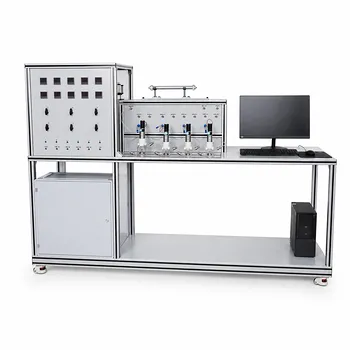
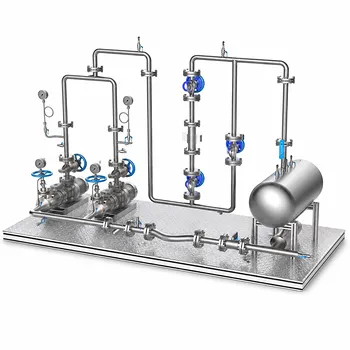
At its core, a catalyst testing reactor system must deliver precise reactant delivery, controlled reaction conditions, and accurate product analysis. A functional system is built around three essential sections: a feed section to manage and deliver reactants, a reactor section where the catalyst bed enables controlled interaction, and an analytical section to sample and identify product components. These core elements must work in concert to generate reproducible flow patterns and highly reliable feedback on catalyst activity and selectivity.
A robust catalyst testing system integrates a feed manifold, a catalyst bed reactor with tight temperature control, and a product analysis module. The real challenge—and deep need—is to ensure that this integrated chain provides consistent, interpretable data so you can trust your catalyst performance results, whether for a teaching lab or a high‑throughput screening campaign.
The Three Must‑Have Sections in Detail
The Feed System: Delivering Controlled Reactants
The feed section is the starting point of any experiment. It typically consists of a feed manifold that combines gas and liquid streams in precise ratios.
In modern modular designs, this section can be broken into a dedicated Gas Feed Module and a Liquid Feed Module. Each must maintain stable flow rates and often includes flow controllers, back‑pressure regulators, and premixing lines. The goal is to deliver a homogeneous, well‑defined reactant mixture to the reactor without fluctuations that could compromise reproducibility.
The Reactor Section: Where Catalyst Magic Happens
The reactor section is the heart of the system. Its primary tasks are to hold the catalyst bed and ensure that the reactant mixture contacts the catalyst under well‑controlled conditions.
A critical design requirement is efficient loading and unloading of the catalyst. For research‑grade systems, this often translates to a standardized reactor matrix that supports plug‑flow operation—essential for deriving intrinsic kinetics and avoiding mass‑transfer biases. Inside each reactor, individual temperature measurements directly within the catalyst bed are non‑negotiable; they capture the true reaction temperature and prevent misleading results from wall‑ or furnace‑only readings. Typical catalyst loading volumes range from 70 to 200 microliters, enabling rapid screening with minimal material.
The reactor section also requires a Heater Module for precise temperature control and an Effluent Module that safely handles the reactor outlet stream—condensing liquids, managing gas‑liquid separation, and preparing the sample for analysis.
The Analytical Section: Measuring Performance
The final fundamental section is the analytical section. Even the best‑controlled reaction is useless if you cannot accurately quantify what comes out.
This module typically includes a sampling interface (valves, splitters) and an analytical instrument such as a gas chromatograph or mass spectrometer. The design must guarantee that the sample stream is representative and that analysis delays are minimized. For catalyst testing, the analytical section provides the direct measurement of activity (conversion) and selectivity—the very metrics that determine if a catalyst is worth further investigation.
The Automation and Informatics Backbone
While not called out as a third section in the simplest view, a modern testing system is incomplete without an Automation/Informatics Module. This layer interlocks the hardware with software—often platforms like LabVIEW—to execute multi‑step protocols.
Automation enables unattended runs, real‑time monitoring of temperatures, flow rates, and pressures, automated sampling sequences, and safety alarm triggers. It turns a collection of hardware into a reproducible, data‑rich platform that can run overnight or over weekends, drastically improving throughput.
Understanding the Trade‑offs
Even with the right components, design decisions carry trade‑offs that can make or break a testing program.
- Modularity versus simplicity: A fully modular system (separate gas, liquid, manifold, reactor, heater, etc.) offers maximum reconfigurability for different chemistries, but it increases complexity, cost, and potential leak points. A more integrated, dedicated skid might be simpler to operate but locks you into a narrow range of conditions.
- Plug‑flow precision versus throughput: Standardized plug‑flow reactors with individual bed temperature measurements give the most reliable kinetic data, but they often limit the total catalyst volume you can test. If high‑throughput screening is the goal, you may need to sacrifice some kinetic ideality for parallelisation, which can introduce reproducibility challenges.
- Automation depth: Full automation with sophisticated informatics can eliminate operator error and improve data quality, but it requires substantial upfront programming effort and ongoing maintenance. Over‑automation on a system that is only used sporadically can become a burden rather than a benefit.
- Analytical capability: Adding advanced analysis (e.g., mass spec for fast transient detection) enhances understanding but drives up cost and demands expert interpretation. A simple GC may suffice for steady‑state catalyst activity testing but will miss dynamic catalyst behavior.
Making the Right Choice for Your Goal
The “essential” components remain the same, but how you configure them should align with your primary objective.
- If your primary focus is education or basic unit‑operations training: Keep the system lean and focused on the three core sections. A well‑instrumented plug‑flow reactor with a simple GC and manual sampling teaches fundamental principles without overwhelming students with automation complexity.
- If your primary focus is early‑stage catalyst screening and high flexibility: Invest in a modular architecture. Separating the gas feed, liquid feed, manifold, and reactor modules lets you reconfigure the setup quickly for different reactions, while basic automation handles repetitive sampling and safety monitoring.
- If your primary focus is generating kinetic data for scale‑up: Prioritize the precision of the reactor section. Insist on individual internal bed temperature measurements, guarantee verified plug‑flow, and pair the system with a robust analytical module—even if that means a slightly less flexible modular layout.
- If your primary focus is high‑throughput, unattended screening: The automation and informatics module becomes as important as the reactor itself. Ensure your hardware fully interfaces with the control software to enable fully automatic protocol execution and data logging, accepting that upfront setup time will be substantial.
Ultimately, a trustworthy catalyst testing reactor is not just a collection of parts—it is a coordinated system where every component, from the feed manifold to the data export, serves the goal of generating reproducible, interpretable reaction data. Align your component choices with that deep need, and you will build a platform that delivers meaningful catalysts insights.
Summary Table:
| System Section | Key Components | Primary Function |
|---|---|---|
| Feed Section | Gas/liquid modules, MFCs, feed manifold | Homogeneous and precise reactant delivery |
| Reactor Section | Plug-flow reactor, heater & effluent modules | Temperature-controlled catalyst-reactant interaction |
| Analytical Section | GC, MS, sampling valves, and splitters | Product quantification (conversion and selectivity) |
| Automation Module | Control software (e.g., LabVIEW), sensors | Unattended protocol execution and safety monitoring |
Scale Up Your Research with LABPARK
Ensure maximum precision, safety, and reproducibility in your laboratory operations. LABPARK provides high-quality Educational and Vocational Unit Operations Pilot Plants in chemical engineering, bioprocess & biotech, and environmental & water treatment designed specifically for universities, research institutes, and enterprises.
Ready to optimize your catalyst testing capabilities? Contact LABPARK today to find the perfect modular pilot plant solution for your project!
Related Products
- Multi Functional Catalytic Reaction and Reactor Evaluation Educational Unit Operations Pilot Plant
- Methanol Synthesis and Catalyst Performance Evaluation Educational Unit Operations Pilot Plant
- Fixed Bed Gas Solid Catalytic Reaction Educational Pilot Plant
- Micro-Scale Gas-Solid Catalytic Reaction Educational Pilot Plant
- Educational Unit Operations Pilot Plant for Intraparticle Diffusion Effective Factor Measurement
People Also Ask
- What reaction engineering principles are shown in a catalytic reactor pilot plant? SO2 Oxidation Guide
- Why is FTIR integration in catalytic pilot plants important? Real-Time Student Insights
- How to analyze active metal distribution & identify catalyst poisoning in pilot plants? Expert Diagnostic Guide
- How do temperature limits and WHSV influence catalytic reactor optimization? Scale-Up Guide
- Why is XPS Critical for Catalytic Reactor Pilot Plants? Optimize Catalyst Performance