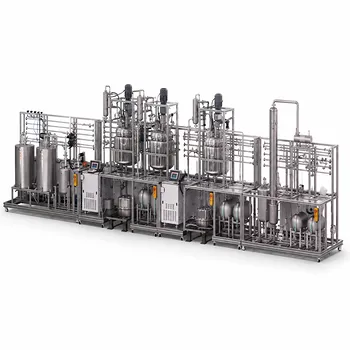
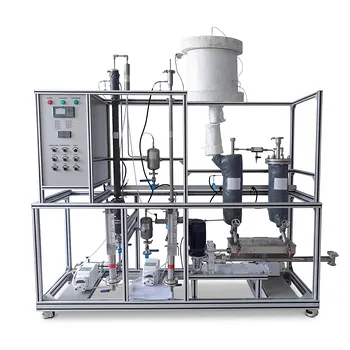
Containment loss in a pilot plant is a fast track to catastrophic consequences. The most common immediate causes are mechanical failures—vessel leaks, pipeline ruptures, gasket blowouts, and unplanned relief valve releases. If not immediately contained, these events can rapidly evolve into downwind toxic clouds, fires, or explosions. The only reliable path to safety is a layered, engineered defense that pairs hardware controls with rigorous operational discipline.
Containment loss is rarely a single-point failure. It emerges from the intersection of worn components, process excursions, and human oversight. A functionally safe plant addresses the root causes of leaks and ruptures through the hierarchy of controls—engineering out the hazard, detecting it early, and providing a last line of defense—rather than simply reacting to alarms.
The Root Causes: Where Containment Breaks Down
Understanding how a system loses containment is the prerequisite to designing it out. The triggers are often mundane until the moment they aren’t.
The Silent Threat of Gasket and Seal Failures
Gaskets and mechanical seals represent the largest population of leak points in any pilot plant. They degrade over time from thermal cycling, chemical attack, or improper installation torque. A single blown gasket on a solvent line at elevated temperature can instantly create a large, sustained release. High-quality gasket selection, correct bolt loading, and periodic retorquing are non-negotiable.
Vessel Leaks and Pipeline Ruptures: Pressure and Corrosion
Pinhole leaks in vessel walls or catastrophic pipeline splits often trace back to corrosion under insulation or erosion at elbows and reducers. A small pH excursion or a dead leg that wasn’t flushed can set up a corrosion cell that remains invisible until a pressure test or worse. Pilot plants with frequent chemistry changes are particularly vulnerable because materials of construction may be borderline for a new recipe.
Relief Valve Releases: Planned but Hazardous
Relief valves are safety devices, yet their activation is a containment loss event. They can open due to overpressure from a runaway reaction, a blocked outlet, or external fire. If the discharge is not routed to a safe location—such as a dedicated scrubber or flare—a violent release of toxic and flammable material directly into the operator’s area can occur.
Escalating Consequences: From Cloud to Catastrophe
Once the primary containment envelope is breached, the sequence of harm is governed by the material properties and the plant layout.
Downwind Toxicity: The Invisible Hazard
A vapour or aerosol release from a toxic solvent or intermediate can travel far beyond the pilot plant bay before an alarm is triggered. Dispersion modeling shows that even small releases of highly toxic materials like hydrogen sulfide or acrylates can reach immediately dangerous concentrations at the plant boundary. The consequence is not just regulatory, but potentially fatal for unprotected personnel.
Fire and Explosion: The Immediate Thermal and Blast Risks
Flammable releases that find an ignition source lead to jet fires, pool fires, or vapor cloud explosions. In a pilot plant, the proximity of operators to equipment means there is minimal separation between the leak source and people. The resulting thermal radiation and overpressure can destroy nearby control systems and escalate the event into a multi-vessel incident.
Quantifying the Risk with Dispersion Modeling and LOPA
Dispersion modeling maps the hazard zone by calculating downwind concentrations for a given release scenario. Alongside Layer of Protection Analysis (LOPA), these tools translate a mechanical failure into a quantified risk. They answer the critical question: do the existing safeguards reduce the frequency of a fatality below the tolerable threshold, or is an additional layer needed? Without this quantification, a plant is managing perception, not risk.
Understanding the Trade-offs: The Limits of Safety Layers
A hierarchy of controls is only as strong as the assumptions baked into each layer. Over-reliance on administrative procedures or PPE without robust engineering controls is a common pitfall.
- No seal is perfect. Even high-integrity dual mechanical seals can leak if the barrier fluid system fails or if solids build up. The design must assume eventual leakage and provide secondary containment like pressure-rated enclosures or drainage.
- Inspections create their own risks. Regular gasket replacement and ultrasonic thickness testing require system openings. Each break of containment for maintenance is an opportunity for human error, such as misalignment or leaving a blind flange loose. The safest inspection is one that can be done on-line with non-intrusive techniques.
- Relief systems can be the hazard. A discharge directed to a knock-out drum that isn’t sized for a two-phase runaway flow will blow through to atmosphere. Proper relief system design must account for worst-case credible scenarios, not just design conditions.
- Cost versus independence. Automatic shut-off valves and safety instrumented systems add capital expense. In an educational or low-budget pilot plant, there is a temptation to substitute a manual procedure. That manual response time is rarely fast enough during a high-speed leak.
Making the Right Choice for Your Goal
The controls you invest in should be proportionate to the maximum credible hazard, not just the typical operating envelope.
- If your primary focus is on operator safety in a teaching laboratory: Build in passive engineering controls first—pressure-rated enclosures, physical shields, and hands-free dump systems. Combine this with clear, visual standard operating procedures and routine, supervised walk-throughs that explicitly check gasket condition.
- If your primary focus is on protecting high-value process research: Invest in automated containment isolation. A high-integrity emergency shutdown system, tied to gas and flame detectors, can reduce the release duration from minutes to seconds, preserving both data and equipment.
- If your primary focus is on regulatory or corporate compliance: Use LOPA and dispersion modeling to create a defensible safety rationale. Document that your preventive maintenance intervals (e.g., gasket replacement every 6 months) and your independent protection layers achieve a target risk reduction factor, and audit that those layers function as designed.
- If your primary focus is on long-term reliability across many campaign changes: Implement a formal management of change process that re-evaluates materials of construction and relief scenarios for every new chemistry. The process is the ultimate safeguard against a slow, corrosion-driven loss of containment.
Sustained containment is not a product you buy; it is a culture of rigorous system selection, realistic hazard quantification, and refusal to accept administrative shortcuts as substitutes for engineered protection.
Summary Table:
| Cause of Loss | Potential Consequence | Recommended Safeguard |
|---|---|---|
| Gasket & Seal Failures | Toxic/flammable chemical leaks | Proper torque, material compatibility, regular inspection |
| Vessel & Pipe Ruptures | High-pressure releases, structural damage | Corrosion monitoring, non-intrusive thickness testing |
| Relief Valve Releases | Environmental exposure, localized hazards | Routing discharge to scrubbers/flares, LOPA sizing |
Build Inherently Safer Pilot Plants with LABPARK
At LABPARK, we design and supply premium Educational and Vocational Unit Operations Pilot Plants for chemical engineering, bioprocess & biotech, and environmental & water treatment. We help universities, research institutes, and enterprises mitigate containment risks through robust, engineered safety controls and industry-standard relief designs.
Ensure your training and research environments are secure, reliable, and compliant. Contact LABPARK today to discuss your custom pilot plant needs!
Related Products
- Fixed Bed Gas Solid Catalytic Reaction Educational Pilot Plant
- Carbon Dioxide Hydrogen Methanol Synthesis Educational Unit Operations Pilot Plant
- Ethyl Acetate Synthesis Unit Operations Pilot Plant for Practical Training
- Natural Product Extraction Unit Operations Training Pilot Plant
- Green Anhydrous Ethanol Refining Practical Training Pilot Plant
People Also Ask
- How do reactor pilot plants safely study gas-solid reactions? Master kinetics with thermal & flow control.
- How does the Mears criterion evaluate transport resistance? Key Guide to Intrinsic Kinetics
- Fluidized vs. Fixed Bed Reactors: Comparing Heat & Complexity in Pilot Plants
- Why is a multibed configuration necessary for exothermic reactions? Optimize your pilot plant trajectory.
- How is the friction factor determined for fixed-bed pilot plants? Select the best pressure drop correlation.