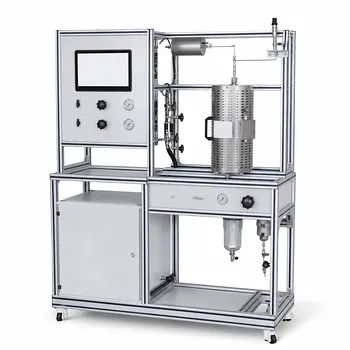
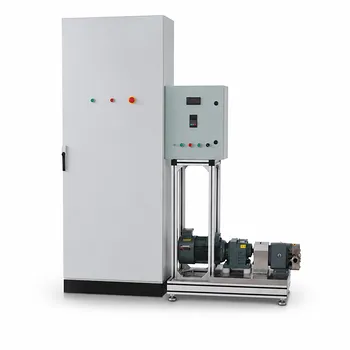
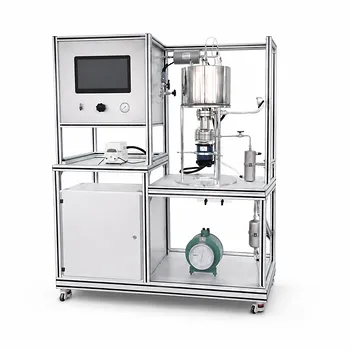
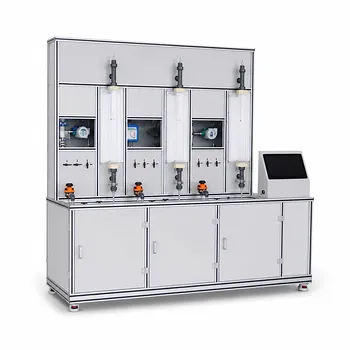
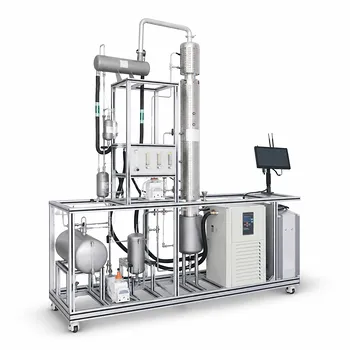
The future of chemical engineering education is flowing. Incorporating continuous-flow reactor systems into educational pilot plants directly exposes students to superior heat and mass transfer, precise parameter control, and inherently safer operation—the very forces reshaping modern manufacturing. This hands-on immersion in process intensification teaches future engineers how to shrink equipment footprints, handle hazardous chemistries confidently, and deliver consistent product purity by burying the variability that plagues traditional batch vessels.
The defining advantage is not just better hardware, but a transformative learning platform. Continuous-flow pilot plants move students beyond textbook theory into the reality of modern industrial practice, where safety is designed into every channel, scale-up becomes a data-driven equation, and sustainability is a physical outcome of smaller, smarter, more efficient operations.
The Safety Imperative: Handling Hazardous Reactions with Confidence
Safety in batch reactors is often a numbers game—large volumes mean large consequences. Flow chemistry rewrites that equation.
Minimizing the Reactive Inventory
The heart of the safety advantage is the dramatically reduced active reaction volume. A continuous pipe reactor holds only a fraction of the material present in a stirred tank, which means that even if a thermal runaway begins, the maximum potential energy release is minuscule. This is not a marginal improvement; it’s a fundamental shift from “containing a disaster” to “making a disaster physically impossible” at scale.
Exceptional Heat Transfer That Prevents Hot Spots
Batch reactors struggle with heat removal because their surface-to-volume ratio is inherently low—typically around 2 m²/m³. Continuous-flow reactors, especially microreactors, can exceed 200 m²/m³. This is what makes it possible to safely run highly exothermic reactions like nitrations or oxidations that would be unthinkable in a large batch vessel. The heat generated on a microscopic scale is dissipated almost instantly, preventing the hot spots that degrade product and trigger runaway.
Containing Toxic and Unstable Intermediates
Reactions that generate toxic, short-lived, or explosive intermediates become manageable. The tiny internal dimensions of flow reactors mean that a dangerous molecule can be generated, consumed, and quenched in seconds, without ever accumulating in bulk. For a student, this unlocks an entire universe of “forbidden” chemistries—aggressive reaction pathways that appear in literature but are traditionally off-limits for hands-on learning due to safety policies.
Teaching Process Intensification: Doing More with Less
Process intensification is not just an industrial buzzword; it’s the design philosophy that will define the sustainability of chemical production. Continuous-flow pilot plants are its ultimate teaching tool.
The Vanishing Equipment Footprint
When you combine superior mixing (achievable in less than 0.1 seconds versus over 10 seconds in a large batch vessel) with integrated separation, the physical plant shrinks dramatically. Students see firsthand how a wall of pumps and tube reactors can replace an entire room of batch tanks. This is a visceral lesson in capital cost reduction and layout efficiency that a diagram simply cannot convey.
Combining Unit Operations into a Single Loop
Continuous systems reward creative thinking. A single continuous reactive distillation column can combine reaction, separation, and purification, eliminating separate crystallization, centrifugation, and drying steps. Alternatively, a fixed-bed catalytic reactor can replace a messy three-step batch extraction and washing sequence with a clean, solvent-free loop. Students learn to think in terms of unifying functions, not just optimizing individual vessels.
Mastering Quality and Consistency
In batch chemistry, product quality is a negotiation between heat, time, and mixing inconsistencies. In flow, it becomes a controlled outcome.
The Power of Precise Parameter Control
A continuous reactor operates at steady state. Temperature, pressure, and residence time are locked in by flow rates and system geometry. This means the reaction environment experienced by the reactant molecules is identical from the first drop to the last liter. For an educator, this provides a perfect platform for students to measure true kinetic constants and understand how variability destroys yield and purity.
Eliminating Mixing as a Variable
The ultra-fast mixing in flow reactors—often diffusion-controlled in microchannels—means that reaction selectivity is no longer obscured by the poor mass transfer that haunts textbook batch examples. Students can study reactions where the desired product is a kinetic intermediate, directly observing how residence time ($t = V/Q$) controls the outcome without the confounding factor of concentration gradients lingering in the vessel.
From Batch Kinetics to Continuous Design: A Seamless Mental Model
One of the most powerful educational outcomes is bridging the worlds of batch and continuous operation.
The Residence Time Equation as a Design Tool
When a continuous reactor is operated under plug flow conditions, the classic batch kinetics data a student generates in a lab course can be directly translated. The relationship $t = V/Q$ simply states that a batch holding time is equivalent to the volume divided by the volumetric flow rate. Students learn that scale-up is not a mysterious art but a logical exercise in maintaining the same temperature and residence time, demystifying the transition from lab to plant.
Understanding the Trade-offs
A balanced education requires understanding where continuous flow does not excel. Without this, an engineer cannot make strategic decisions.
Handling Solids and Complexity
Continuous systems are famously sensitive to clogging and fouling. Reactions that produce precipitates, thick slurries, or high-viscosity polymers can quickly block narrow channels. A pilot plant that only demonstrates perfect flow reactions gives a false sense of universality; students must also see the challenges to understand when a batch approach remains the better business choice.
The Hidden Cost of Flexibility
While batch reactors are inherently flexible—you can just clean them and switch recipes—continuous setups often require dedicated hardware for a specific chemistry. The pumps, seals, and control systems demand a higher level of operational discipline and maintenance skill. An educational pilot plant must balance the allure of cutting-edge flow technology with the reality that teaching the troubleshooting of a peristaltic pump or a mass flow controller is now part of the curriculum.
Avoiding the “Black Box” Effect
A highly automated continuous skid can become a black box, where students press “start” and collect data without understanding the underlying transport phenomena. The design of the educational experience must force interaction with the first principles—measuring real residence time distributions, quantifying heat transfer coefficients, and physically tracing the system—so that the technology enhances, rather than replaces, core chemical engineering competence.
Making the Right Choice for Your Pilot Plant Curriculum
The decision to integrate continuous-flow systems should be driven by which goals you want to emphasize for your students.
- If your primary focus is embedding an instinct for safety: Prioritize microreactors and small-diameter tube reactors for exothermic and energetic chemistries. The goal is for students to experience firsthand how a potential runaway is made physically impossible by geometry.
- If your primary focus is teaching the future of sustainable manufacturing: Choose a reactive distillation or fixed-bed catalytic flow setup. This will force students to calculate mass and energy balances across a unified unit, driving home the economic and environmental benefits of process intensification.
- If your primary focus is bridging fundamental kinetics and industrial reality: Implement a simple plug flow reactor system with precisely controlled temperature and residence time. Use it to validate batch-derived kinetic models directly, turning the residence time equation into a tangible scaling tool.
- If your primary focus is on operational versatility: Retain a classic batch vessel alongside the continuous system. Running the same reaction in both modalities is the ultimate comparative assignment, teaching students not to choose a favorite technology, but to diagnose the problem and select the right tool.
A well-designed continuous-flow pilot plant does not just teach a new type of reactor; it teaches a new way of thinking about chemical processes as inherently safe, exquisitely controlled, and fundamentally more sustainable.
Summary Table:
| Feature | Batch Reactors | Continuous-Flow Reactors |
|---|---|---|
| Safety & Volume | High active volume, higher runaway risk | Low active volume, rapid heat dissipation |
| Process Control | Variable over time, mixing gradients | Steady-state, precise parameter control |
| Footprint | Large footprint, separate unit operations | Compact footprint, integrated process loops |
| Key Limitation | Time-consuming cleaning & setup | Prone to clogging with solids |
Modernize Your Laboratory with LABPARK
Ready to bring the future of chemical engineering to your students and researchers? LABPARK provides state-of-the-art Educational and Vocational Unit Operations Pilot Plants in chemical engineering, bioprocess & biotech, and environmental & water treatment.
We help universities, research institutes, and enterprises build hands-on learning environments that reflect modern industrial safety, efficiency, and sustainability standards.
Contact LABPARK today to explore our pilot plant solutions and request a custom configuration for your curriculum!
Related Products
- 100L Continuous Loop Hydrogenation Educational Unit Operations Pilot Plant
- Gas Phase Mixing and Residence Time Distribution Determination Educational Unit Operations Pilot Plant
- Residence Time Distribution and Reactor Flow Characteristics Determination Educational Pilot Plant
- Tubular Reactor Flow Characteristics Determination Educational Unit Operations Pilot Plant
- Multi-Stage Stirred Tanks in Series Residence Time Distribution and Mixing Performance Determination Educational Pilot Plant
People Also Ask
- Why is the chemical plant startup schedule crucial? De-risk scale-up with pilot plants.
- How to study gasification in pilot plants? Compare exit gas composition & efficiency
- How do deviations in estimating latent heat impact pilot plant thermal systems? Avoid hardware mis-sizing.
- Why Use PTFE & Hastelloy in Chemical Pilot Plants? Prevent Corrosion & Ensure Safety
- Why Compare Predicted and Experimental Excess Enthalpy? Key to Accurate Pilot Plant Scale-up