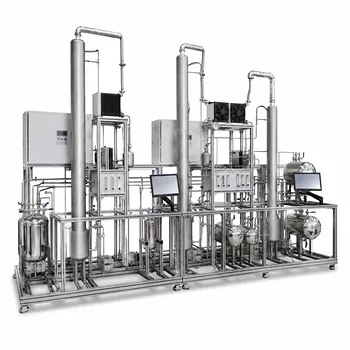
The ‘building block’ appeal of modular pilot plants goes far beyond convenience—it’s an engineering decision that reshapes cost, safety, and how students interact with real process equipment. Skid-mounted construction delivers factory-level quality control, slashes on‑site installation costs, and eliminates the need for highly specialized technicians during setup. In return, it demands higher upfront engineering hours, adds structural steel, and multiplies flange connections—each a potential leak point that must be carefully managed to keep the unit safe and dimensionally compatible with a typical teaching laboratory.
Modular, skid‑mounted pilot plants trade higher initial engineering and material cost for dramatically simpler site work and long‑term educational adaptability. Success hinges on mastering the hidden trade‑off: the many extra connections that come with a “package” must be treated as the primary engineering challenge for safety, leak‑tightness, and layout.
The Case for Modular: Why Skid‑Mounted Units Excel in Training Plants
Superior Quality Through Factory Fabrication
A skid is built in a controlled workshop, not on a dusty classroom floor. That means welds are inspected, instruments are pre‑calibrated, and the entire unit is tested before it ever reaches the school. The result is a plant that starts life with professional, repeatable workmanship—a standard hard to match with stick‑built, on‑site assembly.
Lower Site Costs and Reduced Technical Labor
Once the skid arrives, the “construction” phase shrinks to placing the module, connecting utilities, and maybe bolting on a few external components. Schools avoid the expense and scheduling nightmare of flying in specialist pipefitters or instrument technicians. A small, general‑maintenance crew can handle the final hook‑up, freeing budget for teaching resources.
Accelerated Commissioning and Future Flexibility
Because the unit is pre‑commissioned, students can start experiments in days rather than weeks. And when the curriculum evolves, a skid‑mounted approach allows the entire plant to be relocated or swapped out without permanent building modifications. This adaptability is a quiet superpower in vocational environments where program needs shift regularly.
Understanding the Trade‑offs: Where Modular Thinking Creates New Burdens
Higher Front‑End Engineering Costs
Packing everything onto a frame is a puzzle that must be solved before a single bolt is ordered. Engineers spend more time optimizing layout, pipe routing, and structural support than they would on a free‑standing design. This upfront intellectual investment can make modular appear more expensive on the proposal sheet, even if total project cost ends up lower.
The Steel Penalty: More Structural Mass
A skid needs its own rigid skeleton to survive transport and to support all components as a unified structure. That extra steel adds material cost and weight, and it consumes valuable floor space. In a vocational school lab built for lightweight benchtop setups, the sheer heft of a skid may require reinforcing the floor or widening doorways.
The Flange Factor: Managing Leak Points and Safety
To break a plant into transportable modules, designers insert flanges at skid boundaries—and often between sub‑sections inside the skid. Each flange is a potential leak path for process fluids, steam, or compressed air. In a teaching lab, where novices repeatedly connect and disconnect lines, the leak risk multiplies. Maintenance diligence stops being optional; it becomes a non‑negotiable part of the operating culture.
Spatial Constraints: Making the Skid Fit the Lab
University laboratories are rarely built like industrial bays. Low ceilings, narrow aisles, and fixed fume‑hood positions can clash with a skid that seemed spacious during factory fabrication. A modular design must be explicitly tuned to the target room—right down to door swings and utility chases—or it will create a permanent pinch point for students.
Designing Around the Trade‑offs: Lessons from Micro‑Scale Modularity
Standardized Interfaces as a Leak‑Proof Backbone
Micro‑scale unit‑operations systems use a “fluidic backbone” with standardized, factory‑tested connectors. This approach eliminates dead volumes and drastically reduces the number of hand‑tightened joints that cause performance degradation. For a skid‑mounted pilot plant, adopting similar quick‑connect standards at flange points can cut leak risks without sacrificing modularity.
Embracing Three‑Dimensional Layouts
Instead of spreading components across a flat footprint, micro‑scale assemblies often stack and nest elements in three dimensions. Skid‑mounted training plants can borrow this principle to shrink the steel envelope and recover precious floor space. Integrated structural frames that double as cable and tubing raceways help hide complexity while keeping surfaces clear for student interaction.
Embedding Electronic Buses for Sensors
A modular design doesn’t have to mean a rat’s nest of wires. By planning an electronic backbone alongside the fluidic one, you can pre‑wire sensors, transmitters, and actuators back to a single junction box on the skid. This makes installing the plant in the lab a true plug‑and‑play event and gives students a cleaner view of the instrumentation that really matters.
Minimizing Dead Volume for Pedagogical Clarity
Ad‑hoc connectors often introduce pockets of stagnant fluid that confuse mass‑balance calculations and muddy experimental data. Standardized, low‑dead‑volume interfaces—borrowed from micro‑scale practice—keep the process volume well‑defined. In teaching, that means every measurement reflects the unit operation, not the plumbing.
Making the Right Choice for Your Facility’s Goal
Your final decision depends on what you value most in a training environment. Use this lens to guide the conversation with your engineering partner.
- If your primary focus is minimizing on‑site disruption and technical labor: Skid‑mounted delivery is unbeatable; invest in the upfront engineering to make the installation a one‑day event.
- If your primary focus is space efficiency in a cramped teaching lab: Specify a three‑dimensional, stacked skid design and use standardized connectors to trim both footprint and leak points.
- If your primary focus is long‑term curriculum flexibility and re‑use: Embrace the higher steel cost and flange count but mandate a rigorous, student‑facing leak‑check and maintenance protocol that turns a design trade‑off into a learning opportunity.
- If your primary focus is absolute lowest initial purchase price: Know that a skid‑mounted plant may appear more expensive on paper; run the total project cost (including site labor) to see if the modular route actually saves money.
A modular pilot plant is not a magic box—it is a strategy that front‑loads complexity to deliver simplicity where students and instructors live. Manage the flanges, respect the floorplan, and the skid becomes the safest, most adaptable teaching tool in your lab.
Summary Table:
| Aspect | Advantages of Modular (Skid-Mounted) | Trade-offs & Design Solutions |
|---|---|---|
| Quality & Cost | Factory fabrication, lower onsite labor costs | Higher upfront engineering costs |
| Installation | Rapid plug-and-play commissioning | Heavy steel structures; requires space planning |
| Safety & Maintenance | Pre-wired electronic buses, controlled design | More flange connections; requires leak monitoring |
| Flexibility | High adaptability; easy to relocate or swap | Must be custom-sized to fit lab dimensions |
Bring Industrial-Scale Learning to Your Laboratory
Are you looking to upgrade your training facilities with modular technology? LABPARK provides premium Educational and Vocational Unit Operations Pilot Plants in chemical engineering, bioprocess & biotech, and environmental & water treatment.
Specifically engineered for universities, research institutes, and enterprises, our skid-mounted systems deliver industrial-grade experience with minimal onsite disruption. Let us help you design a safe, space-efficient, and adaptable pilot plant tailored to your curriculum.
Contact LABPARK today to discuss your project requirements!
Related Products
- Natural Product Extraction Unit Operations Training Pilot Plant
- Multi-Modal Distillation Unit Operations Training Pilot Plant
- Comprehensive Multi-Modal Heat Transfer Unit Operations Pilot Plant for Engineering Training
- Rising and Falling Film Evaporation Educational Unit Operations Pilot Plant
- Ethyl Acetate Synthesis Unit Operations Pilot Plant for Practical Training
People Also Ask
- How to Demo Solubility Sensitivity in SFE Pilot Plants? Practical Thermodynamics
- How do pilot plants differentiate physical vs chemical extraction? Enhance Chemical Engineering Training
- How are HTU and NTU applied to determine extraction column height? Guide to Pilot Plant Scaling
- How can Hotelling's T² & Q statistics detect pilot plant abnormalities? Optimize Safety
- Why use split-plot designs in pilot plants instead of CRD? Optimize process parameters effectively.