The balance operators must strike isn't between accuracy and speed—it's between sufficient accuracy and actionable speed. When investigating fouling or corrosive attack in pilot plant equipment, the goal is rarely to produce a perfect laboratory analysis. It's to make a fast, confident maintenance decision that gets the unit back online safely. Rapid estimation methods that yield results within 5% accuracy for deposit solubility, and spectrographic analysis that identifies key elements even at ±10–15% quantitative precision, are usually the optimal compromise. In practice, speed and fitness-for-purpose trump absolute precision because the sample itself is rarely fully representative, and the cost of analytical delay far outweighs the marginal value of chasing decimal points.
Core Insight: In pilot plant maintenance, analytical precision is a trap when it doesn't change the next step. The smart balance is to use fast, intentionally lower-accuracy methods that directly answer the critical question: “What will remove this deposit?” or “Which alloy is corroding?” The answer almost never requires lab-grade quantification.
Why Perfect Accuracy Is the Wrong Target for Pilot Plant Deposits
The nature of fouling samples makes chasing high precision a losing battle. The physical sample scraped from a pipe wall or heat exchanger surface tells only part of the story.
The Sampling Reality You Can’t Ignore
No matter how carefully you collect it, a deposit sample from a pilot plant is never a perfect snapshot of the entire system. It’s a point sample from one accessible location. The composition often varies across the unit, so a high-precision analysis of a gram of material may give you a false sense of confidence about what’s coating a heat exchanger two meters away.
Adding to that, pilot plants operate at smaller scales where process conditions fluctuate frequently. This means the composition of fouling layers can change batch-to-batch. Spending time on a high-accuracy measurement that’s only valid for a single, possibly anomalous, patch is not cost-effective.
Why “5% Accuracy” Is Plenty for Removal Decisions
The core operational question when you face fouling is simple: What solvent or mechanical method will get this out? To answer that, you don’t need to know if the deposit is 42.3% or 44.1% iron oxide. You need to know if it dissolves in dilute acid, loosens with steam, or swells with a detergent.
Rapid bench tests—dropping a small deposit sample into beakers of hot water, dilute acid, alkali, or solvent—give you a qualitative yet highly actionable result. If the sample effervesces in acid, it’s largely carbonate. If it softens in alkali, it’s likely organic. Semi-quantitative kits or portable XRF can give a compositional estimate within about 5%, which is more than enough to confirm you’re dealing with, say, calcium sulfate instead of silica, and to choose the right cleaning chemical.
Identifying Corrosive Attack: Speed Over Standard Precision
When metallic components show pitting, thinning, or discoloration, the question shifts from “How do I clean this?” to “Where did this metal come from, and which part is corroding?”
Spectrographic Analysis as a Fast-Fingerprinting Tool
Spectrographic analysis (such as arc-spark OES) is ideal here because it offers a unique combination of speed and elemental coverage. It can identify the presence of specific elements in a corroded sample in minutes, even though its quantitative precision for minor and trace elements is only about ±10% to 15%. That’s not a flaw—it’s a design trade-off that makes it fast.
What matters is not the exact percentage, but the detection of signature elements. For example, if you see tin in a deposit from a copper-alloy pipe, you can immediately pinpoint Admiralty metal (a Cu-Zn-Sn alloy) as the source. Admiralty metal contains roughly 1% tin, and even at ±15% relative error, the spectrographic reading will clearly show tin present, confirming the alloy and focusing your inspection on the right component.
Context Makes Up for Lower Precision
The speed advantage is that you can test multiple suspect areas in a single maintenance window. A lab-grade ICP-OES analysis might give you 1% precision, but it could take days, and by then the plant may already be shut down again. With field spectrographic results, you combine the elemental fingerprint with your knowledge of the plant’s metallurgy. If you know the condenser tubes are Admiralty and the cooler shell is carbon steel, the presence of tin in a pitted sample tells you exactly where to look—even if the tin value reads 0.8% instead of the alloy’s true 1.0%.
Understanding the Trade-offs and Common Pitfalls
Speed-optimized methods aren’t a free pass. You need to know their limits.
The Risk of Oversimplification
If you rely on a quick deposit solubility test and conclude a material is purely organic because it swells in an alkaline cleaner, you might miss a small inorganic fraction that requires a different rinse. Mitigate this by following up fast bench tests with a simple visual check after cleaning: did the surface come fully clean, or is there a residual scale?
The False Negative in Corrosion Identification
Spectrographic analysis might miss an element that is present but below its detection limit. For example, a very low concentration of chloride in a deposit might not flag, yet it could be the primary cause of crevice corrosion. In such cases, combine the rapid elemental scan with a quick field test (like silver nitrate for chlorides) to cover the gap.
When to Break the Rule and Go for High Precision
If your investigation aims to support a long-term materials-of-construction upgrade or to settle a warranty claim with an equipment supplier, then a full laboratory analysis with traceable standards is justified. But that’s an engineering study, not a troubleshooting response. The daily maintenance decision almost never demands that level of rigor.
Making the Right Choice for Your Goal
Your maintenance strategy determines which analytical path to take. Use the following priorities to match your immediate need.
- If your primary focus is minimizing production downtime: Use rapid field estimates—small-scale solubility tests for deposits and handheld XRF or portable OES for metal identification—to pick the right cleaning method or locate a corroded component within the same shift.
- If your primary focus is confirming a specific alloy failure mechanism: Pair fast spectrographic identification of key alloying elements (like tin, zinc, or chromium) with a visual inspection of known vulnerable zones. Accept a wider quantitative error because the presence/absence of elements is the decision-critical data.
- If your primary focus is capturing a deviation to support a future root cause analysis: Run the rapid test first to guide immediate maintenance, but preserve a representative sample in a sealed container. Later, you can send it for high-precision lab analysis without sacrificing plant availability.
- If your primary focus is evaluating a new chemical cleaning procedure: Compare before-and-after swab samples using the same quick method to prove effectiveness, not absolute composition. Consistency in measurement technique often matters more than ultimate accuracy.
The ultimate skill in pilot plant maintenance isn't chasing laboratory perfection—it's knowing exactly how much analytical certainty you need to act with confidence, and then moving decisively.
Summary Table:
| Parameter | Actionable Speed (Recommended) | Absolute Accuracy (Avoid for Troubleshooting) |
|---|---|---|
| Primary Goal | Fast decision to get unit online | Precise scientific quantification |
| Typical Methods | Rapid solubility tests, portable XRF/OES | High-precision ICP-OES, full lab analysis |
| Target Accuracy | ~5% for deposits, ±10–15% for metals | <1% trace element precision |
| Key Advantage | Minimizes downtime; focuses on action | Suitable for warranty claims or R&D |
| Best Used For | Daily troubleshooting & cleaning selection | Long-term materials engineering studies |
Optimize Your Pilot Plant Operations with LABPARK
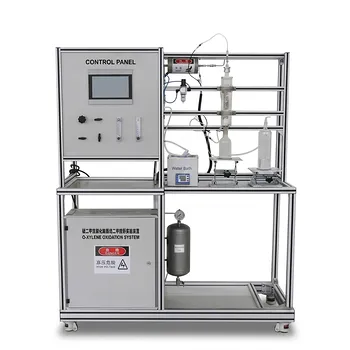
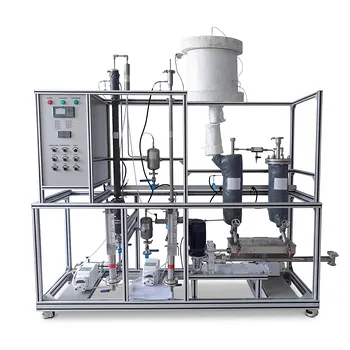
Maintaining peak efficiency in pilot-scale operations requires both practical troubleshooting skills and robust equipment. LABPARK provides state-of-the-art Educational and Vocational Unit Operations Pilot Plants in chemical engineering, bioprocess & biotech, and environmental & water treatment. Designed specifically for universities, research institutes, and enterprises, our systems help your teams master real-world maintenance challenges—like managing fouling and corrosion—safely and efficiently.
Ready to upgrade your research or training facilities? Contact our experts today to find the perfect pilot plant solution for your organization!
Related Products
- Natural Product Extraction Unit Operations Training Pilot Plant
- Ethyl Acetate Synthesis Unit Operations Pilot Plant for Practical Training
- Carbon Dioxide Hydrogen Methanol Synthesis Educational Unit Operations Pilot Plant
- Green Anhydrous Ethanol Refining Practical Training Pilot Plant
- Multi-Modal Distillation Unit Operations Training Pilot Plant
People Also Ask
- How to Demo Solubility Sensitivity in SFE Pilot Plants? Practical Thermodynamics
- How do pilot plants differentiate physical vs chemical extraction? Enhance Chemical Engineering Training
- How are HTU and NTU applied to determine extraction column height? Guide to Pilot Plant Scaling
- How can Hotelling's T² & Q statistics detect pilot plant abnormalities? Optimize Safety
- Why use split-plot designs in pilot plants instead of CRD? Optimize process parameters effectively.