Knowledge Chemical Engineering Education How do elbow meters and rotameters differ in flow measurement? Key Principles & Installation Compared
Author avatar

Tech Team · LABPARK

Updated 1 week ago

How do elbow meters and rotameters differ in flow measurement? Key Principles & Installation Compared


The core distinction lies in the physics they exploit. An elbow meter measures flow by sensing the centrifugal pressure difference across the inner and outer walls of a 90° pipe bend, while a rotameter indicates flow by balancing a float’s gravity against the fluid’s drag in a tapered vertical tube. Their installation requirements mirror this divergence: elbow meters demand generous straight pipe runs and in‑situ calibration, whereas rotameters must be mounted perfectly vertical and calibrated for the specific fluid’s density and phase.

In a chemical engineering unit operations trainer, elbow meters teach how pipe geometry and installation conditions affect inferential flow measurement, while rotameters demonstrate direct‑reading variable‑area metering and the critical role of fluid property corrections. The real educational value lies in contrasting these two principles side‑by‑side.

How They Operate: Centrifugal Force vs. Variable‑Area Buoyancy

The Elbow Meter: Pressure from a Curve

As fluid navigates a 90° bend, centrifugal force throws it toward the outer wall, creating a pressure gradient. Piezometer taps placed at the inner and outer radii capture this difference. The differential pressure is proportional to the velocity head (dynamic pressure), so the square root of that reading yields flow rate.

The Rotameter: Equilibrium in a Tapered Tube

The rotameter employs a vertical, gradually widening tube with a float inside. Upward fluid flow pushes the float upward until the drag force, buoyancy, and the float’s weight balance. The float’s equilibrium position is a direct function of flow rate, giving an immediate visual reading on a scale printed on the tube.

Installation Requirements: Geometry is Non‑Negotiable

Elbow Meter: Demanding Pipe Runs

This meter is highly sensitive to flow disturbances. It requires long, straight pipe sections both upstream and downstream to deliver a uniform velocity profile to the bend. Because the pressure‑difference coefficient depends on the exact bend geometry and internal surface roughness, it must be calibrated in place, not relying on generic discharge coefficients.

Rotameter: Vertical Only, Fluid‑Aware

The rotameter’s operating principle dictates strictly vertical installation; any tilt alters the float’s force balance and corrupts the reading. Moreover, its scale is valid only for a specific fluid at known conditions. When the fluid changes, density correction factors—such as multiplying the reading by the square root of density ratios—must be applied, as taught in unit operations labs.

Calibration and Accuracy: The Hidden Learning Layers

In‑Situ Calibration for Elbow Meters

Unlike standard orifice plates, elbow meters lack a universal flow coefficient. In a training unit, students connect a differential manometer and benchmark the meter against a primary standard (e.g., a weighing tank). This exercise highlights how installation effects and pipe condition can shift the calibration curve dramatically.

Fluid‑Specific Correction for Rotameters

Commercial rotameters are usually factory‑calibrated for water (liquids) or air (gases). When a student runs a different liquid, the true flow rate is the indicated reading multiplied by √[ρ₁(ρf‑ρ₂) / ρ₂(ρf‑ρ₁)], where ρf is float density, ρ₁ is calibration fluid density, and ρ₂ is actual fluid density. This correction drives home the need to account for fluid properties rather than trusting a dial unconditionally.

Understanding the Trade‑offs

  • Robustness vs. Readability: Elbow meters have no moving parts and can handle harsh process fluids, but their pressure signal is small and nonlinear. Rotameters provide a direct, linear‑like scale but contain fragile glass tubes and can become stuck.
  • Permanent Pressure Loss: Elbow meters impose a noticeable pressure drop that may be undesirable in low‑head loops. Rotameters typically have higher pressure loss but offer near‑zero‑cost visual indication.
  • Scale Linearity: Rotameter scales are often nearly linear, easing manual data logging. Elbow meters, relying on the square root of differential pressure, require more manipulation but teach the relationship between velocity head and flow.
  • Educational Scope: Elbow meters force students to confront pipe roughness, boundary layers, and the need for straight runs. Rotameters open a window into buoyancy, density correction, and the limitations of variable‑area instruments.

Choosing the Right Meter for Your Training Goals

Each meter serves a distinct pedagogical purpose. Let your learning objectives guide the decision.

  • If your primary focus is demonstrating how pipe layout and installation conditions affect measurement: Select the elbow meter. Its sensitivity to upstream disturbances and mandatory in‑situ calibration make it a perfect case study in real‑world plant constraints.
  • If your primary focus is teaching direct‑reading instruments and fluid property corrections: Choose the rotameter. The hands‑on application of density correction formulas builds a deep, practical understanding of why a meter must “speak the same language” as the fluid.
  • If your primary focus is comparing multiple flow measurement principles in one trainer: Include both. Running them side‑by‑side lets students observe how friction, orientation, and calibration interact—transforming abstract theory into an unforgettable lesson.

Mastering both the elegant simplicity of the elbow meter and the visual clarity of the rotameter equips students with the critical eye to select, install, and calibrate flow meters for any chemical process.

Summary Table:

Feature Elbow Meter Rotameter
Operating Principle Centrifugal pressure difference across a 90° bend Balance of float gravity and fluid drag in a tapered tube
Installation Requirement Long straight pipe runs; in-situ calibration required Must be mounted strictly vertical; level alignment
Calibration Method In-situ benchmarking against a primary standard Fluid-specific density and phase correction formulas
Key Advantage High robustness, no moving parts, handles harsh fluids Direct visual reading, nearly linear scale, simple setup
Pressure Loss Low to moderate permanent pressure loss Higher pressure loss due to the float restriction

Enhance Your Chemical Engineering Lab with LABPARK

Are you looking to provide students and researchers with hands-on experience in fluid mechanics and unit operations?

LABPARK designs and manufactures high-quality Educational and Vocational Unit Operations Pilot Plants in chemical engineering, bioprocess & biotech, and environmental & water treatment. Our customized trainers for universities, research institutes, and enterprises allow students to directly compare technologies like elbow meters and rotameters in real-world scenarios.

Contact LABPARK today to discuss your lab requirements and request a custom quote!

Related Products

People Also Ask

Related Products

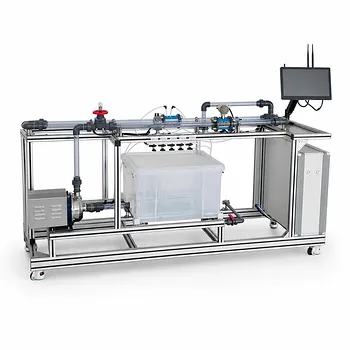
Orifice and Venturi Flowmeter Calibration Educational Pilot Plant for Fluid Mechanics Laboratory

Orifice and Venturi Flowmeter Calibration Educational Pilot Plant for Fluid Mechanics Laboratory

Enhance fluid dynamics education with the Orifice and Venturi Flowmeter Calibration Educational Unit Operations Pilot Plant, featuring transparent orifice and Venturi meters, industrial sensors, touchscreen interface for real-time data analysis and automatic coefficient calculations in engineering student laboratories.

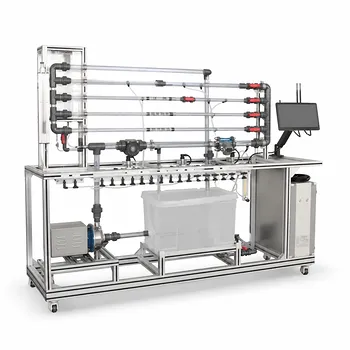
Fluid Friction Resistance Determination Educational Unit Operations Pilot Plant

Fluid Friction Resistance Determination Educational Unit Operations Pilot Plant

Engineered bench-scale system for university engineering labs. Provides hands-on fluid mechanics experience: quantitative energy loss analysis, flow regime observation, friction coefficient determination. Features four-point pressure measurement, transparent sections, industrial touchscreen PLC, 3D virtual simulation. Ideal for chemical, mechanical, civil engineering.

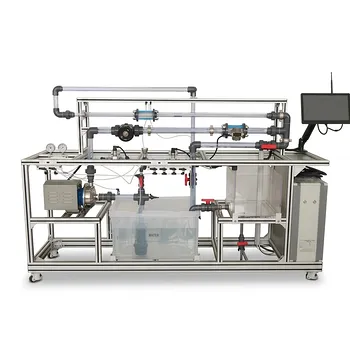
Centrifugal Pump Performance and Orifice Flowmeter Calibration Educational Pilot Plant

Centrifugal Pump Performance and Orifice Flowmeter Calibration Educational Pilot Plant

This versatile educational pilot plant enables engineering students to conduct centrifugal pump performance tests, orifice flowmeter calibration, and fluid mechanics experiments using a transparent flow loop, industrial HMI, and 3D virtual simulation for a comprehensive hands-on learning experience.

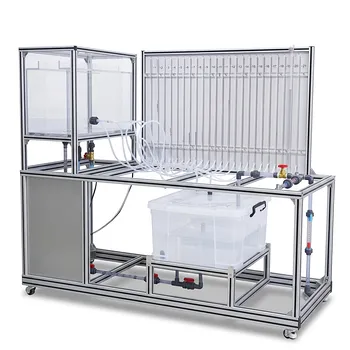
Bernoulli Equation Demonstration Unit Operations Pilot Plant

Bernoulli Equation Demonstration Unit Operations Pilot Plant

Laboratory pilot plant for Bernoulli's equation demonstration with transparent PVC pipes, 23 piezometer tubes for pressure measurement, and hands-on experiments. Designed for engineering education to study energy conservation, hydraulic grade line, and localized losses in fluid steady-flow systems.

Educational Compression Refrigeration Performance Determination Unit Operations Pilot Plant

Educational Compression Refrigeration Performance Determination Unit Operations Pilot Plant

This educational pilot plant for compression refrigeration performance determination offers dual COP evaluation, regenerative cycle comparison, and calorimeter calibration. Customizable for curriculum integration, it features environmentally conscious design. Supports thermodynamic mapping on pressure-enthalpy diagrams and synchronous monitoring with centralized instrumentation.

Centrifugal Pump Performance Determination Educational Unit Operations Pilot Plant

Centrifugal Pump Performance Determination Educational Unit Operations Pilot Plant

This lab system determines centrifugal pump performance curves for unit operations. Students configure dual pumps in series or parallel for hands-on learning. Includes industrial controls, clear piping, and data logging. Customizable for chemical, mechanical, and environmental engineering programs.

Rising and Falling Film Evaporation Educational Unit Operations Pilot Plant

Rising and Falling Film Evaporation Educational Unit Operations Pilot Plant

Hands-on educational pilot plant for studying rising and falling film evaporation, flow regimes, and heat transfer. Customizable for university labs with industrial instrumentation and data acquisition. Enables comparative evaluation of evaporation modes and energy efficiency.

Shell and Tube Heat Exchanger Heat Transfer Coefficient Determination Educational Pilot Plant

Shell and Tube Heat Exchanger Heat Transfer Coefficient Determination Educational Pilot Plant

LABPARK's shell and tube heat exchanger pilot plant enables students to investigate heat transfer coefficients, LMTD, co-current vs counter-current flow, bridging theory and industrial practice. Customizable for chemical, mechanical, environmental engineering curricula. Ideal for unit operations and process engineering labs.

Methanol Synthesis and Catalyst Performance Evaluation Educational Unit Operations Pilot Plant

Methanol Synthesis and Catalyst Performance Evaluation Educational Unit Operations Pilot Plant

Bench-scale methanol synthesis and catalyst evaluation educational pilot plant for chemical engineering labs to study catalytic kinetics, high-pressure operations, process control, and unit operations under realistic conditions with industrial safety features, precision gas delivery, data acquisition, and intelligent monitoring.

Multi Functional Catalytic Reaction and Reactor Evaluation Educational Unit Operations Pilot Plant

Multi Functional Catalytic Reaction and Reactor Evaluation Educational Unit Operations Pilot Plant

Bench-scale educational pilot plant for catalytic reaction and reactor evaluation, integrating fixed bed, fluidized bed, and stirred tank reactors. Students compare reactor designs, evaluate catalysts, and study reaction kinetics and hydrodynamics. Perfect for unit operations labs in chemical engineering curricula.

Three-Tube Heat Transfer Educational Pilot Plant for Unit Operations Training

Three-Tube Heat Transfer Educational Pilot Plant for Unit Operations Training

Three-tube heat transfer pilot plant for studying convective heat transfer enhancement and condensation. Allows comparison of smooth, corrugated, turbulent tubes, verifying empirical correlations. Ideal for chemical engineering education with safety and closed-loop steam recovery.

Comprehensive Heat Transfer Coefficient Determination Educational Unit Operations Pilot Plant

Comprehensive Heat Transfer Coefficient Determination Educational Unit Operations Pilot Plant

Advanced industrial-grade educational pilot plant for comprehensive heat transfer coefficient determination. Enables quantitative convective heat transfer analysis, evaluates double-pipe and shell-and-tube exchanger configurations, and includes digital data acquisition. Customizable for engineering curriculum. Ideal for engineering unit operations labs.

Comprehensive Fluid Mechanics Educational Unit Operations Pilot Plant

Comprehensive Fluid Mechanics Educational Unit Operations Pilot Plant

Hands-on fluid mechanics pilot plant for engineering education covering over 13 principles including pipe flow, minor losses, flowmeter calibration, and pump performance with industrial-grade components, smooth and rough piping, venturi and orifice flowmeters, and centrifugal pump testing and analysis.

Two Phase Flow Pattern Velocity Resistance Measurement Educational Pilot Plant

Two Phase Flow Pattern Velocity Resistance Measurement Educational Pilot Plant

Benchtop educational pilot plant for university labs studying gas-liquid two-phase flow patterns, velocity, and resistance across circular, square, and rectangular conduits. Features 15.6-inch touchscreen, 5G connectivity, differential pressure sensors, safe water-air operation. Supports chemical engineering curricula.

Constant Pressure Filtration Educational Unit Operations Pilot Plant

Constant Pressure Filtration Educational Unit Operations Pilot Plant

Hands-on educational pilot plant for constant pressure filtration. Classic plate and frame filter press allows students to study kinetics, determine specific cake resistance, perform cake washing and evaluate washing rates. Ideal for chemical engineering curriculum. Mobile, customizable, safety-compliant design.

Cavitation Phenomenon Demonstration and Analysis Educational Unit Operations Pilot Plant

Cavitation Phenomenon Demonstration and Analysis Educational Unit Operations Pilot Plant

Advanced educational pilot plant for demonstrating and analyzing cavitation phenomena in fluid systems. Features a transparent acrylic Venturi test section, high-precision pressure and flow sensors, digital data acquisition, and integrated safety relief valves for engineering curricula.

Carbon Dioxide PVT Curve Determination Educational Unit Operations Pilot Plant

Carbon Dioxide PVT Curve Determination Educational Unit Operations Pilot Plant

Enable hands-on learning of thermodynamic principles with this carbon dioxide PVT curve determination pilot plant. Students visualize critical opalescence, phase transitions, and generate P-V isotherms across liquid, gas, and supercritical regions. Robust safety features, adaptable for university engineering labs.

General Purpose Cosmetics Production Unit Operations Training Pilot Plant

General Purpose Cosmetics Production Unit Operations Training Pilot Plant

Integrated pilot-scale cosmetics production training plant for chemical engineering education featuring utility supply emulsification blending and filtration modules with dual touchscreen manual control customizable mobile design ideal for practical hands-on unit operations and advanced process control learning.

Tubular Reactor Flow Characteristics Determination Educational Unit Operations Pilot Plant

Tubular Reactor Flow Characteristics Determination Educational Unit Operations Pilot Plant

Educational pilot plant for investigating tubular reactor flow characteristics and residence time distribution Features adjustable recycle for plug flow and backmixing studies industrial touchscreen interface and real-time data acquisition Ideal for chemical engineering unit operations laboratory training and education

Solid Spherical Heat Transfer Coefficient Determination Educational Chemical Engineering Pilot Plant

Solid Spherical Heat Transfer Coefficient Determination Educational Chemical Engineering Pilot Plant

This educational chemical engineering pilot plant enables students to determine convective heat transfer coefficients and observe transient thermal behavior of solid spheres under natural convection, forced convection, fixed beds, and fluidized bed regimes.


Leave Your Message