The reason is a chemical reaction that turns a precision instrument into a glued-shut failure point.
Acid burettes use glass stopcocks that are chemically attacked by alkaline solutions. The alkali reacts with silica in the glass, forming a sticky sodium silicate gel that physically seizes the stopcock, making it impossible to turn and ruining the burette’s accuracy. In a pilot plant, this same principle scales up instantly—any fluid-handling component that contacts a reactive chemical must be selected for material compatibility, or you risk seizing, leaks, and catastrophic equipment failure.
The glass stopcock seizure is a miniature case study in material compatibility. In a pilot plant, alkaline streams will aggressively corrode or jam silicate glass and reactive elastomers, so valves, piping, and seals must be built from inherently resistant polymers like PTFE or PP to maintain safe, reliable operation.
The Chemistry Behind Glass Stopcock Seizure
How Alkali Attacks the Stopcock
Glass is built on a silica (SiO₂) network. When an alkaline solution—sodium hydroxide being the classic offender—contacts the glass, hydroxide ions break the Si–O–Si bonds.
This reaction forms soluble sodium silicate, a viscous, glue-like substance. Inside a precision-ground stopcock, that sticky gel fills the microscopic clearance between the ground-glass surfaces.
The result is a stopcock that freezes in place. Forcing it can snap the handle or the delicate glass key, turning a titrimetric error into shattered glassware and lost data.
Why It’s a “Sticky” Problem, Not Just Corrosion
Ordinary corrosion might roughen a surface, but the sodium silicate product is uniquely problematic. It acts as both a corrosion byproduct and an adhesive.
This means the failure mode is not a slow leak—it’s sudden, complete, and irreversible without dismantling and aggressive cleaning, which itself often damages the glass.
Scaling Up: Material Compatibility in Pilot Plant Design
The Core Principle Scales Directly from the Lab
The acid burette rule is not an isolated lab quirk. It’s a direct expression of a fundamental chemical engineering mandate: the material of every wetted component must be chemically inert to the process fluid.
A 100-liter pilot reactor, its piping, and its valves are just larger, more expensive stopcocks. If you pump a hot sodium hydroxide stream through a valve body made of or containing reactive silica, the same gel forms—seizing valve stems, clogging ports, and potentially causing a pressure burst.
Polymer Solutions for Alkaline Service
In pilot-plant water treatment, bioprocessing, or any process with alkaline streams, the fix is to eliminate reactive glass and elastomers.
Corrosion-resistant fluoropolymers like PTFE (Teflon) and polyolefins like polypropylene (PP) are used for valve bodies, seats, and seals. They contain no silica network for alkali to attack, so they resist the seizure mechanism entirely.
This isn’t just about avoiding sticky residue. These polymers also prevent the hidden degradation that leads to sudden leaks. A stressed polymer part generally fails by cracking, not by gluing itself immobile, giving operators the advance warning of a drip rather than a locked-shut valve.
Lessons from Cleaning Operations
The material compatibility lesson intensifies when you introduce cleaning-in-place (CIP) or chemical cleaning cycles. The supplementary references highlight a parallel danger: alkaline cleaning solutions (like sodium carbonate or sodium hydroxide) actively corrode aluminum, aluminum alloys, and galvanized iron.
If your pilot plant’s heat exchanger or piping contains aluminum components, and you circulate a caustic cleaning solution, you will pit and weaken those parts, often in a single cycle. A thorough materials audit before any chemical cleaning is the direct operational equivalent of checking your burette type before you fill it.
Understanding the Trade-offs: When Polymer Valves Aren’t a Panacea
Temperature and Pressure Ceilings
While PTFE and PP valves solve the chemical seizure problem, they come with their own limitations. PTFE, for instance, has low mechanical strength and can creep under high clamping forces, making it a poor choice for high-pressure bolted connections unless reinforced.
Polypropylene loses strength dramatically above 80–100°C. If your pilot process runs hot alkaline streams near the boiling point, a simple PP valve may soften and fail. You must then move to higher-performance alloys like Hastelloy or 316L stainless steel with a demonstrated tolerance for high-pH environments at temperature.
The Lure of Glass-Lined Steel
Glass-lined reactors are a clever middle ground in pilot plants: the glass resists acids at high temperature, and the steel provides pressure containment. But the “burette rule” still applies—the lining is silica-based, so prolonged hot alkali service will chemically mill the glass layer, eventually exposing the base metal. Glass-lined equipment is excellent for acids but strictly limited for caustic streams.
Avoiding the Galvanized Trap
The supplementary references repeatedly flag galvanized iron as vulnerable to both acids and alkalis. In a pilot plant, galvanized pipe is an understandable cost-saving choice for a water line, but if that line ever sees an alkaline cleaning flush or a process pH swing, the coating dissolves, and iron corrosion follows rapidly. Material selection must account for worst-case process excursions, not just normal operation.
How to Apply This to Your Project
Align your material selection with the specific demands of your process and the failure mode you most need to avoid.
- If your primary focus is preventing valve seizure in alkaline pilot lines: Use valves with PTFE or PP wetted parts and avoid any glass or silicon-containing elastomers. Validate the temperature rating against your maximum process and CIP conditions.
- If your primary focus is long-term reliability under aggressive cleaning protocols: Conduct a full materials audit. Map every metal in the circuit and cross-reference it with your cleaning chemical SDS. Replace aluminum, aluminum alloys, and galvanized iron in any line that will ever see caustic cleaning solutions.
- If your primary focus is balancing cost with chemical resistance for a multi-purpose pilot plant: Select components like PTFE-lined steel or polypropylene piping where operating temperatures allow, and impose a firm operational rule: no hot, concentrated caustic passes through any silicate glass or glass-lined components, even for a short time.
Treat every pipe, valve, and seal as if it were a precision stopcock—because chemically, it is.
Summary Table:
| Material | Alkaline Compatibility | Key Failure Modes / Risks | Recommended Alternatives |
|---|---|---|---|
| Silicate Glass / Glass-Lined Steel | Poor (especially hot alkali) | Silica reacts to form sticky sodium silicate, seizing valves/joints. | PTFE (Teflon) or polypropylene (PP) |
| PTFE (Teflon) / Polypropylene (PP) | Excellent | PTFE creeps under high pressure; PP loses strength above 80–100°C. | Hastelloy or 316L Stainless Steel for high temp/pressure |
| Aluminum & Galvanized Iron | Poor | Rapid chemical corrosion, pitting, and structural weakening. | Stainless steel or compatible polymers |
Scale Up Safely with LABPARK's Engineering Expertise
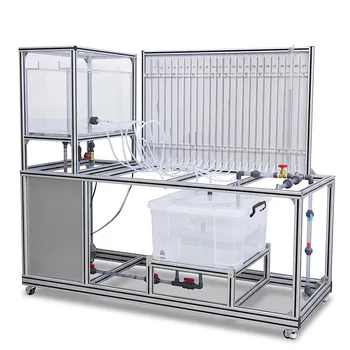
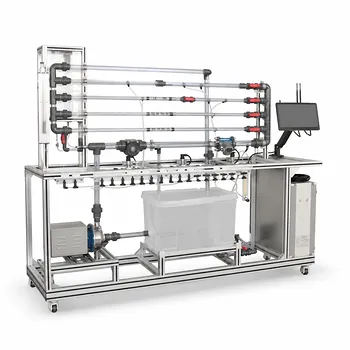
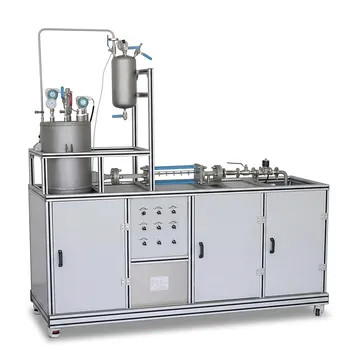
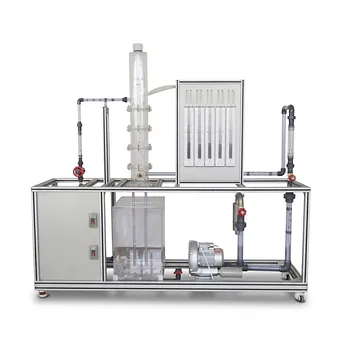
Prevent costly material failures and valve seizures in your scale-up projects. LABPARK provides state-of-the-art Educational and Vocational Unit Operations Pilot Plants in chemical engineering, bioprocess & biotech, and environmental & water treatment. Designed specifically for universities, research institutes, and enterprises, our systems ensure absolute material compatibility and operational safety.
Ready to design a reliable, corrosion-resistant pilot system? Contact LABPARK today to consult with our experts.
Related Products
- Multi-Functional Special Distillation Educational Pilot Plant
- Bernoulli Equation Demonstration Unit Operations Pilot Plant
- Orifice and Venturi Flowmeter Calibration Educational Pilot Plant for Fluid Mechanics Laboratory
- Centrifugal Pump Performance and Orifice Flowmeter Calibration Educational Pilot Plant
- Fluid Friction Resistance Determination Educational Unit Operations Pilot Plant
People Also Ask
- How does operating pressure influence Methylal/Methanol VLE? Discover its impact on distillation
- Why does simple distillation yield higher efficiency than flash distillation? Key thermodynamic differences.
- Why is the acentric factor important in pilot plants? Fluid property prediction.
- How does heavy hydrocarbon characterization affect pilot plant design? Optimize VLE & Column Performance
- How to evaluate distillation tray types using a pilot plant? Master sieve, valve & bubble cap testing.