Knowledge Chemical Engineering Education How to Choose Stripping vs. Rectifying Temp Control for Distillation Pilot Plants
Author avatar

Tech Team · LABPARK

Updated 1 month ago

How to Choose Stripping vs. Rectifying Temp Control for Distillation Pilot Plants


The selection between stripping section temperature control and rectifying section temperature control hinges entirely on which product stream—the bottoms or the distillate—is your primary quality target.

This decision defines the control architecture of your pilot plant. If the bottom product must meet a strict purity specification, you control a temperature in the stripping section by manipulating the reboiler heating medium. If the top distillate is the critical product, you control a temperature in the rectifying section by manipulating the reflux flow rate. A pilot plant’s unique value is its ability to physically demonstrate the separation efficiency and dynamic consequences of this fundamental choice.

Operators select a control scheme based on the primary quality objective: rectifying section control protects distillate purity using reflux, while stripping section control protects bottoms purity using reboiler duty. In a pilot plant, this choice is a powerful tool for directly comparing how these configurations respond to disturbances and affect the entire column’s operating profile.

The Core Logic: Protecting the Critical Product

The fundamental principle is to place the temperature sensor where it will be most sensitive to changes affecting your priority stream, and to choose the manipulated variable that directly impacts that section's separation power.

The Two Control Paths Compared

When defining the control strategy, you are essentially deciding which end of the column to protect first. The other end will then be subject to the quality of that control action.

  • Stripping Section Temperature Control: This scheme directly safeguards the bottom product. A sensor on a sensitive tray in the stripping section adjusts the flow of the heating medium to the reboiler.
    • When to use: The bottom product is the main value stream, and its purity specification is non-negotiable.
    • How it works: An increase in heavy impurities in the bottom product will cause the sensitive tray temperature to rise. The controller responds by increasing reboiler steam, driving more lights back up the column to restore purity.
  • Rectifying Section Temperature Control: This configuration prioritizes the overhead distillate. A temperature sensor in the rectifying section directly manipulates the reflux flow rate returned to the column.
    • When to use: The top distillate is the primary product requiring exact purity control.
    • How it works: A drop in distillate purity is sensed as a temperature increase on the rectifying section’s sensitive tray. The controller then increases the reflux flow, which washes heavier components back down, restoring top purity.

The Role of Sensitive Tray Dynamics

Selecting the correct tray for the sensor is as critical as selecting the section. A pilot plant's compact design makes this choice particularly impactful on performance.

  • Manipulating Reflux vs. Heating: The control channel’s dynamic characteristics must be evaluated. A controller manipulating reflux flow rate is generally much faster than one manipulating a heating medium.
  • Response Criteria: The ideal channel has a large static gain (a small input change causes a large, measurable tray temperature change) and a minimal time constant.
  • Avoiding Dead Time: A manipulated variable with excessive dead time or pure delay will cause system oscillation. For this reason, manipulating reflux flow is typically preferred over manipulating reflux temperature, as the former’s smaller time constant allows the pilot plant to correct temperature deviations much more rapidly.

Understanding the Trade-offs and Cost Drivers

Your choice between control schemes is not just academic; it interacts directly with the physical column design and the broader operational costs you're demonstrating in the pilot plant.

The Penalty of an Inappropriate Control Scheme

Choosing the wrong scheme can lead to an unstable or suboptimal demonstration. For example, controlling a stripping section temperature with reflux flow introduces a significant lag, as the control action must travel the entire length of the column to affect the sensor.

Equipment Cost and Complexity in a Pilot Setting

The type of distillation you are performing, which informs your control objective, also dictates pilot plant construction costs.

  • Vacuum vs. Steam Distillation: If your pilot plant must handle heat-sensitive materials requiring a vacuum, the equipment cost is significantly higher. This is due to the need for vacuum systems, thicker walls to withstand external pressure, and enhanced safety measures. This configuration typically requires a low-pressure-drop packed column.
  • The Steam Distillation Alternative: A cost-effective pilot plant alternative for heat-sensitive materials is steam distillation. It introduces live steam directly, reducing partial pressures. This setup simplifies column construction while effectively demonstrating core thermodynamic and mass-transfer principles, but its control dynamics around an aqueous two-phase system will differ significantly from a standard distillation.

Making the Right Choice for Your Pilot Plant Goal

Translate these principles into a concrete implementation strategy for your specific pilot plant objectives.

  • If your primary focus is bottom product purity: Implement stripping section temperature control. Use a sensitive tray temperature in the lower column section to directly manipulate the reboiler heating medium. This provides the most direct and robust rejection of composition disturbances affecting the bottoms stream.
  • If your primary focus is top distillate product purity: Adopt rectifying section temperature control. Configure a sensitive tray temperature in the upper section to directly set the reflux flow rate. This creates a fast-acting loop that powerfully maintains overhead specification.
  • If your objective is comparative education on control: Utilize both schemes, but not simultaneously. A pilot plant is uniquely suited to switch between configurations. This allows researchers and students to measure how a switch from reflux manipulation to reboiler manipulation alters the column's overall dynamic response, settling times, and product variance for identical separation challenges.

The best choice transforms your pilot plant from a simple separation unit into a precise, responsive instrument that directly reflects the control philosophy best suited to the product you value most.

Summary Table:

Control Scheme Primary Target Manipulated Variable Key Advantage
Stripping Section Bottoms Product Reboiler Heating Medium Protects bottoms purity; robust disturbance rejection
Rectifying Section Distillate (Overhead) Reflux Flow Rate Fast-acting loop; maintains overhead specifications

Enhance Your Engineering Programs with LABPARK

Are you looking to demonstrate advanced process control strategies in your lab? LABPARK provides state-of-the-art Educational and Vocational Unit Operations Pilot Plants in chemical engineering, bioprocess & biotech, and environmental & water treatment. Designed specifically for universities, research institutes, and enterprises, our pilot plants allow hands-on training and research for real-world distillation column dynamics.

Ready to elevate your training and teaching capabilities? Contact LABPARK today to find the perfect pilot plant solution for your institution.

Related Products

People Also Ask

Related Products

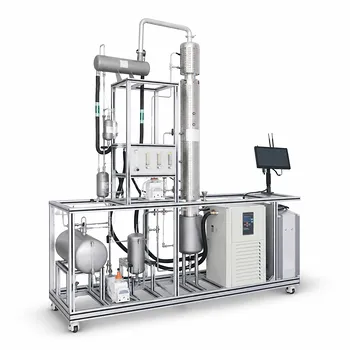
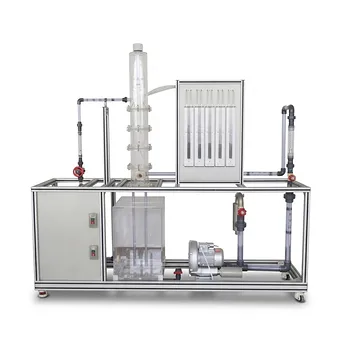
Continuous Sieve-Plate Distillation Pilot Plant for Unit Operations Laboratory Education

Continuous Sieve-Plate Distillation Pilot Plant for Unit Operations Laboratory Education

Integrated pilot-scale teaching system for continuous sieve-plate distillation studies. Visual demonstration of tray hydraulics, flexible feed positions, and automatic reflux control for hands-on unit operations education in engineering labs. Designed for higher education engineering laboratories.

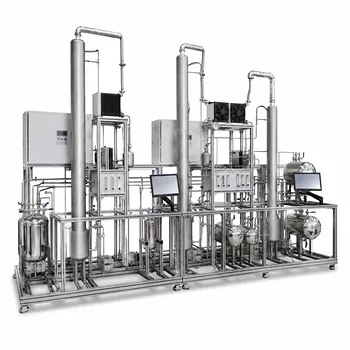
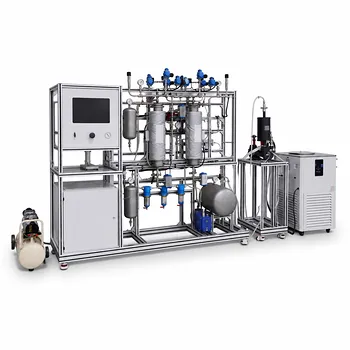
Multi-Functional Special Distillation Educational Pilot Plant

Multi-Functional Special Distillation Educational Pilot Plant

Versatile multi-functional special distillation pilot plant for chemical engineering education. Supports continuous, vacuum, azeotropic, reactive, extractive distillation. Transparent glass columns enable real-time visual observation of hydrodynamics and separation processes.

Multi-Modal Distillation Unit Operations Training Pilot Plant

Multi-Modal Distillation Unit Operations Training Pilot Plant

Multi-modal distillation pilot plant for practical unit operations training in chemical engineering education. Features real, analog, and semi-physical simulation modes, industrial construction, customizable for university labs. Hands-on fractionation columns, SCADA control, safety systems. Includes sight glasses, sampling ports, closed-loop recycling.

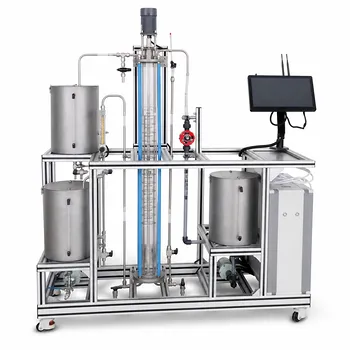
Continuous Batch Extractive Distillation Educational Pilot Plant

Continuous Batch Extractive Distillation Educational Pilot Plant

Versatile pilot plant for continuous, batch, and extractive distillation training. High-borosilicate glass column for visualizing hydraulics, 15.6-inch touchscreen with data logging, precise reflux ratio control 1-99, and durable corrosion-resistant frame. Ideal for chemical engineering education and process research.

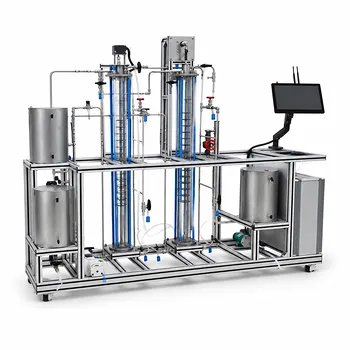
Dual-Mode Rectification Pilot Plant for Practical Training Unit Operations

Dual-Mode Rectification Pilot Plant for Practical Training Unit Operations

Industrial-scale dual-mode rectification pilot plant for chemical engineering practical training. Features real-material and simulated-material operation modes, sieve-plate column with sight glasses for visual observation of hydrodynamics, and customizable SCADA control for safe, hands-on learning of unit operations and mass transfer.

Green Anhydrous Ethanol Purification Extractive Distillation Unit Operations Training Pilot Plant

Green Anhydrous Ethanol Purification Extractive Distillation Unit Operations Training Pilot Plant

Modular pilot plant produces high-purity anhydrous ethanol from crude ethanol via extractive distillation in a zero-emission closed-loop process providing hands-on training in unit operations with PLC-based control SCADA software and digitalized process management focusing on green engineering principles

Electrolyte Distillation Purification and Formulation Educational Pilot Plant

Electrolyte Distillation Purification and Formulation Educational Pilot Plant

Integrated bench-to-pilot scale educational pilot plant for electrolyte distillation, purification, and formulation with borosilicate glass construction, PLC automation, touchscreen HMI, and advanced industrial safety features for hands-on chemical process training, ideal for chemical engineering and materials science curricula.

Green Anhydrous Ethanol Refining Practical Training Pilot Plant

Green Anhydrous Ethanol Refining Practical Training Pilot Plant

Advanced integrated pilot plant for university labs demonstrating extractive distillation to produce high-purity absolute ethanol from crude feedstock, featuring multi-column continuous operation, closed-loop solvent recycling, and customizable controls for hands-on engineering education, ideal for chemical engineering training and research.

Educational Rotary Disc Liquid-Liquid Extraction Pilot Plant

Educational Rotary Disc Liquid-Liquid Extraction Pilot Plant

A transparent rotary disc column for educational liquid-liquid extraction experiments. This pilot plant enables students to study mass transfer, droplet dynamics, and flooding behavior, bridging theory and practice in chemical engineering unit operations education. Features variable-speed agitation and PLC control.

Comprehensive Liquid-Liquid Extraction Pilot Plant for Engineering Education

Comprehensive Liquid-Liquid Extraction Pilot Plant for Engineering Education

Comprehensive liquid-liquid extraction pilot plant for engineering education, integrating rotary and vibratory columns for hands-on observation of phase behavior, flooding limits, and mass transfer efficiency, enabling precise HTU and mass transfer coefficient calculations.

Ethyl Acetate Synthesis Unit Operations Pilot Plant for Practical Training

Ethyl Acetate Synthesis Unit Operations Pilot Plant for Practical Training

Modular and customizable pilot plant for ethyl acetate synthesis practical training. Integrates esterification reaction, liquid-liquid extraction, neutralization, and sieve-plate distillation unit operations. Bridging theory and real-world industrial processes. Designed for university chemical engineering labs

Multi Functional Membrane Crystallization Educational Unit Operations Pilot Plant

Multi Functional Membrane Crystallization Educational Unit Operations Pilot Plant

Integrated bench-scale membrane crystallization pilot plant for engineering education. Provides hands-on training in advanced separation technologies, combining membrane distillation crystallization and process intensification. Features variable scaling vessels, industrial-grade flow control, and interactive digital data acquisition. Customizable for university labs.

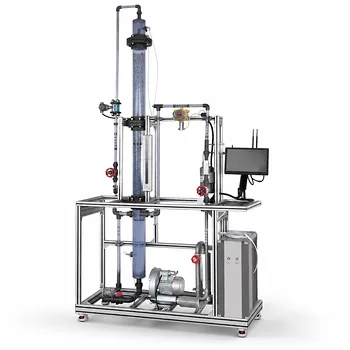
Plate Column Hydrodynamics Tray Demonstration Educational Pilot Plant

Plate Column Hydrodynamics Tray Demonstration Educational Pilot Plant

Advanced transparent educational pilot plant for chemical engineering labs demonstrates plate column hydrodynamics with industrial sieve bubble cap serrated valve trays for visual observation of gas-liquid contact pressure drop measurement and operational limit analysis including flooding weeping entrainment

Absorption and Desorption Educational Unit Operations Pilot Plant

Absorption and Desorption Educational Unit Operations Pilot Plant

Dual packed column absorption and desorption pilot plant for chemical engineering education, offering real-time mass transfer coefficient measurement, durable mobile frame, industrial touch-screen interface, and customizable design for varied laboratory curricula, enabling hands-on study of gas absorption and stripping.

Bench Scale Dual Column Gas Separation and Capture Educational Pilot Plant

Bench Scale Dual Column Gas Separation and Capture Educational Pilot Plant

This dual-column educational pilot plant provides hands-on teaching of gas adsorption, separation, and capture processes. It features stainless steel columns, regeneration up to 400°C, and a 15.6-inch touchscreen PLC for TSA and PSA studies in chemical engineering curricula, process simulation.

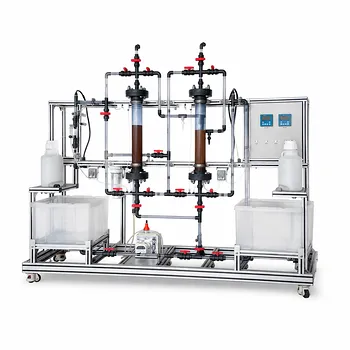
Ion Exchange Water Purification Educational Pilot Plant for Engineering Unit Operations

Ion Exchange Water Purification Educational Pilot Plant for Engineering Unit Operations

This bench-scale ion exchange pilot plant trains engineering students in water purification. Dual transparent columns simulate industrial softening and demineralization. Students observe fluid dynamics, perform resin regeneration, and analyze breakthrough curves. The corrosion-resistant frame ensures durability in unit operations experiments.

Multimodal Absorption and Desorption Pilot Plant for Unit Operations Training

Multimodal Absorption and Desorption Pilot Plant for Unit Operations Training

Multimodal absorption and desorption pilot plant for higher education labs. Bridges theory and industrial practice with transparent packed columns, three operational modes (real-material, simulated, semi-physical), and SCADA control. Students explore mass transfer, column hydraulics, and process control. Customizable.

Packed Bed Absorption Educational Unit Operations Pilot Plant

Packed Bed Absorption Educational Unit Operations Pilot Plant

Study gas-liquid absorption, pressure drop, flooding, and mass transfer coefficients with this pilot plant. Transparent packed column, industrial touchscreen, real-time sensor data, automated analysis. Investigate two-phase flow, loading points, column efficiency. Comprehensive data logging and assessment software included.

Natural Product Extraction Unit Operations Training Pilot Plant

Natural Product Extraction Unit Operations Training Pilot Plant

Integrated natural product extraction pilot plant for chemical engineering training bridges theory and industrial practice with modular extraction and evaporation/concentration units, hybrid touchscreen and manual control, realistic process simulation, and self-contained softened water and vacuum utilities.

Bio-fermentation Ethanol Production Practical Training Unit Operations Pilot Plant

Bio-fermentation Ethanol Production Practical Training Unit Operations Pilot Plant

Bio-fermentation ethanol production pilot plant for hands-on training in unit operations: fermentation, solid-liquid filtration, membrane separation, and distillation. Bridges theory with industrial practice using industrial-grade components, customizable for university labs. Hybrid automated and manual control for comprehensive learning.


Leave Your Message