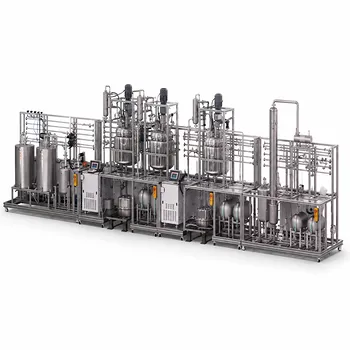
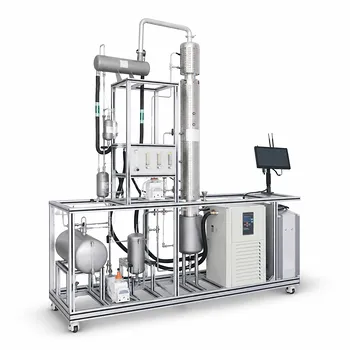
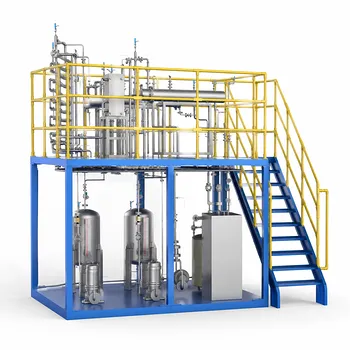
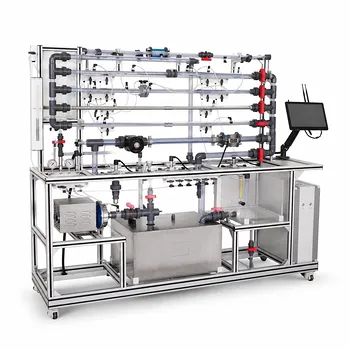
The single most important factor in selecting between batch and continuous pilot plant operation is the alignment with your core educational or research mission. The choice turns on three primary criteria: the pedagogical goals (teaching diverse formulations versus steady-state industrial processes), the research flexibility (multi-product campaigns versus high-throughput parameter studies), and the budgetary realities (lower upfront cost of batch versus the higher automation investment of continuous). For most academic institutions, a nuanced decision that often points toward hybrid configurations—combining batch reactors with continuous downstream units—delivers the most complete training experience.
Batch pilot plants offer unmatched versatility and lower initial capital for teaching fundamentals and small-batch research, while continuous plants are indispensable for demonstrating modern industrial operation, steady-state control, and process intensification. The most effective educational strategy is frequently a hybrid approach, such as a batch reactor feeding a continuous distillation column, which balances broad conceptual coverage with deep industry-relevant skill building.
Understanding the Core Trade-offs
The decision between batch and continuous modes is not about superiority—it is about fitness for purpose. Each operating philosophy brings distinct advantages and inherent limitations that directly impact curriculum coverage, research throughput, and safety instruction.
The Strategic Value of Batch Pilot Plants
Batch systems are the workhorses of teaching laboratories because they prioritize flexibility over throughput. A single jacketed stirred-tank reactor can teach polymerization one week, nitration the next, and extraction the week after simply by changing the recipe and cleaning the vessel.
This versatility makes batch ideal for teaching formulation science, specialty chemicals, and pharmaceuticals, where product variety trumps volume. Batch units also excel at demonstrating batch-to-batch quality control, transient heating profiles, and dynamic reaction kinetics—core chemical engineering fundamentals that students must master.
Financially, batch pilot plants generally require a lower initial capital investment for small-scale operations. Their simpler instrumentation and smaller physical footprint make them more accessible to departments with constrained budgets or shared laboratory spaces. The ease of cleaning and sterilization further supports bioprocess and food engineering training, where cross-contamination must be rigorously avoided.
The Strategic Value of Continuous Pilot Plants
Continuous operation is the standard in modern, high-capacity industrial manufacturing, and a pilot plant that neglects this mode fails to prepare students for the realities of the field. Continuous units teach steady-state material and energy balances, residence time distribution, and the intricacies of feedback control loops—skills critical for roles in petrochemicals, bulk chemicals, and large-scale fine chemical production.
These systems also demonstrate high equipment utilization, often running with 90–95% operational availability in industry. Students learn to operate pumps, control valves, and automated sampling systems under dynamic control, building intuition for process intensification and lean manufacturing principles that eliminate inventory buildup and long cycle times.
For research, continuous pilot plants enable high-throughput experimentation under identical, controlled conditions, which is essential for optimizing catalyst performance, studying steady-state kinetics, and scaling up from microreactors to pilot scale.
Where the Two Modes Collide in Distillation
The distinction is perhaps most instructive in distillation. In a continuous rectification column, feed enters at an intermediate plate, splitting the column into a rectifying section (enriching the volatile component) and a stripping section (recovering the heavy component). This steady-state behavior teaches industrial separation logic perfectly.
In contrast, a batch distillation column loads the entire mixture into the reboiler at once. The column contains only a rectifying section, and the kettle liquid composition continuously depletes over time. This transient operation is invaluable for teaching dynamic process control and small-volume, high-value separation, and it allows multiple components to be separated with a single column, drastically reducing lab footprint and cost.
The Safety Imperative and the Role of Reaction Kinetics
Academic institutions must never overlook the thermal safety dimension. The reaction’s heat release rate and hazard potential often dictate the mode more decisively than any educational preference.
Matching Reactor Type to Hazard Level
Batch reactors are generally suitable only for non-hazardous reactions with low to moderate heat generation rates. If a batch process presents runaway risks, the recommended upgrade is a semi-batch operation, where controlled feeding of a limiting reactant limits accumulation and heat spikes.
For fast and highly exothermic reactions—nitration releasing over 100 kJ/mol is a classic example—continuous reactors are the inherently safer choice. Multi-stage stirred tank reactors in series, tubular reactors, or loop reactors minimize the online inventory of hazardous materials and provide vastly superior heat transfer per unit volume. They enable stable steady-state operation, effectively eliminating the thermal runaway scenarios that can develop in batch.
A well-designed educational pilot plant should therefore include both a batch/semi-batch reactor and a continuous tubular or CSTR train to let students experimentally compare accumulation dynamics and temperature control strategies firsthand.
Understanding the Trade-offs
No mode is without compromise. Recognizing these limits is essential to making an informed procurement decision.
Batch Limitations:
- Long cycle times and significant downtime for cleaning and reconfiguration.
- Inventory buildup between process steps, contrary to lean manufacturing principles.
- Transient behavior makes it difficult to teach steady-state control or continuous material balance closure.
- Poor scalability for high-volume products; data from a 5-litre batch reactor rarely translates directly to a 20,000-litre industrial vessel.
Continuous Limitations:
- High upfront capital cost for pumps, control hardware, and safety interlocks.
- Less flexibility—changing a product typically requires extensive line flushing, reprogramming, and sometimes hardware reconfiguration.
- Multi-component separation demands multiple columns in series, increasing footprint and cost relative to a single batch column.
- Steady-state troubleshooting can be less intuitive for students initially, as deviations must be diagnosed through process trends rather than visible batch-to-batch quality changes.
The Hidden Compromise: Many institutions err by choosing a fully batch or fully continuous plant, then find they cannot teach critical skills. The most robust solution is a modular design with flexible piping and multiple feed points that allows mode switching on key units, especially distillation columns and reactor trains.
Making the Right Choice for Your Institution
Your decision should be driven by a clear-eyed assessment of your primary educational and research mission. Use the following goal-oriented guidance to narrow your options.
-
If your primary focus is versatile teaching across diverse chemical processes and formulations: Prioritize batch reactors and batch distillation units. Their flexibility and lower cost let you cover everything from catalyst screening to food rheology without specialized hardware for each process.
-
If your primary focus is training students for modern industrial operations and process control: Invest in continuous reactor trains and continuous distillation columns. Supplement with a detailed curriculum on automation, PID tuning, and steady-state data reconciliation.
-
If your primary focus is safety-critical or highly exothermic reaction research: Lead with continuous reactors—such as multi-stage CSTRs or microreactors—to demonstrate inherently safer design principles and heat dissipation strategies. Include a semi-batch setup to contrast runaway scenarios.
-
If your primary focus is maximizing educational value within limited space and budget: Adopt a hybrid philosophy. Equip a batch reactor to explore reaction kinetics and formulation, then pipe it directly to a continuous distillation column to teach steady-state separation and integrated process control. This single platform bridges the gap between batch fundamentals and continuous industrial reality.
By aligning your pilot plant configuration with the skills you intend to build—and not simply with what is cheapest or most familiar—you create a facility that genuinely prepares students and researchers for the breadth of modern chemical engineering practice.
Summary Table:
| Feature / Metric | Batch Operation | Continuous Operation |
|---|---|---|
| Primary Focus | Flexibility & formulation | High-throughput & steady-state control |
| Upfront Cost | Lower initial capital | Higher investment (automation) |
| Safety Profile | Suitable for low-moderate heat | Inherently safer for exothermic reactions |
| Best For | Teaching fundamentals | Training for modern industrial operations |
Equip Your Lab with the Right Pilot Plant Configuration
Are you designing or upgrading your laboratory? LABPARK provides state-of-the-art Educational and Vocational Unit Operations Pilot Plants in chemical engineering, bioprocess & biotech, and environmental & water treatment. We help universities, research institutes, and enterprises select and customize the perfect batch, continuous, or hybrid systems to maximize student engagement and research throughput.
Contact LABPARK Today to consult with our experts and get a tailored solution for your institution!
Related Products
- Multi-Reactor Educational Pilot Plant for Reaction Engineering Unit Operations
- Carbon Dioxide Hydrogen Methanol Synthesis Educational Unit Operations Pilot Plant
- Ethyl Acetate Synthesis Unit Operations Pilot Plant for Practical Training
- Multi Pump Fluid Transport Process Piping Unit Operations Training Pilot Plant
- Multi-Modal Distillation Unit Operations Training Pilot Plant
People Also Ask
- What role do educational pilot plants play in scaling green chemistry? Bridging the Lab-to-Industry Gap
- How do educational pilot plants teach scale-up? Bridge the gap to commercial manufacturing.
- How do educational unit operations pilot plants address safety and waste management when scaling up?
- How do educational unit operations pilot plants bridge theory and design? Bridge the Engineering Gap
- Why Compare Predicted and Experimental Excess Enthalpy? Key to Accurate Pilot Plant Scale-up