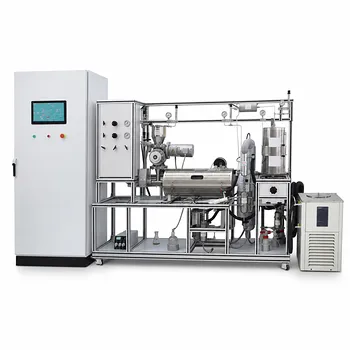
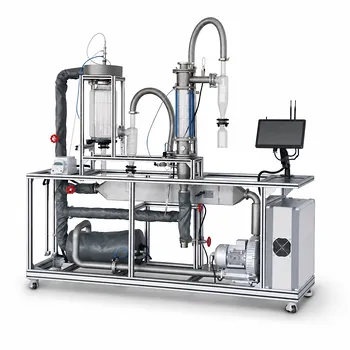
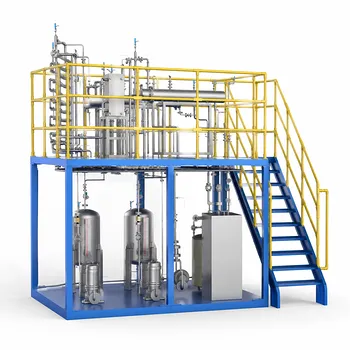
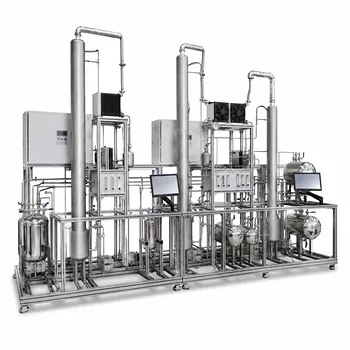
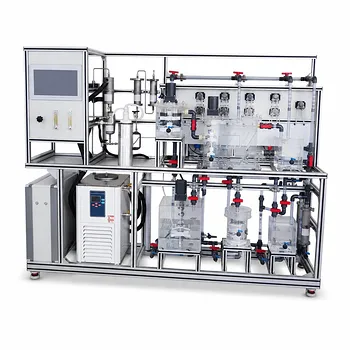
HTST continuous sterilization is the definitive solution. A bioprocess pilot plant designed to handle vitamins and other heat-sensitive media components must abandon traditional batch sterilization. Instead, it should implement a High-Temperature Short-Time (HTST) process using plate, tubular, or direct steam-injection heat exchangers to rapidly heat the medium to ~135°C, hold it for just 3 minutes, and then immediately flash-cool it. This minimizes thermal degradation of delicate nutrients while achieving the same microbial kill as a much longer, cooler cycle.
The core challenge is the mismatch between spore destruction kinetics and nutrient degradation kinetics. HTST exploits the fact that bacterial spores require a higher activation energy to kill than most vitamins do to degrade. By spiking the temperature and slashing the hold time, the pilot plant can sidestep the slow, cumulative damage of batch autoclaving while still delivering a sterile medium. Some vitamin loss is inevitable—so the formulation must account for it upfront.
Why Conventional Batch Sterilization Fails Sensitive Media
The Kinetic Trap of Long Hold Times
Batch sterilization typically heats the entire bioreactor or a large vessel to 121°C and holds it for 20‑30 minutes. The long heat‑up and cooldown periods, plus the extended plateau, expose vitamins to temperatures that rapidly degrade them. Because the degradation reactions for many vitamins (like thiamine or ascorbic acid) have a lower activation energy than the thermal destruction of bacterial spores, a long, moderate hold is disproportionately destructive. Your medium spends too much of its thermal budget in a zone that damages nutrients without a corresponding gain in lethality.
The Surface Answer in Practice
The primary tactical answer is clear: install a continuous HTST sterilization skid. This system will:
- Use a high‑efficiency heat exchanger (tubular or plate) to bring the medium from holding temperature to 135°C in seconds.
- Pass it through a precisely sized holding tube to achieve a residence time of 2‑3 minutes.
- Immediately drop the temperature to ~30‑40°C via a second heat exchanger or a flash‑cooling vessel.
- Optionally employ direct steam injection for the fastest possible ramp—at the cost of some condensate dilution.
Designing the HTST System for Your Pilot Plant
Equipment Selection and Heat Transfer
The heart of the design is the heat exchanger. Indirect systems (plate or tubular) keep the medium and heating fluid separate, avoiding dilution but may be prone to fouling if the medium contains solids. Direct steam injection eliminates the metal‑to‑fluid resistance, achieving near‑instantaneous heating. However, the condensate that mixes into the medium must be balanced by an identical evaporative loss during the flash‑cooling step, or the formulation will become diluted. This trade‑off is critical: for a pilot plant that frequently changes recipes, the predictable volume control of an indirect system often wins.
The Holding Tube: Residence Time Precision
The holding tube is not just a pipe—it’s a calibrated flow path that guarantees every fluid element spends the required time at the kill temperature. The design must ensure true plug flow (minimum axial dispersion) so that no cold slug slips through. The required holding time is determined by the target F₀ value (sterilisation level) and the process temperature. A common target for media sterilization is an F₀ of 8‑12 minutes, which the 135°C/3‑minute combination comfortably delivers, as the lethal rate at 135°C is roughly 25 times that at 121°C.
Rapid Cooldown to Quench Degradation
Immediately after the holding tube, the medium must be quenched. An in‑line heat exchanger using cold process water is typical. In some designs, the hot sterilized medium itself preheats the incoming cold medium, which improves energy efficiency. The cooling rate must be fast enough that the cumulative thermal dose after the holding tube doesn’t undo the HTST benefit. Flash cooling in a vacuum vessel after direct steam injection is another elegant option, as it strips the added condensate and cools simultaneously.
Compensating for Inevitable Nutrient Loss
Even with HTST, some heat‑labile vitamins will degrade. The pilot plant’s media preparation protocol must over‑formulate those sensitive components. For example, if a vitamin’s degradation rate predicts a 10% loss at 135°C/3 min, the initial addition should be increased to 110% of the target concentration. This overage factor should be validated experimentally for each vitamin under the exact time‑temperature profile used.
Understanding the Trade-offs and Pitfalls
- Complexity and Cost: An HTST skid is more expensive to install and maintain than a steam‑jacketed vessel. The control system must manage precise temperature, pressure, and flow interlocks. This complexity is justified only when batch sterilization destroys product‑critical nutrients or when you need the throughput for large‑scale batches.
- Fouling and Cleaning: Heat‑labile media components can form deposits on heat exchanger surfaces, reducing heat transfer and creating cold spots. The design must include provisions for clean‑in‑place (CIP) and, ideally, a rapid swap‑out system for the exchanger plates or tubes if frequent changes are needed.
- Scale‑Down Limitations: For very small pilot batches (e.g., 10‑20 L), the hold‑up volume of a continuous system may be too large. In such cases, sterile filtration of heat‑sensitive additives—introducing them post‑sterilization through a 0.2 µm membrane—is a complementary strategy, though not a replacement for bulk medium sterilization. The primary reference does not address this, but it is a legitimate pilot‑plant workaround worth noting.
- Incomplete Lethality Confidence: A continuous process requires absolute faith in the holding‑tube residence time distribution. Any flow disturbance can compromise sterility. A fail‑safe design that diverts un‑sterile medium away from the sterile tank is mandatory.
Making the Right Choice for Your Pilot Plant’s Goal
Your specific design path depends on what you’re trying to achieve. Use these goal‑driven guidelines to decide:
- If your primary focus is maximum vitamin preservation: Choose a direct steam injection HTST system with flash cooling. The instantaneous heating and cooling loops give you the smallest cumulative thermal dose for the same F₀, though you’ll need to compensate for dilution elegantly.
- If your primary focus is recipe flexibility and minimal dilution: Select a tubular or plate heat exchanger with indirect heating. This lets you switch between different media formulations without worrying about condensate balance, and it’s easier to scale down.
- If your primary focus is a hybrid approach for extremely labile components: Design the pilot plant with a sterile filtration manifold for post‑sterilization addition of a few key vitamins, while the bulk medium is sterilized via HTST. This combines the robustness of heat with the gentleness of cold filtration.
Design your pilot plant to treat heat not as a blunt instrument, but as a precisely controlled tool that respects the fragility of your nutrients while uncompromisingly delivering sterility.
Summary Table:
| Sterilization Method | Heating Mechanism | Nutrient Preservation | Key Pilot Plant Application |
|---|---|---|---|
| Batch Sterilization | Slow jacket heating (121°C) | Poor (high thermal degradation) | Simple, non-sensitive media |
| HTST (Indirect) | Plate/tubular heat exchanger (135°C) | Good (low degradation, no dilution) | Recipe flexibility, scale-down |
| HTST (Direct) | Direct steam injection (135°C) | Excellent (shortest thermal exposure) | Maximum preservation, requires volume control |
Ready to optimize your bioprocess scale-up? LABPARK provides advanced Educational and Vocational Unit Operations Pilot Plants in chemical engineering, bioprocess & biotech, and environmental & water treatment. Designed for universities, research institutes, and enterprises, our pilot plants deliver precise process control to safeguard your sensitive formulations. Contact us today to discuss your custom pilot plant requirements!
Related Products
- Dual Mode Heat Transfer Pilot Plant for Unit Operations Training
- Bio-fermentation Ethanol Production Practical Training Unit Operations Pilot Plant
- Multi-Functional Membrane Separation Educational Pilot Plant for Unit Operations Lab
- Three-Tube Heat Transfer Educational Pilot Plant for Unit Operations Training
- Continuous Sieve-Plate Distillation Pilot Plant for Unit Operations Laboratory Education
People Also Ask
- When is ε-NTU preferred over LMTD in pilot plants? Predict heat exchanger performance without iteration.
- Why is the prevention of scale formation on heat exchanger surfaces a critical learning objective? Key Lessons
- How do unit conversions affect pilot plant calibration? Avoid errors in heat transfer data analysis
- How is the thermal resistance of a thick-walled hollow cylinder calculated? Key Equations
- Under what conditions can arithmetic mean replace LMTD in pilot plant calculations?