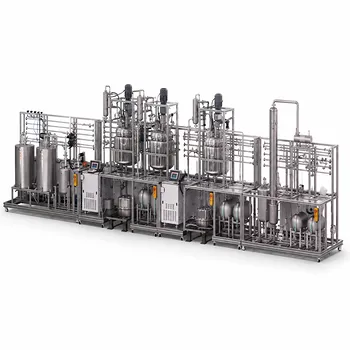
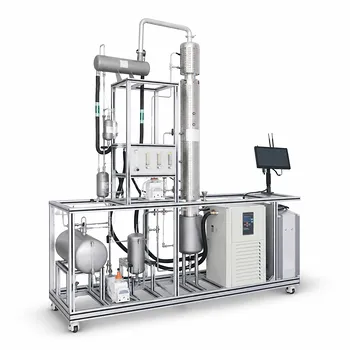
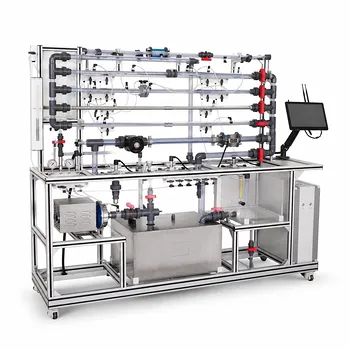
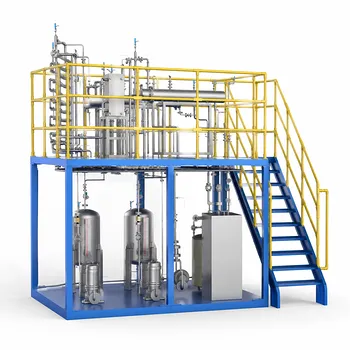
HAZOP is not just a review—it is the systematic blueprint that transforms a pilot plant from a collection of equipment into a safely operable unit. Applied to chemical engineering pilot plants, Hazard and Operability (HAZOP) analysis is a structured, team-based procedure that interrogates every element of a process design using guide words (such as “No,” “More,” “Less”) on key parameters (flow, pressure, temperature) to uncover potential deviations from the design intent. For each deviation, the team identifies credible causes and consequences, then translates those findings directly into preventive safety controls—such as safety interlocks, alarm limits, and emergency shutdown procedures—well before any chemical is charged or any student turns a valve.
Applying HAZOP to a pilot plant means creating a tangible, auditable link between a hidden hazard and a specific safety control. It forces you to systematically imagine every credible way the process can stray from its intended operating envelope, then embed that foresight into the piping and instrumentation diagrams (P&IDs), the control logic, and the standard operating procedures—turning a theoretical design into a learning environment where safety is built in, not tacked on.
The HAZOP Methodology: Deconstructing Design Intent
The power of HAZOP in a pilot plant comes from its disciplined, node-by-node breakdown of the process. It does not rely on vague brainstorming but on a precise linguistic framework that leaves no parameter unexamined.
Dividing the Pilot Plant into Analytical Nodes
The first step is to partition the pilot plant’s process flow—reactors, distillation columns, vaporizers, transfer lines—into distinct nodes. A node might be a vessel, a pipe segment, or even a specific operational step. This granularity ensures that every point where a deviation could occur receives focused attention.
Guide Words as a Systematic Interrogation Tool
For each node, the team applies a standard set of guide words to each relevant process parameter. The primary reference’s example is classic: the guide word “No” combined with “heating steam flow” on a pilot-scale vaporizer generates the deviation “No heating steam flow.” The team then traces the cause (e.g., control valve failure, steam supply loss) and the consequence (e.g., liquid reactant accumulation, potential overflow, or loss of downstream reaction). This same method, extended with guide words like “More,” “Less,” and “Reverse,” forces the team to consider increases, decreases, and backflow scenarios that are often missed in less structured reviews.
Key Process Parameters in Pilot Plants
The supplementary references expand the parameter list beyond simple flow, pressure, and temperature. In a pilot plant, you must also examine:
- Liquid level (volume) to prevent overfilling or dry-running
- Agitation speed to avoid poor mixing or vortexing
- Concentration and pH for reaction control
- Viscosity and phase state (solid/liquid/gas) which impact transport and heat transfer This comprehensive list ensures that deviations like “more viscosity” (leading to pump overload) or “reverse phase” (gas backflow) are not overlooked.
From Analysis to Action: Designing Safety into Pilot Plants
The real value of a HAZOP study is not the list of deviations—it is how that list directly engineers safety into the hardware and the human actions.
Translating Deviations into Safety Instrumented Systems
Each identified deviation drives the placement of sensors, alarms, and automated trips. Consider a pilot-scale ammonia oxidation reactor: a HAZOP analysis might reveal that “More ammonia concentration” (>4%) creates an explosion risk. The direct result is the inclusion of redundant analyzers and an automated bypass trip valve in the P&ID. Similarly, “No flow” or “Low flow” of reactants leads to low-flow alarms and temperature-high-limit (TAHL) trips to stop a runaway. You can see this integration in the finished pilot plant: level alarms (LAH/LAL) on a vaporizer, pressure switches (PSL) on air streams, all hardwired into a PLC to demonstrate an industrial-grade Safety Instrumented System (SIS).
Embedding Safety into Operating Procedures
A HAZOP does not only design hardware. It also writes the rulebook. When the study identifies that a “No heating steam” deviation could cause liquid accumulation, the operating procedure gains a step to verify steam flow before introducing reactants. The analysis of “Reverse” flow on a feed line—where hot acidic gas could backflow and corrode upstream equipment—justifies both the installation of a non-return valve (NRV) and a standard pre-start check of that valve’s integrity. In this way, the operating procedure becomes a living record of the HAZOP’s wisdom.
Pre-Startup Reviews and Management of Change
The HAZOP is not a one-time event. Before a pilot plant is first commissioned, a pre-startup safety review verifies that all recommendations have been closed. Later, any modification—a new pump, a different chemical, a change in setpoint—triggers a Management of Change (MOC) process that updates the HAZOP. This ensures the safety analysis remains synchronized with the actual plant throughout its lifecycle, from early conceptual diagrams through detailed engineering and into day-to-day operation.
The Educational Imperative: Training Operators for Real-World Safety
In pilot plants with a vocational or academic mission, HAZOP serves a second, equally critical purpose: it transforms the facility into a training ground for safe instinct.
Building a Hazard-Aware Mindset
When students or trainees actively participate in a HAZOP study, they stop seeing a reactor as just a vessel and start seeing a network of potential deviations. The structured, collaborative environment forces them to ask, “What if this pump trips?” and “How could that vapor velocity get too high?” This hands-on inquiry builds a hazard-awareness reflex that static lectures cannot replicate.
Hands-On Design of Safety Interlocks
The primary reference highlights a direct educational outcome: students use HAZOP findings to design the very safety interlocks they will later rely upon. They might wire a low-level alarm switch on a vaporizer or program a high-temperature shutdown in the PLC, internalizing the logic that connects a deviation to a protective response. This vocational training directly prepares them for industrial environments where P&IDs and SIS design are daily realities, not abstract concepts.
Understanding the Trade-offs and Limitations
No single method is foolproof, and HAZOP must be applied with clear eyes open to its inherent constraints.
Qualitative Nature and Facilitator Dependence
HAZOP is a qualitative tool; it does not provide failure rates or quantitative risk levels. Its output is only as good as the expertise in the room. A poorly facilitated session can drift into superficial “what-ifs” or miss subtle interactions. In an educational setting, an instructor must actively guide students to probe deeply, ensuring they consider causes like simultaneous failures or latent human errors that novices might overlook.
The Trap of Abstract Analysis
A HAZOP study conducted purely on paper, without linking each finding to a physical sensor or an explicit operating instruction, becomes an academic exercise. The real application demands that every deviation leads to a tangible, documented control—a specific instrument tag in the P&ID or a bullet in the startup checklist. Without this rigor, the pilot plant may look safe on a flowchart but remain vulnerable in practice. Also, the analysis can become time-consuming; balancing thoroughness with the need to commission the plant requires disciplined scope definition.
Making the Right Choice for Your Safety Program
How you weight the HAZOP process depends on your primary goal. Use these priorities to shape your application.
- If your primary focus is vocational training and operator development: Make HAZOP the centerpiece of the pre-lab curriculum. Have students generate the deviations, propose the interlocks, and then physically verify that those interlocks function during a controlled “trip test.”
- If your primary focus is rapid iteration of a research pilot plant: Perform a focused HAZOP during early P&ID development, concentrating on high-severity deviations (explosion, toxic release, runaway) and ensuring critical safety instrumented functions are locked in before the first build.
- If your primary focus is aligning with industrial standards and regulatory compliance: Integrate HAZOP at every project gate—conceptual, detailed design, pre-commissioning—and strictly enforce an MOC log so that the HAZOP document remains a living, auditable record of the plant’s safety rationale.
- If your primary focus is integrating process safety into a teaching lab with limited resources: Use the guide-word framework on a single critical node (like a reactor with exothermic potential) as a case study to demonstrate the methodology, then apply the lessons to the full plant during a structured walk-through.
HAZOP is the engine that converts good engineering intentions into demonstrable safety—and when applied thoughtfully to a pilot plant, it protects both the people who operate it today and the professionals they will become tomorrow.
Summary Table:
| HAZOP Element | Pilot Plant Application | Safety Outcome |
|---|---|---|
| Analytical Nodes | Dividing process flow (reactors, columns, lines) | Granular, focused hazard analysis |
| Guide Words & Parameters | Applying "No", "More", "Less" to flow, temp, level | Systematic discovery of process deviations |
| Safety Instrumented Systems | Translating deviations into alarms, sensors, & trips | Automated runaway prevention & PLC control |
| Operating Procedures | Writing safety checks based on deviation causes | Reduced human error & safe startup protocols |
| Educational Integration | Hands-on student design of safety interlocks | Active safety mindset & vocational readiness |
Build Safer, Smarter Labs with LABPARK
At LABPARK, we design and manufacture premium Educational and Vocational Unit Operations Pilot Plants across chemical engineering, bioprocess & biotech, and environmental & water treatment. We build safety, reliability, and HAZOP-aligned principles directly into our hardware and control systems to ensure a secure, hands-on learning and research environment for universities, research institutes, and enterprises.
Ready to elevate your facility's safety and educational capabilities? Contact LABPARK today to get started!
Related Products
- Multi-Reactor Educational Pilot Plant for Reaction Engineering Unit Operations
- Carbon Dioxide Hydrogen Methanol Synthesis Educational Unit Operations Pilot Plant
- Ethyl Acetate Synthesis Unit Operations Pilot Plant for Practical Training
- Multi Pump Fluid Transport Process Piping Unit Operations Training Pilot Plant
- Multi-Modal Distillation Unit Operations Training Pilot Plant
People Also Ask
- How do educational unit operations pilot plants address safety and waste management when scaling up?
- How do educational unit operations pilot plants bridge theory and design? Bridge the Engineering Gap
- Why Compare Predicted and Experimental Excess Enthalpy? Key to Accurate Pilot Plant Scale-up
- Why Use PTFE & Hastelloy in Chemical Pilot Plants? Prevent Corrosion & Ensure Safety
- How to study gasification in pilot plants? Compare exit gas composition & efficiency