If you’re running a gas‑liquid reactor in a pilot plant, the Hatta number instantly tells you which physical step is in charge of your overall rate.
It compares the time it takes for a gas molecule to diffuse through the liquid film to the time it takes for it to react. When the Hatta number is small, chemical kinetics is the bottleneck, and the reaction happens deep in the bulk liquid. When it’s large, diffusion is the brake, and the reaction is finished before the molecule ever leaves the film. For students and researchers, calculating the Hatta number (M) transforms a black‑box pilot plant into a transparent diagnostic tool that directly reveals whether you need to tweak chemistry or improve physical transport to shift the rate‑controlling step.
The Hatta number maps exactly how “deep” a reaction penetrates the liquid film, exposing the true rate‑controlling step. A small M² signals slow kinetics that dominate the overall rate, while a large M² means fast chemistry that is starved by diffusion. Operating a pilot plant without knowing your Hatta number is like tuning an engine without knowing whether the fuel or the air supply is throttled.
How the Hatta Number Decodes the Rate‑Controlling Step
The Hatta number (M) is the dimensionless ratio of the characteristic time for diffusion to the characteristic time for chemical reaction. It is often expressed as its square, M², which directly compares the potential reaction rate in the liquid film to the rate at which dissolved gas can be supplied by diffusion alone. For a given system, M² immediately categorizes the situation into one of four operational regimes, each with a clear‑cut rate‑limiting mechanism.
The Slow Reaction Regime (M² ≪ 1, Typically M < 0.3)
When the Hatta number is very small, the reaction is so sluggish that it barely consumes any reactant as the gas diffuses across the film. The entire liquid film behaves like a passive boundary layer. Reaction takes place almost exclusively in the well‑mixed bulk liquid.
In this regime, the rate‑controlling step is chemical kinetics in the bulk. The reactor behaves as a homogeneous system, and the liquid‑side mass transfer coefficient has almost no influence on the overall rate. To speed up the process, you must increase the reaction rate itself—by raising temperature, using a more active catalyst, or boosting the reactant concentration in the bulk liquid. The liquid holdup volume (e.g., choosing a bubble column over a packed column) becomes the critical equipment design parameter because the reaction needs long residence time to proceed.
The Fast and Instantaneous Regimes (M² ≫ 1, Typically M > 3)
When the Hatta number is large, the chemical reaction is so rapid that it gobbles up the dissolved gas before the molecule can traverse the liquid film. The reaction is completed entirely inside the film, and the gas concentration in the bulk liquid drops to zero.
Here, physical mass transfer (diffusion) is the rate‑controlling step. The overall absorption rate is now governed by the physical mass transfer coefficient, the interfacial area, and the gas concentration at the interface—not by the intrinsic kinetics. All attempts to accelerate the reaction by increasing liquid‑phase turbulence or flow rates become ineffective because the chemical conversion itself is no longer the bottleneck. Instead, to enhance performance you must intensify the chemical absorption by selecting a more reactive absorbent, increasing the reactant concentration at the film boundary, or raising the operating temperature to further boost the enhancement factor.
In the extreme case of an instantaneous reaction (M → ∞), the reaction zone shrinks to a flat plane inside the film, and the rate is entirely limited by the diffusion of the reactants to that plane.
The Moderate Reaction Regime (M ≈ 1)
When the Hatta number hovers near unity, the reaction takes place partly in the liquid film and partly in the bulk. Neither kinetics nor mass transfer alone dictates the rate; both must be considered simultaneously. This transitional zone demands the most rigorous modelling during scale‑up because small changes in temperature, concentration, or hydrodynamics can shift the regime dramatically.
Practical Diagnostics on a Pilot Plant
The Hatta number gives researchers a structured way to troubleshoot and optimize a running unit. By calculating M² from fundamental data (reaction rate constant, diffusivity, mass transfer coefficient), you gain a clear picture of where the molecule disappears—and therefore what you should adjust.
What to Change When Kinetics Controls
If you diagnose the slow reaction regime (M² ≪ 1), the limiting step lies in the chemical conversion in the bulk liquid. Your pilot plant adjustments should focus on:
- Increasing the liquid residence time, by selecting a reactor type with higher liquid holdup (e.g., a bubble column instead of a packed column) or by reducing the liquid throughput.
- Raising the operating temperature to accelerate the intrinsic kinetics.
- Increasing the concentration of the liquid‑phase reactant throughout the bulk, not just near the interface.
Surface area enhancements (finer bubbles, more packing) will deliver only marginal gains because the film itself is chemically inert.
What to Change When Mass Transfer Controls
In the fast or instantaneous regimes (M² ≫ 1), the overall rate is mass‑transfer‑limited. The reaction inside the film is already as fast as it can be, so the only way to absorb more gas is to deliver more molecules to the film faster. Actions that work here include:
- Increasing the gas‑phase partial pressure or the interfacial gas concentration.
- Choosing a more powerful absorbent that raises the chemical enhancement factor, effectively raising the local consumption rate within the film.
- Maximizing the gas‑liquid interfacial area (through better gas dispersion or structured packing), because the absorption rate scales directly with area.
Notice that increasing bulk liquid turbulence or recirculation is not effective—the chemistry is already consuming the gas before the film can be replenished by bulk eddies.
Understanding the Trade‑offs and Pitfalls
The Hatta number is a powerful diagnostic, but it rests on assumptions that can mislead if not carefully evaluated.
- Assumption of pseudo‑first‑order kinetics. The classical Hatta number calculation relies on the dissolved gas concentration being much smaller than the liquid‑phase reactant, so the reaction appears first order in the gas. If this condition fails, the true enhancement factor and regime boundaries shift, potentially misclassifying a system as “fast” when it is actually transitioning.
- Ignoring gas‑phase resistance. A large Hatta number only identifies liquid‑side limitations. If the gas‑side film also offers significant resistance, the overall rate may still be controlled by gas‑side mass transfer regardless of M²’s value, leading to incorrect pilot‑plant diagnostics.
- Operational drift near the boundary (M ≈ 1). Around the moderate regime, small temperature or concentration changes can flip the rate‑limiting step. Pilot plants operating in this zone are notoriously sensitive, and scale‑up without a solid kinetic model can produce designs that behave completely differently at full scale.
- Using the wrong scale‑up rule. Students often assume that if the pilot plant is fast‑regime, the industrial column should simply be designed to match the same M². However, the dimensionless group must be preserved alongside the appropriate controlling timescale: for fast reactions, maintain the same specific interfacial area (a) per unit volume; for slow reactions, maintain the same liquid residence time.
Making the Right Choice for Your Pilot Plant Goal
Every experiment in a gas‑liquid pilot plant has a different primary objective. The Hatta number helps you align your operating decisions with that objective.
- If your primary focus is learning reactor fundamentals: Map the entire regime spectrum by varying temperature and reactant concentration while monitoring absorption rates. Let students physically observe the transition from bulk‑reaction control to film‑diffusion control by plotting conversion against M².
- If your primary focus is maximizing conversion in a pilot‑scale reaction: First compute M². For M² ≪ 1, invest in greater liquid holdup and higher temperature. For M² ≫ 1, invest in a more reactive absorbent and maximize the interfacial area, not bulk mixing.
- If your primary focus is reliable scale‑up: Confirm that the regime at pilot scale matches the intended industrial regime. For fast reactions, scale the volumetric mass transfer coefficient (kLa) while keeping the Hatta number constant. For slow reactions, scale by liquid residence time and keep the bulk kinetics identical.
A single dimensionless number illuminates the frontier between chemistry and transport. By placing the Hatta number at the heart of your pilot‑plant operation, you stop guessing and start engineering the step that really matters.
Summary Table:
| Hatta Number (M) | Reaction Regime | Rate-Controlling Step | Key Adjustment / Action |
|---|---|---|---|
| M < 0.3 (M² ≪ 1) | Slow | Bulk Chemical Kinetics | Increase temperature, liquid residence time, or reactant concentration. |
| M ≈ 1 | Moderate | Transition (Both) | Implement rigorous modeling; monitor sensitivity to temp/flow changes. |
| M > 3 (M² ≫ 1) | Fast / Instantaneous | Physical Mass Transfer (Diffusion) | Increase gas partial pressure, use reactive absorbents, maximize interfacial area. |
Optimize Your Gas-Liquid Reaction Studies with LABPARK
Are you looking to bridge the gap between theory and practical scale-up in your laboratory? LABPARK provides premium Educational and Vocational Unit Operations Pilot Plants in chemical engineering, bioprocess & biotech, and environmental & water treatment. Designed specifically for universities, research institutes, and enterprises, our pilot plants enable students and researchers to accurately analyze dimensionless groups like the Hatta number and optimize reactor performance.
Ready to elevate your research and teaching capabilities? Contact LABPARK today to find the perfect pilot plant solution for your institution!
Related Products
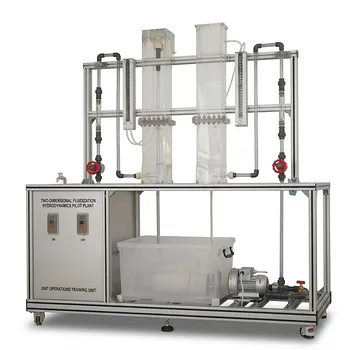
- Two-Dimensional Fluidization Hydrodynamics Educational Pilot Plant for Unit Operations Training
- Educational Unit Operations Pilot Plant for Intraparticle Diffusion Effective Factor Measurement
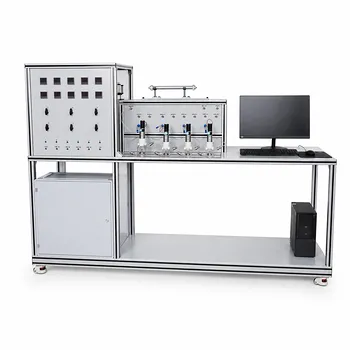
- Multi-Reactor Educational Pilot Plant for Reaction Engineering Unit Operations
- Fixed-Bed Chemical Reaction and Gas Dust Tar Removal Unit Operations Pilot Plant
- Fluidized Bed Gas Solid Catalytic Reaction Educational Pilot Plant
People Also Ask
- What pressure drop characteristics should students & researchers monitor in a fluidization pilot plant?
- How does active time pulsing mixing enhance fluid homogenization? Configuration Guide for Educational Pilot Plants
- How can acoustic chemometrics prevent reactor clogging in educational fluidized bed pilot plants?
- What is the operational significance of solids feed rate on emulsion phase dynamics in fluidized bed pilot plants?
- How can inline NIR & microwave sensors study fluidized bed drying dynamics? A Real-Time Guide