Understanding the Method Operable Design Region transforms pilot plant training from rigid checklist execution into a masterclass in operational resilience.
The Method Operable Design Region (MODR) defines the proven multi-dimensional envelope of conditions—solvent ratios, temperatures, flow rates—where a unit operation consistently yields acceptable results. When applied to pilot plant operator training, it replaces the fragile model of following one “recipe” with a deep understanding of the safe boundaries between robust performance and failure. This approach directly reduces out‑of‑spec events caused by minor fluctuations and equips operators to troubleshoot in real time.
The MODR is a training framework, not just a quality concept. By visually and experimentally demonstrating the proven safe operating space for each unit operation, you shift operators from passive procedure‑followers into active boundary managers, building the intuition they need to prevent process upsets before they happen.
The Foundation: What a Method Operable Design Region Really Means
From a Single‑Point Recipe to a Proven Safe Space
Traditional operating instructions focus on a Normal Operating Range (NOR)—a single target value with tight tolerances.
The moment a parameter drifts outside that narrow window, an inexperienced operator sees only a deviation and often reacts with guesswork.
The MODR is fundamentally different.
It is the entire experimental region—often visualized as a contour plot or a three‑dimensional sweet spot—where the method’s outputs remain acceptable even as multiple variables change simultaneously.
Where the standard recipe says “keep temperature at 60°C,” the MODR says “any combination of temperature between 55°C and 68°C and flow rate between 4 and 7 L/min will work, as long as you stay inside this proven envelope.”
A Perfect Fit for Unit‑Operations Pilot Plants
A well‑designed pilot plant is the ideal environment to teach this concept.
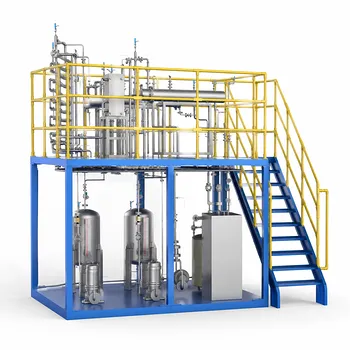
Modern training facilities often cover the full industrial chain—raw material prep, reaction, separation, recovery, and waste treatment—using highly flexible equipment with continuous automated control.
This flexibility means you can safely run a distillation column at multiple reflux ratios, push a reactor across a range of pressures, and observe how those changes shift the failure boundary.
That deliberate exploration plants the seeds of a mental model no textbook can deliver.
The Transformative Impact on Operator Training
From Recipe Memorization to Predictive Troubleshooting
When operators only know the NOR, every small fluctuation feels like an emergency.
Alarms become noise, and the instinct is to tweak things back to the setpoint without understanding the underlying cause.
Training with the MODR changes that.
Operators learn where the real “cliffs” are—the critical edges where product quality drifts or the system becomes unstable.
As the primary reference notes, they come to grasp “the boundary between the safe design space and the failure zone,” which allows them to confidently allow minor, harmless swings while recognizing the early signals that truly matter.
The result is fewer over‑corrections, less alarm fatigue, and a dramatic drop in unnecessary out‑of‑spec investigations.
Building a Mental Model of Complex Interactions
Unit operations rarely fail because of a single variable.
A falling level in a reboiler might be safe at one feed composition but dangerous at another, and only an operator who understands the multi‑variable limits can judge the difference.
During training, an instructor can deliberately walk the plant toward a corner of the MODR—for example, gradually raising temperature while lowering solvent ratio—until the first sign of degradation appears.
That lived experience builds an intuitive grasp of trade‑offs: a gain in yield might shrink the safety margin on pressure, and an efficient steady state might leave no room for a sudden feedstock change.
The operator leaves training not with a script, but with a calibrated risk‑sense for the entire unit.
Practical Implementation: Teaching the MODR on Your Pilot Plant
Design Safe “Boundary Discovery” Exercises
The heart of MODR‑based training is structured experimentation, not blind trial‑and‑error.
Use your pilot plant’s inherent operational flexibility to design short modules where teams:
- Start within the known NOR.
- Under controlled supervision, systematically vary one factor (e.g., agitator speed) while holding others constant.
- Record the precise point where product quality or process stability begins to deviate, marking that data point on a shared visual map.
Over multiple runs, the group collectively builds the MODR for that unit operation, fostering both scientific thinking and a deep respect for the physical limits of the equipment.
Leverage Automation to Visualize and Enforce the Safe Space
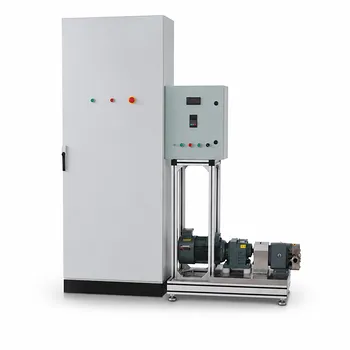
The continuous automated control systems common in modern pilot plants turn the MODR from an abstract diagram into a live operational tool.
A DCS or SCADA screen can display the current operating point as a dot inside a shaded “green zone” that represents the proven region.
When a parameter drifts toward the edge, the interface can issue a soft alarm or even restrict final control elements before failure occurs.
Training on such a system cements two critical habits: operators learn to monitor their position within the space, not just absolute numbers, and they internalize that the boundaries are not arbitrary limits but scientifically determined safety fences.
Understanding the Trade‑offs and Common Pitfalls
The Hidden Cost of Mapping the Design Region
Creating a reliable MODR demands time, material, and careful experimental planning.
There is a real risk that a hastily generated region—one that ignores key raw‑material variability or long‑term fouling—gives a false sense of security and leads to an unexpected failure during regular operation.
Furthermore, during training, the focus on boundary exploration can tempt participants to treat the pilot plant like a sandbox.
Without clear stop‑criteria and experienced instructors, “finding the edge” can become “falling off the cliff,” damaging equipment or producing hazardous waste.
The training protocol must always prioritize safety and define exactly when an exercise must be halted.
When Strict Recipe Adherence is Still the Safer Route
Not every process is a candidate for live boundary‑discovery training.
Highly exothermic reactions, systems with runaway potential, or processes involving potent compounds demand that the MODR be taught entirely through simulation and historical data.
In these cases, the principle is identical—operators must still understand the safe envelope—but the method shifts from hands‑on experimentation to rigorous, classroom‑based case studies.
The key is to be honest about the limitation: the “explore the edge” module is reserved for inherently forgiving unit operations, never for the plant’s highest‑hazard steps.
Making the Right Choice for Your Training Goal
The MODR concept is a powerful framework, but how you implement it must match your specific training objectives.
- If your primary focus is building independent troubleshooters: Invest in hands‑on boundary‑discovery modules. Let operators map the MODR themselves under expert supervision, because the act of discovery carves the deepest neural pathway.
- If your primary focus is minimizing process upsets and OOS events: Embed the MODR directly into your control system HMI. Use soft limits and visual boundary warnings, and make sure every training session drills operators on interpreting what a specific position inside the envelope means for the next shift.
- If your primary focus is on safety‑critical, high‑hazard operations: Never use live experimentation to find the failure edge. Instead, build rigorous simulator‑based training that uses historical failure data to demonstrate the boundary, reinforcing the severe consequences of crossing it.
- If your primary focus is maximizing educational throughput: Design your pilot plant around modular, quickly reconfigurable unit operations. This allows you to demonstrate distinctly different MODRs—for distillation, extraction, or reaction—in a single day, giving students a broad, tangible feel for the envelope concept across process types.
By embedding the Method Operable Design Region into your operator training strategy, you stop teaching people to run a recipe and start giving them the intelligence to manage a living, breathing process—one that stays safe and efficient no matter what the real world throws at it.
Summary Table:
| Training Aspect | Traditional (NOR-Based) | Modern (MODR-Based) |
|---|---|---|
| Focus | Single-point recipe & setpoints | Multi-dimensional safe operating envelope |
| Operator Role | Rigid procedure follower | Active boundary & risk manager |
| Troubleshooting | Reactive (guesswork after deviation) | Predictive (understanding multi-variable limits) |
| Safety & Quality | Higher risk of out-of-spec events | Proactive drift prevention & safety control |
Elevate Your Process Training with LABPARK
Ready to transition your operators and students from rigid recipe followers to resilient process managers? LABPARK provides premium Educational and Vocational Unit Operations Pilot Plants across chemical engineering, bioprocess & biotech, and environmental & water treatment.
Designed specifically for universities, research institutes, and enterprises, our modular pilot plants feature advanced automated controls that let users safely explore process boundaries (MODR) and build real-world troubleshooting expertise.
Contact LABPARK today to design your custom pilot plant solution!
Related Products
- Carbon Dioxide Hydrogen Methanol Synthesis Educational Unit Operations Pilot Plant
- Multi Pump Fluid Transport Process Piping Unit Operations Training Pilot Plant
- Multi-Reactor Educational Pilot Plant for Reaction Engineering Unit Operations
- Ethyl Acetate Synthesis Unit Operations Pilot Plant for Practical Training
- Multi-Modal Distillation Unit Operations Training Pilot Plant
People Also Ask
- How do temp & pressure affect methanol synthesis pilot plants? Optimize equilibrium and catalyst performance.
- Why is a purge system necessary when operating a gas recirculation loop in a methanol synthesis pilot plant? (Guide)
- Why do modern methanol pilot plants operate at lower pressures? Catalyst & Feed Requirements Explained
- What are the operational requirements for catalyst activation? Safe Methanol Pilot Plant Operation
- Why is the chemical plant startup schedule crucial? De-risk scale-up with pilot plants.