Your catalyst choice doesn’t just influence the reaction—it determines whether your pilot plant produces reliable hydrogen data or a costly lesson in deactivation.
The specific transition metal you select (Ni, Co, Cu, Fe) defines the reaction pathway, temperature window, and selectivity. The support material (Al₂O₃, CeO₂, ZrO₂, MgO, and tailored composites like AZZ) then stabilizes the active sites, provides the essential high surface area for metal dispersion, and actively fights carbon deposition. Experimental outcomes—hydrogen yield, CO selectivity, and catalyst lifetime—are a direct product of this metal‑support synergy.
The most successful pilot‑scale hydrogen production studies treat the catalyst and support as a single integrated system. A poor match leads to misleadingly low conversion, rapid coking, or sintering that masks the true performance of your unit operation. The right choice must align with your reaction temperature, feedstock, and the reactor’s heat‑transfer design.
The Metal Active Phase: Defining the Reaction Pathway and Temperature Requirements
Nickel: The Workhorse with a Coking Achilles’ Heel
Nickel is the most popular choice for methane steam reforming (MSR) because it offers high activity for C‑H, O‑H, and C‑C bond cleavage at a low cost.
However, Ni is inherently prone to sintering (metal particles fusing together) and carbon deposition (coking), which block active sites and cause rapid deactivation.
In a pilot plant, this trade‑off means you can achieve excellent initial conversion, but the data will gradually drift without careful thermal management and support promotion.
Copper: Precision at Lower Temperatures for Methanol
Copper is the premier metal for methanol steam reforming, operating efficiently at 200–350 °C.
Its high selectivity minimizes unwanted side‑products, but its performance depends on extremely small particle sizes and high dispersion.
Without a stabilizing support that prevents Cu particles from migrating and coalescing, conversion collapses quickly—a clear example of why metal and support cannot be chosen independently.
Cobalt and Bimetallic Systems: Balancing Stability and Selectivity
Cobalt often delivers better resistance to carbon deposition than Ni during ethanol steam reforming (ESR) in the 400–800 °C range.
For studies requiring a broader operating window, bimetallic formulations become essential.
For alcohol reforming, Cu‑Fe on an AZZ (Al₂O₃‑ZrO₂‑ZnO) support provides an optimal balance of efficiency and stability. For methane reforming, Ni‑La on Al₂O₃‑CeO₂ helps achieve the critical goal of low CO selectivity while retaining high activity.
The Support: Far More Than an Inert Scaffold
Engineering Surface Area for Maximum Active Site Access
A high‑surface‑area support—often 285–300 m²/g through sol‑gel methods—disperses the metal into a vast number of active sites.
Sol‑gel wash‑coated alumina or silica creates a three‑dimensional porous network that dramatically improves conversion compared to flat, sputtered catalysts.
In a packed‑bed pilot reactor, this high specific area directly translates to a measurable jump in hydrogen throughput.
Preventing Sintering and Agglomeration at High Temperatures
At the 500–800 °C typical of MSR and ESR, metal nanoparticles naturally seek to reduce their surface energy by merging.
Alumina (Al₂O₃), Zirconia (ZrO₂), and Ceria (CeO₂) act as physical barriers, keeping the active particles isolated and preserving their catalytic activity over extended runs.
Even more robust spinel supports like MgAl₂O₄ or ZnAl₂O₄ exhibit superior sintering resistance and lower carbon deposition than traditional silica.
Chemical Promotion: How CeO₂ and ZrO₂ Actively Fight Coke
Ceria (CeO₂) is not just a stabilizer—it possesses an exceptional oxygen storage capacity that supplies oxygen to gasify carbon precursors before they form persistent coke.
Zirconia (ZrO₂) additionally promotes hydroxyl group formation that drives higher methane conversion and further stabilizes the metal.
When you match a Ni catalyst with a CeO₂‑based support, you routinely observe a lower rate of deactivation in the pilot‑plant product gas analysis.
Wash‑Coating vs. Sputtering: The Method Shapes the Result
The way the support is applied matters as much as its composition.
A sol‑gel wash‑coat provides a thick, highly porous layer with deep reactant access; a sputtered film gives only a flat interface with low conversion.
For meaningful heterogeneous catalysis studies on a pilot scale, the wash‑coated monolith or pellet is the standard because it realistically emulates industrial mass‑transfer and pore‑diffusion resistances.
The Critical Intersection of Catalyst and Reactor Conditions
Matching Chemistry to Heat Transfer: A Pilot Plant Imperative
The heat transfer characteristics of the pilot‑scale reactor must be paired with the catalyst‑support chemistry.
A highly endothermic reaction like methane reforming demands rapid heat input; if the catalyst bed cannot conduct heat quickly enough, cold spots form, conversion drops, and coke accumulates locally.
Researchers and instructors must therefore select a support with adequate thermal conductivity and design the bed volume to match the reactor’s heating profile.
Feedstock Purity and Catalyst Configuration
Real‑world feed streams contain impurities that poison metals.
In a pilot plant demonstrating hydrogen production from sulfur‑containing hydrocarbons, a single fixed bed of Ni/Al₂O₃ will fail quickly.
A dual or three‑fold configuration with a sacrificial guard bed (or a dedicated hydrodemetallization layer) protects the downstream reforming catalyst, and this directly impacts the hydrogen purity and steady‑state data you collect.
Understanding the Trade‑offs: Longevity, Cost, and Complexity
High activity rarely comes without a cost. Nickel gives remarkable initial conversion but demands rigorous coking‑mitigation strategies. Copper offers unmatched low‑temperature methanol selectivity but requires ultra‑fine dispersion and strict temperature control.
Ceria‑ and zirconia‑rich supports dramatically extend catalyst life, yet they increase material cost and can complicate manufacturing.
Choosing the AZZ ternary support or La‑promoted CeO₂‑Al₂O₃ system solves a specific selectivity problem, but the added complexity means you must verify that every batch is identically prepared to get reproducible pilot‑plant data.
Sintering resistance vs. gas permeability is another balance. A support with very small pores stabilizes metals exceptionally well but may choke on diffusion resistance, lowering apparent activity.
Finally, sol‑gel wash‑coating maximizes surface area and conversion while risking pressure‑drop buildup if the coat thickness is not optimized for the pilot plant’s flow capacity.
Making the Right Choice for Your Pilot Plant Study
Your selection must serve the experimental goal. Use the following framework.
- If your primary focus is high‑purity hydrogen from methane: Combine Ni‑La on a CeO₂‑Al₂O₃ support to achieve low CO and sustain activity under high‑temperature reforming. Validate that the bed’s thermal contact with the reactor walls prevents cold spots.
- If your primary focus is low‑temperature alcohol reforming (methanol or ethanol): Start with bimetallic Cu‑Fe on an AZZ support for efficient conversion and stability, or use Co on a high‑surface‑area CeO₂‑ZrO₂ support for better coke resistance in ethanol reforming.
- If your primary focus is long‑term catalyst stability and reproducible data: Select an MgAl₂O₄ or ZnAl₂O₄ spinel support that resists sintering and coking, even at the cost of marginally higher pressure drop, and pair it with a metal that matches your temperature window.
- If your primary focus is an educational demonstration of catalysis: Use a sol‑gel wash‑coated Ni/Al₂O₃ catalyst to visually compare conversion vs. a non‑catalytic run; highlight how the support’s 300 m²/g surface area enables the dramatic activity jump, but emphasize that real industrial plants add promoters to manage deactivation.
The right catalyst‑support system transforms your pilot plant from a simple flow loop into a precise instrument that tells you exactly how a full‑scale hydrogen plant will behave. Choose the chemistry that solves your specific deep need—selectivity, stability, or scalability—and the data will speak for itself.
Summary Table:
| Metal Catalyst | Common Support | Application (Temp) | Key Benefit / Trade-off |
|---|---|---|---|
| Nickel (Ni) | Al₂O₃, CeO₂-Al₂O₃ | Methane Steam Reforming (500–800°C) | High activity & low cost; prone to coking and sintering |
| Copper (Cu) | AZZ, Silica | Methanol Steam Reforming (200–350°C) | High low-temp selectivity; requires high dispersion to avoid deactivation |
| Cobalt (Co) | CeO₂-ZrO₂ | Ethanol Steam Reforming (400–800°C) | Better carbon resistance than Ni; higher material complexity |
| Bimetallic (e.g., Cu-Fe) | AZZ (Al₂O₃-ZrO₂-ZnO) | Alcohol Reforming (Variable) | Optimal balance of stability and selectivity; requires precise preparation |
Optimize Your Hydrogen Production Studies with LABPARK
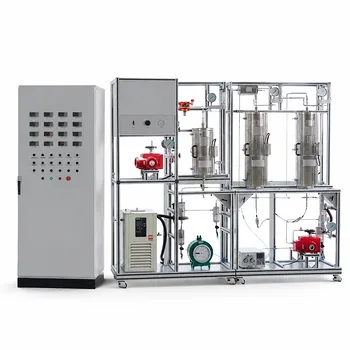
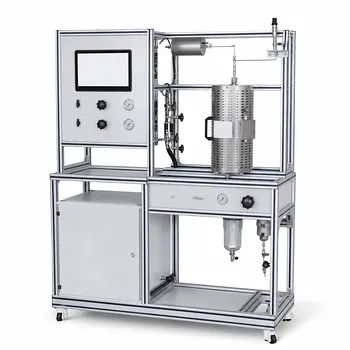
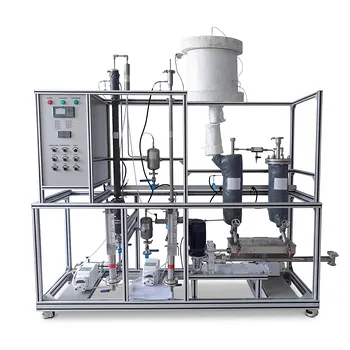
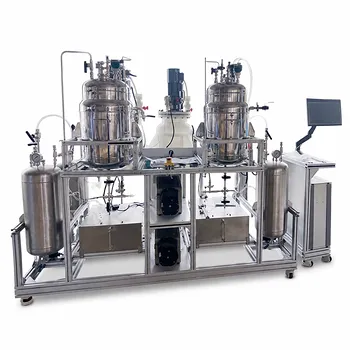
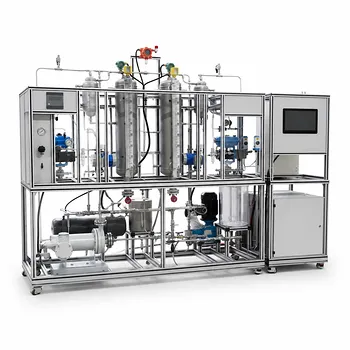
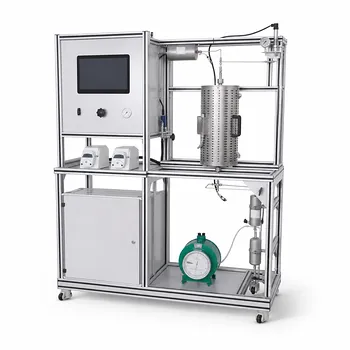
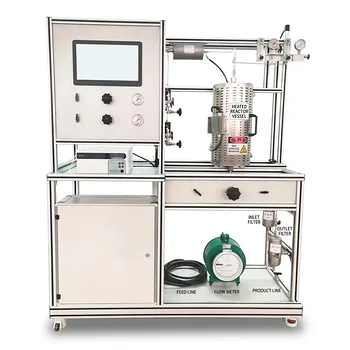
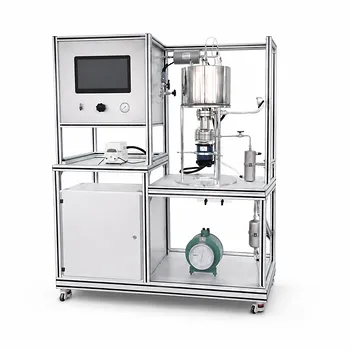
Are you looking to achieve reliable, reproducible experimental data in your chemical engineering lab? LABPARK provides state-of-the-art Educational and Vocational Unit Operations Pilot Plants in chemical engineering, bioprocess & biotech, and environmental & water treatment. Specially designed for universities, research institutes, and enterprises, our systems offer precise control over reactor conditions, heat transfer, and catalyst configurations to ensure your research translates directly to industrial success.
Why Partner with LABPARK?
- Reliable Data: Emulate real-world industrial mass-transfer and pore-diffusion resistances.
- Versatile Configurations: Easily adapt feedstocks, heating profiles, and multi-bed setups.
- Academic & Vocational Value: Provide students and researchers with hands-on, industry-relevant experience.
Take the guesswork out of catalyst testing. Contact LABPARK today to discover how our pilot plants can enhance your laboratory capabilities!
Related Products
- Crude Benzene Hydrogenation Educational Unit Operations Pilot Plant
- Carbon Dioxide Hydrogen Methanol Synthesis Educational Unit Operations Pilot Plant
- Multi Functional Catalytic Reaction and Reactor Evaluation Educational Unit Operations Pilot Plant
- 100L Continuous Loop Hydrogenation Educational Unit Operations Pilot Plant
- Electrolytic Hydrogen Production Educational Unit Operations Pilot Plant
People Also Ask
- What process control features are essential in a benzene hydrogenation pilot plant? Safe & Efficient Operation
- How can flow-NMR be integrated with pilot plant reactors to monitor kinetics? A Complete Guide
- How to design experiments when runs exceed reactor capacity? Master Statistical Blocking
- How does gas flow configuration impact reactor pressure drop & catalyst efficiency? Axial-radial vs. axial flow.
- How do bulk and solution polymerization compare? Key pilot plant reactor design tips.