Knowledge Chemical Engineering Education How HF Reactivity Affects Pilot Plant Material Choice: Crucial Design Rules
Author avatar

Tech Team · LABPARK

Updated 1 month ago

How HF Reactivity Affects Pilot Plant Material Choice: Crucial Design Rules


The aggressive reactivity of hydrofluoric acid creates a non-negotiable material constraint: you simply cannot use anything containing silica. This unique chemical behavior eliminates glass and ceramics as construction options, forcing engineers to choose between sophisticated fluoropolymers for chemical inertness or specific nickel-copper alloys that weaponize the corrosion process to protect themselves. The selection is not just about preventing a leak—it’s about eliminating the potential for a catastrophic, runaway reaction that generates toxic gas.

The core challenge of handling HF is that it reacts chemically with passive materials like glass, but only forms a stable, passive layer with reactive metals like nickel and copper. This fundamental difference dictates that pilot plant design must prioritize either a chemically inert barrier (plastics) or a controlled, self-limiting surface reaction (metals), while always ensuring zero moisture ingress to prevent the acid from becoming violently aggressive.

The Non-Negotiable Rule: Avoiding the Glass Trap

The very first, non-negotiable decision in any HF pilot plant design is the complete exclusion of glass.

The Chemistry of Destruction

The problem is fundamentally chemical. Hydrofluoric acid aggressively attacks silica (SiO2), the primary network-forming component of glass. This reaction produces gaseous silicon tetrafluoride (SiF4) and water.

Why Glass Is a Critical Hazard

Using a borosilicate glass sight gauge or reactor is not just a material compatibility failure; it creates a runaway hazard. The reaction etches and weakens the glass, leading to a catastrophic rupture. Simultaneously, it generates toxic SiF4 gas, turning a containment failure into a safety incident.

Engineering the Solution: Two Paths to Containment

Once silica-based materials are ruled out, the engineering solution splits into two distinct paths: absolute chemical inertness, or controlled metallic passivation.

Path 1: Fluoropolymers (The Inert Barrier)

If your process operates at lower temperatures and pressures, high-performance plastics provide a robust solution. Polytetrafluoroethylene (PTFE) and Polyvinylidene fluoride (PVDF) are fully fluorinated carbon backbones.

The carbon-fluorine bond is incredibly strong and chemically inaccessible. To the aggressive fluoride ion in HF, this surface looks like a perfectly inert, impenetrable wall, making these materials ideal for linings, gaskets, and tubing.

Path 2: Reactive Metal Alloys (The Protective Crust)

When you need structural strength or thermal conductivity that plastics cannot provide, you turn to specific metals. This is a counter-intuitive strategy where you use the metal's reactivity to your advantage. Nickel-copper alloys (like Monel) and pure copper do not resist HF; they immediately react with it.

The Passivation Principle

This instant reaction forms a dense, tightly adherent layer of metal fluoride (like copper fluoride, CuF2). Crucially, this fluoride crust is completely non-porous and non-reactive. It acts as a perfect physical barrier, instantly stopping any further corrosion of the base metal underneath.

Understanding the Critical Limitations

No material choice is a magic bullet. Trusting a material without understanding its operational limits is a recipe for disaster.

The Mechanical Weakness of Plastics

Fluoropolymers are chemically perfect but mechanically complex. PTFE is notorious for "cold flow" under sustained mechanical load. A flanged PTFE-lined pipe can leak over time as the material deforms, unless the design specifically accommodates this behavior with proper gasket compression techniques.

The Moisture Sensitivity Factor

The corrosion data for metal alloys is based on anhydrous HF. The presence of even trace amounts of water fundamentally changes the game. Water ionizes HF, creating an acidic, electrically conductive solution. This negates the non-conductive property of anhydrous acid and can destabilize the protective fluoride layer, leading to rapid, severe corrosion.

The Peril of Mixing Materials

You must isolate concepts from different safety protocols. A storage solution for flammable solvents (like high-density polyethylene) has no bearing on HF safety. Furthermore, the behavior of a weak acid in an HF solvent is a distinct physical chemistry phenomenon and does not inform the mechanical construction material choice for a pilot plant handling concentrated HF.

Making the Right Choice for Your Unit Operation

Your final material specification must align the equipment's primary function with the specific physical state and temperature of your process.

  • If your primary focus is low-pressure mixing or storage at ambient temperature: PTFE or PVDF components provide the most chemically inert and cost-effective solution for linings and seals, provided mechanical creep is managed.
  • If your primary focus is a high-temperature reaction or needing structural metal strength: Prioritize nickel-copper alloys like Monel, verifying they are rated for your process temperature and ensuring a strict anhydrous environment to maintain the passive fluoride layer.
  • If your primary focus is operator safety and system longevity: The critical design feature is total moisture exclusion via hermetic sealing, as even condensation from the air will transform a manageable material into a violently corrosive one.

The successful containment of hydrofluoric acid relies less on finding a universally resistant material and more on engineering an environment where your chosen material’s specific defense mechanism can function flawlessly.

Summary Table:

Material Type Compatibility Mechanism & Behavior Key Limitations
Silica & Glass Highly Incompatible Reacts to form toxic $SiF_4$ gas and water Catastrophic rupture hazard
Fluoropolymers (PTFE, PVDF) Compatible (Low Temp/Pressure) Chemically inert carbon-fluorine barrier Subject to "cold flow" deformation under load
Nickel-Copper Alloys (Monel) Compatible (High Temp/Pressure) Forms a protective, passive metal fluoride crust Vulnerable to rapid corrosion if moisture is present

Build Safe and Compliant Chemical Engineering Unit Operations with LABPARK

Handling highly reactive chemicals like hydrofluoric acid requires specialized engineering expertise and precise equipment design. LABPARK provides premium Educational and Vocational Unit Operations Pilot Plants in chemical engineering, bioprocess & biotech, and environmental & water treatment tailored for universities, research institutes, and enterprises.

Whether your process demands inert fluoropolymer linings or robust, passivated metal alloy reactors, we deliver systems engineered for absolute safety and long-term durability.

Contact LABPARK experts today to customize your pilot plant unit operations!

Related Products

People Also Ask

Related Products

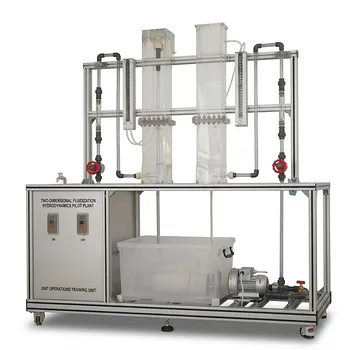
Two-Dimensional Fluidization Hydrodynamics Educational Pilot Plant for Unit Operations Training

Two-Dimensional Fluidization Hydrodynamics Educational Pilot Plant for Unit Operations Training

Explore gas-solid and liquid-solid fluidization hydrodynamics with our transparent 2D educational pilot plant. Ideal for chemical engineering unit operations labs, it demonstrates fixed to fluidized bed regimes, measures pressure drop, and integrates QR-code digital learning for enhanced student training.

Methane Cracking Educational Unit Operations Pilot Plant

Methane Cracking Educational Unit Operations Pilot Plant

This bench-scale methane cracking educational pilot plant provides hands-on catalytic conversion training with a 1000°C furnace, seven mass flow controllers, and real-time automation for safe, curriculum-aligned experiments. Designed for university teaching of unit operations and reaction engineering.

Electrolytic Hydrogen Production Educational Unit Operations Pilot Plant

Electrolytic Hydrogen Production Educational Unit Operations Pilot Plant

Bench-scale electrolytic hydrogen production pilot plant designed for university engineering labs. Provides hands-on training in water electrolysis, gas-liquid separation, and process safety. Fully customizable system with digital PID control, corrosion-resistant components, and hydrogen gas detector. Ideal for chemical engineering curricula.

Steam Methane Reforming Hydrogen Production and Purification Educational Pilot Plant

Steam Methane Reforming Hydrogen Production and Purification Educational Pilot Plant

This bench-scale educational pilot plant combines steam methane reforming with hydrogen purification, offering safe, hands-on unit operations training for university engineering laboratories. Its customizable design and high-precision monitoring enable real-time study of catalysis, phase separation, and process dynamics.

100L Continuous Loop Hydrogenation Educational Unit Operations Pilot Plant

100L Continuous Loop Hydrogenation Educational Unit Operations Pilot Plant

This 100L continuous loop hydrogenation pilot plant is designed for chemical engineering education, featuring 316 stainless steel construction, advanced gas-liquid mass transfer components, explosion-proof safety systems, and a 15.6-inch touchscreen with 5G connectivity, cloud data logging, bridging theory and industry.

Water Electrolysis Hydrogen Production and Storage Educational Pilot Plant

Water Electrolysis Hydrogen Production and Storage Educational Pilot Plant

Integrated pilot-scale training system for higher education engineering labs. Features AWE/PEM electrolysis, adjustable DC power, PLC controls, gas-liquid separation, and pressurized hydrogen storage. Hands-on learning in green hydrogen, process control, and safety, ideal for chemical and energy departments.

Fluidized Bed Gas Solid Catalytic Reaction Educational Pilot Plant

Fluidized Bed Gas Solid Catalytic Reaction Educational Pilot Plant

Our educational fluidized bed gas-solid catalytic reaction pilot plant is ideal for chemical engineering labs. Students study fluidization dynamics, catalyst evaluation, and process control hands-on. Features include a customizable reactor, touchscreen HMI, and safety interlocks for safe, curriculum-aligned experiments.

Multi-Functional Special Distillation Educational Pilot Plant

Multi-Functional Special Distillation Educational Pilot Plant

Versatile multi-functional special distillation pilot plant for chemical engineering education. Supports continuous, vacuum, azeotropic, reactive, extractive distillation. Transparent glass columns enable real-time visual observation of hydrodynamics and separation processes.

Continuous Batch Extractive Distillation Educational Pilot Plant

Continuous Batch Extractive Distillation Educational Pilot Plant

Versatile pilot plant for continuous, batch, and extractive distillation training. High-borosilicate glass column for visualizing hydraulics, 15.6-inch touchscreen with data logging, precise reflux ratio control 1-99, and durable corrosion-resistant frame. Ideal for chemical engineering education and process research.

Crude Benzene Hydrogenation Educational Unit Operations Pilot Plant

Crude Benzene Hydrogenation Educational Unit Operations Pilot Plant

Advanced pilot plant for higher education, enabling hands-on study of crude benzene hydrogenation and gas-liquid catalytic reactions. Triple-stage reactor system with precision flow and temperature control, AI-driven PID, remote monitoring, and comprehensive safety interlocks. Customizable for curriculum integration.

Electrolyte Distillation Purification and Formulation Educational Pilot Plant

Electrolyte Distillation Purification and Formulation Educational Pilot Plant

Integrated bench-to-pilot scale educational pilot plant for electrolyte distillation, purification, and formulation with borosilicate glass construction, PLC automation, touchscreen HMI, and advanced industrial safety features for hands-on chemical process training, ideal for chemical engineering and materials science curricula.

Methanol Synthesis and Catalyst Performance Evaluation Educational Unit Operations Pilot Plant

Methanol Synthesis and Catalyst Performance Evaluation Educational Unit Operations Pilot Plant

Bench-scale methanol synthesis and catalyst evaluation educational pilot plant for chemical engineering labs to study catalytic kinetics, high-pressure operations, process control, and unit operations under realistic conditions with industrial safety features, precision gas delivery, data acquisition, and intelligent monitoring.

Carbon Dioxide Hydrogen Methanol Synthesis Educational Unit Operations Pilot Plant

Carbon Dioxide Hydrogen Methanol Synthesis Educational Unit Operations Pilot Plant

Hands-on educational pilot plant for methanol synthesis from carbon dioxide and hydrogen. Enables practical study of high-pressure catalysis, unit operations, and process control. Features real-time data acquisition, safety systems, and customizable experiment modules for undergraduate and graduate chemical engineering laboratories.

Carbon Dioxide Hydrogenation Methanol Synthesis Educational Unit Operations Pilot Plant

Carbon Dioxide Hydrogenation Methanol Synthesis Educational Unit Operations Pilot Plant

Pilot-scale educational system for carbon dioxide hydrogenation to methanol. Designed for unit operations teaching, it features a fixed-bed reactor, three-stage heating, dual mass flow controllers, and a 15.6-inch touchscreen with data acquisition. Perfect for chemical engineering and sustainable energy courses.

Alkaline Membrane Water Electrolysis Educational Pilot Plant Unit Operations Training System

Alkaline Membrane Water Electrolysis Educational Pilot Plant Unit Operations Training System

Hands-on educational pilot plant for alkaline membrane water electrolysis hydrogen production, integrating unit operations training with industrial PLC control, real-time data logging, customizable design, durable 316L stainless steel construction, explosion-proof safety, and modern 5G connectivity for university laboratories.

Fixed-Bed Chemical Reaction and Gas Dust Tar Removal Unit Operations Pilot Plant

Fixed-Bed Chemical Reaction and Gas Dust Tar Removal Unit Operations Pilot Plant

Integrated educational pilot plant for studying catalytic gas-solid reactions and downstream gas purification. Features dual fixed-bed reactor, three-stage heating, and touchscreen control for hands-on engineering training. Ideal for chemical and environmental engineering curricula.

Ultrafiltration Membrane Separation Educational Pilot Plant

Ultrafiltration Membrane Separation Educational Pilot Plant

This ultrafiltration membrane separation educational pilot plant enables undergraduate students to process PVA solutions, study hollow fiber membrane dynamics, and perform quantitative analysis with spectrophotometry for hands-on learning of unit operations and industrial maintenance and membrane cleaning protocols.

Comprehensive Fluid Mechanics Educational Unit Operations Pilot Plant

Comprehensive Fluid Mechanics Educational Unit Operations Pilot Plant

Hands-on fluid mechanics pilot plant for engineering education covering over 13 principles including pipe flow, minor losses, flowmeter calibration, and pump performance with industrial-grade components, smooth and rough piping, venturi and orifice flowmeters, and centrifugal pump testing and analysis.

Multifunctional Membrane Separation Educational Pilot Plant with Ultrafiltration, Nanofiltration, Reverse Osmosis

Multifunctional Membrane Separation Educational Pilot Plant with Ultrafiltration, Nanofiltration, Reverse Osmosis

An integrated laboratory bench-scale membrane separation system for higher education engineering labs combining Ultrafiltration, Nanofiltration, and Reverse Osmosis processes. Features industrial PLC control with touch-screen HMI, transparent piping, and academic assessment software. Ideal for chemical and environmental engineering curricula.

Educational Unit Operations Pilot Plant for Intraparticle Diffusion Effective Factor Measurement

Educational Unit Operations Pilot Plant for Intraparticle Diffusion Effective Factor Measurement

Designed for chemical engineering university labs, this pilot plant allows hands-on determination of catalyst particle intraparticle diffusion effective factors and gas-solid reaction kinetics using a fixed-bed tubular reactor with industrial touchscreen control, bridging theory and practical reactor design.


Leave Your Message