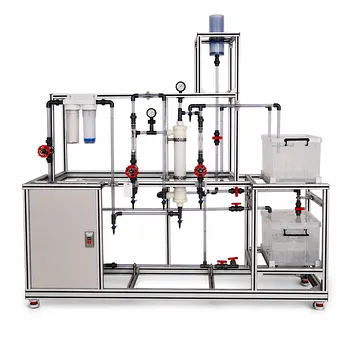
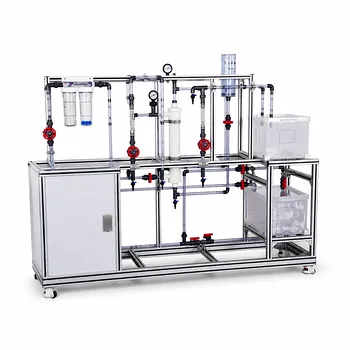
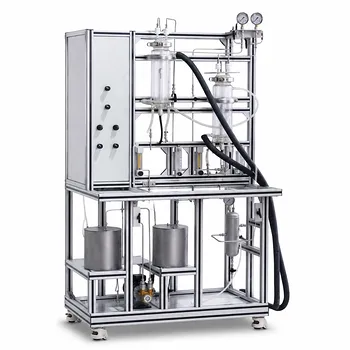
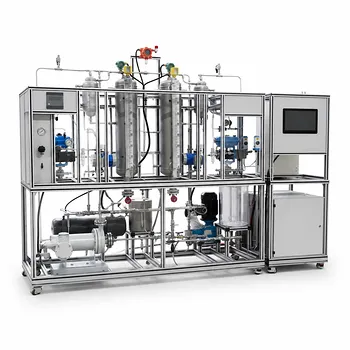
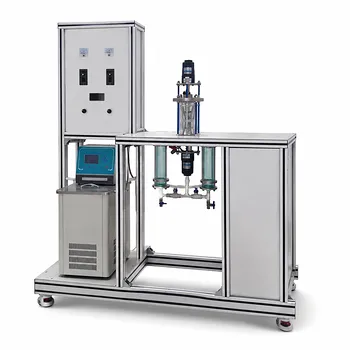
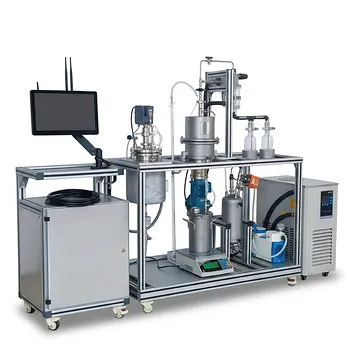
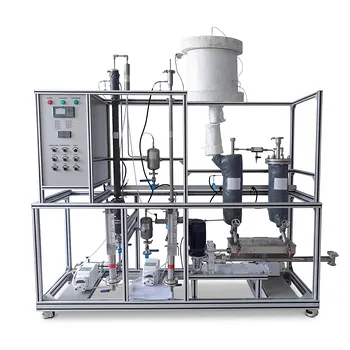
Hybrid membrane configurations are the cornerstone of modern pilot-scale separations. Integrating microfiltration (MF) with ultrafiltration (UF) creates a staged barrier system that solves the core challenge of balancing high separation efficiency with long-term operational stability. For bioprocess pilot plants, MF clarifies cell-rich broths while UF gently concentrates valuable proteins; in wastewater treatment, MF pre-treatment physically shields UF membranes from crippling fouling. These hybrid setups let researchers and operators fine-tune multi-stage parameters, achieving product purity and contaminant removal that single-stage systems cannot match.
The central advantage of coupling MF and UF is a protective pre-treatment cascade that dramatically reduces fouling on downstream membranes. This unlocks higher sustainable flux, longer membrane life, and more reproducible results. In bioprocessing, it enables scalable, non-thermal concentration of heat-sensitive biologics; in wastewater, it ensures robust removal of suspended solids, pathogens, and microplastics. A pilot plant is the ideal proving ground to optimize these cascading barriers before full-scale deployment.
The Mechanics of a Hybrid MF-UF Pilot System
How Pre-treatment Protects Downstream Performance
MF membranes act as a physical sacrificial barrier, removing suspended solids, large colloids, and even microplastics before the stream reaches the tighter UF layer. This drastically reduces the loading of foulants that would otherwise blind the UF membrane.
In bioprocess, MF eliminates cell debris and biomass, while in environmental applications it strips out particulate organic matter. Because the UF stage deals with a much cleaner feed, its flux stays higher and cleaning intervals lengthen. The result is a more reliable, lower-maintenance pilot operation.
Sequential Purification: From Clarification to Concentration
The hybrid design naturally mirrors step-wise downstream processing. MF delivers a clarified, particle-free intermediate that UF can then tackle for precise molecular separations.
In a biotech pilot, MF harvests whole cells, then UF concentrates the target protein or enzyme while removing smaller impurities. For wastewater, MF can remove turbidity and large pathogens, after which UF reliably eliminates viruses and nanoscale organic molecules. This sequential approach drives purity levels impossible with a single membrane stage.
Why Bioprocess Pilot Plants Depend on Hybrid Configurations
Gentle Processing of Heat-Sensitive Products
All membrane filtration in a hybrid train operates at ambient temperature and without a phase change. There is no thermal degradation of enzymes, antibiotics, or active biological compounds. This preserves product activity and native structure that thermal concentration would destroy.
Moreover, the process requires no chemical additives or external reagents. The target biomolecules remain uncontaminated, simplifying downstream formulation. Pilot plants demonstrate this gentle, high-retention purification directly.
Mastering Fouling Control Through Crossflow Operation
Hybrid MF-UF systems in bioprocessing rely on crossflow filtration to moderate fouling. The sweeping action of the feed stream across the membrane surface limits cake buildup. At pilot scale, operators learn to balance crossflow velocity, transmembrane pressure, and shear rate to maximize flux without damaging delicate cells or proteins.
Because biological solutions aggressively foul hydrophobic membranes, pilot tests often use hydrophilically modified polysulfone (PES) or polyethersulfone (PSU) UF membranes. Blending in polyvinylpyrrolidone (PVP) or polyethylene glycol (PEG) reduces non-specific protein adsorption. Pilot runs also perfect cleaning-in-place (CIP) protocols, teaching exactly when and how to restore permeability without dismantling the system.
Advancing Wastewater Treatment with Staged Filtration
Targeting Emerging Contaminants and Reducing Energy
In wastewater pilot plants, an MF → UF cascade removes microplastics, residual suspended solids, and bacteria in sequence. The UF stage can also cut dissolved organic carbon and prepare water for downstream nanofiltration or reverse osmosis polishers.
Because membrane separation is pressure‑driven and does not require a phase change, the hybrid system consumes far less energy than thermal distillation. By measuring pressure drops and selectivity in real time, pilot‑plant researchers demonstrate process intensification—getting more contaminant removal per unit of energy and footprint.
Smart Fouling Mitigation Strategies
The staged design lets innovators test advanced anti‑fouling technologies before real‑world deployment. A pilot plant can trial UF membranes coated with graphene oxide or biomimetic films that repel foulant adhesion.
Another proven hybrid tactic is placing an activated carbon adsorption unit ahead of the membrane module. This pre-step adsorbs dissolved organic foulants that would otherwise plug pores. Together with MF pre‑treatment, these strategies extend membrane life and reduce chemical cleaning frequency—a key sustainability win validated at pilot scale.
Navigating the Complexities and Trade-offs of Hybrid Systems
The Persistent Challenge of Membrane Fouling
Even with a protective MF barrier, fouling is never fully eliminated. Protein‑rich streams can still form a gel layer on UF membranes, and hydrophobic base polymers like PSU remain vulnerable to rapid adsorption. Operators must guard against irreversible membrane drying, which can permanently destroy permeability. Treating membranes with a humectant like glycerin during idle periods becomes a mandatory maintenance step.
Balancing Selectivity, Flux, and Operational Cost
Adding an MF stage increases capital cost, footprint, and system complexity. Every extra pump, housing, and set of sensors introduces a new control variable and potential failure point. The payoff must be a real gain in separation quality or a dramatic reduction in UF cleaning frequency. Pilot plant work is essential to prove that the cost of complexity is outweighed by the operational savings and product purity.
Material Limitations and Demanding Maintenance
Modified hydrophilic membranes improve fouling resistance but can be more expensive and less chemically robust in aggressive cleaning environments. Operators must verify long‑term compatibility with CIP chemicals and avoid over‑compacting the membrane layer at high pressures. These trade‑offs can only be mapped accurately through systematic pilot testing.
Making the Right Hybrid Configuration Choice for Your Pilot Plant
The ideal MF‑UF integration depends squarely on your process goals. Use these targeted strategies to guide your pilot‑scale design:
- If your primary focus is maximizing bioproduct purity and yield: Start with an MF clarification step to remove cells and debris, then concentrate the product with a hydrophilic‑modified UF membrane; this preserves biological activity and minimizes yield loss to fouling.
- If your primary focus is extending membrane life in high‑foulant wastewater: Enforce rigorous MF pre‑treatment and consider adding an activated carbon adsorption unit upstream. This layered defense sharply reduces organic loading on the UF stage, cutting cleaning frequency.
- If your primary focus is energy efficiency and cold processing: A fully pressure‑driven hybrid cascade is optimal; operate the UF loop at the lowest viable crossflow velocity and pressure to minimize energy draw while still controlling fouling.
- If your primary focus is education and process development: Use the pilot plant to methodically map the influence of feed flow rate, transmembrane pressure, and CIP intervals on long‑term flux. Test emerging anti‑fouling coatings and humectant preservation protocols to build a transferable design rulebook.
By deliberately engineering your hybrid MF‑UF pilot configuration, you transform a simple filtration trial into a robust, scalable blueprint for downstream success.
Summary Table:
| Membrane Stage | Target Impurities / Solutes | Main Role in Hybrid System | Key Pilot Benefits |
|---|---|---|---|
| Microfiltration (MF) | Suspended solids, cell debris, microplastics | Sacrificial pre-treatment & clarification | Shields downstream UF membranes, reduces fouling |
| Ultrafiltration (UF) | Target proteins, viruses, macromolecules | Concentration & final purification | High product purity, gentle processing of biomolecules |
Optimize Your Membrane Separation Processes with LABPARK
Looking to master multi-stage filtration scaling or train the next generation of engineers? LABPARK provides state-of-the-art Educational and Vocational Unit Operations Pilot Plants in chemical engineering, bioprocess & biotech, and environmental & water treatment.
Designed specifically for universities, research institutes, and enterprises, our pilot plants empower you to:
- Optimize configurations: Fine-tune hybrid MF-UF parameters for maximum flux and minimal fouling.
- Test innovations: Evaluate advanced anti-fouling coatings and cleaning-in-place (CIP) protocols.
- Scale with confidence: Bridge the gap between laboratory research and industrial-scale deployment.
Ready to elevate your research and training capabilities? Contact LABPARK today to discuss your custom pilot plant requirements!
Related Products
- Multifunctional Membrane Separation Educational Pilot Plant with Ultrafiltration, Nanofiltration, Reverse Osmosis
- Ultrafiltration Membrane Separation Educational Pilot Plant
- Multi Functional Membrane Crystallization Educational Unit Operations Pilot Plant
- Multi-Functional Membrane Separation Educational Pilot Plant for Unit Operations Lab
- Hollow Fiber Ultrafiltration Membrane Separation Educational Pilot Plant
People Also Ask
- How do PEI, PVDF, and PSU membranes compare in pilot plants? Find the best fit.
- Pervaporation vs. Vapor Permeation: Handling Suspended Solids in Membrane Pilot Plants
- What are the trade-offs of polymer vs inorganic membranes in teaching pilot plants? Key laboratory comparison.
- How can operators optimize operating conditions and cleaning protocols in membrane separation pilot plants to mitigate fouling?
- What are the advantages of membrane separation in pilot plants? Efficient Organic Vapor Recovery