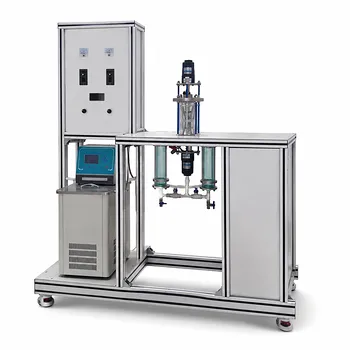
Uniform coating in a Wurster fluid bed pilot plant is an exercise in controlled statistics, not chance.
The process works by cyclically lifting particles through a high‑velocity draft tube where each particle receives a tiny droplet of coating solution on every pass. Uniformity across thousands of multiparticulates is then achieved by ensuring that every particle passes through the spray zone a sufficient number of times under stable, repeatable conditions. This article breaks down the hydrodynamic core of the Wurster column and the critical process design factors that students and researchers must manipulate to produce reproducibly coated drug delivery systems.
The central insight for achieving uniform multiparticulate coating in a pilot‑scale Wurster column is twofold: create a robust, pressure‑driven circulation loop that guarantees each particle sees the spray zone repeatedly, and tightly control droplet deposition so that the total coating mass per particle converges to a narrow distribution. The entire setup becomes a statistical engine where the number of cycles and the per‑cycle coating dose define the final outcome.
The Wurster Column Mechanism: A Predictable Circulation Loop
The Wurster column does not simply spray a bed of particles; it orchestrates a directional, repeating pathway. Understanding this circulation is the first step to designing uniform coatings.
Leveraging the Pressure Differential for Particle Lift
A specially designed air distributor plate sends the majority of the drying gas at high velocity directly up through the central draft tube.
This creates a pressure drop inside the column that is lower than that of the surrounding annular bed, drawing particles from the downbed into the tube.
The continuous pressure differential acts as a pump, ensuring a steady flow of particles into the coating zone.
The Spray Zone: A Moment of Coating
Particles accelerate upward past a bottom‑spray nozzle located near the base of the draft tube.
Here they intercept atomized coating solution droplets, receiving only a fraction of the total intended coat in a single pass.
Because only a small percentage of particles are coated at any instant, the coating process becomes a repeated micro‑dosing event rather than a bulk operation.
Disengagement and Return to the Downbed
After exiting the top of the draft tube, particles enter the expansion chamber, where the gas velocity drops below the minimum entrainment velocity.
This abrupt deceleration causes the particles to disengage from the air stream and fall back into the outer annular downbed.
They then flow under gravity toward the base, where the pressure differential pulls them back into the column, restarting the cycle.
Critical Process Design Factors for Uniform Multiparticulate Coating
Turning the circulation loop into a reliable coating platform demands precise manipulation of a few interrelated variables. These are the levers that determine whether the statistical coating engine delivers a reproducible product.
Solids Content and Spray Rate – The Statistical Coating Equation
The coating solution’s solids content directly influences droplet size, drying behaviour, and the amount of coating material delivered per pass.
A higher solids content can increase the coating mass deposited with each hit, but it also raises the risk of droplet drying too slowly or causing particle agglomeration.
The spray rate defines how many droplets are generated per unit time. Together with the circulation rate, it governs the probability that a given particle will receive a droplet on each pass and how many cycles are needed to reach the target coating weight.
For uniform results, the spray rate must be balanced against the drying capacity so that each droplet attaches and forms a smooth film before the particle cycles back.
Drying Gas Flow Rate – The Engine of Circulation
The gas flow rate dictates the velocity inside the draft tube and, consequently, the pressure differential that drives circulation.
Too low a flow rate yields a weak fountain and poor particle mixing; some particles never enter the spray zone, leading to broad coating thickness distributions.
Too high a flow rate can induce attrition, cause particles to bypass the spray zone entirely, or create dead zones. The optimal flow rate establishes a stable, repeatable cycle where the particle residence time in the spray zone is consistent across the batch.
Inlet Temperature and Humidity Control – Balancing Drying and Stickiness
Inlet air temperature determines the evaporation rate of solvent from the applied coating droplets.
If the temperature is too low, droplets remain wet for too long, causing particles to stick together or agglomerate in the spray zone.
If the temperature is too high, spray droplets may dry before contacting the particle surface, resulting in dust formation and poor film formation.
Humidity also plays a subtle role, especially with aqueous coatings, influencing the moisture content of the circulating particles and the overall drying kinetics.
Applying Quality by Design (QbD) in a Pilot Plant Environment
A pilot‑scale Wurster column is an ideal training ground for implementing QbD principles in multiparticulate coating development.
Defining the Design Space for Coating Thickness
By systematically varying critical process parameters (CPPs)—airflow rate, spray rate, inlet temperature—and measuring the resulting coating weight gain and uniformity, researchers can map a robust design space.
This space defines the ranges within which the process produces acceptable critical quality attributes (CQAs), such as a target coating thickness with a narrow standard deviation.
The pilot plant thus transforms from a simple coater into a knowledge‑generation tool, making the relationship between process settings and product performance explicit.
Demonstrating Osmotic Multiparticulate Control
For complex systems like osmotic rupturing multiparticulates, where drug release is directly governed by coating thickness, the pilot plant becomes indispensable.
Students can manipulate the spray rate or solids content and observe a clear, causal impact on dissolution profiles.
This hands‑on correlation cements the understanding that uniform coating is not a cosmetic property but a functional requirement for patient safety and efficacy.
Understanding the Trade-offs and Common Pitfalls
Even with sound principles, a Wurster pilot plant presents practical challenges that researchers must anticipate.
The Risk of Agglomeration vs. Spray Rate
Increasing the spray rate can shorten process time, but it pushes the system towards overwetting.
If the spray overwhelms the drying capacity, particles form wet bridges and agglomerate into larger clusters, ruining both uniformity and yield.
The safe spray rate is a function of the inlet temperature, gas flow, and coating formulation. Finding the edge of this boundary without crossing it is a key experimental goal.
Sampling Bias and True Uniformity
Taking a sample from the surface of the bed may not represent the entire batch.
Particles that have circulated fewer times may be concentrated in certain regions. A proper assessment of coating uniformity therefore requires multiple samples taken from different locations and at different times, or in‑line process analytical technology (PAT) to track coating mass in real time.
Scale‑Up Considerations from Pilot to Production
While the pilot plant demonstrates the fundamental physics, the absolute values of airflow, pressure drop, and circulation time do not scale linearly.
A production column’s larger dimensions alter the flow regime and can change the particle residence time distribution.
Nevertheless, the pilot‑scale study defines the critical relationships between CPPs and CQAs, providing the foundation for a rational scale‑up strategy based on maintaining equivalent process conditions.
How to Apply This to Your Pilot Plant Research
The right experimental approach depends on your specific goal. Use these targeted strategies to get the most from your Wurster column.
- If your primary focus is teaching the fundamentals of coating uniformity: Start by varying only the gas flow rate while holding spray rate and temperature constant, and map the resulting coating weight distribution. This isolates the role of circulation.
- If your primary focus is developing a robust formulation for a new drug: Use a low‑solids coating solution initially to establish a stable circulation pattern before increasing solids to the target level, and monitor agglomeration closely.
- If your primary focus is optimizing process efficiency without sacrificing quality: Perform a design‑of‑experiments (DoE) study with airflow, spray rate, and temperature, measuring both coating uniformity and yield to identify the most productive yet safe operating window.
By treating your Wurster pilot plant as a controlled statistical coating engine, you turn a seemingly random process into a reproducible platform for engineering next‑generation multiparticulate drug delivery systems.
Summary Table:
| Critical Process Parameter | Impact on Coating Uniformity | Key Risk if Uncontrolled |
|---|---|---|
| Solids Content & Spray Rate | Controls droplet size and coating mass deposited per cycle | Agglomeration or spray drying (poor film formation) |
| Drying Gas Flow Rate | Drives the pressure differential and cyclic circulation loop | Weak fluidization (uneven coating) or particle attrition |
| Inlet Air Temp & Humidity | Governs solvent evaporation rate and film-forming quality | Overwetting (particle stickiness) or premature droplet drying |
Elevate Your Process Research & Education with LABPARK
Are you looking to optimize your pharmaceutical process development or enhance your hands-on engineering curriculum? LABPARK provides premium Educational and Vocational Unit Operations Pilot Plants in chemical engineering, bioprocess & biotech, and environmental & water treatment.
Specifically designed for universities, research institutes, and enterprises, our advanced pilot systems offer the precise control and reliability needed to master complex processes like fluid bed coating.
Contact LABPARK today to discuss your laboratory requirements and discover how our tailored pilot plants can accelerate your research and training outcomes!
Related Products
- Packed Bed Absorption Educational Unit Operations Pilot Plant
- Multi-Functional Drying Educational Unit Operations Pilot Plant
- Fluidized Bed Gas Solid Catalytic Reaction Educational Pilot Plant
- Comprehensive Liquid-Liquid Extraction Pilot Plant for Engineering Education
- Educational Rotary Disc Liquid-Liquid Extraction Pilot Plant
People Also Ask
- How Do Flow Regimes Transition in Packed Bed Pilot Plants? Key Scale-up Insights
- How does reactant concentration determine absorption column control? Gas-film vs. dual-film.
- How is the packing height of an absorption column calculated? Master HTU & NTU Concepts
- How does static vs. operating holdup affect pilot plant calibration? Avoid Critical Scale-Up Errors
- Why is counter-current flow selected for gas absorption? Maximize Pilot Plant Efficiency