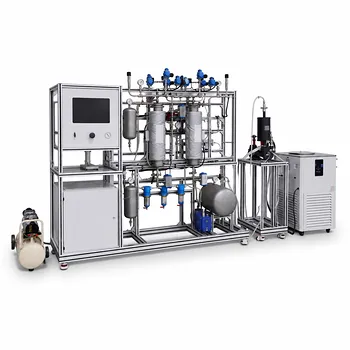
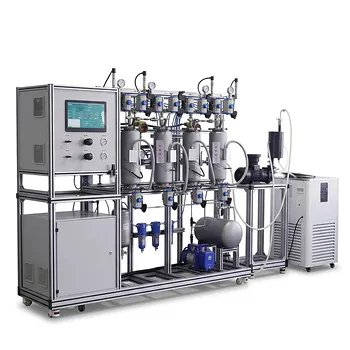
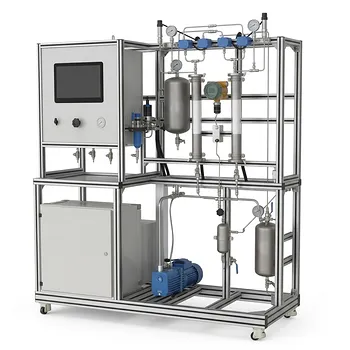
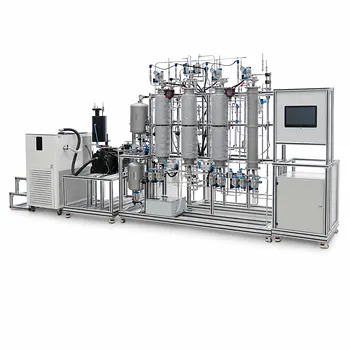
The safety and integrity of a gas-separation membrane module in an educational pilot plant hinge on one critical design detail: the chemical and physical compatibility of its sealing materials.
Sealing materials—including O-rings, gaskets, and the tubesheet resin—must not only maintain a gas-tight barrier against flammable, toxic, or asphyxiating gases, but also prevent destructive interactions with the membrane polymer itself. If the sealant plasticizes, shrinks, or cracks during curing or operation, it can create hazardous bypass pathways or catastrophic leaks, undermining both student safety and experimental validity.
Sealing material choice is not a maintenance afterthought; it is a fundamental safety design constraint.
For educational pilot plants, where varied gas streams and membrane materials are frequently tested, the risk of chemical incompatibility can rapidly transform an instructive experiment into a dangerous containment failure. The design must prioritize consistent compression on O-rings and rigorous compatibility between tubesheet resins and the membrane to prevent leaks, contamination, and long-term module degradation.
The High-Stakes Safety Requirement in Educational Pilot Plants
Educational gas-separation pilot plants often handle gases that are flammable (e.g., hydrogen, methane), poisonous (e.g., carbon monoxide), or asphyxiating (e.g., nitrogen, carbon dioxide). A single leak caused by seal degradation can trigger a fire, toxic exposure, or oxygen depletion in the laboratory.
This demands that every seal—from the module’s end caps to the tubesheet—be designed and validated for absolute gas-tightness under the expected pressure, temperature, and chemical conditions.
Beyond immediate safety, experimental data integrity depends on uncontaminated separation. Bypass or cross-leakage due to seal failure distorts permeability and selectivity measurements, rendering the research or teaching exercise meaningless. Therefore, sealing compatibility directly shapes both the risk profile and the pedagogical value of the plant.
How Seal Failure Propagates in a Membrane Module
Gas-separation modules typically consist of membrane elements housed inside a pressure vessel, with tubesheets that separate the high-pressure feed side from the low-pressure permeate side.
Seal failure can occur in two primary ways:
- O-ring/Gasket Leakage: If the elastomer softens or swells from chemical attack, it loses its ability to maintain a static compression seal on the vessel or between membrane elements.
- Tubesheet Bypass: The cured resin bond between membrane and vessel can crack or delaminate, creating a direct path for gas to bypass the selective membrane layer entirely.
Both failure modes result from incompatibility between the seal material and one or more components in the system, not from mere mechanical wear.
Understanding the Critical Sealing Points
Before addressing compatibility, it’s essential to map where sealing materials are used in a typical educational module.
The Pressure Vessel and Membrane Element Interface
Most modules rely on O-rings or flat gaskets positioned between the membrane cartridge and the pressure housing. These seals must withstand the system’s maximum operating pressure while remaining chemically inert to any gas, condensate, or trace solvent vapors present.
Improper material choice here can lead to rapid hardening, swelling, or extrusion.
The Tubesheet: A Permanent Structural Seal
The tubesheet is where the membrane elements are potted into a rigid end-seal, usually using a curable resin. This seal is permanent and cannot be adjusted once cured.
Common tubesheet sealants include epoxy, silicone, and urethane resins. Their selection is a one-time design decision that governs the module’s lifetime safety.
The Compatibility Problem with Tubesheet Sealants
The primary reference highlights three dominant failure mechanisms linked to sealant-membrane incompatibility: plasticization, cracking, and curing shrinkage.
Plasticization and Solvent Attack
If the liquid resin or its curing byproducts act as a solvent for the thin selective layer of the membrane, they can plasticize the polymer skin. Plasticization drastically increases the membrane’s free volume, causing it to swell and lose its selectivity, but more critically, it weakens the adhesive bond at the interface.
For example, some epoxy formulations contain amines or solvents that aggressively soften polyimide or polysulfone membranes, leading to microcracks that later propagate under pressure.
Curing Shrinkage and Thermal Stress
Epoxy and urethane resins typically shrink by 1–5% during crosslinking. If this shrinkage is constrained by the rigid membrane fibers or vessel wall, it generates tensile stress at the interface.
Combined with the different thermal expansion coefficients of the resin, membrane, and metal housing, the seal can crack upon cooling or even during temperature swings in operation. Silicone resins, while more flexible, can also shrink and may not bond well to certain membrane polymers without a primer.
Chemical Swelling During Gas Exposure
Even after successful curing, the sealant can swell when exposed to certain gases. High-pressure carbon dioxide, for instance, is known to dissolve into and expand many polymer matrices.
If the resin swells more than the surrounding materials, it can crush the membrane or debond from the vessel. Conversely, if the membrane swells (e.g., due to heavy hydrocarbons), it can pull away from the rigid seal.
Matching the Sealant to the Membrane Polymer
Educational plants often test multiple membrane chemistries (e.g., cellulose acetate, polyimides, polysulfones, perfluoropolymers). There is no universal tubesheet resin.
Engineers must verify that the chosen sealant (epoxy, silicone, urethane) does not act as a solvent for the membrane skin, does not contain catalysts or plasticizers that migrate into the membrane, and exhibits a cure profile that minimizes interfacial stress. Pull-out or shear adhesion tests on coupon samples under gas-exposure conditions are the gold standard, but for educational setups, consulting manufacturer compatibility data and performing a simple immersion test (membrane coupon in liquid resin) can quickly flag gross incompatibility.
Material Selection for O-Rings and Gaskets
O-rings and gaskets face a different set of challenges: they must remain elastically resilient under repeated thermal cycles and pressure pulses while resisting chemical attack on their mechanical properties.
The Risk of Using Generic Elastomers
A common pitfall in educational plant assembly is the use of off-the-shelf nitrile (NBR) or EPDM O-rings.
NBR swells dramatically in the presence of aromatic hydrocarbons or ketones; EPDM degrades in many solvents. If the gas stream contains even traces of these compounds (e.g., VOCs from a previous experiment), the seals can fail without warning. Consulting chemical resistance charts and matching the gasket material to the complete gas composition is mandatory.
Recommended Materials for Broad Compatibility
For maximum safety in a teaching environment where gas mixtures may vary, PTFE-encapsulated O-rings or solid PTFE gaskets offer near-universal chemical resistance, though they require higher compression forces and are sensitive to creep.
Viton (FKM) fluorocarbon elastomers provide a better balance of chemical resistance and elastic recovery, handling many acids, fuels, and halogenated hydrocarbons. Perfluoroelastomers (FFKM) extend this range to the widest possible, but at a high cost—often justified only when the most aggressive solvents or high-temperature gases are used.
The Role of Consistent Compression Loading
The primary reference emphasizes that module design must ensure consistent compression loading on the seals.
This means using precisely machined grooves with proper fill percentages, controlled torque on end caps, and avoiding uneven clamping that can pinch or extrude the O-ring. In a student-operated pilot plant, built-in torque stops or spring-loaded compression systems can prevent human error from over-compressing and damaging the seal, or under-compressing and causing a leak.
Design Strategies to Mitigate Compatibility Risks
Real-Time Monitoring for Early Leak Detection
Integrating pressure transducers and gas-specific sensors on the permeate and vent lines can immediately detect a rise in pressure or the presence of a tracer gas where it shouldn’t be. For educational plants, this not only teaches students about process control but also serves as a critical safety layer: a sudden change in permeate pressure or composition can trip an automatic shutdown.
Temperature and Swelling Stress Management
Because polymer membranes and sealants have different thermal expansion coefficients, rapid temperature changes can induce cracking. For pilot plants that run cyclic temperature experiments, a slow, controlled ramp rate and a module design that accommodates differential movement (e.g., flexible sealing faces or compression springs) help preserve seal integrity.
Additionally, always precondition new modules by exposing them to the process gas at low pressure before full operation, allowing any initial swelling to stabilize without causing a stress spike.
Understanding the Trade-offs
No single sealing solution is perfect. Designers of educational modules must navigate these key compromises.
Chemical Resistance vs. Mechanical Resilience
PTFE-based seals offer outstanding inertness but tend to cold-flow and lose bolt load over time, requiring periodic retorquing. Viton seals maintain better elasticity but may swell in highly polar solvents. For a teaching lab that runs multiple gas types, the safety margin of near-universal resistance may outweigh the maintenance burden of PTFE, provided the module design compensates for creep.
Cure Speed vs. Interfacial Stress
Fast-cure epoxies reduce fabrication time but often generate higher exothermic heat and greater shrinkage stress. Slower-curing, flexible adhesives (like certain two-part silicones) may reduce the risk of cracking but demand longer assembly time and may have lower bond strength to stainless steel housing. The trade-off is between throughput in constructing modules and long-term seal reliability.
Cost vs. Safety Assurance
FFKM O-rings and high-purity medical-grade silicone tubesheets come with a steep price. For an educational budget, the practical approach is to limit the chemical scope of the plant to gases compatible with a well-characterized mid-range seal (e.g., Viton for hydrocarbons, PTFE for acid gases) rather than trying to achieve a universal system that is never fully safe.
Common Pitfalls to Avoid in Educational Pilot Plants
- Assuming all epoxies are equal: The same resin that works for water-based membranes may catastrophically plasticize a polyimide gas-separation membrane. Always verify compatibility with the specific membrane chemistry.
- Neglecting cure cycle control: Curing resin under ambient conditions without proper mixing, degassing, or temperature control can trap air bubbles that become leak paths under pressure.
- Using consumer-grade thread sealants: PTFE tape on threaded fittings is not a substitute for a properly designed metal-to-metal seal or O-ring. Tapes can shred and contaminate membrane surfaces.
- Ignoring the history of the gas stream: Residual solvent from a previous cleaning cycle or a trace component in the gas bottle can condense and attack seals. Plan for the worst-case chemical mix.
Making the Right Choice for Your Educational Goal
The ideal sealing strategy depends on what the pilot plant is designed to teach and the gases it will encounter. Use these guidelines to align design with educational outcomes.
- If your primary focus is demonstrating hazardous gas handling and safety protocols: Select the most chemically inert seals available (PTFE or FFKM), build in double-seal arrangements with leak detection, and emphasize teachable moments around chemical compatibility charts and curing procedures.
- If your primary focus is long-term membrane performance and research: Prioritize rigorous compatibility testing between sealant and membrane coupon, using slow-cure flexible resins that minimize stress, and invest in real-time cross-leakage monitoring to protect data integrity.
- If your primary focus is broad curriculum coverage with a single module: Limit the experimental matrix to a set of gases and membrane materials that are known to be compatible with a Viton/Epoxy combination, and clearly document the chemical boundaries for students.
- If your primary focus is budget and simplicity: Build a module based on spiral-wound cartridges with pre-verified manufacturer seals and use PTFE-encapsulated O-rings, but restrict operation to clean, non-condensing gases to avoid swelling issues.
Designing for safety and reliability in an educational gas-separation pilot plant means treating every sealing material as a critical component, not an accessory, and verifying its compatibility with the full chemical and thermal life of the experiment.
Summary Table:
| Sealing Point | Key Failure Risks | Recommended Materials |
|---|---|---|
| Vessel Interface | O-ring swelling, chemical attack, leaks | Viton (FKM), PTFE-encapsulated O-rings |
| Tubesheet Seal | Plasticization, cracking, curing shrinkage | Compatibility-tested epoxy, flexible silicones |
Ensure Safety and Precision with LABPARK
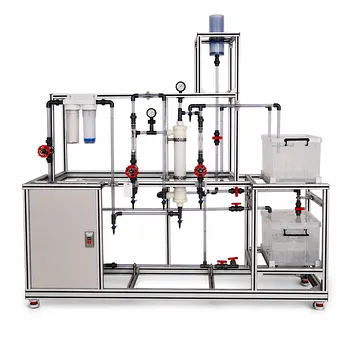
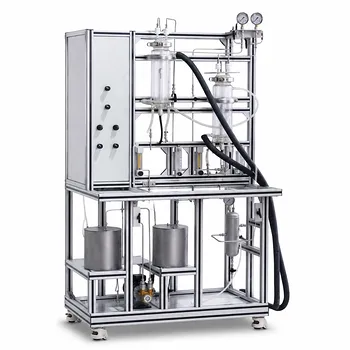
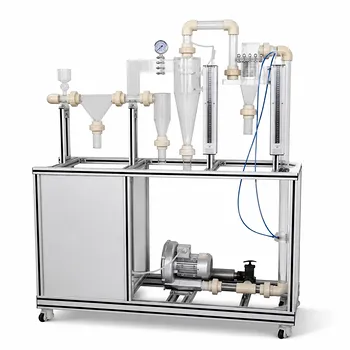
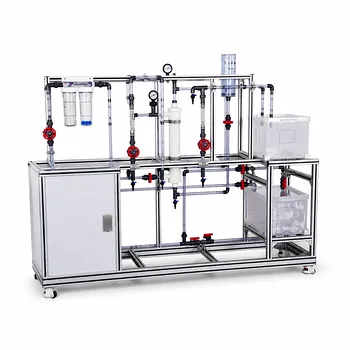
Designing safe gas-separation experiments requires rigorous material compatibility. LABPARK provides premium Educational and Vocational Unit Operations Pilot Plants in chemical engineering, bioprocess & biotech, and environmental & water treatment for universities, research institutes, and enterprises.
Our systems are engineered to prevent leakage, protect students, and secure reliable experimental data. Contact us today to discuss your laboratory's safety and educational requirements!
Related Products
- Multi-Functional Membrane Separation Educational Pilot Plant for Unit Operations Lab
- Ultrafiltration Membrane Separation Educational Pilot Plant
- Multifunctional Membrane Separation Educational Pilot Plant with Ultrafiltration, Nanofiltration, Reverse Osmosis
- Photocatalytic Membrane Separation and Degradation Unit Operations Pilot Plant
- Gas-Solid Heterogeneous Separation Demonstration Educational Unit Operations Pilot Plant
People Also Ask
- What are the key differences in membrane configurations? Choose the Right Unit Operations Pilot Plant
- How Do Pervaporation, Vapor, and Gas Permeation Differ in Pilot Plants? Key Comparison
- What are the advantages of membrane separation pilot plants? Energy-saving process intensification.
- Pervaporation vs. Vapor Permeation: Handling Suspended Solids in Membrane Pilot Plants
- How do PEI, PVDF, and PSU membranes compare in pilot plants? Find the best fit.