The right level instrument can mean the difference between a successful pilot campaign and a costly, hazardous failure. For highly corrosive or high-temperature media in unit operations pilot plants, laboratory engineers default to non-contact measurement—radar or ultrasonic transmitters—or to isolated contact methods like flange-type differential pressure (DP) transmitters. These choices protect the sensor components from direct exposure to aggressive conditions, while simpler contact devices (glass tubes, float switches) remain viable only for benign, ambient-temperature aqueous systems.
The selection isn’t just about avoiding sensor damage. It’s a disciplined evaluation of process chemistry, temperature limits, and material compatibility. The best choice safeguards both experimental data quality and personnel safety while respecting the educational and research mission of the pilot plant.
Understanding the Selection Challenge
The Interplay of Chemistry and Temperature
Corrosive fluids chemically attack wetted parts, while high temperatures accelerate corrosion rates and degrade electronics. In a pilot plant, media can range from hot sulfuric acid to molten salts. The instrument must maintain accuracy without becoming a contaminant source or a safety risk.
Matching Instrument Type to Media
The primary reference categorizes solutions based on the media’s aggressiveness. Aggressive fluids demand a physical separation between the process and the sensitive transducer. For non-aggressive, ambient-temperature water, cost and simplicity dominate—glass level gauges or hydrostatic sensors suffice.
Preferred Level Measurement Technologies for Harsh Conditions
Non-Contact Radar and Ultrasonic
These sensors mount above the liquid surface, eliminating any contact with the process fluid. Radar (microwave) transmitters are particularly robust because their electromagnetic waves are largely unaffected by vapor, pressure, or temperature fluctuations. Ultrasonic transmitters use sound waves but require careful compensation for temperature gradients in the vapor space; they remain a proven, cost-effective non-contact option when conditions are less extreme.
Isolated Contact Differential Pressure
A flange-type DP transmitter uses a diaphragm seal to isolate the sensing element. The process pressure deflects a corrosion-resistant diaphragm, and the force is transmitted hydraulically (via a fill fluid) to the actual sensor. This architecture keeps sensitive electronics at a safe distance, making it suitable for high-temperature, pressurized vessels. The diaphragm and housing material become the primary defense against corrosion.
When to Consider RF Admittance
For media that also foam or coat probes, RF admittance or capacitance level meters can handle phase interfaces and coatings. While not explicitly listed for high-temperature corrosives, these technologies can be selected if the probe is fabricated from corrosion-resistant alloys or coated with chemically inert materials like PTFE—provided the temperature rating of the insulation is not exceeded.
The Critical Factor of Material Compatibility
Lessons from the Lab: Ammonia and Oxygen
Supplementary references highlight non-negotiable material rules that apply equally to level instruments. Ammonia corrodes copper and brass, so any wetted part—diaphragm, flange, probe—must be carbon steel or stainless steel. In oxygen-rich systems, even trace oil can cause an explosion; instruments must be properly degreased and certified oil-free. These examples underscore the principle: the instrument’s body must be chemically compatible with the fluid, not just the sensing technology.
Applying Material Selection to Level Instruments
When evaluating a flange DP transmitter, the diaphragm material (e.g., Hastelloy, Monel, or stainless steel) and the gasket material must withstand the specific corrosive agent at process temperature. For non-contact radar or ultrasonic, the antenna material (often PTFE or ceramic) and the housing must resist fumes or splashing. The same logic used for heat exchanger tubes (stainless steel for corrosive, graphite/PTFE for extreme chemical resistance) directly translates to level sensor selection.
Understanding the Trade-offs
Cost, Accuracy, and Maintenance
- Non‑contact radar offers high reliability and accuracy but comes with a higher upfront cost, which may strain a pilot plant’s equipment budget.
- Flange DP transmitters are often more economical for pressurized vessels but require periodic checks of the fill fluid and diaphragm integrity. Their accuracy can be affected by ambient temperature changes on the capillary.
- Ultrasonic devices are lower cost than radar but may struggle with surface turbulence, foam, or steep vapor temperature gradients that distort the sound path.
- RF admittance probes, while versatile for coating media, need regular calibration to compensate for changes in the fluid’s dielectric constant and can suffer if coatings build up unevenly.
Safety Risks in Educational Settings
In a teaching laboratory, an improperly selected level sensor is an immediate safety hazard. The supplementary guidelines for oxygen pressure gauges—strict oil-free cleaning—remind us that student-operated pilot plants demand conservative, fail-safe instrument choices. Non-contact methods inherently reduce the risk of leaks or chemical exposure.
Making the Right Choice for Your Goal
Your final decision must balance the specific process chemistry, the expected temperature range, and the plant’s educational objectives. Use these goal-oriented guidelines:
- If your primary focus is maximizing safety and durability with a corrosive, high‑temperature fluid: Choose a non‑contact radar transmitter with a chemically inert antenna (e.g., PTFE). It eliminates leakage risks and withstands harsh vapors without material degradation.
- If your primary focus is achieving high accuracy on a limited budget for a pressurized, non‑foaming corrosive liquid: Select a flange‑type DP transmitter with a diaphragm material verified against your specific chemical (e.g., stainless steel or Hastelloy). Ensure the fill fluid is compatible with the operating temperature range.
- If your primary focus is teaching the fundamentals of level measurement while dealing with a mildly corrosive, ambient‑temperature solution: A simple ultrasonic sensor or even a glass tube indicator can serve the educational purpose, but always verify material compatibility for any wetted o‑rings or fittings.
- If your primary focus is handling a slurry, viscous, or foaming corrosive media at moderate temperatures: Consider an RF admittance probe with a PTFE‑coated electrode and a stainless steel housing. Confirm that the insulation can withstand the process temperature and that routine calibration is feasible.
The instrument you choose is not just a component—it’s a guardian of data integrity and lab safety. By methodically evaluating chemical attack, thermal stress, and material limits, you turn a potentially hazardous measurement problem into a reliable, teachable moment.
Summary Table:
| Technology | Ideal For | Key Advantages | Critical Material Choice |
|---|---|---|---|
| Non-Contact Radar | Highly corrosive, high-temp, vapor-heavy media | No fluid contact, high accuracy, safe | PTFE or ceramic antenna |
| Flange DP Transmitter | Pressurized vessels, non-foaming liquids | Cost-effective for pressure, robust | Hastelloy, Monel, or SS diaphragm |
| Ultrasonic Transmitter | Mildly corrosive, ambient-temp liquids | Cost-effective non-contact option | Sensor housing & chemical compatibility |
| RF Admittance | Viscous, slurry, or foaming media | Handles coatings & phase interfaces | PTFE-coated probe & thermal limits |
Equip Your Lab for Safety and Precision with LABPARK
Designing pilot plants with challenging media requires expert engineering and the right instrumentation. LABPARK provides state-of-the-art Educational and Vocational Unit Operations Pilot Plants in chemical engineering, bioprocess & biotech, and environmental & water treatment tailored for universities, research institutes, and enterprises.
We help you select and integrate the safest, most reliable level measurement technologies to protect your students, staff, and experimental data.
Ready to upgrade your laboratory or research facility? Contact us today to discuss your custom pilot plant configuration!
Related Products
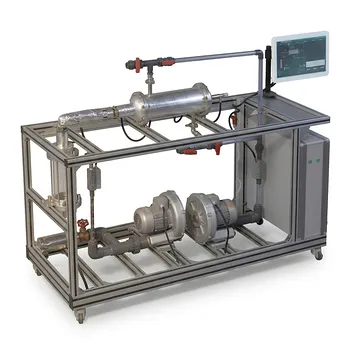
- Shell and Tube Heat Exchanger Heat Transfer Coefficient Determination Educational Pilot Plant
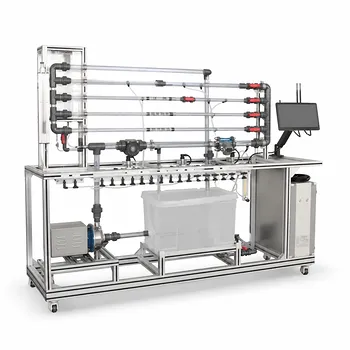
- Fluid Friction Resistance Determination Educational Unit Operations Pilot Plant
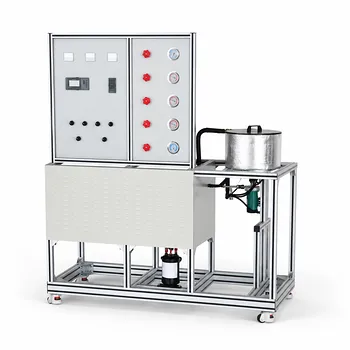
- Educational Compression Refrigeration Performance Determination Unit Operations Pilot Plant
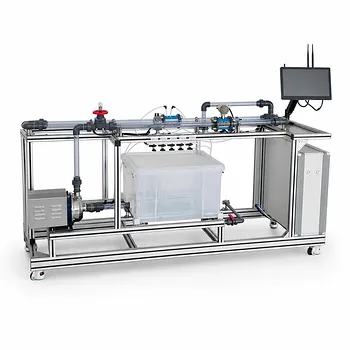
- Orifice and Venturi Flowmeter Calibration Educational Pilot Plant for Fluid Mechanics Laboratory
- Bernoulli Equation Demonstration Unit Operations Pilot Plant
People Also Ask
- Why Apply LMTD Correction in Shell-and-Tube Pilot Plants & How to Determine It
- How is the fouling factor (Rd) evaluated? Key Pilot Plant Insights for Students
- How is fouling factor demonstrated using shell and tube pilot plants? Practical Lab Guide
- Why is simulating and calculating fouling factors crucial when operating educational heat exchanger pilot plants?
- Why Estimate Tube Wall Temp in Heat Exchangers? Master Pilot Plant Thermal Resistance