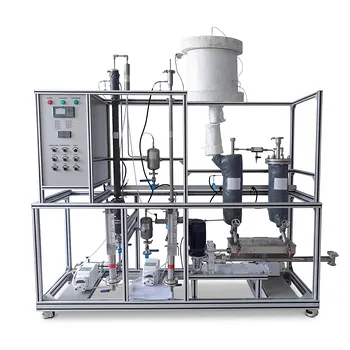
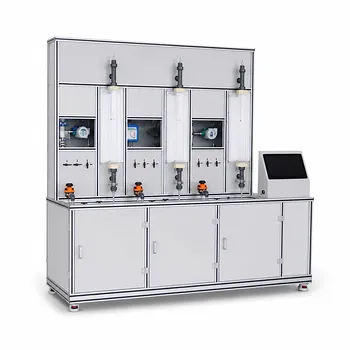
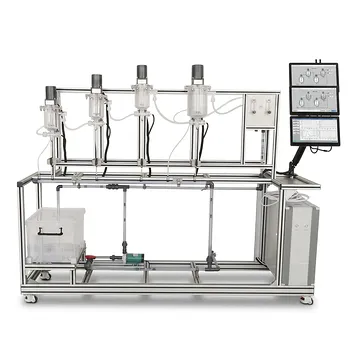
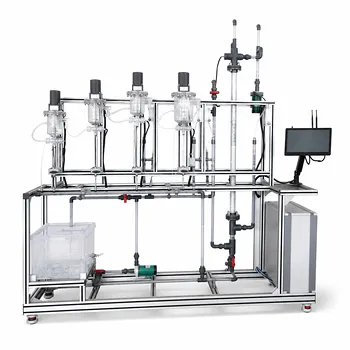
Managing the intense heat from gas-phase hydrogenation is a make-or-break challenge in pilot plants. These reactors handle highly exothermic reactions where a single runaway event can destroy catalyst, compromise safety, and skew data. The solution relies on two main approaches: indirect heat removal through cooling surfaces like jackets, internal coils, or multi-tubular designs, and direct temperature quenching by injecting cold raw materials or gas between catalyst beds. The choice between them—and the reactor type that deploys them—determines whether the system stays on its optimum reaction curve or veers into dangerous territory.
Gas-phase hydrogenation heat management is not just about adding cooling capacity—it’s about maintaining temperature uniformity across the entire catalyst bed. The two primary strategies (indirect cooling vs. cold-shot quenching) each solve this puzzle differently. Your pilot plant's goal—whether to mimic industrial reactors, study intrinsic kinetics, or test catalyst stability—must drive which strategy you adopt.
Why Excess Heat Is the Core Enemy
The Thermodynamic Reality
Hydrogenation reactions break unsaturated bonds under hydrogen pressure, releasing enormous amounts of energy. Aromatics hydrogenation alone can liberate around 326 kJ/mol, enough to heat a gas stream by hundreds of degrees within seconds.
That heat concentrates directly at the active sites on the catalyst surface.
If it isn't removed immediately, the bed temperature spikes.
The Consequences of Thermal Runaway
A runaway temperature rise triggers a cascade of failures.
It deactivates the catalyst—permanently sintering active metals or converting the support phase.
It reduces selectivity, pushing the reaction toward unwanted byproducts or total hydrogenation.
And it creates a safety risk as the reactor can exceed its design pressure.
The Pilot Plant Imperative
In a pilot plant, the stakes go beyond safety. Researchers need stable, well-characterized operating conditions to extract meaningful kinetic data and design equations for scale‑up.
A reactor that cannot manage its own heat yields data that is impossible to interpret.
The goal is to run close to isothermal or at a precisely controlled temperature profile.
The Two Core Heat Management Strategies
Indirect Cooling: Removing Heat Through a Barrier
This approach uses a solid wall to separate the reaction mixture from a cooling medium.
In gas-phase service, common indirect cooling implementations include:
- Jacketed fixed‑bed reactors: A coolant flows through an outer shell, pulling heat through the reactor wall. This works well for small-diameter beds where surface-to-volume ratio is high.
- Multi‑tubular fixed‑bed reactors: Many small-diameter tubes filled with catalyst are surrounded by a circulating thermal fluid—usually molten salt or hot oil. This configuration mimics industrial designs and can simulate steam generation.
- Fluidized‑bed reactors with internal heat transfer tubes: The boiling, particle‑laden gas mixture actively scours the tube surfaces. This significantly enhances the process‑side heat transfer coefficient compared to a fixed bed, driving heat into a thermal fluid circulating inside the tubes.
You get high heat removal rates and the ability to recover energy.
However, temperature gradients can still develop. In a fixed bed, the center of each catalyst pellet—and the axial center of the tube—runs hotter than the wall.
Direct Quenching: The Cold-Shot Method
Instead of pulling heat across a wall, this method injects cold material directly into the reaction stream.
For gas-phase hydrogenation, the quenching medium is typically cold raw feedstock or cooled hydrogen gas.
The cold shot is introduced at intermediate points along the catalyst bed.
It instantly dilutes the reaction mixture, absorbing the sensible heat and dropping the temperature back into the target range.
This strategy turns a single large bed into a series of adiabatic sections with interstage cooling.
You avoid the complex fabrication of thousands of small tubes and you gain a direct, fast‑acting temperature control lever.
The trade‑off is that the injection dilutes the reactant concentration, potentially reducing per‑pass conversion.
How Reactor Design Dictates the Choice
The primary reference highlights that gas‑phase hydrogenation favors fixed‑bed or fluidized‑bed configurations.
- Fixed‑bed reactors are the natural home for the cold‑shot method and multi‑tubular cooling. You can stack multiple catalyst beds in a single vessel, with quench injection rings between them. This is the classic industrial design for processes like ammonia synthesis or hydrocracking.
- Fluidized‑bed reactors are natural fits for internal heat transfer tubes. The intense solids mixing wipes out hot spots and makes the entire bed behave as a well‑stirred thermal reservoir. This is crucial when catalyst selectivity is extremely temperature‑sensitive.
Understanding the Trade-offs
No single solution fits every pilot plant. Each path comes with limitations.
Indirect Cooling: Complexity vs. Uniformity
While multi‑tubular reactors give excellent temperature control, they are mechanically complex. Tube‑to‑tube flow distribution must be perfected, or some tubes will see higher flows and potential hotspots.
Fluidized beds with internal tubes avoid hotspots but introduce catalyst attrition. Fines generated by particle‑on‑particle abrasion can clog downstream lines or become entrained in the product gas.
And in a fixed bed with a simple jacket, heat removal can be woefully inadequate if you scale the tube diameter too large.
Cold-Shot Quenching: Simplicity vs. Efficiency
The cold‑shot method is elegant in its simplicity: no internal baffles, no tubes, just a series of injection nozzles.
But the penalty is dilution. Every cold injection pushes the reactant concentration further down, demanding a larger total catalyst volume to achieve the same production rate.
You also need precise flow control and fast‑responding valves to trim the quench gas based on bed temperatures.
Misjudge the cold‑shot rate, and you can overcool a section, quenching the reaction entirely.
Matching the Strategy to the Data Objective
If you are studying catalyst deactivation, a multi‑tubular fixed bed with a single‑pass cooling medium lets you track the temperature profile over time and infer how the deactivation front moves.
If you are studying kinetics, the near‑isothermal environment of a fluidized bed with internal cooling reduces data complexity—you can decouple heat transfer from chemistry.
If you are simulating an industrial adiabatic reactor, a multi‑bed system with cold‑shot quench is the most faithful mimic.
Making the Right Choice for Your Pilot Plant
Your goal dictates which heat management strategy becomes the backbone of the pilot plant design. Plan accordingly.
- If your primary focus is scaling up an industrial multi‑bed process: Use a series of adiabatic fixed beds with cold‑shot hydrogen or feed injection between stages. This replicates the commercial temperature profile and per‑pass conversion limits.
- If your primary focus is generating clean kinetic data under isothermal conditions: Select a fluidized bed reactor with internal heat transfer tubes and a circulating thermal‑oil system. The chaotic solids mixing and high tube‑side heat transfer keep the entire bed at a single temperature.
- If your primary focus is flexibility to test both gas‑phase and trickle‑bed modes: Choose a multi‑tubular fixed‑bed pilot plant with a circulating coolant loop. You can run it gas‑phase using the jacket and tubes, then easily switch to a two‑phase downflow by adding a liquid feed, maintaining cooling through the same surfaces.
- If your primary focus is maximum safety with aggressive, runaway‑prone chemistries: Combine both strategies. Use a cooled multi‑tubular reactor body and still install a cold‑shot quenching option for emergency temperature suppression—giving you a double layer of protection.
By aligning the cooling method with the pilot plant’s true mission, you turn a dangerous exothermic reaction into a predictable, data‑rich experiment that you can scale up with confidence.
Summary Table:
| Heat Management Strategy | Mechanism | Key Advantages | Best For |
|---|---|---|---|
| Indirect Cooling | Heat transfer across a physical barrier (jackets, internal tubes) | High heat removal; preserves reactant concentration | Isothermal kinetic studies & uniform temperature |
| Direct Quenching | Injecting cold reactant or hydrogen gas into the catalyst bed | Simple design; rapid, direct temperature control | Replicating industrial multi-bed processes |
Optimize Your Process Scale-Up with LABPARK
Managing highly exothermic reactions requires precision-engineered equipment. LABPARK provides advanced Educational and Vocational Unit Operations Pilot Plants in chemical engineering, bioprocess & biotech, and environmental & water treatment. Designed for universities, research institutes, and enterprises, our systems ensure precise thermal control and reliable data generation.
Ready to elevate your research and training capabilities? Contact LABPARK today to discuss your custom pilot plant needs!
Related Products
- Gas Phase Mixing and Residence Time Distribution Determination Educational Unit Operations Pilot Plant
- 100L Continuous Loop Hydrogenation Educational Unit Operations Pilot Plant
- Carbon Dioxide Hydrogenation Methanol Synthesis Educational Unit Operations Pilot Plant
- Crude Benzene Hydrogenation Educational Unit Operations Pilot Plant
- Carbon Dioxide Hydrogen Methanol Synthesis Educational Unit Operations Pilot Plant
People Also Ask
- Why do gas-flow unit operations pilot plants require an expansion factor? Achieve Precise Flow Calculations
- Pulse vs. Step Injection for RTD: Practical Differences in Pilot Plants Explained
- How do pressure changes affect gas-phase reaction rates? Safely Optimize Your Kinetics
- Why use an experimental factor for terminal velocity in gas flow pilot plants? Streamline Frictional Flow Analysis
- How is the pressure-volume extrapolation method applied in educational pilot plants to calibrate gas sensors?