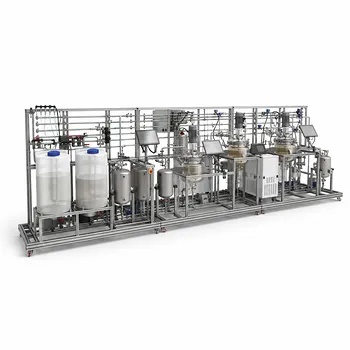
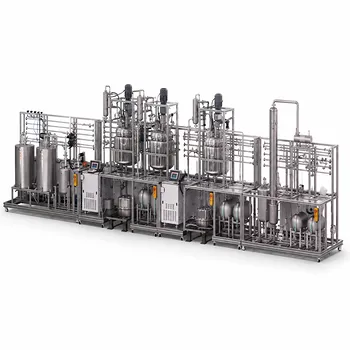
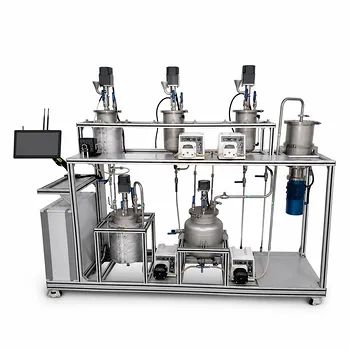
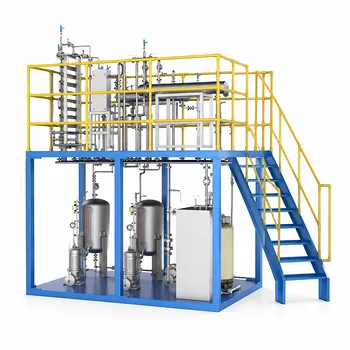
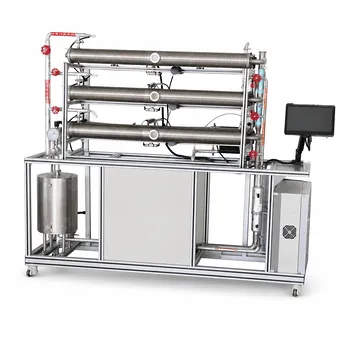
At their core, environmental pilot plants act as bridges between laboratory discovery and real-world restoration. They allow researchers to precisely recreate contaminated water and soil runoff environments, introduce specific pollutant-degrading microbes, and monitor how effectively those organisms clean up toxic compounds. By measuring critical performance indicators like chemical oxygen demand (COD), biological oxygen demand (BOD), and degradation rates under adjustable flow and nutrient conditions, these systems generate the backbone data needed to safely scale bioremediation from a flask to a field.
Pilot-scale treatment systems de-risk bioremediation by providing a controlled, measurable platform to optimize microbial cleanup before costly full-scale deployment, while training engineers to design processes that reliably meet environmental discharge standards.
Simulating the Messy Real World – In a Controlled Setting
Recreating Contaminated Water and Soil Runoff
A pilot plant can be configured as a miniature activated sludge basin, an anaerobic digester, or even a soil column to mimic real spill scenarios. Researchers spike these systems with specific pollutants—such as crude oil fractions, chlorinated solvents, or pesticide-laden agricultural runoff—to see how biological communities respond.
The Power of Adjustable Environmental Conditions
Unlike an open field trial, every variable can be dialed in and held constant. You can precisely set soil moisture, aeration rates, dissolved oxygen levels, pH, and nutrient doses (nitrogen and phosphorus) to create the ideal feast for your decontaminating microbes. This control allows scientists to isolate exactly which factor limits or accelerates cleanup, generating reproducible results that a gust of wind or a rainstorm would ruin outdoors.
The Heart of Bioremediation: Measuring What Matters
Tracking the ‘Food’ and the ‘Breath’ of Microbes
Biological remediation lives and dies by microbial metabolism. Pilot plants continuously capture biological oxygen demand (BOD5) and chemical oxygen demand (COD) — the oxygen equivalents consumed as bacteria oxidize organic pollutants. By tracking how fast these values drop, you get a real-time picture of how hungrily your introduced Pseudomonas strains, for example, are gobbling up hydrocarbons.
Quantifying Degradation Kinetics to Predict Success
The pilot plant becomes a kinetic laboratory. By adjusting hydraulic retention time (HRT) and organic loading rates while measuring nutrient consumption, you can derive degradation rate constants. These numbers tell you not just if a contaminant disappears, but how quickly, allowing you to design a full-scale treatment plant with the correct tank volumes to achieve effluent BOD5 under 20 mg/L.
Bridging the Gap from Bench to Field
Generating Scalable Design Parameters
A petri dish shows that a microbe can eat oil; a pilot plant shows whether it can do so while millions of gallons flow through each day. The system yields practical engineering data: optimal aeration requirements, sludge yield coefficients, and precise retention times. This is the vital template engineers use to size pumps, blowers, and reactors for a real treatment facility.
Validating Performance Under Realistic Hydraulic Conditions
Pilot plants simulate continuous flow, shock loads, and seasonal temperature swings—realities that batch beakers ignore. By integrating membrane filtration or sedimentation units downstream, you can also test polishing steps, ensuring that the bioremediated water meets reuse or discharge regulations before any pipe is laid in the ground.
Understanding the Trade-offs
The Complexity of Real-World Heterogeneity
A pilot plant cannot perfectly mimic the layered, heterogeneous structure of an actual contaminated aquifer or field. Indigenous microbial consortia, soil mineralogy, and unpredictable weather patterns introduce variables that remain simplified in the pilot hall. Results should always be validated with phased field trials.
Operational and Maintenance Considerations
Running a living biological system demands constant attention—keeping microbes alive, preventing clogging, and disposing of generated sludge. These systems also demand skilled operators and can represent a significant spatial and financial investment. The value lies in the mistakes and optimizations you catch now, before they become million-dollar problems outdoors.
Making the Right Choice for Your Project
How you use a pilot plant depends squarely on what you aim to achieve.
- If your primary focus is academic research: Lean into the system’s flexibility to isolate degradation pathways and quantify kinetic constants for novel microbial strains under strictly controlled conditions.
- If your primary focus is industrial process development: Use pilot trials to build a robust envelope of operational parameters—HRT, loading rates, aeration needs—and stress-test the system with real wastewater to guarantee regulatory compliance.
- If your primary focus is workforce training: Configure the plant to expose students to authentic biological process upsets, sensor calibration, and manual sampling routines that build the troubleshooting intuition essential for a career in water management.
A thoughtfully operated pilot plant transforms bioremediation from an intriguing concept into a bankable, repeatable, and teachable engineering solution.
Summary Table:
| Pilot Plant Feature | What It Simulates/Controls | Key Benefit for Bioremediation |
|---|---|---|
| Contaminant Simulation | Spiking systems with crude oil, solvents, and pesticides | Realistic testing of microbial response in runoff |
| Environmental Control | Precision adjustment of pH, DO, flow, and nutrients | Optimization of microbial growth and degradation kinetics |
| Performance Monitoring | Continuous tracking of COD, BOD5, and degradation rates | Generation of accurate scaling data for full-scale design |
| Hydraulic Validation | Continuous flow, shock loads, and seasonal changes | Verification of regulatory effluent compliance before field deployment |
Scale Up Your Environmental Research with LABPARK
Transitioning bioremediation from the laboratory to the field requires precise, scalable data. LABPARK offers specialized Educational and Vocational Unit Operations Pilot Plants in chemical engineering, bioprocess & biotech, and environmental & water treatment.
Designed to meet the rigorous demands of universities, research institutes, and enterprises, our systems provide the controlled environments and realistic hydraulic conditions needed to optimize microbial cleanup and train future engineers.
Contact LABPARK today to find the perfect pilot plant solution for your project!
Related Products
- Natural Product Extraction Unit Operations Training Pilot Plant
- Electrolytic Hydrogen Production Educational Unit Operations Pilot Plant
- Fixed-Bed Chemical Reaction and Gas Dust Tar Removal Unit Operations Pilot Plant
- Ethyl Acetate Synthesis Unit Operations Pilot Plant for Practical Training
- 100L Continuous Loop Hydrogenation Educational Unit Operations Pilot Plant
People Also Ask
- How to Demo Solubility Sensitivity in SFE Pilot Plants? Practical Thermodynamics
- How do pilot plants differentiate physical vs chemical extraction? Enhance Chemical Engineering Training
- How are HTU and NTU applied to determine extraction column height? Guide to Pilot Plant Scaling
- Why use split-plot designs in pilot plants instead of CRD? Optimize process parameters effectively.
- What are the limitations of acentric factor models? Avoid pilot plant errors with polar fluids.