Low-temperature pyrolysis squeezes more liquid out of coal; high-temperature pyrolysis cracks it into a methane- and hydrogen-rich gas.
Specifically, low-temperature ranges (500–600°C) deliver the highest tar yields—around 10% of the product slate—along with a solid semi-coke. As you push the temperature to 900–1100°C, the process shifts dramatically, maximizing the yield of coke oven gas (roughly 20% of total products) and loading it with high concentrations of hydrogen and methane. The middle ground, medium-temperature pyrolysis (700–900°C), gives transitional yields that balance liquids and gases.
The core mechanism is selective thermal cracking. Temperature acts as the master control valve: low heat preserves larger liquid molecules, while intense heat fragments them into small, valuable gases. Chemical engineering pilot plants turn this principle into a safe, observable, and measurable unit operation by precisely controlling these temperature zones and separating the resulting products.
The Temperature-Product Distribution Spectrum
Thermal decomposition of coal follows a clear trend: higher temperatures favor smaller, more thermodynamically stable molecules. The product slate shifts from solids and liquids toward gases.
Low-Temperature Pyrolysis (500–600°C): Maximizing Tar
This is the sweet spot for liquid production. The primary reference confirms that low-temperature pyrolysis yields around 10% tar, composed of valuable chemical precursors.
The gentle heating avoids extensive secondary cracking. Consequently, a large portion of the volatile matter condenses as coal tar rather than breaking down into permanent gases. The remaining solid is a reactive semi-coke, useful for further energy or chemical processing.
High-Temperature Pyrolysis (900–1100°C): Maximizing Gas
At this intensity, the process is engineered for gas generation. The yield of coke oven gas jumps to about 20% of total products, with a composition rich in hydrogen and methane.
The severe thermal environment initiates deep cracking and aromatization reactions. Large tar molecules and hydrocarbons are cleaved into the smallest gas molecules, making this the preferred route when the goal is a high-BTU fuel gas or synthesis gas precursor.
Medium-Temperature Pyrolysis (700–900°C): The Transition Zone
This intermediate band produces a compromise product slate. Tar yields are lower than low-temperature conditions, but gas volumes have not yet reached their maximum.
Historically, this range was used to produce town gas and medium-quality liquids. In a pilot plant, it is where you can most vividly observe the progressive shift from liquid- to gas-dominated production as you ramp the setpoint.
How Chemical Engineering Pilot Plants Replicate These Unit Operations
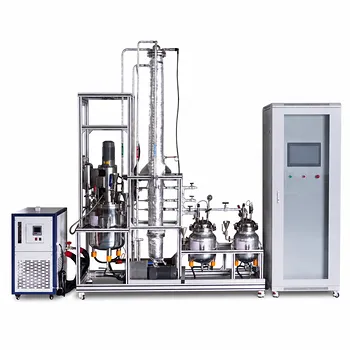
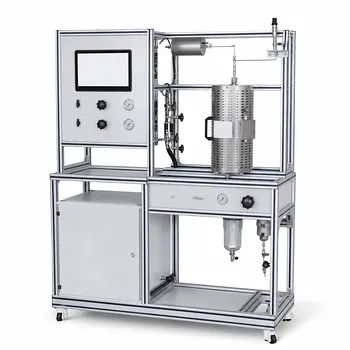
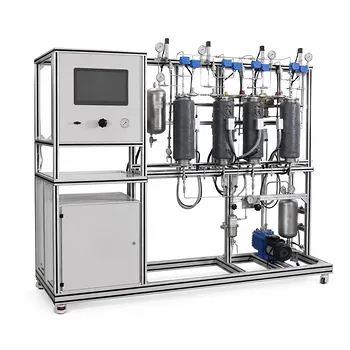
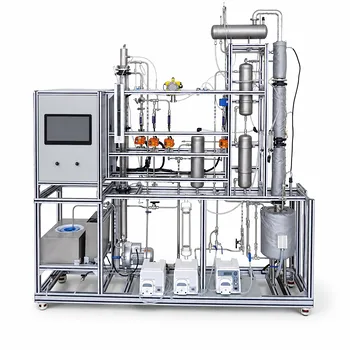
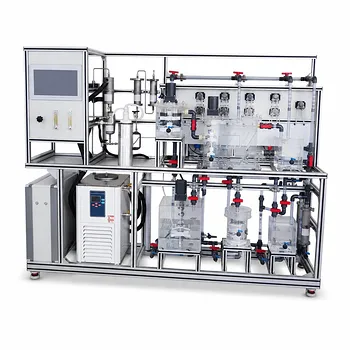
A well-designed pyrolysis pilot plant is more than a heated retort; it’s an integrated system that mimics industrial-scale unit operations on a benchtop or skid-mounted platform.
Designing for Three Distinct Temperature Zones
Supplementary references stress that pilot plants must handle all three retorting temperature bands. Modern units incorporate multi-zone furnaces or fluidized-bed reactors with pinpoint temperature control.
This architecture allows students and researchers to run the same coal sample at 550°C, 800°C, and 1000°C in succession. By logging the real-time thermal profile, they can directly correlate each temperature plateau with the resulting product yields.
Downstream Separation and Analysis
The primary reference highlights that these pilot plants can condense and fractionate liquid products—separating coal tar into light oil, phenol oil, and wash oil—and analyze the gas composition.
This is the unit operations heart of the system. After the reactor, hot vapors pass through a series of scrubbers, condensers, and distillation columns. The gas stream is cooled, dried, and sent to a gas chromatograph. Liquid fractions are collected in graduated receivers, giving direct, measurable proof of how product distribution changes with temperature.
Beyond Yield: Teaching Fundamental Principles Through Pilot Plants
A pyrolysis pilot plant does more than just make products; it makes abstract theory tangible.
Reaction Kinetics and Heat Management
Supplementary references on reactor design emphasize that safe scale-up requires kinetic data across a wide temperature range. Coal pyrolysis involves a network of exothermic (char formation) and endothermic (cracking) reactions.
By recording concentration-versus-time data at steady-state temperatures, an operator can fit reaction rate equations. This converts the pilot plant into a miniature kinetic laboratory, revealing the activation energies that govern tar vapor cracking and gas formation—without risking thermal runaway at industrial scale.
Equilibrium Thermodynamics in Action
Later cracking reactions often approach equilibrium. Using the van’t Hoff equation, students can measure the equilibrium constant at different temperatures and calculate the reaction enthalpy.
Since higher heat favors endothermic fragmentation, the product mix shifts to smaller molecules just as Le Chatelier’s principle predicts. Running the plant at several temperature steps, logging the H₂ and CH₄ mole fractions, and plotting ln(K) versus 1/T turns textbook thermodynamics into a hands-on verification.
Understanding the Trade-offs
No single temperature wins on every front. Objectively weighing the sacrifices is essential for rational design.
The Purity versus Yield Dilemma
Low-temperature operation preserves complex tar chemicals but gives only modest gas volumes. High-temperature operation delivers a hydrogen-rich gas stream that is nearly free of tars, but it consumes the valuable liquid precursors that a refiner or chemical producer might want.
You are essentially deciding whether to harvest large molecules for chemical feedstock or to completely crack them into fuel gas. The pilot plant visualizes this zero-sum trade-off in every graduated cylinder and gas sample bag.
Pilot Plant Limitations
A pilot-scale experiment is not a perfect mirror of a commercial coke oven. Heat losses are proportionally larger, wall effects can alter fluid dynamics, and the mixing environment may differ from full-scale.
Supplementary references note that micro-mixing and feed segmentation can influence conversion. Therefore, direct yield numbers from a small pilot plant often need scaling corrections before they can be used for industrial reactor design. The plant is a powerful learning tool, but data must be interpreted with an awareness of these scale-down artifacts.
Making the Right Choice for Your Goal
Your specific objective dictates which temperature range and pilot-plant configuration you should prioritize.
- If your primary focus is producing liquid chemical feedstocks (tar, oils): Operate in the low-temperature band. Configure the pilot plant’s fractionation train to maximize detailed liquid cuts and analyze them chemically.
- If your primary focus is maximizing a hydrogen- and methane-rich fuel gas: Push the reactor to the high-temperature zone. Ensure the gas collection and analysis system is the primary analytical focus.
- If your primary focus is teaching thermodynamic and kinetic fundamentals: Use a pilot plant that can sweep across all three temperature bands. Have students take samples at each plateau and calculate equilibrium constants and rate parameters from their own data.
- If your primary focus is studying scale-up risks and material handling: Pay close attention to the exothermic char-formation step and use the pilot plant’s real-time data to validate a kinetic model before designing a larger reactor.
By matching the temperature and the pilot plant’s configuration to your true objective, you turn coal pyrolysis from a simple heating process into a precise, teachable unit operation.
Summary Table:
| Pyrolysis Range | Temperature | Primary Products & Yields | Core Mechanism |
|---|---|---|---|
| Low-Temperature | 500–600°C | ~10% coal tar yield, reactive semi-coke | Low heat; preserves larger liquid molecules |
| Medium-Temperature | 700–900°C | Transitional mix of liquids and gases | Intermediate cracking; transition zone |
| High-Temperature | 900–1100°C | ~20% coke oven gas (rich in H₂ & CH₄) | Deep thermal cracking and aromatization |
Bring Hands-On Unit Operations and Pyrolysis Research to Your Lab
Translating complex thermodynamic and kinetic principles into practical knowledge requires robust, industrial-grade training systems.
LABPARK provides specialized Educational and Vocational Unit Operations Pilot Plants designed for universities, research institutes, and enterprises. Covering key sectors like chemical engineering, bioprocess & biotech, and environmental & water treatment, our scale-down pilot plants empower students and researchers to safely study real-world thermal reactions, downstream separation, and process control.
Want to elevate your engineering curriculum or research capabilities? Contact LABPARK today to find the perfect pilot plant solution for your facility!
Related Products
- Solid Waste Pyrolysis and Refining Educational Pilot Plant for Unit Operations
- Natural Product Extraction Unit Operations Training Pilot Plant
- Continuous Batch Extractive Distillation Educational Pilot Plant
- Carbon Material Thermal Pretreatment Multiphase Separation Educational Pilot Plant
- Carbon Dioxide Hydrogenation Methanol Synthesis Educational Unit Operations Pilot Plant
People Also Ask
- How do educational unit operations pilot plants bridge theory and design? Bridge the Engineering Gap
- How do educational unit operations pilot plants address safety and waste management when scaling up?
- When to transition from PID to adaptive control in pilot plants? Key process indicators.
- Why is the chemical plant startup schedule crucial? De-risk scale-up with pilot plants.
- Why Compare Predicted and Experimental Excess Enthalpy? Key to Accurate Pilot Plant Scale-up