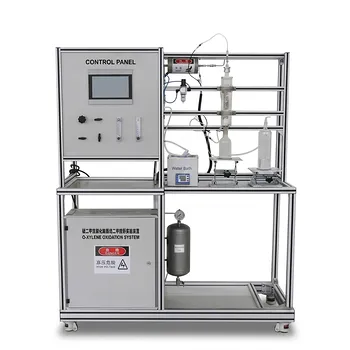
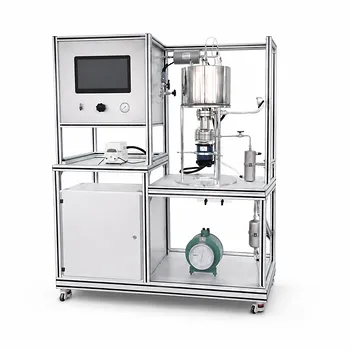
Control systems that learn like a brain’s neural network can tame the chaotic, non-linear behavior of pilot-scale reactors. Backpropagation (BP) neural network controllers adapt by continuously learning the complex, input-to-output relationships directly from plant data, without needing a fixed mathematical model. They do this by propagating output errors backward through the network to adjust internal connection weights, allowing them to approximate the reactor’s shifting dynamics and maintain precise control as conditions change.
The core challenge with biochemical and chemical pilot plants is their deeply non-linear and time-varying nature, which breaks conventional controllers. BP neural networks solve this by acting as universal function approximators that self-tune through error-driven learning, adapting in real time to biological growth curves, exothermic heat releases, and other unpredictable behaviors.
The Challenge of Non-Linearity in Pilot Plant Reactors
Biochemical and chemical reactors are rarely well-behaved systems. Their dynamics shift with every change in feedstock, temperature, or biological activity, making robust control a moving target.
Where Traditional Controllers Fail
Standard PID controllers rely on linear, time-invariant models. In a bioreactor, growth rates can follow exponential, Monod-type, or even inhibition kinetics that are fundamentally non-linear. Once the operating point drifts from the linearized region, performance degrades sharply. Time delays from sensor placement or reaction kinetics compound the problem, often leading to oscillation or instability.
The Need for Adaptive, Data-Driven Solutions
Pilot plants are built to explore new recipes and scale-up unknowns. This environment demands a controller that can adjust without manual retuning. A data-driven approach becomes essential because deriving accurate first-principles models is expensive and often impractical. BP neural networks fit this need exactly—they learn the underlying process behavior from historical and live input-output data.
How Backpropagation Neural Networks Model Non-Linear Dynamics
A BP network doesn’t control like a pre-programmed algorithm; it approximates the reactor’s own transfer function. This approximation is built from layers of simple computational units that collectively can model any continuous non-linear relationship.
The Architecture of a BP Network
A basic BP network consists of an input layer, one or more hidden layers, and an output layer. The input layer receives sensor readings (temperature, pH, dissolved oxygen), while the output layer produces the control signal (e.g., coolant valve position or substrate feed rate). Hidden layers contain neurons that transform the signal using non-linear activation functions—such as sigmoid or ReLU. These activation functions are what give the network its power to model curves, thresholds, and sudden shifts, rather than just straight lines.
Capturing Non-Linearity Through Layered Transformations
Each neuron applies a weighted sum of its inputs and passes it through the activation function. Stacking multiple layers creates a cascade of non-linear transformations, enabling the network to capture complex phenomena like substrate inhibition or heat generation rates that change exponentially with temperature. This layered structure effectively builds a high-dimensional decision surface that contours to the reactor’s real behavior.
The Adaptation Mechanism: Learning from Error
The true adaptive power of a BP controller lies in its error-driven, iterative learning loop. The network refines its internal weights every time it sees the gap between the desired setpoint and the actual plant output.
Forward Pass and Error Calculation
In operation, the controller first does a forward pass: inputs flow through the network to generate a control action. The reactor responds, and sensors measure the result. The controller then computes the error between this measured output (e.g., actual glucose concentration) and the target setpoint. This scalar error is the fuel for all learning.
Backpropagating Error to Adjust Weights
The error signal is sent backward through the network, from output layer to hidden layers, using the chain rule of calculus. Each connection weight gets a small adjustment proportional to its contribution to the overall error. This is the weight update step. Through hundreds or thousands of such updates, the network reshapes its input-output mapping to reduce future error, effectively "feeling" its way towards a better control law for the current operating region.
Continuous Self-Learning for Shifting Dynamics
In a pilot plant, the optimal control strategy evolves as biomass grows or a catalyst deactivates. A BP controller can operate in online learning mode, where the weight updates occur continuously in real time. Every new data point refines the model, so when the reaction kinetics suddenly shift due to a pH spike or nutrient depletion, the controller automatically adjusts its output mapping to compensate. This gives it a level of resilience that fixed-gain controllers cannot match.
Understanding the Trade-offs
Despite their flexibility, BP-based controllers come with operational baggage that must be managed, especially in a pilot plant environment where safety and reliability are paramount.
Data Requirements and Training Stability
Neural networks learn from experience, but they need good quality data. In the early hours of a batch run, the network may be poorly trained and produce erratic control moves unless pre-trained on historical data or a process simulator. Training instabilities, such as gradient explosion or vanishing gradients in deep networks, can also cause the weights to update poorly, stalling the learning process.
Computational Demands and Real-Time Constraints
Backpropagation involves many matrix multiplications and derivative calculations. For a fast exothermic reaction where control loops run at sub-second intervals, the computational overhead may strain standard pilot plant PLCs or microcontrollers. This often requires offloading calculations to a dedicated edge computer or simplifying the network architecture, which can limit approximation accuracy.
Risk of Overfitting and Local Minima
A network can memorize the noise and peculiarities of a specific batch rather than learning the true underlying dynamics. This overfitting leads to poor performance on the next run. Similarly, the error landscape may trap the learning algorithm in a local minimum, resulting in a controller that is “good enough” but far from optimal. Strategies like learning rate schedules, momentum, and dropout must be employed to mitigate these risks.
Making the Right Choice for Your Reactor Control Project
The decision to implement a BP neural controller should be guided by the specific demands of your pilot plant and your development resources.
- If your primary focus is handling highly unpredictable bio-kinetics (like mixed cultures or novel enzyme pathways): Prioritize BP controllers for their model-free, non-linear learning ability, and invest time in offline pre-training with historical data.
- If your primary focus is tight control of a hazardous exothermic reaction with fast dynamics: Combine the BP network with a safety fallback (like a conservative PID loop) and validate its real-time inference speed on your target hardware before commissioning.
- If your primary focus is rapid deployment with minimal tuning in a standard fed-batch process: Use a hybrid approach—start with a well-tuned PID for base stability and layer a BP neural network to adaptively compensate for the recurring non-linearities that appear late in the run.
By strategically applying the universal approximation power of backpropagation networks, you equip your pilot plant with a controller that doesn’t just follow a manual script, but actively learns the process as it unfolds.
Summary Table:
| Feature | Traditional PID Control | BP Neural Network Control |
|---|---|---|
| Model Requirement | Requires fixed mathematical model | Model-free (data-driven) |
| Non-linearity Handling | Poor (limited to linearized regions) | Excellent (universal function approximator) |
| Adaptability | Manual tuning; degrades with drift | Continuous online self-learning |
| Computational Load | Very low | Moderate to high (requires processing power) |
| Data Dependency | Low | High (requires quality training data) |
Scale Up Your Research with Advanced Control Systems
Transitioning from theory to real-world application requires reliable, adaptable hardware. LABPARK provides premium Educational and Vocational Unit Operations Pilot Plants in chemical engineering, bioprocess & biotech, and environmental & water treatment.
Tailored for universities, research institutes, and enterprises, our pilot plants are designed to support advanced control configurations—including neural networks—helping you master complex chemical and biological dynamics.
Ready to elevate your laboratory capabilities? Contact LABPARK today to find the perfect pilot plant solution for your needs.
Related Products
- Fixed-Bed Chemical Reaction and Gas Dust Tar Removal Unit Operations Pilot Plant
- Fixed Bed Gas Solid Catalytic Reaction Educational Pilot Plant
- Residence Time Distribution and Reactor Flow Characteristics Determination Educational Pilot Plant
- Multi-Reactor Educational Pilot Plant for Reaction Engineering Unit Operations
- Tubular Reactor Flow Characteristics Determination Educational Unit Operations Pilot Plant
People Also Ask
- When to transition from PID to adaptive control in pilot plants? Key process indicators.
- How do deviations in estimating latent heat impact pilot plant thermal systems? Avoid hardware mis-sizing.
- Why Compare Predicted and Experimental Excess Enthalpy? Key to Accurate Pilot Plant Scale-up
- How to study gasification in pilot plants? Compare exit gas composition & efficiency
- Why Use PTFE & Hastelloy in Chemical Pilot Plants? Prevent Corrosion & Ensure Safety