Solubility curves are not just data points; they are the master control logic for a crystallization pilot plant. They dictate whether you should heat, cool, or evaporate your mother liquor to isolate a specific crystal lattice. By mapping the divergent solubility-temperature slopes of your target compound and its impurities, you program the yield, purity, and particle size distribution of your batch directly onto the plant’s distributed control system.
Mastering fractional crystallization hinges on identifying the unique temperature gradient where your target solute’s solubility collapses while impurities remain comfortably unsaturated. The pilot plant’s role is to physically enforce this precise thermal trajectory, bridging the gap between a static phase diagram and dynamic, high-purity solid production.
Decoding the Phase Diagram for Operational Strategy
Before touching a control valve, you must classify your chemical system. Not all solubility curves are equal, and the shape dictates the unit operation.
Steep vs. Flat Solubility Gradients
The primary reference highlights how copper sulfate pentahydrate purification works: its solubility plummets upon cooling. A steep positive solubility curve makes cooling crystallization the obvious, most energy-efficient choice. You dissolve the crude material hot, then force the product to nucleate and grow by precisely lowering the jacket temperature.
Conversely, if the curve is flat (like common salt, NaCl), cooling does virtually nothing to change yield. For these systems, you must rely on evaporative crystallization. The pilot plant operator uses the solubility curve to calculate the precise water removal target required to reach the supersaturation limit at a constant high temperature.
The Window of Separation
True purification is about the differential between two curves. The reference separating potassium salts ($KCl$, $K_2CO_3$, $K_2SO_4$) underscores that even chemically similar compounds possess distinct temperature coefficients.
Your operational window is the temperature band where your product is supersaturated, but the impurity concentration remains below its saturation limit. In a jacketed vessel, you narrow your cooling profile to dwell exactly within this metastable zone. Staying too hot leaves yield in the liquor; dropping too cold triggers a "catastrophic nucleation" event that traps impure solution inside a mass of unusable fines.
Engineering the Thermal Trajectory
Knowing where to go on the curve is theoretical. Controlling how fast you get there is the engineering challenge.
From Saturation to Supersaturation
The solid line of a solubility curve represents equilibrium. To form crystals, you must cross into the supersaturated region. In a pilot plant, you induce this by manipulating jacket fluid temperature to outpace the dissolving kinetics.
You must avoid the "critical limit" where the solution becomes kinetically unstable. Supplementary references stress that advanced thermodynamic models (like COSMO-RS) are used to predict this limit. By calculating the activity coefficient at saturation, you can determine the maximum allowable supersaturation ratio. The pilot plant validates this correlation by measuring the induction time—the delay before the first nuclei appear—at specific cooling rates.
Managing the Cooling Ramp
A linear cooling ramp is rarely optimal. The rate of surface area generation during crystal growth is exponential. Therefore, your temperature control strategy must be non-linear.
Initialize the batch with a slow, controlled cooling rate to gently pass into the metastable zone without a nucleation burst. Later, as the slurry density increases, the massive surface area of the existing crystals absorbs supersaturation instantly. You can then safely increase the cooling rate to maximize yield without risking secondary nucleation. The pilot plant’s process control logic implements this as a cascaded control loop, tracking batch temperature against a polynomial setpoint trajectory rather than a simple step change.
Navigating Thermodynamic and Kinetic Pitfalls
A solubility curve assumes thermodynamic equilibrium. A pilot plant operates in a kinetic reality that often contradicts the static chart.
The Threat of Inverse Solubility
A critical application mentioned in the supplementary references is inverse solubility, where solutes like sodium sulfate precipitate on heating. This cannot be processed in a standard cooling crystallizer.
If you heat a saturated solution of an inverse-soluble salt in a shell-and-tube exchanger, the film temperature at the tube wall exceeds the bulk fluid temperature. This forces crystals to nucleate directly on the hot surface, forming a calcified scale. The pilot plant must be reconfigured with a scraped-surface heat exchanger or run with extreme turbulence to minimize the thermal boundary layer. Your solubility curve analysis immediately flags this hazard and dictates a completely different heat transfer strategy.
Metastable Equilibria and Hydrates
The supplementary references warn that electrolyte systems can form various hydrates. Your solubility curve might show the stable phase boundary for a pentahydrate, but the system can easily form a metastable anhydrous phase.
If you operate near a transition temperature without tight control, you risk precipitating a mixture of hydrates. This destroys product consistency and invites caking during downstream storage. Effective scale-up requires the pilot plant to track the suspension density and ionic strength in real-time, ensuring the "history" of the batch does not drift toward a pseudo-equilibrium that the pure thermodynamic model didn't predict.
Understanding the Trade-offs
Objective optimization requires balancing conflicting process demands. The best crystal for filtration is often the hardest to produce thermally.
- Yield vs. Purity: A high yield requires deep cooling to capture the last dissolved product. However, deep cooling increases viscosity, inhibiting diffusion of impurities away from the growing crystal face. The boundary layer becomes saturated with trapped waste, reducing crystal lattice purity.
- Evaporation vs. Cooling: Evaporative crystallization generates a high nucleation rate at the boiling surface, often resulting in fine, powdery crystals. Cooling crystallization, if properly seeded, produces larger, granular particles. The trade-off is that cooling often leaves 5-10% of the product in the mother liquor, while evaporation can theoretically recover it all at the cost of particle quality.
- Modeling vs. Physical Trials: COSMO-RS and other models minimize trial runs, but they can systematically overpredict solubility in polar aprotic solvents. Relying solely on a simulation without a single pilot plant validation risks designing a crystallizer that is 20% oversized or a filtration step that fails due to polymorphic conversion.
Making the Right Choice for Your Goal
Your target application dictates which region of the solubility curve you exploit. Align your pilot plant’s operation strategy with your specific definition of success.
- If your primary focus is maximum chemical purity: Exploit the high-temperature section. Operate in a hot, evaporative mode just below the boiling point. Impurities remain in solution at high temperatures due to entropic effects, allowing you to separate perfect lattice blocks.
- If your primary focus is maximizing total recovery (yield): Exploit the low-temperature tail. Use powerful brine chilling to drive the solubility down to its absolute minimum. This captures almost everything, but you must accept a significant drop in filtration speed and increased mechanical impurity occlusion.
- If your primary focus is avoiding process fouling: Map the transition points for hydrate formation and inverse solubility. Program your temperature profile to circumvent these zones entirely, even if it means sacrificing a few percentage points of theoretical recovery to guarantee continuous, unplugged operation.
You are not just running a machine; you are executing a phase transition with thermal precision to trap impurities in the liquid phase and isolate a single solid species in a pure state.
Summary Table:
| Curve Type | Crystallization Method | Key Operational Focus | Best For |
|---|---|---|---|
| Steep Positive | Cooling Crystallization | Non-linear cooling ramp | High-yield recovery of temperature-sensitive solutes |
| Flat | Evaporative Crystallization | Water/solvent removal rate | Solutes with minimal solubility change over temperature |
| Inverse | Scraped-surface Heating | Turbulence & boundary layer control | Solutes that precipitate upon heating; prevents wall scaling |
Master Unit Operations & Crystallization Processes with LABPARK
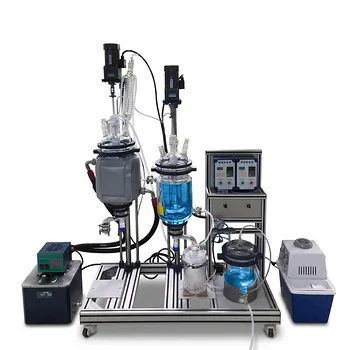
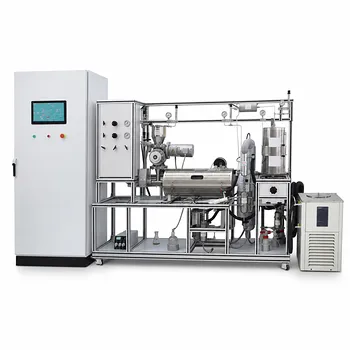
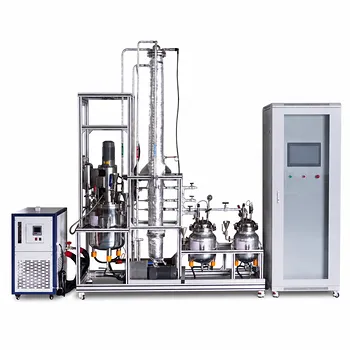
Bridge the gap between chemical thermodynamics and hands-on engineering. LABPARK provides advanced Educational and Vocational Unit Operations Pilot Plants in chemical engineering, bioprocess & biotech, and environmental & water treatment.
Specifically engineered for universities, research institutes, and enterprises, our systems enable students and researchers to master complex dynamic processes—from fractional crystallization to thermal trajectory control.
Ready to elevate your training and research capabilities? Contact LABPARK Today to find the perfect pilot plant solution for your lab.
Related Products
- Multi-Modal Distillation Unit Operations Training Pilot Plant
- Multi Functional Membrane Crystallization Educational Unit Operations Pilot Plant
- Potassium Salt Thermal Dissolution and Crystallization Separation Educational Unit Operations Pilot Plant
- Dual-Mode Rectification Pilot Plant for Practical Training Unit Operations
- Multi-Functional Special Distillation Educational Pilot Plant
People Also Ask
- How can energy balance equations for condensers & reboilers be validated experimentally? Guide
- How does catalyst water concentration affect distillation pilot plant design? Key separation train choices.
- What are the primary reflux ratio control strategies? Master Distillation Unit Operations
- How can real-time carbon number prediction improve distillation pilot plants? Optimize control.
- Why is vacuum operation capability an essential feature for a distillation unit operations pilot plant? Unlock Efficiency