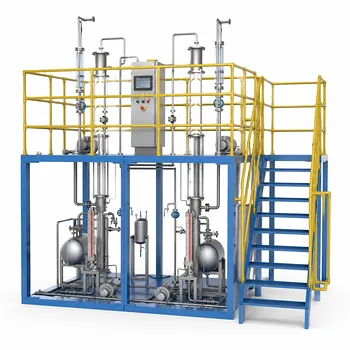
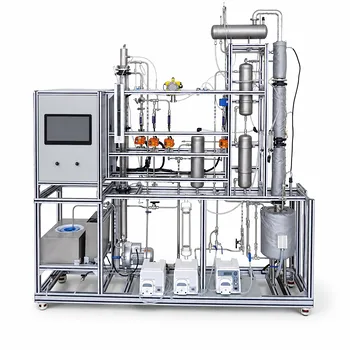
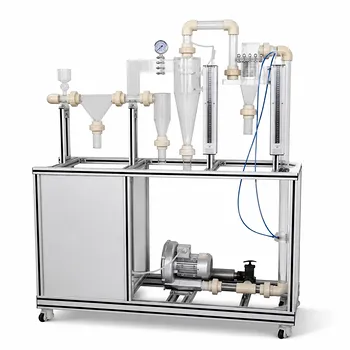
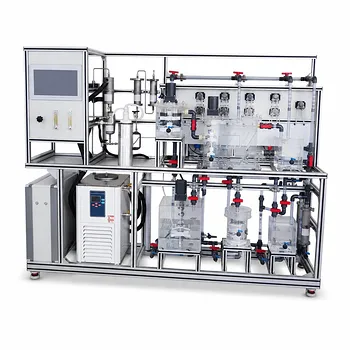
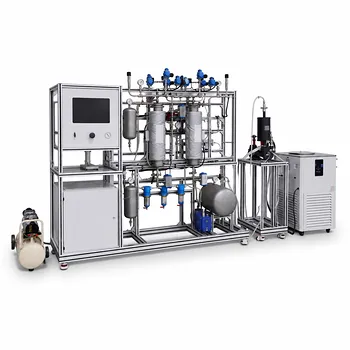
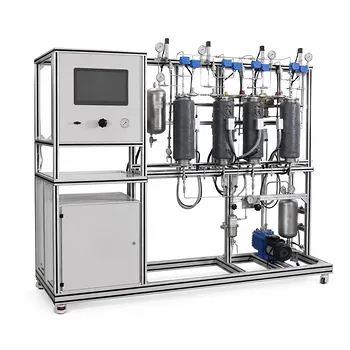
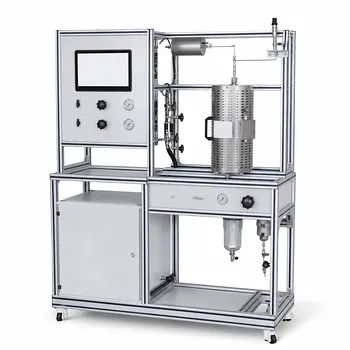
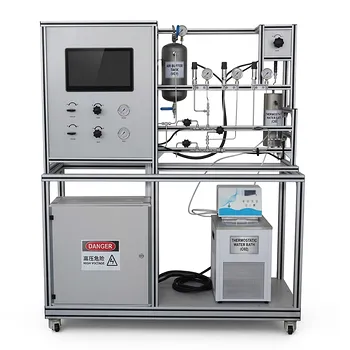
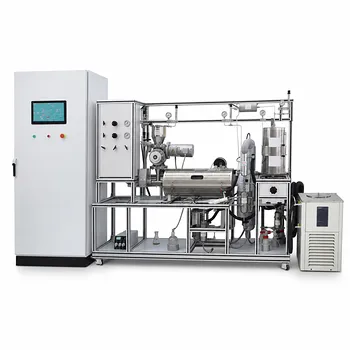
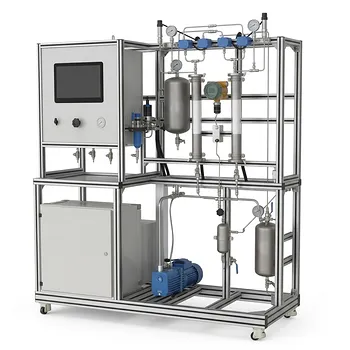
The sticky, complex problem of tar fouling can derail even the most carefully designed gasifier. In a research or educational setting, mitigating tar isn't just about preventing clogs—it's about probing the fundamental chemistry and engineering of pyrolysis, oxidation, and reduction. The most effective pilot-plant configuration seamlessly integrates both in-situ (primary) parameter control and downstream (secondary) hot gas cleaning into a single, flexible, and deeply instrumented learning platform.
Tar mitigation in a pilot plant is a two-layered design challenge. The primary configuration surrounds the gasifier with adjustable controls for temperature, gasifying agent, residence time, and catalytic additives. The secondary configuration lines up a modular train of physical separators and chemical crackers. Together, they allow students and researchers to isolate variables and directly compare how each method changes tar loading and syngas quality.
The Two-Pronged Approach to Tar Mitigation
Tar, a complex mixture of condensable hydrocarbons, forms alongside syngas (CO, H₂) and must be tackled both where it is born and after it leaves the reactor. A well-configured pilot plant gives direct access to both fronts.
Primary Methods: Controlling the Reaction from Within
Primary strategies manipulate the gasifier’s own operating envelope to reduce tar at the source. On a pilot scale, this means the reactor must offer extreme controllability.
- Temperature is the master dial. Since the main steam gasification reaction ($CH_{1.5}O_{0.7} + 0.3H_2O \rightarrow CO + 1.05H_2$) is endothermic ($\Delta H = 74 \text{ kJ/mol}$), achieving higher temperatures directly cracks more tar. A pilot plant’s heating system must be able to simulate heat supply—for example, by metering a controlled air stream to mimic partial oxidation ($\Delta H = -113 \text{ kJ/mol}$)—so students can map the exact temperature window where tar condenses.
- The gasifying agent ratio reshapes chemistry. By precisely varying the steam-to-biomass ratio, researchers see how more steam shifts reactions toward hydrogen production and can reduce heavier hydrocarbon precursors. A pilot plant needs mass-flow controllers on both the steam line and the biomass feed system to make this a reproducible independent variable.
- Residence time determines reaction completion. Longer times in the hot zone allow tar molecules to crack. A pilot plant can be constructed with variable reactor lengths or adjustable feed rates to let users test the kinetic limits of primary tar destruction.
- Catalytic additives in the bed. Placing in-situ catalysts (like dolomite, olivine, or Ni-based materials) directly in the gasifier bed can crack tars as they form. A pilot-scale gasifier should allow easy swapping of bed materials and direct comparison between catalytic and inert runs.
Secondary Methods: Polishing the Syngas Downstream
When primary methods are insufficient or when you want to study post-gasification cleaning as a separate unit operation, the pilot plant must include a modular hot gas cleaning train.
- Physical separation modules: A cyclone captures coarse particulates and entrained bed material. A hot gas filter (candle or ceramic) removes fine dust, while a scrubber or electrostatic precipitator can demonstrate the condensation and removal of residual tar aerosols. Each module should be installed with bypass lines, so its individual effect on tar dew point and pressure drop can be isolated.
- Chemical cracking units: A thermal cracker operates by raising the syngas temperature to ~1200–1300°C in a dedicated reactor tube, thermally smashing large tar molecules. A catalytic cracker passes syngas over a fixed bed of reforming catalysts at lower temperatures. Configuring these secondary reactors with independent temperature control and sampling ports turns them into research-grade test cells.
Configuring a Pilot Plant for Deep Tar Research
Bridging primary and secondary methods into a cohesive educational system requires deliberate physical and digital design.
Modular Reactor Design for Parameter Experimentation
A fluidized bed or downdraft fixed-bed reactor that can accept multiple inserts (e.g., an internal cracking zone, an air-distribution plate for oxidation) gives the flexibility to switch between air-blown, steam-blown, and autothermal modes. The ability to quickly reconfigure the gasifier is what separates a demonstration unit from a true research pilot plant.
Instrumentation and Data for Real-Time Tar Analysis
Without measurement, mitigation is guesswork. The pilot plant must be studded with thermocouples, pressure transducers, and gas sampling ports corresponding to both the primary reaction zone and the secondary cleaning train. An online micro-GC or tar-sampling system (SPA/SPME) lets users immediately see how changing one parameter shifts the concentration of naphthalene, phenols, and other tar markers.
Understanding the Trade-offs: Education vs. Absolute Purity
Every configuration decision involves a trade-off between flexibility, cost, and operational clarity.
- Complexity for its own sake can overwhelm learning. A simple reactor with only temperature and steam controls can beautifully teach the primary tar curves, while a fully automated catalytic cracker might obscure the chemistry with control logic.
- Physical cleaning adds condensate management. Scrubbers remove tars but produce a contaminated liquid waste stream that the pilot plant must handle. This introduces a realistic engineering problem for students but also adds maintenance.
- Catalytic additives require bed management. In-situ catalysts can suffer from attrition and sulfur poisoning. The pilot plant must be designed for easy access to remove, regenerate, and characterize spent bed material—a critical research workflow that is often overlooked.
- Cost vs. depth of study. A secondary thermal cracker demands high-temperature alloys and energy, while a catalytic system may require expensive nickel-based catalysts. The pilot plant’s budget must align with the specific educational or research goals.
Making the Right Choice for Your Research or Educational Goal
The ideal configuration is the one that puts your specific inquiry at the center of the design.
- If your primary focus is teaching fundamental gasification and tar formation: Prioritize a simple, robust reactor with precise temperature and steam-ratio control. Start with a primary-only configuration and a basic cyclone. Students will observe tar directly through gas sampling ports and learn the main levers without getting lost in a maze of secondary hardware.
- If your primary focus is catalytic tar cracking research: Build a gasifier with an easily exchangeable bed, then attach a dedicated, independently heated catalytic reactor train downstream. Instrument the inlet and outlet of the cracker with tar sampling points to measure exactly how much tar is destroyed chemically.
- If your primary focus is downstream cleaning technology comparison: Design a hot gas cleaning skid with a cyclone, a hot gas filter, and a scrubber connected in series, each with a bypass valve. This allows students to isolate the pressure drop, tar removal efficiency, and energy loss of each unit operation, turning the pilot plant into a testbed for physical separation.
- If your primary focus is integrated process understanding: Commission a fully modular system where the gasifier can run in both primary-mitigation mode (with catalytic bed material) and secondary-mitigation mode (with the cleaning train active). Then, teach the complete mass balance—from biomass to clean syngas—tracking tar as it is either destroyed inside the reactor or captured downstream.
Every tar mitigation configuration in a research pilot plant is ultimately a statement about which variable you want students or researchers to master. Start by deciding what question you need to answer, and then build the plant to make that answer unmissable.
Summary Table:
| Mitigation Method | Key Mechanisms | Pilot Plant Configuration Requirements |
|---|---|---|
| Primary (In-situ) | Temperature control, steam-to-biomass ratio, residence time, catalytic bed additives | Mass-flow controllers, adjustable heating systems, easily swappable bed reactors |
| Secondary (Downstream) | Physical separation (cyclones, scrubbers), thermal & catalytic cracking | Modular cleaning train with bypass lines, independent heating, multiple sampling ports |
Enhance Your Research and Teaching with LABPARK
Are you looking to equip your laboratory with advanced, highly configurable research systems? LABPARK provides state-of-the-art Educational and Vocational Unit Operations Pilot Plants across chemical engineering, bioprocess & biotech, and environmental & water treatment.
Designed specifically for universities, research institutes, and enterprises, our modular pilot plants enable hands-on learning, precise parameter control, and reliable experimental scale-up.
Contact LABPARK today to discuss your custom pilot plant configuration and elevate your engineering research!
Related Products
- Fixed-Bed Chemical Reaction and Gas Dust Tar Removal Unit Operations Pilot Plant
- Bio-fermentation Ethanol Production Practical Training Unit Operations Pilot Plant
- Dual-Mode Gas Absorption and Desorption Unit Operations Training Pilot Plant
- Natural Product Extraction Unit Operations Training Pilot Plant
- Carbon Dioxide Absorption and Desorption Educational Pilot Plant for Carbon Capture Studies
People Also Ask
- When to transition from PID to adaptive control in pilot plants? Key process indicators.
- How do deviations in estimating latent heat impact pilot plant thermal systems? Avoid hardware mis-sizing.
- Why Compare Predicted and Experimental Excess Enthalpy? Key to Accurate Pilot Plant Scale-up
- How to study gasification in pilot plants? Compare exit gas composition & efficiency
- Why Use PTFE & Hastelloy in Chemical Pilot Plants? Prevent Corrosion & Ensure Safety