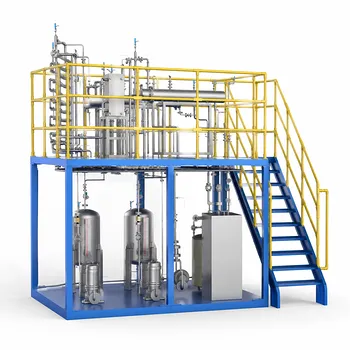
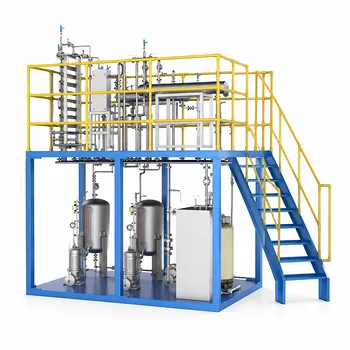
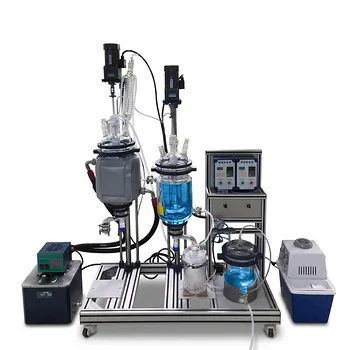
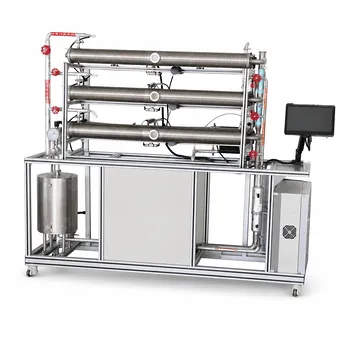
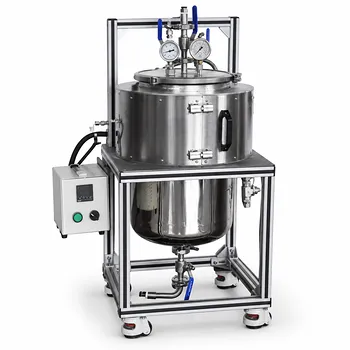
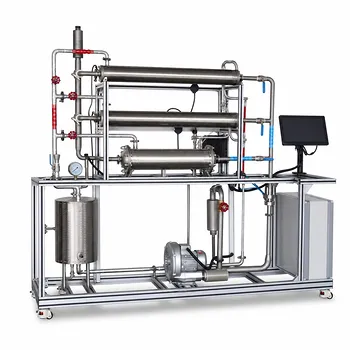
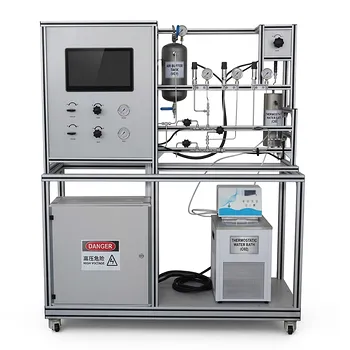
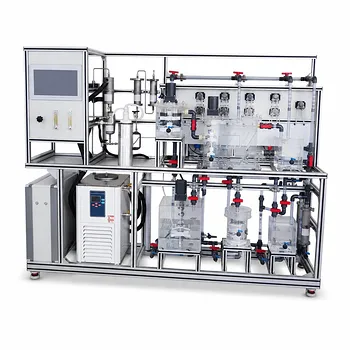
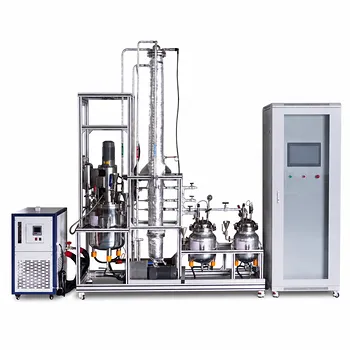
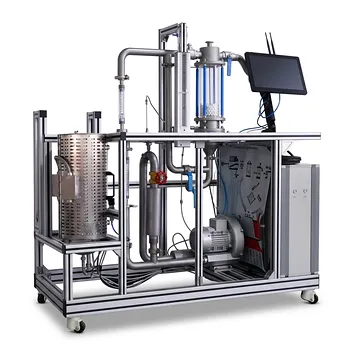
The bridge between pinch theory and industrial practice is a physical pilot plant.
Thermal unit operations pilot plants transform abstract pinch calculations into tangible, real-time experiments. By configuring actual heat exchanger networks and measuring live temperatures and flow rates, students directly observe how the pinch point and stream matching rules govern maximum energy recovery. This hands-on approach replaces mathematical abstraction with an intuitive, diagnostic understanding of heat integration.
Pinch analysis pilot plants enable students to treat the pinch point as a physical boundary—not just a calculation. By collecting live data and manually applying the CP rules (CPh ≤ CPc above the pinch, CPh ≥ CPc below it), they discover that maximum heat recovery hinges on preserving the minimum temperature driving force. The pilot plant then reveals how real-world losses and equipment constraints cause deviations from ideal models, turning the exercise into a powerful lesson in process optimization.
From Theory to Touch: How a Pilot Plant Demonstrates Pinch Analysis
Configurable Streams and Real-Time Data
Pilot plants designed for thermal unit operations offer multiple heated and cooled liquid streams with adjustable flow rates.
Sensors on each stream continuously measure temperature, pressure, and flow, allowing students to calculate heat capacity flow rates (CP) and stream duties.
This live data feed removes the guesswork from pinch calculations—every composite curve is built from physical measurements, not textbook values.
Building Composite Curves to Find the Pinch
Students use the collected data to construct temperature-enthalpy (T-H) diagrams.
The hot and cold composite curves are plotted directly from stream temperatures and heat loads measured across the pilot plant’s heat exchangers, preheaters, and coolers.
Where the vertical gap between the curves equals the chosen minimum temperature approach (ΔT_min), the system’s pinch point becomes a visible, physical reality.
The CP Rules as a Hands-On Gatekeeper
The pilot plant makes the critical CP matching rules a hands-on verification exercise.
Above the pinch, students can physically split streams and adjust valves to confirm that CPh must be less than or equal to CPc—otherwise the temperature profiles converge and violate ΔT_min.
Below the pinch, they enforce the opposite—CPh ≥ CPc—to prevent a temperature cross.
Seeing a live temperature violation on a chart when a wrong match is configured ingrains the thermodynamic logic far deeper than any simulation.
Designing and Testing a Heat Exchanger Network
Translating the Grid Diagram onto a Physical Plant
Once the pinch division is known, students design a heat exchanger network using the classic grid diagram.
They physically route streams to match hot and cold flows above and below the pinch, ensuring that hot utility is only added above the pinch and cold utility only below.
This physical manipulation of valves, streams, and exchangers transforms a paper‑based design method into a verifiable, tactile engineering process.
Comparing Measured Utility Targets to Theory
The pilot plant’s instrumentation allows direct measurement of utility consumption—steam flow to heaters, cooling water flow to coolers.
Students compare these actual values against the minimum utility targets calculated from the composite curves and spreadsheet models.
Discrepancies between theory and experiment become teaching moments: they illustrate heat losses, non‑ideal heat transfer, and the real‑world penalties of ignoring CP rules.
Understanding the Trade-offs and Real-World Limitations
The ΔT_min Dilemma: Energy Recovery vs. Exchanger Size
A smaller ΔT_min reduces utility demand but requires larger, more expensive heat exchangers.
On a pilot plant, students can physically swap exchangers or adjust flow configurations to see how a more aggressive ΔT_min leads to longer temperature approaches and higher capital cost.
This tangible link between thermodynamic targets and equipment sizing grounds theoretical trade‑offs in a real‑world context.
Heat Loss and the Gap Between Theory and Reality
No pilot plant is perfectly insulated.
Students quickly observe that measured utility consumption always exceeds the pinch target, even when CP rules are strictly followed.
Quantifying this gap by performing a full heat balance—comparing calculated duties from flow rates and temperature drops with actual utility inputs—teaches them to diagnose and account for thermal losses, a skill essential for process optimization.
Batch Operations: When Time Breaks Steady-State Assumptions
Some pilot plants can simulate batch sequences using intermediate thermal storage tanks.
This demonstrates that classic steady‑state pinch analysis cannot directly schedule batch heating and cooling—indirect heat recovery via hot‑water loops or phase‑change materials is needed.
Students see firsthand the thermodynamic penalty of temporal mismatches, learning that dynamic operation introduces constraints that continuous analysis overlooks.
Tailoring the Lab Experience to Your Learning Objectives
After a brief introductory session, align the hands‑on experiments with your primary educational goal:
- If your primary focus is teaching the fundamentals of pinch technology: Start with a simple two‑stream network to build composite curves, locate the pinch, and test the CP rules manually.
- If your primary focus is process optimization and troubleshooting: Introduce deliberate wrong stream matches and have students measure the resulting utility penalty and temperature‑cross locations.
- If your primary focus is bridging theory to industrial practice: Challenge learners to design a full heat exchanger network from a grid diagram, commission it on the pilot plant, and reconcile the predicted and actual energy consumption while accounting for measured heat losses.
- If your primary focus is exploring advanced concepts: Use the plant’s batch capabilities to illustrate indirect heat recovery via thermal storage, highlighting the time‑dependent limitations of traditional pinch analysis.
A thermal unit operations pilot plant turns pinch analysis from a mathematical exercise into an engineer’s diagnostic instrument—equipping students not just with knowledge, but with the critical, comparative judgment that defines real process design.
Summary Table:
| Educational Focus | Practical Activity | Key Equipment & Data |
|---|---|---|
| Pinch Fundamentals | Build composite curves, locate pinch points, and test CP rules manually | Temperature, pressure, and flow sensors |
| Process Optimization | Introduce wrong stream matches to measure utility penalties and temp-crosses | Adjustable valves and bypass lines |
| Industrial Practice | Design, commission, and reconcile a full heat exchanger network (HEN) | Heaters, coolers, and multi-stream exchangers |
| Advanced Concepts | Simulate batch operations and indirect heat recovery | Intermediate thermal storage tanks |
Bring Thermodynamic Theory to Life with LABPARK
Bridge the gap between classroom calculations and industrial reality. LABPARK provides state-of-the-art Educational and Vocational Unit Operations Pilot Plants in chemical engineering, bioprocess & biotech, and environmental & water treatment tailored for universities, research institutes, and enterprises.
Equip your students and researchers with the hands-on tools they need to master heat integration, process design, and energy optimization.
Contact LABPARK today to customize your pilot plant solution!
Related Products
- Comprehensive Multi-Modal Heat Transfer Unit Operations Pilot Plant for Engineering Training
- Dual Mode Heat Transfer Pilot Plant for Unit Operations Training
- Potassium Salt Thermal Dissolution and Crystallization Separation Educational Unit Operations Pilot Plant
- Three-Tube Heat Transfer Educational Pilot Plant for Unit Operations Training
- Hot Filtration Educational Unit Operations Pilot Plant Laboratory System
People Also Ask
- When is ε-NTU preferred over LMTD in pilot plants? Predict heat exchanger performance without iteration.
- What engineering trade-offs must students analyze in a heat transfer pilot plant? Balance performance & cost.
- How to Verify Air-Side Heat Transfer Coefficient with a Pilot Plant? Practical Lab Guide
- Why is emissivity critical in heat transfer pilot plants? Bridge the Gap Between Theory & Industrial Design
- How does cascade control achieve superior disturbance rejection in heat transfer pilot plants?