The interference is not the acid—it’s the metal ions.
When metallic impurities like ferric (Fe³⁺) and aluminum (Al³⁺) dissolve in spent chemical cleaning solutions, they don’t just sit there—they chemically impersonate acid during a standard titration. To get an accurate active acid concentration, you must first mask those metals by adding a fluoride salt. Once the fluoride converts the interfering ions into stable hexafluoro complexes, the true acid content can be reliably measured by titrating with a standard base to the appropriate indicator endpoint.
A spent acid cleaning solution containing hydrolyzing metal ions will consume base as if it were extra acid. The only reliable fix is to add fluoride (e.g., potassium fluoride) to selectively mask Fe³⁺ and Al³⁺ as non‑interfering species, then titrate the remaining acid using phenolphthalein (for monobasic acids) or thymolphthalein (for dibasic phosphoric acid).
The Hidden Interference: Why Standard Titration Fails
The Problem of Hydrolyzing Metal Ions
Ferric and aluminum ions dissolved in acidic solutions gradually react with water.
That hydrolysis process releases hydrogen ions—chemically indistinguishable from the hydrogen ions of the cleaning acid itself.
How Metal Ions Mimic Acid
When you titrate with sodium hydroxide, you’re counting every neutralizable hydrogen ion.
The hydrolysis‑generated acidity from Fe³⁺ and Al³⁺ inflates the base consumption, making the active acid concentration appear higher than it truly is.
With phenolphthalein, you’ll overshoot the real endpoint and report a false‑high acid strength.
The Solution: Selective Masking with Fluoride
How Fluoride Complexation Works
Fluoride ions (F⁻) react rapidly with ferric and aluminum ions to form extremely stable hexafluoro complexes, such as FeF₆³⁻ and AlF₆³⁻.
Once encased in those six fluoride ions, the metal’s ability to hydrolyze and generate acidity is completely shut down.
The complexes are innocuous in the titration—they do not consume base and do not affect the indicator.
Step-by-Step Procedure in the Lab
First, filter the spent cleaning solution to remove any particulate matter.
Then, add a measured amount of potassium fluoride solution to the clear filtrate.
Stir to allow complete complexation, then titrate with standard sodium hydroxide.
- For hydrochloric or sulfamic acid: Titrate as a monobasic acid to the phenolphthalein endpoint.
- For phosphoric acid: Titrate as a dibasic acid to the thymolphthalein endpoint (the second neutralization step).
Because the metal ions are now masked, the base volume directly reflects only the active cleaning acid.
Understanding the Trade-offs
Safety and Handling of Fluoride
Potassium fluoride is toxic and corrosive.
Always wear gloves and eye protection, and work in a well‑ventilated fume hood when preparing or dispensing fluoride solutions.
Never acidify fluoride‑containing waste without proper controls—it can release hazardous hydrogen fluoride gas.
Ensuring Complete Masking
Insufficient fluoride will leave some metal ions unmasked, reintroducing interference.
Use a slight molar excess of fluoride relative to the total dissolved iron and aluminum, but avoid extreme over‑addition that might affect the indicator or the buffering capacity of the sample.
Filtering Out Solids
Filtering before fluoride addition is essential.
Suspended metal‑rich particles can slowly release more ions during the titration, causing drifting endpoints.
A clear filtrate guarantees that only dissolved metals are targeted by the masking step.
Indicator Selection for Different Acids
With the metals masked, phenolphthalein works perfectly for strong monobasic acids.
For phosphoric acid, phenolphthalein would indicate only the first proton neutralized—not the true active acid content relevant to many cleaning cycles.
Thymolphthalein, changing colour at a higher pH, catches the second dissociation step, giving the correct dibasic acid value.
Making the Right Choice for Your Goal
- If your primary focus is hydrochloric or sulfamic acid: Use phenolphthalein after fluoride masking. One base equivalent per acid molecule delivers a direct, falsification‑free result.
- If your primary focus is phosphoric acid: Use thymolphthalein after fluoride masking to capture both active protons. This matches the way phosphoric acid performs in many cleaning applications.
When you design your monitoring protocol around the true chemistry of the system—masking interferences rather than fighting them—you get data you can trust to control the cleaning process reliably.
Summary Table:
| Acid Type | Masking Agent | Indicator | Endpoint Goal |
|---|---|---|---|
| Hydrochloric / Sulfamic | Potassium Fluoride (KF) | Phenolphthalein | Monobasic titration (1 proton) |
| Phosphoric Acid | Potassium Fluoride (KF) | Thymolphthalein | Dibasic titration (2 protons) |
Optimize Your Pilot Plant Operations with LABPARK
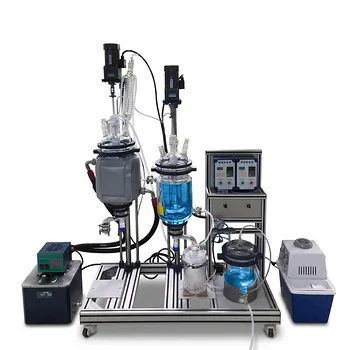
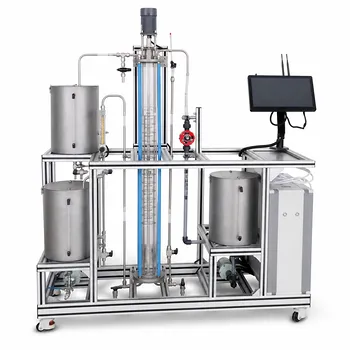
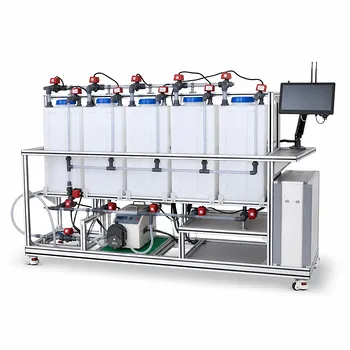
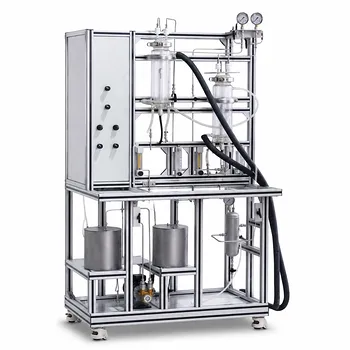
Accurate chemical analysis is vital for reliable process control. LABPARK provides state-of-the-art Educational and Vocational Unit Operations Pilot Plants in chemical engineering, bioprocess & biotech, and environmental & water treatment designed specifically for universities, research institutes, and enterprises.
Ready to elevate your research, training, and testing capabilities? Contact LABPARK today to discover how our pilot plant solutions can support your engineering goals!
Related Products
- Electrolyte Distillation Purification and Formulation Educational Pilot Plant
- Ion Exchange Water Purification Educational Pilot Plant for Engineering Unit Operations
- Potassium Salt Thermal Dissolution and Crystallization Separation Educational Unit Operations Pilot Plant
- Educational Rotary Disc Liquid-Liquid Extraction Pilot Plant
- Constant Pressure Filtration Educational Unit Operations Pilot Plant
People Also Ask
- Why does simple distillation yield higher efficiency than flash distillation? Key thermodynamic differences.
- How to Integrate Spectroscopy in Distillation Pilot Plants for Advanced Process Control
- Why is the acentric factor important in pilot plants? Fluid property prediction.
- How to Verify Distillation Boundary Lines & Composition Regions with Pilot Plants
- How does double temperature difference control improve distillation pilot plants? Stabilize purity.