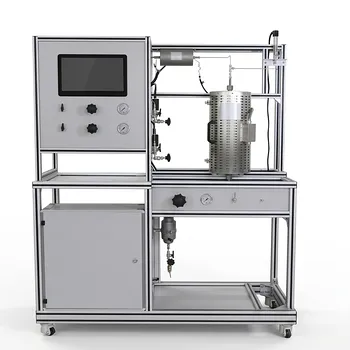
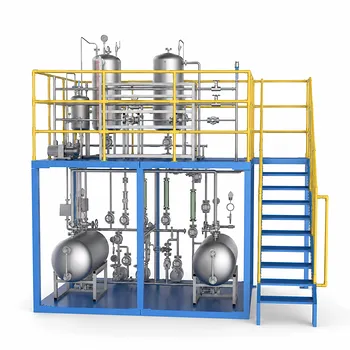
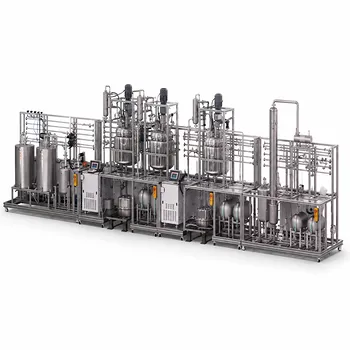
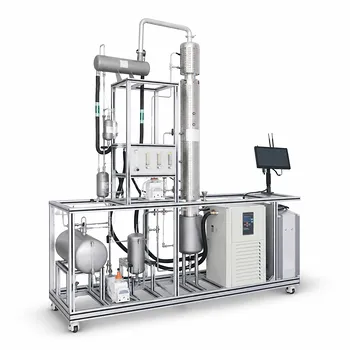
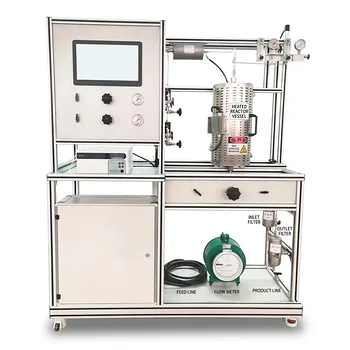
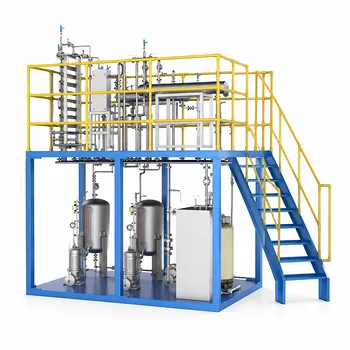
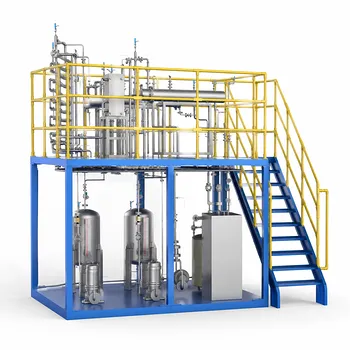
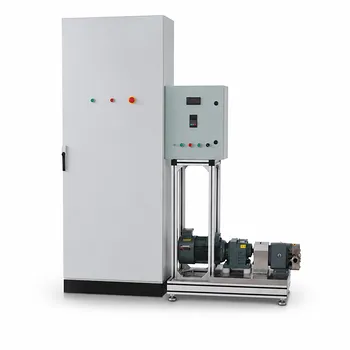
HAZOP studies transform pilot plants from mere hardware into dynamic safety classrooms. Instructors use them to guide students through a structured, team-based analysis of potential process deviations. By applying guide words like “No,” “More,” or “Reverse” to real equipment—such as reactors, vaporizers, or distillation columns—students learn to systematically identify hazards, assess consequences, and define corrective actions. This not only cements theoretical knowledge but builds the instinctive risk-awareness essential for safe operation in full-scale industrial environments.
The true power of HAZOP in pilot-plant training lies in shifting students from passive operators to active safety analysts. By dissecting “what can go wrong” on real hardware before touching a valve, they internalize the link between design intent, operational deviations, and engineered safeguards—turning every pipe, sensor, and control loop into a lesson in process safety.
Why Pilot Plants Need HAZOP Integration
A pilot plant is more than a scaled-down factory—it’s a controlled environment where mistakes become learning opportunities. Integrating HAZOP studies into the curriculum ensures that safety isn’t taught as a separate theory but as an inseparable part of every operation. This approach meets a deep educational need: preparing students not just to run a unit, but to question, anticipate, and design out hazards from the very first P&ID mark.
Building a Safety-First Mindset from Day One
Students often approach pilot plants with a “recipe” mentality—follow the steps, get the result. A HAZOP session disrupts that passive attitude. By sitting around the P&ID with their peers and an instructor, they learn that every flow, temperature, and pressure has a failure mode. This collaborative investigation builds a mental library of cause-and-effect chains, making them naturally cautious and curious operators.
Connecting Theory to Tangible Consequences
Classroom thermodynamics and kinetics become visceral when students ask, “What if cooling water flow is lost?” In a HAZOP, they don’t just calculate a temperature rise—they trace the chain of events: pump failure → loss of cooling → exotherm acceleration → potential overpressure. The pilot plant sits in the room as a silent witness, making the abstract consequence a tangible threat. This experiential learning fixes safety principles in long-term memory far more effectively than any lecture slide.
Teaching the Language of Process Safety
Guide words (No, More, Less, Reverse, As Well As, Part Of, Other Than) are the universal vocabulary of process hazard analysis. By using them repeatedly on pilot-plant nodes—a feed line, a reactor jacket, a condenser vent—students internalize a standardized method for questioning a design. They exit the course able to walk into an industrial facility and immediately participate in a real HAZOP, because the methodology is now a familiar habit.
A Step-by-Step Framework for Pilot-Plant HAZOPs
Instructors can adopt a clear, repeatable sequence that mirrors industrial practice while fitting educational timelines. This structure gives students a safe “playground” to practice systematic risk assessment.
Node Selection: Define the Boundaries
Begin by dividing the pilot plant into logical nodes. A node can be a vessel, a heat exchanger, a section of piping, or even a specific operational step. For a distillation pilot plant, nodes might be “feed preheater and inlet line,” “reboiler circuit,” or “reflux drum.” The instructor asks, “What is the design intent of this node?” to anchor the analysis. Students must articulate normal operating parameters—a vital step that reveals gaps in understanding before a single deviation is explored.
Choose a Parameter and Apply a Guide Word
With the node defined, select a process parameter from the pilot plant’s control screen or P&ID: flow, temperature, pressure, level, pH, concentration, agitation speed. Then apply a guide word. For example, on a reactor cooling line, combine “flow” with “Less.” The question becomes: “What could cause low cooling water flow, and what are the consequences?” Guide words force students to consider realistic failure modes—valve sticking, pump trip, filter blockage—and link them directly to the process parameter.
Cause, Consequence, and Safeguard Mapping
This is the core analytical step. For each deviation, students must identify credible causes (equipment failure, human error, external disruption) and then trace the consequences through the entire node. On a steam-heated vaporizer, “More steam flow” caused by a control valve failure leads to low liquid level, high vapor velocity, and possible liquid carryover into a downstream reactor. Then, they evaluate existing safeguards: level alarms, pressure relief valves, interlock shutdowns, non-return valves. The instructor acts as a facilitator, not a lecturer, guiding students to discover these connections themselves.
Document and Verify
Every finding is recorded on a HAZOP worksheet and marked on the P&ID. This teaches the discipline of rigorous technical documentation—a skill as critical as any valve maneuvering. After the session, students can walk down the pilot plant and physically locate the safeguards they identified, from the temperature transmitter to the emergency stop pushbutton. This physical verification cements the link between paper analysis and real hardware.
Common Pitfalls and How to Overcome Them
Even with a robust framework, educational HAZOPs risk becoming either too shallow or overly ambitious. Acknowledging these trade-offs helps instructors design more effective sessions.
The Trap of Procedural Drudgery
If the instructor simply reads a checklist, students disengage. HAZOP is a creative, investigative process—not a form-filling exercise. Avoid exhaustive word-parrot sessions by selecting a few high-consequence deviations relevant to the pilot plant’s real hazards (e.g., exotherm runaway, toxic release, overpressure). Keep the analysis alive with real-world anecdotes of accidents that started with that same deviation.
Time Pressure vs. Depth
A full HAZOP on a complex pilot plant could take days—time a university lab course doesn’t have. Accept that you will not analyze every line. Focus on a single critical node in depth, such as the reactor feed system, rather than skimming five nodes. Students learn more from a thorough, 90-minute analysis of one risk than from a superficial pass over the entire flowsheet.
The Pilot Plant Isn’t an Industrial Facility
Students might dismiss findings because “it’s only a small glass vessel.” Instructors must constantly bridge the gap: “In a full-scale reactor, this low-level scenario would trigger a vessel collapse because of the larger volume.” Use the pilot plant as a demonstrator of principles, always referencing how the same deviation plays out at scale. If the pilot plant contains inherent limits (e.g., low pressure, dilute concentrations), explicitly discuss what would change in an industrial environment.
Making HAZOP Stick: Actionable Training Strategies
The true measure of success is whether students carry this thinking into their future work. These final strategies ensure the lesson endures.
- If your primary focus is instilling a safety culture: Walk the pilot plant after the HAZOP and have students physically touch each safeguard they identified—from a rupture disc to a hard-wired interlock. This anchors analysis in tactile reality.
- If your primary focus is teaching operational insight: Use the HAZOP to derive the top three “never exceed” conditions for the pilot plant, and let students verify them during a controlled startup. This makes them owners of the safe operating envelope.
- If your primary focus is preparing students for industry careers: Require students to complete a standard HAZOP worksheet and present findings to their peers as if they were a plant safety committee. Grading on the clarity of cause-and-effect logic, not just completeness, makes the exercise professionally rigorous.
HAZOP isn’t an add-on to pilot-plant training—it’s the lens that transforms technical operation into professional engineering judgment.
Summary Table:
| HAZOP Step | Action for Students | Educational Objective |
|---|---|---|
| 1. Node Selection | Define boundaries and design intent on P&ID | Bridge theoretical design with physical equipment |
| 2. Deviation Analysis | Apply guide words (e.g., "More Flow", "No Temp") | Identify potential operational failure modes |
| 3. Cause & Effect | Trace causes and analyze process consequences | Link thermodynamic theory to real-world hazards |
| 4. Safeguard Mapping | Locate physical safety controls (valves, alarms) | Develop rigorous engineering documentation skills |
Bring Industrial Safety Standards into Your Lab
Equip your students with the practical process safety and operational skills demanded by modern industry. LABPARK design and manufacture high-quality Educational and Vocational Unit Operations Pilot Plants for chemical engineering, bioprocess & biotech, and environmental & water treatment.
Whether you are a university, research institute, or enterprise, our pilot plants are built to facilitate hands-on learning and rigorous HAZOP training.
Contact LABPARK today to request a customized quote and elevate your laboratory curriculum!
Related Products
- Carbon Dioxide Hydrogen Methanol Synthesis Educational Unit Operations Pilot Plant
- Multi Pump Fluid Transport Process Piping Unit Operations Training Pilot Plant
- Multi-Reactor Educational Pilot Plant for Reaction Engineering Unit Operations
- Ethyl Acetate Synthesis Unit Operations Pilot Plant for Practical Training
- Multi-Modal Distillation Unit Operations Training Pilot Plant
People Also Ask
- How do temp & pressure affect methanol synthesis pilot plants? Optimize equilibrium and catalyst performance.
- Why is a purge system necessary when operating a gas recirculation loop in a methanol synthesis pilot plant? (Guide)
- Why do modern methanol pilot plants operate at lower pressures? Catalyst & Feed Requirements Explained
- What are the operational requirements for catalyst activation? Safe Methanol Pilot Plant Operation
- Why is the chemical plant startup schedule crucial? De-risk scale-up with pilot plants.