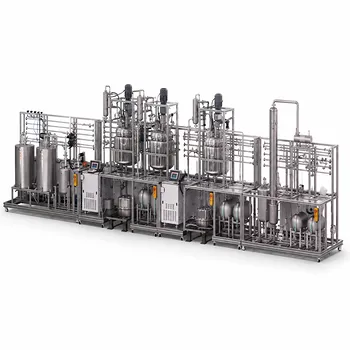
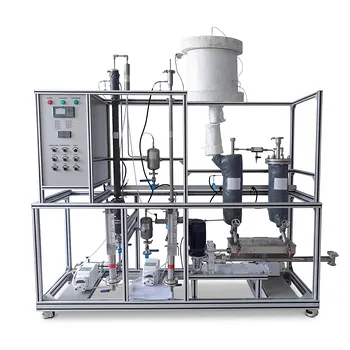
The most effective integration isn't a standalone lecture—it’s a mandatory operational prerequisite. Before students touch any valve or control system, they must participate in a structured HAZOP study of that specific pilot plant’s design intent. Using standard guide words like “No,” “More,” or “Less” applied to critical process parameters (flow, temperature, pressure), students and instructors systematically identify potential deviation causes, such as valve failures or pump loss. The study’s findings are then physically validated against the plant’s installed safety interlocks, alarm limits, and emergency shutdown procedures, bridging the gap between paper-based theory and real-world risk.
The challenge in academia is that pilot plants are often treated as simple demonstration tools, not as hazardous processes. Integrating HAZOP transforms the plant operation curriculum from a focus on “how to run it” to the far more critical vocational lesson of “what can go wrong and how the plant protects itself.” The deep need is not just safety, but producing engineers who instinctively design for safety.
Beyond Compliance: The Educational Purpose of HAZOP
The surface goal is accident prevention. The deeper need is creating a generation of engineers who view safety as an integral design parameter, not a post-hoc checklist. A pilot plant hysop study is the vehicle for this transformation.
Turning Operators into Inherently Safe Designers
The physical pilot plant is a living textbook for inherently safer design principles. By conducting a HAZOP, you force students to ask why certain design choices were made.
They can compare the plant’s batch size to a full-scale industrial unit, physically grasping the concept of hazard minimization through reduced equipment volumes. They can analyze the solvent choice, learning why a safer alternative was selected and the performance trade-offs involved. This moves inherent safety from an abstract principle to an observable, measurable system characteristic.
Mastering the Multi-Layered Safety Concept
Industrial loss prevention relies on independent protection layers. A HAZOP study is the tool that reveals these layers to the student. They don't just see a pressure gauge; they understand it as one element in a sequence.
The study process links a deviation to its defense: from inherent safety at the design base (reduced inventory), through basic process control systems, critical alarms for human intervention, and automatic safety shutdowns, to the final line of defense, pressure relief systems. This teaches students standard industrial safety protocols as an integrated, logical system.
The Functional Architecture of a Pilot Plant HAZOP
To implement this effectively, you must move beyond a theoretical discussion and embed the HAZOP into the plant’s operational DNA. The process is a structured, node-by-node forensic examination.
Step 1: Define the System and Break It into Nodes
The first step is to divide the pilot plant’s P&ID into logical, manageable sections. A “node” can be a vessel, a specific pipe section, or a critical operational step.
For a distillation unit pilot plant, one node is the reboiler and its heating system. Another is the feed line, and another is the condenser. This teaches students how to compartmentalize complexity, a critical engineering skill. The parameters to evaluate for each node, such as temperature, pressure, flow rate, volume, agitation, and phase state, become the focal points of the investigation.
Step 2: Apply Guide Words to Uncover Deviations
This is the heart of the vocational training. For each node and its design intent, a team applies standardized guide words. This collaborative, interrogative environment is where true learning happens.
A simple prompt like “No heating steam flow” applied to a reactor or vaporizer node becomes a rich investigative exercise. The team must trace the logic: a pneumatic valve failure is a possible cause, leading to liquid reactant accumulation. This directly informs the requirement for a steam flow low-alarm and a temperature-low trip to protect against thermal damage or runaway reactions when steam suddenly returns.
Step 3: Map Deviations to Safety Instrumented Systems
A HAZOP’s theoretical findings are pointless if they don’t connect to the physical plant. The critical step is to physically verify the engineered safeguards for each credible deviation. This makes the plant’s P&ID and PLC program transparent to the student.
Consider an ammonia-air oxidation reactor analysis. A “High Ammonia Concentration” (>4%) deviation, posing an explosion risk, justifies the existence of redundant analyzers and automated bypass trip valves. Similarly, “No flow” or “Low flow” of reactants explains why the plant is fitted with low-flow alarms and temperature-high-limit trips. This process teaches students how a cause-consequence analysis materializes into a safety instrumented system (SIS).
Understanding the Trade-offs and Pitfalls
Integrating HAZOP is not without friction. A poorly implemented program can become a box-checking exercise that teaches nothing, or worse, creates a false sense of confidence.
The Tension Between Education and Operational Efficiency
A thorough HAZOP is time-intensive. There’s an inherent conflict between the educational goal of deep, student-led exploration and the logistical need to cycle multiple student groups through a limited number of lab hours.
The pitfall is rushing the study to fit a schedule, which can lead to a superficial identification of hazards. The solution is to frame the HAZOP as the core learning objective itself, not just a prerequisite for operation. A pre-completed, instructor-led HAZOP for common scenarios can serve as a baseline, with students tasked to re-validate and expand upon it for a specific run condition.
Avoiding the Illusion of Safety
A procedural HAZOP on paper can create a dangerous illusion that the plant is perfectly safe. This must be actively countered by verifying the inherent limitations and condition of the pilot plant.
The study must be integrated with a hands-on review of material safety data sheets and a physical inspection of chemical storage facilities. Students must understand that a safety interlock is worthless if the connected sensor has drifted out of calibration or if the emergency preparedness protocol is unclear. The HAZOP must be shown as a living system review, dependent on human factors like training and fatigue management.
Making the Right Choice for Your Curriculum
The method of integration should align with your primary educational goal for the pilot plant. Use the plant’s flexibility to target specific learning outcomes.
- If your primary focus is safety instinct formation: Make the HAZOP a student-led, ungraded investigation with an open-ended time allocation before they ever operate the plant. The goal is deep, collaborative inquiry, not efficiency.
- If your primary focus is simulating industrial project workflow: Assign a pre-defined HAZOP scope with a strict deadline, treating the final report and resulting safe operating limits as the key deliverable against a rubric.
- If your primary focus is control systems education: Center the entire HAZOP on the functional logic of the PLC. Have students trace specific deviations directly to the corresponding sensor, alarm, and final element wiring, turning the study into a system debugging exercise.
The power of a pilot plant is its ability to make failure—and its prevention—real and tangible, and only a properly integrated HAZOP study unlocks that ultimate educational potential.
Summary Table:
| Integration Step | Focus Area | Educational & Vocational Value |
|---|---|---|
| 1. Define Nodes | Dividng P&ID into physical systems (e.g., reboiler, feed line). | Teaches students how to compartmentalize complex process architectures. |
| 2. Apply Guide Words | Testing process parameters with guide words (e.g., "No Flow"). | Develops investigative habits and links operational deviations to consequences. |
| 3. Map to Safety Systems | Verifying alarms, interlocks, and emergency trips on the physical plant. | Connects theoretical process safety directly to hardware control logic (PLC/SIS). |
Build a Safer, Industry-Ready Engineering Lab with LABPARK
Integrating HAZOP studies into your curriculum requires pilot plants that reflect real-world industrial hazards and safety systems. LABPARK provides premier Educational and Vocational Unit Operations Pilot Plants in chemical engineering, bioprocess & biotech, and environmental & water treatment designed for universities, research institutes, and enterprises.
Our systems are built with realistic process control networks, emergency shutdown systems, and physical safety interlocks—giving your students the hands-on environment they need to master inherently safe design.
Contact LABPARK today to discover the right pilot plant solution for your lab!
Related Products
- Fixed Bed Gas Solid Catalytic Reaction Educational Pilot Plant
- Multi Pump Fluid Transport Process Piping Unit Operations Training Pilot Plant
- Carbon Dioxide Hydrogen Methanol Synthesis Educational Unit Operations Pilot Plant
- Ethyl Acetate Synthesis Unit Operations Pilot Plant for Practical Training
- Natural Product Extraction Unit Operations Training Pilot Plant
People Also Ask
- How do reactor pilot plants safely study gas-solid reactions? Master kinetics with thermal & flow control.
- How does the Mears criterion evaluate transport resistance? Key Guide to Intrinsic Kinetics
- Fluidized vs. Fixed Bed Reactors: Comparing Heat & Complexity in Pilot Plants
- Why is a multibed configuration necessary for exothermic reactions? Optimize your pilot plant trajectory.
- What are the differences between pseudohomogeneous and heterogeneous models in pilot plants?