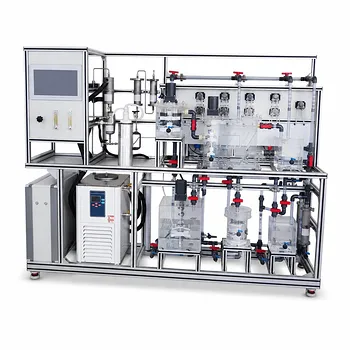
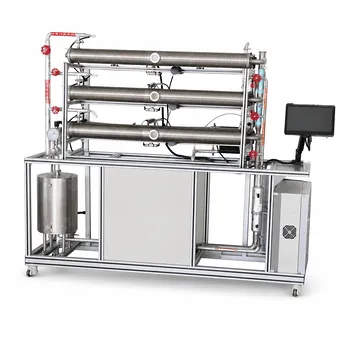
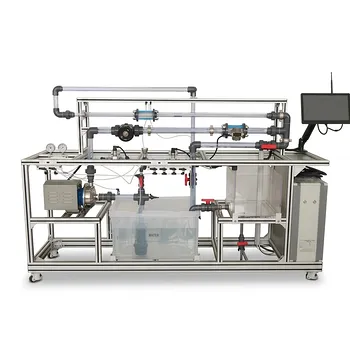
A closed-loop gas circulation design transforms a rotary dryer from a simple drying tool into a powerful, hands-on lesson in environmental stewardship. When students operate a pilot plant with a condenser and recirculating gas loop, they immediately see how hot exhaust vapor can be cooled to recover liquid solvent instead of releasing harmful volatile organic compounds (VOCs) into the air. This direct observation bridges the gap between abstract regulations and practical chemical engineering, making concepts like solvent recovery, emission control, and green chemistry tangible and unforgettable.
The core educational value of a closed-loop gas circulation dryer lies in its ability to demonstrate, in a controlled lab setting, the exact same solvent recovery principles that industry uses to meet environmental compliance. By physically collecting condensed solvent and measuring emission reductions, students internalize that pollution prevention is a design choice, not an afterthought.
The Teaching Power of a Closed Loop vs. Once-Through Design
To appreciate the educational impact, it helps to contrast two configurations often found in pilot plants: a once-through dryer that vents gas after a single pass, and a closed-loop system that recycles the gas stream.
Visualizing the Problem: The Once-Through Baseline
A once-through dryer does exactly what its name suggests: hot gas sweeps moisture and volatile compounds away, then exits the system.
If that exhaust contains VOCs, the only paths are venting directly to the atmosphere or sending the stream to a flare. Both options are invisible and wasteful to a student. The solvent disappears; there is no physical evidence of its fate. This makes environmental compliance feel like abstract paperwork, not a concrete process objective.
The Closed-Loop Solution: Solvent Recovery in Action
Now introduce a blower to recirculate the gas and a condenser to cool the hot, vapor-laden exhaust.
Students watch the temperature drop across the condenser, then literally see droplets of recovered solvent collect in a receiver. The process flow becomes a cycle: gas picks up solvent in the dryer, drops it out in the condenser, and returns clean to the dryer. This turns the pilot plant into a miniature solvent recovery unit, identical in principle to industrial systems that achieve over 95% VOC capture.
Connecting Classroom Theory to Real-World Regulations
Every drop of recovered solvent is a data point. Students can measure the mass of solvent condensed and compare it to the total solvent introduced.
Suddenly, terms like emission factor, destruction efficiency, and mass balance become measurable realities. They understand why agencies like the EPA or ECHA set limits—not because regulation is arbitrary, but because the technology to capture and reuse solvents exists and is economically viable. This direct experience plants the seed that environmental compliance is an engineering parameter, much like temperature or pressure.
Material Conservation: Seeing the Circular Economy in the Lab
The learning extends beyond emission control into the broader philosophy of material efficiency, a principle highlighted in pilot plants with recycling loops.
From Waste Stream to Resource Stream
When students collect the condensed solvent, they are holding a stream that—in a once-through system—would have been waste. Instead, in a closed-loop design, that solvent can be redirected back to the process or reclaimed for reuse.
This simple act rewires their thinking: solvent is no longer a consumable to be disposed of, but a recoverable asset. They grasp the core of circular process design without needing a full factory.
Linking to Raw Material Efficiency
Pilot plants equipped with recycling loops often return recovered solvent, unreacted raw materials, or catalysts to the reactor. Students see how a process can approach theoretical maximum conversion by recovering and reusing valuable streams. The gas circulation dryer becomes a building block of a larger resource-efficient plant, teaching that every separation step is an opportunity for recovery, not just a cleanup cost.
Energy Integration: The Hidden Curriculum of Heat Recovery
A sophisticated rotary dryer pilot plant rarely stops at solvent recovery. It often incorporates heat exchangers and thermal integration to pre-heat incoming gas or liquid using hot exhaust streams.
Minimizing External Utilities
When students map energy flows, they discover that the hot gas leaving the dryer still carries substantial thermal energy. A heat exchanger can capture that enthalpy to reduce the heating demand on the fresh gas stream. This creates a dual efficiency lesson: material recovery via condensation and energy recovery via thermal integration.
The pilot plant becomes a microcosm of a modern chemical facility where pinch analysis principles are applied. Students can measure how much natural gas or electricity the system saves, linking process design directly to carbon footprint reduction.
Understanding the Trade-offs
No teaching tool is perfect, and a closed-loop gas circulation dryer is no exception. Acknowledging its limitations is critical to building objective expertise.
The Hidden Cost of Condensation
Condensation requires cooling, which demands energy. Students soon realize that while they are recovering solvent, they are also paying for refrigeration or cooling water. There is a crossover point where the value of recovered solvent must outweigh the energy cost. This avoids the trap of thinking “closed loop” is always automatically green; it teaches life-cycle thinking from the start.
Complexity and Operational Nuance
A recirculating gas loop introduces control challenges. The gas composition can change as moisture or inert gases accumulate, requiring a purge stream to prevent build-up. Condenser fouling, pressure drop management, and blower sizing are all real-world issues that once-through systems hide. By wrestling with these in the lab, students build the troubleshooting skills that make them industry-ready.
Safety Boundaries
The supplementary reference on rotary evaporation highlights a critical point: parameters like bath temperature, fill volume, and vacuum sequence matter enormously for safe operation. The same applies to a pilot-scale dryer with flammable solvents. Students must learn to operate below flash point limits and manage oxygen concentrations in a closed gas loop. This embeds a safety-first culture directly into the environmental lesson.
Making the Right Choice for Your Educational Goal
How you use a gas circulation pilot plant depends on what you want students to take away.
- If your primary focus is environmental compliance and regulation: Run the dryer in both once-through and closed-loop modes. Have students measure VOC concentration at the vent in each case and calculate emissions reductions. Use the data to simulate a regulatory reporting exercise.
- If your primary focus is solvent recovery process design: Task students with optimizing condenser temperature, gas recirculation rate, and solvent yield. Let them experience the economic trade-off between recovery efficiency and utility cost firsthand.
- If your primary focus is energy integration: Equip the plant with heat exchangers and ask students to perform a simple energy balance, comparing external heating duty with and without pre-heating. This turns thermodynamics into a tangible cost-benefit analysis.
- If your primary focus is industrial safety and operability: Introduce controlled “faults” — a clogged condenser, a blower trip — and have students diagnose and recover using standard operating procedures that respect flash points and purging requirements.
By physically touching the recovered solvent, measuring energy savings, and grappling with trade-offs, students walk away not just with book knowledge, but with a gut-level understanding that sustainable process design is a series of deliberate, measurable choices.
Summary Table:
| Feature | Once-Through Design | Closed-Loop Gas Circulation |
|---|---|---|
| VOC Emissions | Vented or flared (wasted) | Captured and condensed (recovered) |
| Core Teaching Focus | Basic drying kinetics | Green chemistry, circular economy, mass balance |
| Resource Recovery | Low (no solvent reuse) | High (solvent recycled back to process) |
| Energy Integration | None | Heat exchangers pre-heat incoming gas |
| Safety & Control | Simple operation | Advanced control (flash points, purging) |
Bring sustainable chemical engineering to life in your lab. LABPARK provides premium Educational and Vocational Unit Operations Pilot Plants in chemical engineering, bioprocess & biotech, and environmental & water treatment for universities, research institutes, and enterprises. Help your students master green chemistry, thermal integration, and industrial compliance through hands-on practice. Contact our specialists today to customize the ideal pilot plant for your curriculum!
Related Products
- Educational Rotary Disc Liquid-Liquid Extraction Pilot Plant
- Multi-Functional Drying Educational Unit Operations Pilot Plant
- Comprehensive Liquid-Liquid Extraction Pilot Plant for Engineering Education
- Circulating Wind Tunnel Drying and Convective Heat Transfer Coefficient Determination Educational Pilot Plant
- High-Gravity Emulsification and Mass Transfer Educational Pilot Plant
People Also Ask
- How do density and IFT affect liquid-liquid extraction pilot plants? Optimize Column Performance
- How are ternary phase diagrams and LLE data applied in extraction experiments? Optimize Pilot Plant Scale-up
- In a liquid-liquid extraction pilot plant, how is a ternary-phase diagram utilized to determine solvent feed requirements?
- How Do Selectivity & Distribution Coefficients Influence LLE Pilot Plant Solvent Choice?
- How to Validate BIPs for LLE Pilot Plants? Steps to Align Simulations with Reality