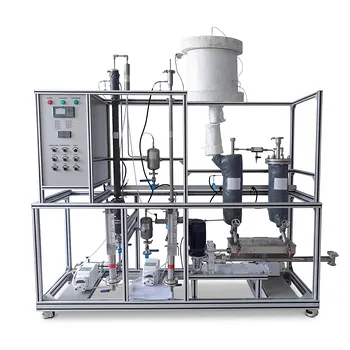
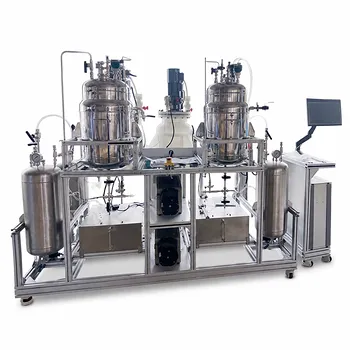
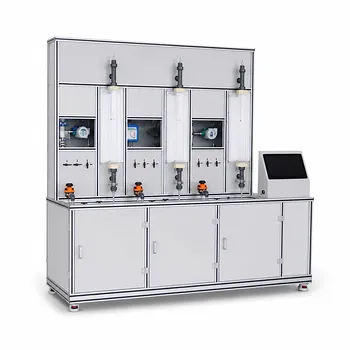
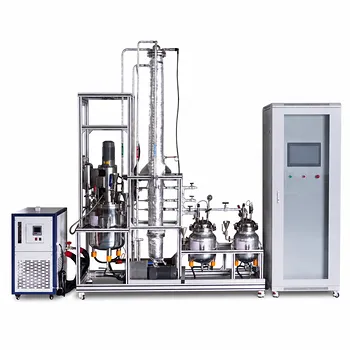
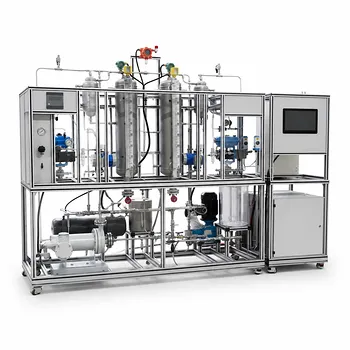
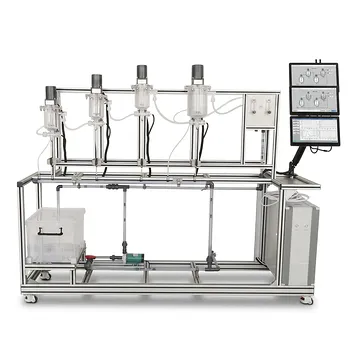
A pilot plant is the ultimate teaching bridge from equation-laden textbooks to the real, probabilistic world of hydrocarbon cracking. By loading different feedstocks—from ethane to light diesel—and systematically adjusting furnace temperatures, steam ratios, and residence times, students directly measure how each variable shifts the yield of ethylene, propylene, and co-products. The inclusion of waste heat recovery systems then adds a layer of energy-efficiency analysis, making the plant a complete sandbox for modern yield optimization.
The core insight is that every process parameter and feedstock choice imposes a unique kinetic, thermodynamic, and mass-transfer signature on the product slate. A well-instrumented educational pilot plant transforms these abstract signatures into a tangible, data-rich map—teaching engineers to navigate the trade-offs between maximum olefin output, co-product value, energy consumption, and long-term operability.
Decoding Feedstock: The Molecular Blueprint of Your Products
The first lesson a cracking pilot plant teaches is that the feedstock is not just a raw material; it is a molecular declarative statement of what the process can produce. The hydrogen-to-carbon ratio and molecular weight of the feed predetermine the theoretical yield window and the coking severity.
Gaseous vs. Liquid Feedstocks: A Tale of Two Mechanisms
Gaseous feeds like ethane crack with a beautiful simplicity. Their high hydrogen content (H/C ≈ 3) drives reactions toward ethylene yields as high as 84 weight percent, with almost no heavy by-products. This makes them perfect for demonstrating pure kinetic selectivity under controlled radical-chain mechanisms.
Liquid feeds like naphtha or light diesel introduce the rich complexity of industrial reality. With H/C ratios dropping to 1.5–2, they generate a broad spectrum of olefins, diolefins, and aromatics. The same radical initiation now branches into multiple propagation paths, and coking becomes a first-order variable that students must actively manage.
Hydrogen-to-Carbon Ratio and Coking Tendencies
A pilot plant’s sight glasses and sampling ports turn the abstract concept of coking into a visible, time-dependent phenomenon. Higher H/C feeds minimize coke formation, extending continuous run times. Lower H/C feeds force engineers to balance conversion against the accelerated deactivation of reactor surfaces, teaching that yield optimization is never just about the product—it’s about maintaining the catalyst or reactor wall itself.
Manipulating Process Knobs: From Severity to Selectivity
Once the feedstock is set, the pilot plant becomes a living laboratory where students can turn process parameters into real-time yield shifts. The two master controls are temperature and dilution.
Temperature and Residence Time: The Severity Levers
Cracking severity is a function of time spent at a given temperature. In a thermal cracking module, even a 10–15°C increase in the furnace outlet temperature can shift the product distribution from a propane-rich gas toward a lighter, ethylene-dominant slate. By running the plant at different coil outlet temperatures while keeping residence time constant (via flow rate adjustments), students generate carbon-number distribution curves that directly map the free-radical bond rupture patterns.
Short residence times at high temperature favor olefins; longer times push toward methane and heavier condensed-ring aromatics. This experimental validation cements the kinetic principle that cracking is an uncontrollable cascade—and that the optimal yield of an intermediate like ethylene is a fleeting moment along the reaction coordinate.
Steam-to-Hydrocarbon Ratio: Dilution and Partial Pressure Effects
Steam is the silent optimizer. Increasing the steam-to-hydrocarbon ratio lowers the partial pressure of hydrocarbons, which Le Chatelier’s principle tells us favors de-propagation and olefin formation. Simultaneously, it suppresses bi-molecular condensation reactions that lead to coke. In the pilot plant, students can ramp this ratio from 0.3 to 0.6 (weight basis) and observe a cleaner furnace run length alongside a measurable nudge in light olefin selectivity.
Extending to Catalytic Cracking: Selectivity and Carbon Number Control
An educational plant equipped with a catalytic reactor module unlocks the next level of selectivity training. Thermal cracking relies on random free-radical bond rupture, producing abundant C1–C2 fragments. In contrast, catalytic cracking proceeds through carbenium ion intermediates, which undergo ordered beta-scission and isomerization. The result is a product slate richer in branched C4–C7 hydrocarbons—the building blocks of gasoline—and far less light gas.
By switching between thermal and catalytic modes using the same liquid feed, students can generate two completely different carbon-number distributions. This side-by-side comparison demonstrates how a catalyst re-routes the reaction network, teaching that yield “optimization” often means choosing between a high-ethylene mode and a high-gasoline mode.
Revealing Hidden Constraints: Mass Transfer and Energy Efficiency
Real yield optimization extends beyond the reactor outlet. Two of the most profound lessons a pilot plant can teach happen at the boundaries of the chemical reaction—inside the catalyst pores and in the heat recovery train.
When Diffusion Dictates Yield: The Thiele Modulus in Action
The internal structure of a catalyst pellet can make or break an intermediate product’s yield. In a consecutive reaction network designed to produce a desired intermediate (A → B → C), diffusional resistance traps B inside the pellet, giving it more time to over-react into C. The result is a lower observed yield of B compared to what intrinsic kinetics predict.
The pilot plant makes this abstract Thiele modulus tangible. By altering catalyst particle sizes (changing the diffusion path length) or adjusting flow rates (varying external mass transfer coefficients), students can shift the system from a kinetic-controlled regime to a diffusion-controlled one. They then measure the effectively factor directly—seeing with their own data how a steep internal concentration gradient erases the selectivity that was promised by the kinetic model.
Energy Recovery and Process Economics: The Waste Heat Boiler
No yield optimization conversation is complete without the cold, hard lens of energy economics. A pilot plant equipped with a waste heat boiler and heat recovery exchangers turns thermal efficiency into a measured variable. Students can correlate different furnace operating severities with the amount of high-pressure steam raised downstream. They quickly learn that the extra 1% ethylene yield from a 5°C higher cracking temperature might come at the cost of a disproportionate increase in fuel gas consumption—a lesson that only a hands-on energy balance can deliver.
Understanding the Trade-offs
The educational power of a pilot plant lies in its refusal to let students chase a single number. Every optimization creates a cascade of consequences.
- Maximum ethylene yield vs. co-product value: Ethane cracking gives the purest ethylene stream but produces almost no valuable propylene or butadiene. Naphtha cracking dilutes ethylene but generates a monetizable basket of co-products that can change the plant’s economic breakeven point.
- High severity vs. run-length and coking: Pushing temperature and reducing steam dilution to chase conversion inevitably accelerates coke deposition. Students learn to optimize not just the instantaneous yield but the integrated yield over the decoking cycle.
- Thermal simplicity vs. catalytic selectivity: Thermal cracking avoids catalyst costs but is inherently unselective. Catalytic cracking broadens the product spectrum toward drop-in fuels but introduces catalyst deactivation and regeneration complexities.
- Process intensification vs. mass transfer penalty: Smaller catalyst particles improve intra-particle diffusion but increase bed pressure drop, raising compression costs. The pilot plant transforms this textbook trade-off into a measurable pressure-drop versus yield-improvement curve.
- Carbon allocation in FCC vs. hydrocracking: In an FCC pilot unit, carbon leaves the reactor as coke and is burned off as low-pressure CO₂. In a hydrocracking unit, carbon ends up in the high-pressure CO₂ stream of the hydrogen plant. By running carbon balances on both setups, students face the reality that yield optimization now includes carbon capture readiness—high-pressure CO₂ is far easier to sequester, making the hydrocracking route more attractive in a carbon-constrained future.
How to Design Your Pilot-Plant Learning Module
The relationship between feedstock, parameters, and yield is best taught by constructing targeted experiments that isolate one variable at a time while anchoring the analysis in a real economic or environmental metric.
- If your primary focus is to teach fundamental reaction kinetics: Start with a gaseous ethane feed and vary furnace outlet temperature stepwise while recording ethylene, ethane conversion, and light gas yields. The clean system eliminates side reactions and makes activation energy calculations starkly clear.
- If your primary focus is to explore industrial co-product trade-offs: Use a naphtha liquid feed and run a full 3×3 matrix of temperature and steam-to-hydrocarbon ratio. Measure the entire C1–C5 olefin and aromatic slate, then overlay spot-market pricing data to find the optimal “value-weighted” operating window.
- If your primary focus is to demonstrate catalyst and transport effects: Equip the plant with a catalytic reactor module and run consecutive reactions (e.g., cracking of a model compound). Vary catalyst particle size and space velocity to generate the characteristic yield-versus-Thiele-modulus curve, showing where the process shifts from surface-kinetics-limited to pore-diffusion-limited.
- If your primary focus is to integrate process economics and sustainability: Configure the pilot plant with a full heat recovery train and carbon balance loop. Task students with maximizing the ratio of high-value olefin revenue to total CO₂ emitted, adjusting furnace severity, steam ratio, and even considering a catalytic vs. thermal mode switch to hit that net-benefit metric.
A cracking pilot plant, in the right hands, is far more than a scaled-down industrial unit. It is a dynamic experimental philosophy that transforms every measured temperature and every GC trace into a permanent intuition about the energetic and molecular dance that drives yield optimization.
Summary Table:
| Parameter / Variable | Action / Variation | Impact on Yield & Process | Key Educational Takeaway |
|---|---|---|---|
| Feedstock Selection | Gaseous (Ethane) vs. Liquid (Naphtha) | Ethane yields high ethylene (~84%); liquids yield mixed olefins & heavy coke | Demonstrates molecular blueprint & coking tendencies |
| Temperature & Time | Higher temp, shorter residence time | Shifts product to light olefins; prevents over-cracking | Teaches kinetic selectivity & cracking severity limits |
| Steam Dilution | Increasing steam-to-hydrocarbon ratio | Lowers partial pressure; suppresses condensation & coke | Illustrates Le Chatelier’s principle in yield optimization |
| Reaction Mode | Thermal vs. Catalytic cracking | Thermal favors C1–C2; Catalytic yields branched C4–C7 | Compares random radical pathways to selective catalysis |
| Mass & Heat Transfer | Varying catalyst size & heat recovery | Alters Thiele modulus; tracks steam generation economics | Connects chemical reaction engineering to plant economics |
Bring Industrial Reality to Your Laboratory with LABPARK
Bridge the gap between complex textbook equations and real-world industrial operations. LABPARK provides state-of-the-art Educational and Vocational Unit Operations Pilot Plants in chemical engineering, bioprocess & biotech, and environmental & water treatment.
Designed specifically for universities, research institutes, and enterprises, our robust pilot plants enable you to:
- Deliver high-impact, hands-on training for future chemical engineers.
- Safely demonstrate complex thermodynamic, kinetic, and mass-transfer phenomena.
- Conduct precise process parameter testing and yield optimization research.
Ready to elevate your laboratory capabilities? Contact LABPARK today to explore our standard and customized pilot plant solutions!
Related Products
- Methane Cracking Educational Unit Operations Pilot Plant
- 100L Continuous Loop Hydrogenation Educational Unit Operations Pilot Plant
- Electrolytic Hydrogen Production Educational Unit Operations Pilot Plant
- Steam Methane Reforming Hydrogen Production and Purification Educational Pilot Plant
- Carbon Dioxide Hydrogenation Methanol Synthesis Educational Unit Operations Pilot Plant
People Also Ask
- How do ethane vs naphtha cracking influence teaching pilot plant analytical configurations? Key Design Guide
- How can flow-NMR be integrated with pilot plant reactors to monitor kinetics? A Complete Guide
- How do cracking temperature and residence time affect olefin yield? Pilot Plant Guide
- How are utility consumption rates integrated into chemical pilot plant economic evaluations?
- How should OSBL investments be estimated? Key Steps to Avoid Budget Overruns in Pilot Plant Projects