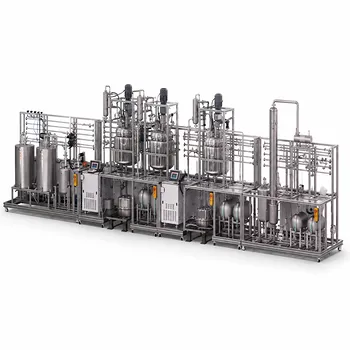
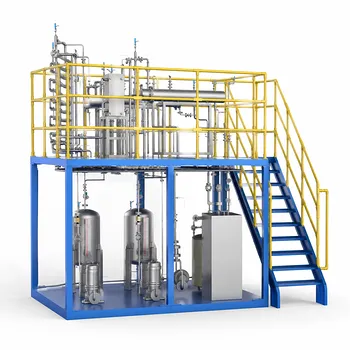
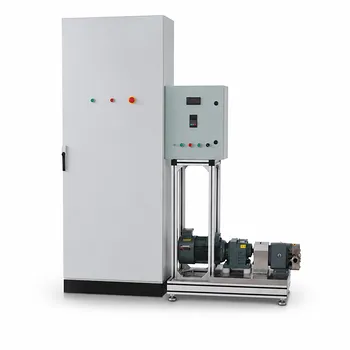
Theory meets reality in a chemical reactor. Pilot plants bridge the gap by providing the physical evidence that pure simulation cannot. They let students confront the non-ideal behaviors—heat loss, mixing imperfections, side reactions—that thermodynamic models simply ignore, turning abstract discrepancies into measurable, analyzable data.
Educational pilot plants transform the confusion between “what the model predicts” and “what the reactor actually does” into a structured investigation of real-world constraints. By enabling direct comparison between simulated equilibrium data and experimental yields, they teach students to diagnose the limits of ideal assumptions and build practical kinetic understanding.
The Hidden Gap Between Simulation and Experiment
Theoretical thermodynamic models are built on a foundation of idealized assumptions. Students learn to calculate equilibrium compositions, energy balances, and conversion rates as if reactors operate in a frictionless, perfectly controlled world. But the moment a reaction leaves the textbook, real physical constraints take over.
These discrepancies are not errors—they are the fingerprints of reality. And pilot plants are the laboratory where those fingerprints become visible.
Where Simulation Models Fall Short
Simulations typically assume perfect mixing, uniform temperature, and instantaneous heat transfer. They treat catalysts as eternally active and ignore secondary pathways like polymerization or coking. The primary reference highlights that real product distributions deviate because of heat transfer limits, spatial temperature gradients, and catalyst deactivation.
Furthermore, idealized reactor models—such as the continuous stirred tank (CSTR) or plug flow (PFR)—presume that every fluid element experiences the same residence time. Supplementary references emphasize that actual residence time distributions (RTD) rarely match these ideals, creating significant yield and selectivity differences. The result: students who trust only the model will forecast conversions that the pilot plant will never deliver.
The Power of Physical Measurement
A simulation outputs a number; a pilot plant outputs a thermocouple reading, a flow meter trend, and a product sample. Students measure temperatures at multiple points along a reactor bed, observe the pressure drop that indicates fouling, and collect exit streams for composition analysis. These physical measurements expose the spatial gradients and heat losses that models lump together.
When students compare the measured mass and energy balances against their pre-run simulations, the mismatch is immediate. The primary reference underscores that this hands-on analysis identifies the practical limitations of thermodynamic models and forces a shift from equilibrium thinking to real-world reaction kinetics.
How Pilot Plants Expose the Discrepancies
Pilot plants do more than just run reactions—they decompose the error between simulation and reality into specific, observable phenomena. By varying one parameter at a time, students isolate the root causes.
Quantifying Heat Transfer Realities
In an exothermic reaction, a simulation might calculate a perfect adiabatic temperature rise using Hess’s law. But the pilot plant’s temperature probes show a lower peak. Why? Heat is being lost to the reactor walls, absorbed by the vessel’s own heat capacity, and even carried away by imperfectly preheated feed streams.
Supplementary references highlight that measuring temperature changes during neutralization or synthesis in a pilot-scale reactor directly teaches energy balances and the practical application of thermodynamics. Students learn that the “missing” energy is not a failure of physics, but a failure of the model to include the real system’s heat capacity and environmental losses. This turns a calculation error into a lesson in system boundary definition.
Visualizing Non-Ideal Mixing and Residence Times
A PFR simulation assumes no axial mixing; a CSTR simulation assumes infinite back-mixing. A pilot plant reveals the truth lies somewhere in between. By injecting a tracer pulse and measuring the outlet concentration over time, students construct the actual residence time distribution (RTD).
A supplementary reference states that the RTD in a physical pilot plant rarely matches the idealized model. Using that data, students can build a reactor network model—say, a CSTR with a dead zone and bypass—that actually reflects the measured behavior. This transforms an abstract modeling exercise into a concrete data‑fitting problem, forcing them to reconcile theory with physical fluid dynamics.
Unraveling Side Reactions and Selectivity Loss
Thermodynamic equilibrium might favor a desired product, but kinetic pathways can betray you. On a pilot‑scale catalytic reactor, students can raise the temperature to accelerate the main reaction, only to watch by-product selectivity skyrocket. The primary reference mentions secondary polymerization and coking as real‑world culprits.
Because students can collect samples at intermediate points along the reactor and analyze them, they witness the growth trajectory of side products. This spatial resolution, impossible in a textbook equilibrium problem, shows that reaction engineering is a race between kinetics. It teaches that selectivity is often a product of rate control, not equilibrium positioning.
Understanding the Deeper Physical Constraints
Beyond individual phenomena, pilot plants give students a holistic sense of process scalability and dynamic behavior. The lessons are not just about chemistry, but about the equipment itself.
The Reality of Scale‑Up and Multi‑Phase Flows
Laboratory glassware often behaves ideally; pilot plants bridge the leap to industrial hardware. Supplementary references note that scale‑up verification requires real‑world data on material balances, cycle times, and equipment sizing.
When a reaction goes from a 100‑mL beaker to a 10‑litre stirred tank with internal cooling coils, students face mass transfer limitations, dead volumes, and imperfect contact patterns head‑on. The pilot plant becomes a testing ground where the model’s assumption of “perfectly mixed” crashes against the reality of baffles, impeller designs, and multi‑phase dispersions.
Path‑Dependent Energy and Work Concepts
A particularly elegant demonstration comes from gas thermodynamics. Supplementary references describe an experiment where students perform gas expansion in a single step versus multiple steps. Although the initial and final states are identical (so ΔU = 0 for an isothermal process), the work extracted differs significantly.
By operating the pilot plant to simulate multi‑stage expansion, students see that more steps yield more work, approaching the theoretical reversible limit. This physical experience crystallizes the concept of path functions and the irreversible nature of real processes—a concept that stays abstract when only using equations.
Trade-offs and Limitations of Pilot Plant Learning
Pilot plants are powerful, but they are not a silver bullet. An honest evaluation must acknowledge where they can mislead or strain resources.
The Cost of Reality
Running physical experiments demands time, chemicals, utilities, and maintenance. A simulation can iterate thousands of cases overnight; a pilot plant might manage three runs in a day. Educational programs must balance the depth of insight against the throughput of experimental data.
Additionally, the sheer number of sensors and control loops can overwhelm students if not properly scaffolded. The data stream can become noise without a clear hypothesis.
The Scale‑Down Distortion
A pilot reactor down‑scaled from an industrial unit still operates at lower pressures, smaller tube diameters, and different heat transfer regimes. Some discrepancies you observe in the lab—like an artificially large wall heat loss per unit volume—are specific to the miniaturized geometry and would not persist at full scale.
Students must learn that the pilot plant is a representative but imperfect proxy. The skill lies in distinguishing between scale‑dependent artifacts and universal physical constraints.
Making the Right Choice for Your Learning Goals
To get the most educational value, align the use of pilot plants with your specific objectives. The approach should change depending on whether you’re reinforcing fundamentals or preparing for industry.
- If your primary focus is understanding thermodynamic principles: Use the pilot plant to run multi‑stage expansion or simple neutralization experiments. Focus on the path dependency of work and heat, and explicitly compare the measured energy balance to the ideal calculation. The goal is to embed the concept of irreversibility.
- If your primary focus is reactor kinetics and scale‑up: Implement a catalytic reactor system and perform tracer studies to capture the true RTD. Challenge students to build a non‑ideal reactor model that matches the physical data, then use it to re‑predict performance under untested conditions. This teaches model validation.
- If your primary focus is developing troubleshooting engineering intuition: Deliberately introduce small “faults”—a partially deactivated catalyst charge, a slightly off‑spec feed rate—and have students diagnose the resulting deviation from simulation. This turns abstract concepts like catalyst deactivation into a detective game.
Use the pilot plant not as a black box that confirms theory, but as a controlled laboratory of imperfections that trains students to think like pragmatic engineers.
Summary Table:
| Parameter | Simulation Assumption | Pilot Plant Reality |
|---|---|---|
| Heat Transfer | Adiabatic, uniform temperature | Heat loss to walls, spatial gradients |
| Fluid Mixing | Perfect mixing or no axial mixing | Non-ideal flow, actual RTD deviations |
| Selectivity | Ideal equilibrium yields | Kinetic side reactions, coking, bypasses |
| Scale-up | Negligible boundary & geometry limits | Mass transfer limits, wall heat loss effects |
Empower the Next Generation of Chemical Engineers
At LABPARK, we design and manufacture high-quality Educational and Vocational Unit Operations Pilot Plants tailored for chemical engineering, bioprocess & biotech, and environmental & water treatment programs.
Our systems help universities, research institutes, and enterprises bridge the gap between theoretical thermodynamic models and actual reactor operations, giving students and researchers hands-on experience with real-world physical constraints.
Ready to upgrade your laboratory? Contact us today to discuss how our pilot plants can enhance your curriculum and research capabilities!
Related Products
- Carbon Dioxide Hydrogen Methanol Synthesis Educational Unit Operations Pilot Plant
- Multi Pump Fluid Transport Process Piping Unit Operations Training Pilot Plant
- Multi-Reactor Educational Pilot Plant for Reaction Engineering Unit Operations
- Ethyl Acetate Synthesis Unit Operations Pilot Plant for Practical Training
- Multi-Modal Distillation Unit Operations Training Pilot Plant
People Also Ask
- How do temp & pressure affect methanol synthesis pilot plants? Optimize equilibrium and catalyst performance.
- Why is a purge system necessary when operating a gas recirculation loop in a methanol synthesis pilot plant? (Guide)
- Why do modern methanol pilot plants operate at lower pressures? Catalyst & Feed Requirements Explained
- What are the operational requirements for catalyst activation? Safe Methanol Pilot Plant Operation
- Why is the chemical plant startup schedule crucial? De-risk scale-up with pilot plants.