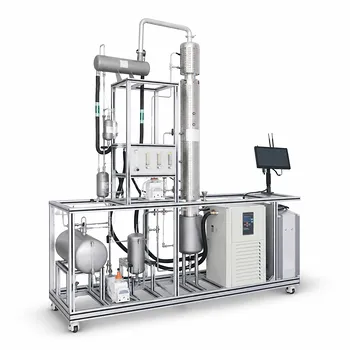
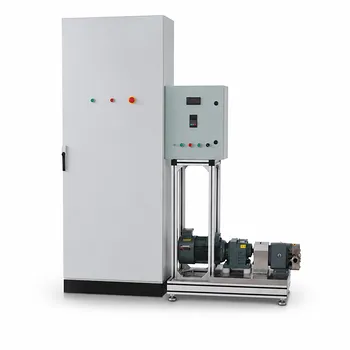
Pilot plants serve as the essential bridge between theory and practice, offering a hands-on platform to directly attack waste at its source. By physically manipulating unit operations like distillation columns, reactors, and heat exchangers, students and researchers can alter operating parameters, test novel catalysts, and implement advanced control strategies. This direct experimentation demonstrates how tweaking temperatures, flow rates, and separation efficiency shrinks the waste footprint and boosts raw material efficiency in a realistic yet safe setting.
The true power of unit operations pilot plants lies in demonstrating that waste is not an inevitable byproduct but a design and operational choice. They educate engineers to prioritize source reduction, recycling, and energy efficiency from the very first experiment, transforming waste minimization from an abstract principle into a measurable, hands-on objective.
Why Pilot Plants Are Unmatched for Source Reduction
Manipulating the Process Variables That Matter Most
Pilot plants allow direct control over the critical knobs of any chemical process: temperature, pressure, flow rates, and residence times. By systematically adjusting these variables, researchers can map out exactly where byproducts form and how slight operational shifts reduce their formation. This empirical approach reveals that waste is often a consequence of suboptimal settings—not a fixed output.
Testing Alternative Feedstocks and Catalysts
Changing raw materials or catalysts is a high-risk endeavor in a full-scale plant. A pilot unit provides a low-stakes environment to introduce purified feeds, different solvent systems, or new catalysts. Observing how these choices influence reaction pathways and side-product generation turns waste minimization into a proactive, feedstock-level optimization exercise.
Integrating Advanced Control for Real-Time Waste Mitigation
Modern pilot plants can be equipped with model-predictive control or closed-loop optimization algorithms. Students learn that continuous feedback from sensors—analyzing composition, pressure drop, or thermal efficiency—enables automatic adjustments that consistently keep the process in its lowest-waste operating window. This teaches that waste minimization is not a one-time fix but a dynamic, ongoing discipline.
Closing the Loop: Recycling and Reuse at the Pilot Scale
Recovering Solvents and Valuable Materials
Separation units like distillation columns, liquid-liquid extractors, or membrane systems can be seamlessly integrated into a pilot plant flow sheet. By running these units with waste streams, researchers determine the optimal reflux ratio, temperature, or extraction solvent that yields high-purity recovery while balancing energy costs. This demonstrates that many “waste” streams are actually mislabeled product streams waiting to be recaptured.
Reducing Secondary Waste from Clean-up
Pilot plants also show how internal recycling cuts the volume and toxicity of effluents sent to downstream treatment. For instance, a scrubber solution can be regenerated and reused, or a catalyst can be cleaned in-situ. Seeing these systems in operation teaches engineers to design processes where waste never leaves the unit—lowering both environmental impact and treatment expenses.
Energy Optimization as a Hidden Waste Minimization Strategy
Measuring and Minimizing Thermal Waste
Energy is a raw material, and its excessive use is a form of waste. Pilot-scale heat exchangers, evaporators, and distillation columns let students quantify heat loss, pinch points, and overall thermal efficiency. They can then apply heat integration strategies—like using hot bottom streams to preheat feed—physically rearranging the pilot plant to slash energy waste.
Linking Process Control to Energy Footprint
Adjusting a distillation column’s reflux ratio or a reactor’s cooling rate directly alters energy demand. On a pilot unit, these relationships become visible, teaching that energy minimization is inseparable from operational optimization. Small changes in set points can yield dramatic reductions in steam or cooling water usage, reinforcing the holistic view of waste reduction.
The Crucial Distinction: Design Optimization vs. Operational Wisdom
Learning Where Equipment Limits Truly Lie
Theoretically optimal designs often encounter practical roadblocks: a distillation column might flood, a heat exchanger may foul, or structural limits cap vessel heights. Pilot plants expose these constraints physically. Students learn to optimize within real boundaries, balancing waste reduction with safety, reliability, and maintainability.
Multi-Objective Trade-offs in a Live System
In a pilot plant, maximizing purity to reduce waste might inflate energy costs, or intensifying recycling could increase maintenance complexity. Operating these units forces students to weigh conflicting goals, preparing them for the messy realities of industrial optimization. The “best” solution is invariably a compromise, not a single perfect parameter set.
Understanding the Trade-offs
Pilot plants are invaluable but not a magic bullet.
- Scale-up Uncertainty: A waste reduction tactic that works brilliantly on a pilot column may not translate directly to a 10-meter diameter industrial column due to hydrodynamics or heat transfer differences.
- Time and Resource Intensity: Running physical experiments is slower than simulation. Over-reliance on pilot studies can delay development if not balanced with modeling.
- Over-Optimization Risk: Focusing solely on minimizing one waste stream can inadvertently increase another—for example, cutting aqueous waste but spiking VOC emissions. The pilot plant must be operated with a system-level perspective.
- Safety and Operational Blind Spots: A pilot plant optimized for minimal waste might push equipment to stability limits. Teaching must emphasize that no waste reduction goal justifies compromising process safety.
Making the Right Choice for Your Curriculum or Research Goal
Consider what you want the pilot plant experience to emphasize:
- If your primary focus is teaching fundamental source reduction: Design experiments that let students systematically vary temperature, pressure, and feed purity, quantifying how each parameter shifts byproduct formation and yields.
- If your primary focus is advanced process control and automation: Equip the pilot plant with real-time analytics and control software to demonstrate that waste minimization can be a dynamic, algorithm-driven target.
- If your primary focus is closing material loops: Incorporate separation units and recycle streams so researchers can measure the economic and environmental trade-offs of recovering solvents, monomers, or catalysts.
- If your primary focus is energy-centric waste reduction: Use heat integration exercises and energy audits on the pilot plant to teach pinch analysis, thermal efficiency, and the hidden link between energy waste and total waste footprint.
- If your primary focus is bridging design theory and practical constraints: Allow students to experience flooding, fouling, or structural limitations firsthand, ensuring their optimization mindset includes operability and safety.
When pilot plants are treated as dynamic learning laboratories rather than miniature factories, they become the ultimate tool for engineering a future where waste is designed out of processes from the very start.
Summary Table:
| Strategy | Pilot Plant Application | Key Learning Outcome |
|---|---|---|
| Source Reduction | Adjusting temperature, pressure, and catalyst types | Identify byproduct triggers & optimal settings |
| Recycling & Reuse | Integrating separation units (distillation, extraction) | Optimize solvent recovery and minimize effluent |
| Energy Optimization | Heat integration and thermal audits | Lower utility footprints and analyze thermal waste |
| Constraint Management | Testing physical limits (flooding, fouling) | Balance waste targets with safety and operability |
Empower Your Lab with LABPARK's Advanced Pilot Plants
Ready to transform how your students and researchers approach process optimization and waste minimization? LABPARK designs and delivers state-of-the-art Educational and Vocational Unit Operations Pilot Plants across chemical engineering, bioprocess & biotech, and environmental & water treatment.
Whether you are a university aiming to enrich your engineering curriculum, a research institute testing novel catalysts, or an enterprise scaling up green processes, our systems provide the real-world, hands-on experience needed to design out waste and maximize resource efficiency safely.
Take the next step in process innovation—contact LABPARK today to discuss your customized pilot plant solution!
Related Products
- Carbon Dioxide Hydrogen Methanol Synthesis Educational Unit Operations Pilot Plant
- Multi Pump Fluid Transport Process Piping Unit Operations Training Pilot Plant
- Multi-Reactor Educational Pilot Plant for Reaction Engineering Unit Operations
- Ethyl Acetate Synthesis Unit Operations Pilot Plant for Practical Training
- Multi-Modal Distillation Unit Operations Training Pilot Plant
People Also Ask
- How do temp & pressure affect methanol synthesis pilot plants? Optimize equilibrium and catalyst performance.
- Why is a purge system necessary when operating a gas recirculation loop in a methanol synthesis pilot plant? (Guide)
- Why do modern methanol pilot plants operate at lower pressures? Catalyst & Feed Requirements Explained
- What are the operational requirements for catalyst activation? Safe Methanol Pilot Plant Operation
- Why is the chemical plant startup schedule crucial? De-risk scale-up with pilot plants.