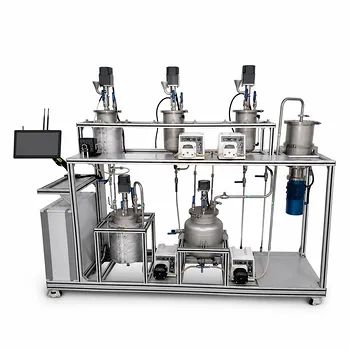
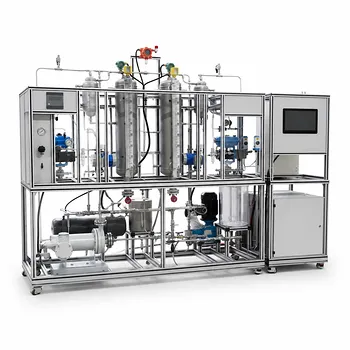
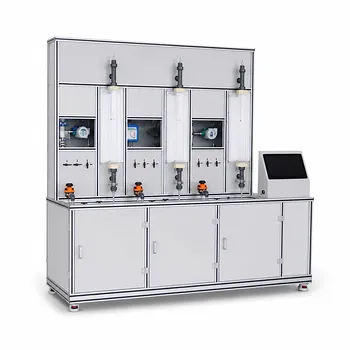
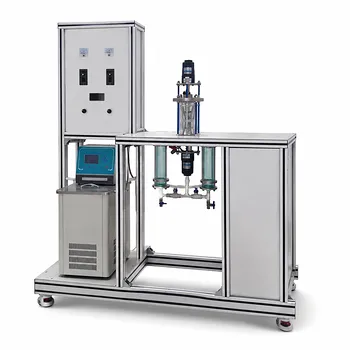
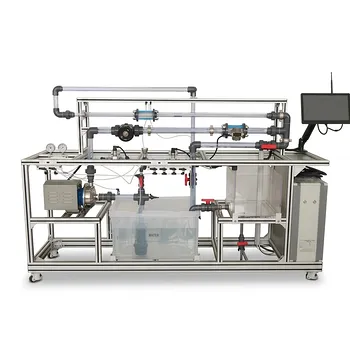
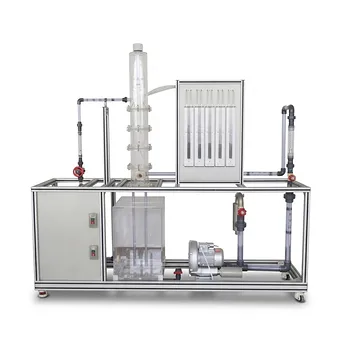
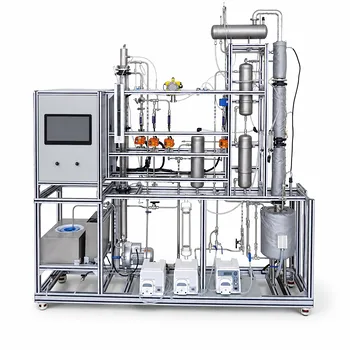
Membrane fouling is not an anomaly—it is the default state of a membrane bioreactor. An educational MBR pilot plant turns this fundamental challenge into a controlled, hands-on laboratory. By integrating real-time sensors for transmembrane pressure (TMP) and permeate flux, the pilot plant allows students to directly observe how operational choices—aeration rate, hydraulic retention time, biomass concentration—accelerate or mitigate fouling. They then apply and evaluate cleaning strategies, such as backwashing and chemical clean-in-place (CIP) cycles, to restore membrane permeability, bridging the gap between theory and the daily realities of wastewater treatment operators.
The educational MBR pilot plant makes membrane fouling tangible: students deliberately provoke it, measure its progression through data, and then systematically reverse it using industrial cleaning protocols. This transforms a lecture-hall concept into a diagnostic skill set.
Turning Theory into Practice: The Core of the Educational MBR
A pilot-scale submerged MBR is a living system. It continuously cultivates a mixed liquor of microorganisms while withdrawing clean permeate through a membrane barrier. This creates the perfect platform for environmental engineering students to experience fouling—not as a textbook definition, but as a dynamic process they control.
Simulating Real-World Wastewater Treatment
Students can feed the pilot plant with synthetic wastewater or pre-screened municipal influent.
They observe how the bioreactor’s biomass concentration increases over time, and with it, the fouling potential. The system’s compact footprint and transparent design let them visually inspect the membrane surface and mixed liquor, connecting visual cues to data.
The Fouling Playground: Manipulating Key Variables
The pilot plant becomes an experimental arena. Students adjust operating parameters and watch the consequences unfold in real time.
- Aeration rate: They increase or decrease coarse-bubble airflow beneath the submerged membranes. Higher rates create more vigorous scouring, which students see reflected in a slower TMP rise. Lower rates lead to rapid cake layer formation.
- Flux and hydraulic retention time: By changing the permeate pump speed, they alter the flux. Pushing the system above the critical flux triggers an exponential TMP increase, demonstrating the threshold every plant operator must respect.
- Sludge retention time and biomass concentration: Allowing the mixed liquor suspended solids (MLSS) to accumulate mimics a high-SRT environment. Students witness how thicker, more viscous sludge dramatically accelerates fouling.
Making the Invisible Visible: Instrumentation and Real-Time Monitoring
Fouling mechanisms—cake formation, pore blocking, concentration polarization—are invisible to the naked eye. The pilot plant’s sensor suite makes them quantifiable.
Transmembrane Pressure (TMP) as the Fouling Storyteller
TMP is the extra force needed to push water through a fouling membrane. In a clean system, TMP is stable. As foulants accumulate, TMP climbs.
Students learn to read the TMP curve. A gradual, linear rise often signals external cake buildup. A sudden spike suggests pore constriction or collapse. This direct data feedback turns abstract fouling models into concrete diagnostic tools.
Permeate Flux and the Critical Flux Experiment
Students measure flux—liters of permeate produced per square meter per hour. By stepping up the flux in increments, they can identify the point where TMP becomes unstable. That is the critical flux.
Demonstrating this principle on a pilot unit teaches a core lesson: to operate sustainably, you must stay below critical flux or implement aggressive fouling control. Students see that exceeding it without adequate air scouring inevitably leads to a runaway fouling event.
From Problem to Solution: Demonstrating Cleaning Strategies
Once fouling is induced, the pilot plant becomes a training ground for recovery. Students carry out the same physical and chemical cleaning protocols used in full-scale plants.
Physical Cleaning: Backwashing and Air Scouring
The pilot unit typically includes automated valves and a backpulsing system. Students initiate a backwash cycle, reversing the permeate flow to dislodge the cake layer.
They observe an immediate drop in TMP. Combined with continuous or intermittent air scouring, this demonstrates the first line of defense. Students measure flux recovery and learn how often these physical cleans are needed to maintain stable, low-pressure operation near the 0.2–0.6 bar range typical of hollow-fiber MBRs.
Chemical Clean-in-Place (CIP) Protocols
When physical cleaning is no longer sufficient, the pilot plant can simulate a full chemical CIP. Students circulate cleaning agents—acids for inorganic scaling, sodium hypochlorite for organic fouling, or surfactants for oils—through the membrane module.
They monitor TMP decay during the soak and rinse phases, calculating permeability restoration as a percentage. This hands-on experience teaches them to select chemicals based on foulant type, evaluate cleaning efficiency, and understand the impact on membrane lifespan. They learn that aggressive chemical exposure eventually degrades the polymer, a vital trade-off in asset management.
Understanding the Trade-offs and Practical Limitations
No single cleaning strategy is without cost. The pilot plant exposes these compromises in a controlled environment.
- Energy vs. fouling control: High aeration rates effectively scrub the membrane but can consume up to 70% of the plant’s total energy. Students can measure air flow and calculate energy demand, tying operational cost directly to fouling resistance.
- Chemical intensity vs. membrane life: Aggressive CIP with high oxidant concentrations restores permeability quickly but shortens membrane life. A gentler, lower-concentration protocol may leave residual fouling. Students track permeability after multiple cycles to see the cumulative effect.
- Irreversible fouling: After numerous cleaning cycles, some permeability is permanently lost. This drives home the importance of preventative operation—staying below critical flux and maintaining adequate scouring—rather than relying solely on corrective cleaning.
Making the Right Choice for Your Course Goals
The educational MBR pilot plant can be tailored to different learning outcomes. Its flexibility is its greatest strength.
- If your primary focus is fundamental process understanding: Design a lab where students vary a single parameter (e.g., aeration rate) while holding others constant, and analyze the TMP trend over 24 hours to derive a fouling rate.
- If your primary focus is operator training and troubleshooting: Present students with a fouled system and provide only TMP and flux data. Challenge them to diagnose whether the fouling is organic, scaling, or particulate, then justify and execute the appropriate chemical CIP protocol.
- If your primary focus is sustainable design and lifecycle thinking: Have students run the pilot at two different flux setpoints and track both energy consumption and chemical usage over a week. They then calculate the total operating cost per cubic meter of permeate to find the true economic optimum.
By transforming an invisible, relentless process into a measurable, controllable experiment, the educational MBR pilot plant gives students the confidence to face membrane fouling not as a feared failure, but as a manageable operational variable.
Summary Table:
| Stage / Variable | Key Parameters | Educational & Operational Insight |
|---|---|---|
| Fouling Variables | Aeration rate, Permeate Flux, MLSS concentration | Demonstrates the impact of air scouring, critical flux limits, and biomass viscosity. |
| Real-Time Monitoring | Transmembrane Pressure (TMP), Permeate Flux | Quantifies invisible fouling mechanisms like cake formation and pore blocking via sensor data. |
| Physical Cleaning | Backwashing, Continuous/Intermittent Air Scouring | Shows the first line of defense to dislodge surface cake layers and restore initial permeability. |
| Chemical Cleaning | Clean-in-Place (CIP) using acids, oxidants, or surfactants | Illustrates targeted chemical recovery, concentration selection, and membrane lifespan trade-offs. |
Elevate Your Environmental Engineering Lab with LABPARK
Ready to bring real-world wastewater treatment challenges into the classroom? LABPARK designs and manufactures premium Educational and Vocational Unit Operations Pilot Plants in chemical engineering, bioprocess & biotech, and environmental & water treatment for universities, research institutes, and enterprises.
Our pilot plants—including customizable MBR systems—are engineered to give students and researchers hands-on experience with industrial-grade automation, real-time sensor monitoring, and critical maintenance protocols.
Contact LABPARK today to discuss your curriculum needs and request a customized technical proposal!
Related Products
- Multi-Functional Membrane Separation Educational Pilot Plant for Unit Operations Lab
- Multi-Reactor Educational Pilot Plant for Reaction Engineering Unit Operations
- Multi Functional Membrane Crystallization Educational Unit Operations Pilot Plant
- Polymerization Granulation and Pellet Processing Educational Unit Operations Pilot Plant
- Micro-Scale Gas-Solid Catalytic Reaction Educational Pilot Plant
People Also Ask
- Why is membrane fouling a critical focus area? De-risk your bioprocess and food-grade scale-up success.
- How do PEI, PVDF, and PSU membranes compare in pilot plants? Find the best fit.
- How do filtration levels (MF, UF, NF, RO) differ? Membrane Pilot Plant Guide
- How does surface modification mitigate membrane fouling? Key grafting & charge strategies.
- How do membrane pilot plants demonstrate synthetic vs biological membrane advantages?