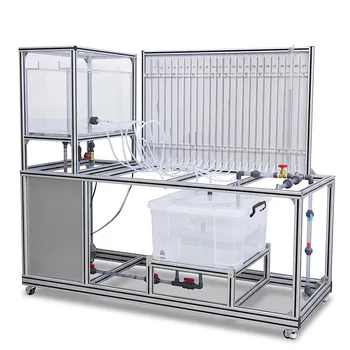
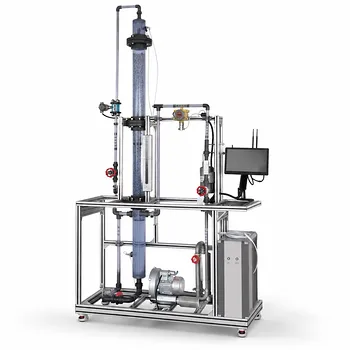
Catch basins and dissolved air flotation (DAF) manage FOG through complementary separation mechanisms: catch basins use gravity and residence time to remove heavy solids and free-floating grease, while DAF uses microbubbles to capture finely dispersed FOG and suspended particles that gravity separation cannot remove effectively.
The core principle is staged treatment: use a catch basin for bulk solids and readily separable FOG, then apply DAF when FOG is finely dispersed, emulsified, or subject to stricter discharge requirements.
How Catch Basins Remove FOG
Gravity separates materials by density
A catch basin is a gravity-based separation vessel. As wastewater slows inside the basin, heavy suspended solids settle to the bottom, while free-floating fats, oils, and grease rise toward the surface.
This separation depends on density differences and adequate hydraulic residence time. The longer wastewater remains relatively undisturbed, the more opportunity solids have to settle and free FOG has to float.
Solids and surface grease are removed separately
Accumulated solids are removed from the bottom of the basin by manual or mechanical methods. The floating FOG layer is removed from the surface through skimming or other collection equipment.
This prevents grease and solids from continuing downstream, where they can contribute to pipe blockages, operational problems, and noncompliant discharge.
Catch basins provide front-end protection
Catch basins are particularly useful as a preliminary treatment step because they remove the larger and more easily separable portion of the load. This reduces the burden placed on downstream treatment equipment.
However, a catch basin is not designed to remove every form of FOG. Small droplets and emulsified grease may remain suspended in the wastewater despite adequate residence time.
How DAF Removes Finer FOG
Microbubbles attach to grease and particles
A DAF system introduces micro air bubbles into the wastewater stream. The bubbles attach to suspended FOG droplets and fine particulates, reducing their effective density and causing them to rise rapidly to the surface.
The resulting floating layer is collected through continuous mechanical skimming or a comparable surface-removal mechanism.
DAF targets material gravity cannot remove
DAF is most valuable when FOG is finely dispersed or emulsified, or when suspended particles are too small to settle or float efficiently under gravity alone.
It therefore complements, rather than simply replaces, catch basin operation. The catch basin handles bulk separation; DAF provides more intensive separation for the remaining fine material.
DAF supports stringent discharge objectives
When gravity separation alone does not achieve the required wastewater quality, DAF can improve the removal of FOG and fine suspended solids before discharge or further treatment.
Its effectiveness depends on the interaction between bubbles and particles, including the likelihood that bubbles will contact and attach to the target material.
How the Units Are Integrated
Catch basin treatment commonly precedes DAF
A practical treatment arrangement is to place the catch basin upstream of the DAF system. The basin first removes heavy solids and free-floating grease, while the DAF unit treats the finer residual FOG and suspended material.
This staged approach assigns each unit operation to the separation task it performs best.
The sequence reduces downstream loading
Removing bulk solids before DAF helps prevent excessive solids accumulation and reduces the material that the flotation system must process. DAF can then focus on the more difficult-to-separate fraction.
The result is a more controlled physical separation process than relying on either unit operation in isolation.
Pilot plants help establish operating conditions
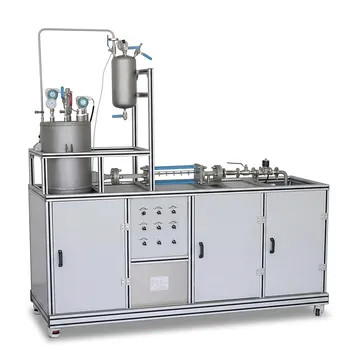
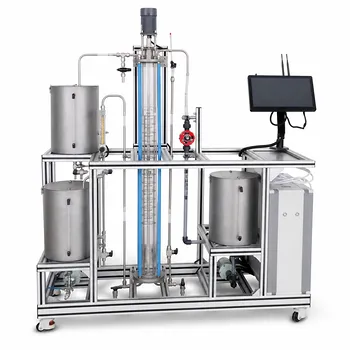
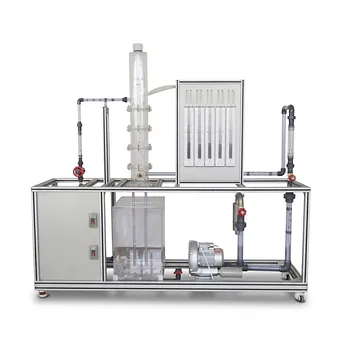
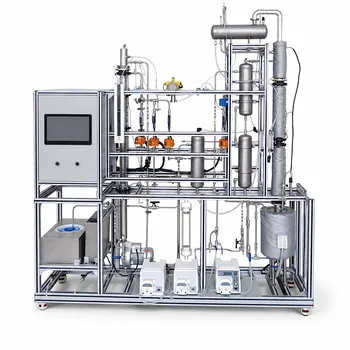
Environmental and water treatment pilot plants allow engineers and students to test the combined process under realistic conditions. They can compare treatment performance while varying hydraulic loading, residence time, and flotation conditions.
Pilot testing is especially useful before designing a full-scale system because industrial wastewater characteristics can vary significantly by process and operating period.
Key Operating Factors
Hydraulic residence time affects gravity separation
In a catch basin, residence time must be sufficient for heavy solids to settle and free FOG to rise. Excessive hydraulic loading can carry these materials through the vessel before separation occurs.
Pilot testing can help identify the relationship between hydraulic loading rate and solids-liquid separation efficiency.
Bubble-particle collision affects DAF performance
DAF performance depends on whether microbubbles successfully contact and attach to FOG droplets and fine suspended solids. This is described through bubble-particle collision and attachment behavior.
The air-to-solids ratio and wastewater characteristics influence how effectively the flotation step captures the target material.
FOG form determines the appropriate unit operation
Large, free-floating grease is generally more amenable to gravity separation. Fine droplets and emulsified FOG are more difficult and may require DAF or other conditioning before effective flotation.
Consequently, selecting equipment based only on total FOG concentration can be misleading; the physical form of the FOG is also important.
Understanding the Trade-offs
Catch basins are simple but limited
Catch basins provide a relatively straightforward method for removing settleable solids and free-floating FOG. Their main limitation is that they depend on gravity and adequate residence time, so they are less effective for fine or emulsified material.
They also require periodic removal of accumulated bottom solids and surface grease.
DAF is more capable but more complex
DAF can remove material that gravity separation leaves behind, but it requires air injection, bubble generation, and continuous surface skimming. This introduces greater mechanical and operational complexity than a gravity vessel.
DAF should therefore be used when the wastewater characteristics or discharge objectives justify the additional process requirements.
Poor staging can reduce overall performance
Sending high concentrations of heavy solids directly to DAF can place unnecessary demand on the flotation unit. Conversely, relying only on a catch basin when FOG is finely dispersed may result in inadequate removal.
The treatment system should be designed around the actual separation characteristics of the wastewater rather than the equipment label alone.
How to Apply This to Your Project
The appropriate configuration depends on the wastewater’s FOG form, solids concentration, hydraulic loading, and discharge requirements.
- If your primary focus is bulk solids and free-floating grease removal: Use a catch basin with sufficient residence time and provisions for bottom solids removal and surface FOG skimming.
- If your primary focus is finely dispersed or emulsified FOG: Use DAF to attach microbubbles to residual grease droplets and fine particulates for rapid flotation and mechanical skimming.
- If your primary focus is reliable overall treatment: Integrate the catch basin upstream of DAF so gravity separation removes the bulk load before flotation treats the finer fraction.
- If your primary focus is process design or optimization: Use pilot testing to evaluate hydraulic loading rates, residence times, air-to-solids ratios, bubble-particle interactions, and separation efficiency.
A well-designed FOG treatment system uses gravity to remove what readily separates and DAF to capture what gravity cannot.
Summary Table:
| Unit operation | Primary removal mechanism | Best suited for | Main benefit | Key limitation |
|---|---|---|---|---|
| Catch basin | Gravity settling and flotation | Heavy solids and free-floating FOG | Simple front-end protection | Limited removal of fine or emulsified FOG |
| DAF | Microbubble attachment and flotation | Fine, dispersed FOG and suspended solids | Stronger separation for stringent discharge targets | Requires air injection, skimming, and closer process control |
| Catch basin + DAF | Staged gravity and flotation separation | Variable industrial wastewater loads | Reduces DAF loading while improving overall treatment | Requires coordinated design and operation |
| Pilot plant testing | Controlled evaluation of operating conditions | Process design and optimization | Identifies hydraulic loading, residence time, and air-to-solids requirements | Requires representative wastewater and testing time |
Need to improve industrial FOG removal? Contact LABPARK to discuss an Educational or Vocational Unit Operations Pilot Plant for chemical engineering, bioprocess and biotech, or environmental and water treatment applications. LABPARK helps universities, research institutes, and enterprises evaluate catch basin and DAF configurations, compare gravity and flotation performance, optimize hydraulic loading, residence time, air-to-solids ratios, and bubble-particle interactions, and build practical training or process-development capabilities before full-scale implementation.
Related Products
- Two-Dimensional Fluidization Hydrodynamics Educational Pilot Plant for Unit Operations Training
- Gas-Solid Heterogeneous Separation Demonstration Educational Unit Operations Pilot Plant
- Rising and Falling Film Evaporation Educational Unit Operations Pilot Plant
- Dual-Mode Gas Absorption and Desorption Unit Operations Training Pilot Plant
- Cavitation Phenomenon Demonstration and Analysis Educational Unit Operations Pilot Plant
People Also Ask
- Why is minimum fluidization velocity (U_mf) critical? Optimize Your Pilot Plant Operations
- What pressure drop characteristics should students & researchers monitor in a fluidization pilot plant?
- How is total skin friction drag calculated for laminar flat-plate flow? Blasius formula and valid Reynolds range
- How does active time pulsing mixing enhance fluid homogenization? Configuration Guide for Educational Pilot Plants
- How does Reynolds number characterize flow regimes and momentum transfer? Master pilot-plant analysis