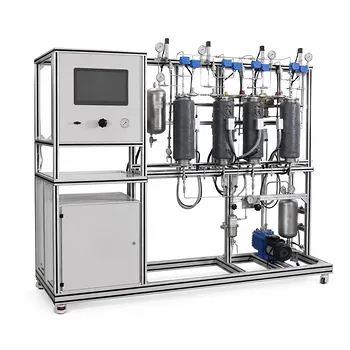
Knowledge Chemical Engineering Education How to control and optimize the constant-rate drying period in a vacuum drying pilot plant?
Author avatar

Tech Team · LABPARK

Updated 1 month ago

How to control and optimize the constant-rate drying period in a vacuum drying pilot plant?


The drying rate during the constant period is controlled by a delicate balance of heat input and mass removal. In a vacuum drying pilot plant, this rate is primarily dominated by heat transfer. You optimize it by maximizing the temperature difference between the heating jacket and the solvent's boiling point, while ensuring your vacuum pump can effectively remove the generated vapor without bottlenecking the process.

The constant-rate period in a vacuum dryer is fundamentally a heat-transfer-limited operation. The core strategy for optimization is to safely widen the gap between the jacket temperature and the solvent's boiling point (by increasing jacket heat or lowering pressure) and to maximize the wetted surface area in contact with the heat source through agitation.

The Fundamental Physics of Constant-Rate Drying

The constant-rate drying period isn't about forcing moisture out of the material. It’s about providing enough energy to vaporize solvent at the solid's surface, exactly as if it were an open pool of liquid.

The Temperature Difference is the Engine

The entire process is driven by the temperature difference (ΔT) between your heat source and the evaporating solvent.

The solvent saturating the solid surface boils at a specific temperature dictated by the system’s operating pressure. Heat flows from the hot jacket to the cooler product surface. The larger the temperature gap between the jacket set point and the solvent’s boiling point, the faster the heat transfer, and consequently, the faster the drying rate.

The Role of Heat Transfer Coefficient

The other half of the equation is the heat transfer coefficient (U) . This measures how efficiently heat moves from the jacket, through the dryer wall, and into the wet cake.

Even with a massive ΔT, drying will be slow if the heat transfer is inefficient. In a static vacuum oven, only the material touching the shelf gets heated directly. The rest of the cake acts as an insulator, causing prolonged drying times and a process that is actually mass-transfer limited, not heat-transfer limited.

The Three Control Variables for Optimization

To optimize the constant-rate period in a pilot plant, you manipulate three main levers. All three directly target the driving force (ΔT) or the contact surface area.

1. Jacket Temperature: The Primary Heat Driver

Raising the jacket temperature is the most direct way to increase the ΔT and accelerate the drying rate.

More heat input vaporizes the surface solvent faster. This lever is powerful but requires strict oversight. The jacket temperature must never exceed the thermal stability limit of your product, preventing degradation or melting of the solid matrix.

2. System Pressure: Controlling the Boiling Point

Lowering the operating pressure lowers the solvent’s boiling point, which automatically widens the ΔT without changing the jacket temperature.

This is a critical advantage for heat-sensitive materials. By pulling a deeper vacuum, you enable vigorous evaporation at a low, safe product temperature. However, the vacuum pump's capacity becomes the limiting factor here.

3. Agitation: Maximizing the Wetted Surface

In static dryers, only the layer of wet solids in contact with the heated wall gets effective heat. Agitation—using an internal mixer or rotating paddle—continuously turns the cake over.

This action exposes fresh, wet solvent to the heated surfaces. It prevents localized drying and transforms the batch from a static insulator into a dynamic system that maximizes the heat transfer coefficient. This mechanically intensive method is a key differentiator between a slow oven and an efficient agitated vacuum dryer.

A Critical Non-Process Parameter: Vacuum Pump Capacity

The vacuum pump does not control the drying rate, but it enables it. A fundamental mistake is focusing solely on heat without ensuring adequate vapor removal.

As you successfully vaporize solvent, a massive volume of gas is generated. The vacuum pump must be sized appropriately to sweep this vapor away continuously. If the pump is undersized, the vapor accumulates, the system pressure rises, the solvent's boiling point increases, and your carefully designed ΔT collapses—slamming the brakes on the drying rate.

Understanding the Limits and Trade-offs

Aggressive optimization for speed can directly damage the product, creating a false efficiency that ruins the batch.

  • Product Quality Defects: Excessively high drying rates can cause physical defects like cracking, deformation, or surface hardening (case hardening). Case hardening is particularly insidious—it traps moisture inside the solid by forming an impermeable dry "skin," prematurely ending the constant-rate period and leaving a wet core.
  • Product Entrainment: In designs with high-velocity vapor flow or overly aggressive mixing, fine particles can be entrained—blown away into the vacuum system. This causes product loss and contamination of downstream equipment.
  • The Falling-Rate Trap: Over-applying heat is pointless once the critical moisture content is reached. In the subsequent falling-rate period, mass transfer (internal diffusion of moisture to the surface) becomes the limiting factor. Increasing the temperature difference yields diminishing returns and risks thermal damage while adding minimal speed improvement.

Making the Right Choice for Your Pilot Plant Goal

The optimal settings are not found in a manual; they are found by balancing these parameters against your specific product's needs. Use the pilot plant to generate the drying rate curve and identify the critical moisture content experimentally.

  • If your primary focus is protecting a heat-sensitive active ingredient: Prioritize a deep vacuum to lower the boiling point, and use a very conservative jacket temperature. Accept the longer cycle time as necessary to maintain product integrity.
  • If your primary focus is maximizing throughput for a robust chemical: Use an agitated dryer with the maximum safe jacket temperature and ensure your vacuum pump has ample capacity to handle the vapor load. Monitor for physical defects like fines or clumping.
  • If your primary focus is generating data for scale-up: Conduct experiments that vary the jacket temperature and agitation speed independently. Record the exact point where the rate deviates from linearity to define the critical moisture content, which is essential for modeling full-scale falling-rate behavior.

Mastering the constant-rate period is less about chasing a single perfect number and more about understanding the dynamic equilibrium between the energy you supply and the vapor you remove.

Summary Table:

Parameter Control Mechanism Optimization Strategy Key Risk / Trade-off
Jacket Temperature Drives heat transfer (ΔT) Increase to accelerate vaporization Product thermal degradation
System Pressure Lowers solvent boiling point Lower pressure to widen ΔT Vacuum pump capacity bottleneck
Agitation Increases heat transfer coefficient (U) Mix continuously to renew contact surfaces Product entrainment and fines

Optimize Your Unit Operations with LABPARK

Are you looking to scale up your drying processes or enhance hands-on training? LABPARK provides state-of-the-art Educational and Vocational Unit Operations Pilot Plants in chemical engineering, bioprocess & biotech, and environmental & water treatment.

Specially designed for universities, research institutes, and enterprises, our pilot plants enable precise process control, reliable scale-up data, and robust educational value.

Contact our technical experts today to find the ideal pilot plant solution for your laboratory or facility!

Related Products

People Also Ask

Related Products

Multi-Functional Drying Educational Unit Operations Pilot Plant

Multi-Functional Drying Educational Unit Operations Pilot Plant

Versatile multi-functional drying educational unit operations pilot plant integrating tunnel, fluidized bed, and spray drying. Enables hands-on study of drying curves, psychrometry, and gas-solid separation for chemical engineering curriculum in higher education labs.

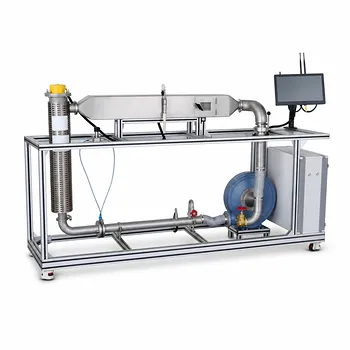
Circulating Wind Tunnel Drying and Convective Heat Transfer Coefficient Determination Educational Pilot Plant

Circulating Wind Tunnel Drying and Convective Heat Transfer Coefficient Determination Educational Pilot Plant

This educational pilot plant enables engineering students to study convective drying, air-water vapor systems, and heat transfer by determining drying curves, drying rate curves, and convective heat transfer coefficients under variable conditions.

Supercritical High-Gravity Flash Evaporation Educational Unit Operations Pilot Plant

Supercritical High-Gravity Flash Evaporation Educational Unit Operations Pilot Plant

Bench-scale integrated teaching system for advanced separation and mass transfer, combining supercritical high-gravity flash evaporation with heating, chemical reaction, and material collection, featuring modular design, Stainless Steel 316L construction, transparent visualization, touchscreen control, and safety systems for chemical engineering education.

Multimodal Absorption and Desorption Pilot Plant for Unit Operations Training

Multimodal Absorption and Desorption Pilot Plant for Unit Operations Training

Multimodal absorption and desorption pilot plant for higher education labs. Bridges theory and industrial practice with transparent packed columns, three operational modes (real-material, simulated, semi-physical), and SCADA control. Students explore mass transfer, column hydraulics, and process control. Customizable.

Rising and Falling Film Evaporation Educational Unit Operations Pilot Plant

Rising and Falling Film Evaporation Educational Unit Operations Pilot Plant

Hands-on educational pilot plant for studying rising and falling film evaporation, flow regimes, and heat transfer. Customizable for university labs with industrial instrumentation and data acquisition. Enables comparative evaluation of evaporation modes and energy efficiency.

Multi-Functional Special Distillation Educational Pilot Plant

Multi-Functional Special Distillation Educational Pilot Plant

Versatile multi-functional special distillation pilot plant for chemical engineering education. Supports continuous, vacuum, azeotropic, reactive, extractive distillation. Transparent glass columns enable real-time visual observation of hydrodynamics and separation processes.

Natural Product Extraction Unit Operations Training Pilot Plant

Natural Product Extraction Unit Operations Training Pilot Plant

Integrated natural product extraction pilot plant for chemical engineering training bridges theory and industrial practice with modular extraction and evaporation/concentration units, hybrid touchscreen and manual control, realistic process simulation, and self-contained softened water and vacuum utilities.

Dual Mode Heat Transfer Pilot Plant for Unit Operations Training

Dual Mode Heat Transfer Pilot Plant for Unit Operations Training

Engineering-scale dual-mode heat transfer pilot plant for hands-on unit operations training in chemical engineering. Features real and simulated modes, multiple heat exchanger types, comprehensive coefficient determination, and advanced process control with data acquisition for engineering students and researchers.

Multi-Functional Membrane Separation Educational Pilot Plant for Unit Operations Lab

Multi-Functional Membrane Separation Educational Pilot Plant for Unit Operations Lab

The Multi-functional Membrane Separation Educational Unit Operations Pilot Plant is an integrated bench-scale laboratory system designed for teaching undergraduate engineering education. It features Ultrafiltration, Nanofiltration, and Reverse Osmosis modules in a compact, mobile unit for practical hands-on learning.

Hot Filtration Educational Unit Operations Pilot Plant Laboratory System

Hot Filtration Educational Unit Operations Pilot Plant Laboratory System

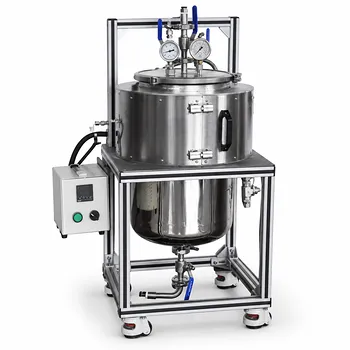
This integrated laboratory bench-scale hot filtration pilot plant enables students to study solid-liquid separation under thermal conditions, featuring a stainless steel vessel, removable heating jacket, and multi-layer filter plates for unit operations education, ideal for chemical engineering laboratory curriculum.

Fixed-Bed Chemical Reaction and Gas Dust Tar Removal Unit Operations Pilot Plant

Fixed-Bed Chemical Reaction and Gas Dust Tar Removal Unit Operations Pilot Plant

Integrated educational pilot plant for studying catalytic gas-solid reactions and downstream gas purification. Features dual fixed-bed reactor, three-stage heating, and touchscreen control for hands-on engineering training. Ideal for chemical and environmental engineering curricula.

Constant Pressure Filtration Educational Unit Operations Pilot Plant

Constant Pressure Filtration Educational Unit Operations Pilot Plant

Hands-on educational pilot plant for constant pressure filtration. Classic plate and frame filter press allows students to study kinetics, determine specific cake resistance, perform cake washing and evaluate washing rates. Ideal for chemical engineering curriculum. Mobile, customizable, safety-compliant design.

General Purpose Cosmetics Production Unit Operations Training Pilot Plant

General Purpose Cosmetics Production Unit Operations Training Pilot Plant

Integrated pilot-scale cosmetics production training plant for chemical engineering education featuring utility supply emulsification blending and filtration modules with dual touchscreen manual control customizable mobile design ideal for practical hands-on unit operations and advanced process control learning.

Multi-Modal Distillation Unit Operations Training Pilot Plant

Multi-Modal Distillation Unit Operations Training Pilot Plant

Multi-modal distillation pilot plant for practical unit operations training in chemical engineering education. Features real, analog, and semi-physical simulation modes, industrial construction, customizable for university labs. Hands-on fractionation columns, SCADA control, safety systems. Includes sight glasses, sampling ports, closed-loop recycling.

Multi-Reactor Educational Pilot Plant for Reaction Engineering Unit Operations

Multi-Reactor Educational Pilot Plant for Reaction Engineering Unit Operations

Integrated bench-scale educational pilot plant for chemical engineering teaching featuring fixed bed fluidized bed and stirred tank reactors with web-based digital twin controls and safety interlocks for hands-on unit operations and reaction engineering comparative studies in one compact system.

Absorption and Desorption Educational Unit Operations Pilot Plant

Absorption and Desorption Educational Unit Operations Pilot Plant

Dual packed column absorption and desorption pilot plant for chemical engineering education, offering real-time mass transfer coefficient measurement, durable mobile frame, industrial touch-screen interface, and customizable design for varied laboratory curricula, enabling hands-on study of gas absorption and stripping.

Solid Waste Pyrolysis and Refining Educational Pilot Plant for Unit Operations

Solid Waste Pyrolysis and Refining Educational Pilot Plant for Unit Operations

This pilot plant for solid waste pyrolysis and refining integrates pyrolysis, separation, distillation, and catalytic hydrogenation into one educational unit. It provides visual process observation, smart data logging, and industrial safety for hands-on learning of engineering unit operations.

Bench Scale Carbon Dioxide Capture Educational Unit Operations Pilot Plant

Bench Scale Carbon Dioxide Capture Educational Unit Operations Pilot Plant

This bench-scale educational pilot plant simulates industrial CO₂ separation using a multi-tower adsorption system for hands-on engineering training. Students achieve ≥90% CO₂ purity while studying pressure swing adsorption, desorption kinetics, and process control in gas purification experiments.

Dual-Mode Rectification Pilot Plant for Practical Training Unit Operations

Dual-Mode Rectification Pilot Plant for Practical Training Unit Operations

Industrial-scale dual-mode rectification pilot plant for chemical engineering practical training. Features real-material and simulated-material operation modes, sieve-plate column with sight glasses for visual observation of hydrodynamics, and customizable SCADA control for safe, hands-on learning of unit operations and mass transfer.

Bio-fermentation Ethanol Production Practical Training Unit Operations Pilot Plant

Bio-fermentation Ethanol Production Practical Training Unit Operations Pilot Plant

Bio-fermentation ethanol production pilot plant for hands-on training in unit operations: fermentation, solid-liquid filtration, membrane separation, and distillation. Bridges theory with industrial practice using industrial-grade components, customizable for university labs. Hybrid automated and manual control for comprehensive learning.


Leave Your Message