The core reason is that a chemical reaction doesn't happen in isolation. In a real reactor, intrinsic kinetics—the rate at which molecules transform under ideal conditions—is just one piece of the puzzle. The actual, observed rate is almost always governed by how quickly mass, heat, and momentum can be moved to and from the reaction site. Analyzing transport processes alongside kinetics is, therefore, not optional; it's the defining act that separates a successful industrial process from a laboratory curiosity that fails dangerously or inefficiently at scale.
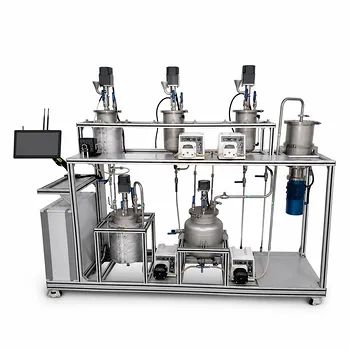
Pilot plants exist to intentionally couple chemical kinetics with physical transport limitations. By studying this interplay, engineers build the macro-kinetic models needed to predict behavior in large-scale reactors, preventing disasters like thermal runaway and ensuring economic viability where pure kinetic studies would give a dangerously incomplete picture.
The Dangerous Illusion of Pure Chemical Kinetics
Intrinsic Kinetics Only Work in a Perfect World
Intrinsic kinetics describe a reaction's speed under complete chemical control. This means the system is assumed to be perfectly mixed, with no temperature gradients and reactants instantly available at the active site. This ideal state rarely exists beyond a well-stirred, dilute laboratory flask.
In any industrial or pilot-scale vessel, these perfect conditions break down immediately. The moment you have a concentration difference or a temperature change across a physical distance, transport processes begin to govern the reaction. The reaction rate you then measure is a macro-kinetic rate: the combined result of the chemical speed limit and the physical speed of delivery.
You Design a Reactor, Not a Chemical Equation
Focusing solely on kinetics leads to designing a vessel that achieves a perfect reaction on paper, but fails in reality. The reactor's geometry, the flow pattern of fluids, and the method of heat removal fundamentally alter local concentrations and temperatures. These physical factors change product selectivity, catalyst lifetime, and even the safe operating window of the plant.
How Transport Phenomena Seize Control of the Reaction
Mass Transfer: The Starvation Effect
If a reactant cannot diffuse or be convected to the catalyst surface faster than it is consumed, the catalyst starves. The overall reaction rate is then dictated by the rate of mass transfer, not the intrinsic chemical rate. In gas-solid reactors, slow pore diffusion can mean that only the outer shell of a catalyst pellet is active, wasting expensive noble metals inside. In multiphase reactors, a slow transfer of gas into the liquid phase can choke the entire process.
Heat Transfer: The Runaway and Quenching Trap
A reaction that produces or absorbs heat creates an immediate temperature gradient. Without rapid heat removal, an exothermic reaction can create a hot spot. This spot locally accelerates the reaction rate, which generates more heat, leading to a destructive positive feedback loop known as thermal runaway. Conversely, poor heat addition in an endothermic reaction quenches the reaction, killing conversion. These temperature gradients also damage heat-sensitive catalysts or biological molecules, a fact that kinetics alone doesn't predict.
Momentum Transfer: The Invisible Architect of Flow
The way fluids flow—their velocity profiles and mixing patterns—directly controls both mass and heat transfer. Poor momentum transfer in a packed bed creates stagnant zones where reactants are trapped, reducing effective reactor volume. In a fluidized bed, an incorrect gas velocity prevents proper solid mixing, causing channeling or defluidization. The pressure drop required to drive this flow is a massive operational cost factor, making the fluid dynamics a primary economic design constraint, not a minor detail.
Why the Pilot Plant Is the Interpreter of This Coupled Reality
Benchmarking and Mapping the Constraints
A pilot plant isn't just a smaller version of an industrial reactor; it's a diagnostic tool. By systematically varying flow rates and temperatures, you can isolate which physical process is the bottleneck. A plot of conversion versus flow rate, for example, reveals if a reaction is diffusion-limited. The pilot plant data directly identifies where adding more catalyst is useless because the core problem is a mass or heat transfer barrier.
Generating the Data for Scale-Up Models
Scale-up models demand macro-kinetic expressions that bundle true kinetics with transport resistances. These parameters—like heat transfer coefficients and effective diffusivities—are impossible to derive from first principles alone for a new, messy chemical system. The pilot plant provides the experimental substrate to calibrate these models, allowing you to predict with confidence how a reactor will behave when it's a hundred times larger.
Validating Critical Fluid Dynamic Criteria
In gas-solid reactors, the pilot plant is essential for measuring physical thresholds that kinetics never address. For a packed bed, you must measure the pressure drop-gas flow relationship to size the gas blower. For a fluidized bed, you need the minimum fluidization velocity to transition solids into a fluid-like state. For a transport-line reactor, the terminal particle velocity dictates the transport kinetics. These purely physical parameters ensure the reactor will even function as intended.
Understanding the Trade-offs and Common Pitfalls
The False Economy of Ignoring Physical Data
The biggest pitfall is assuming a reaction that works in a stirred beaker will scale linearly. A common failure mode is scaling up a reactor based only on residence time from a kinetic model, while ignoring the tenfold drop in surface-area-to-volume ratio for heat transfer. The result is often a reactor that overheats instantly at the pilot stage.
Over-Engineering Physical Constraints Can Kill Yields
The opposite risk is designing a reactor with extreme mixing and heat transfer to eliminate all gradients. This can shear sensitive products like enzymes or crystals, or create such a high-pressure drop that operating costs become prohibitive. The goal isn't to eliminate transport limitations at all costs, but to understand them well enough to control selectivity and economics intelligently.
The Trap of Fluidization Uncertainty
In fluidized-bed pilot plants, particle size distribution directly changes the minimum fluidization velocity and the gas-bypassing behavior. If you test your pilot plant with a narrow, ideal particle size cut but your scaled-up process handles a real industrial feed with a wide distribution, your macro-kinetic model will be wrong. The pilot plant must use representative feedstocks to accurately couple particle physics with the chemistry.
How to Apply This to Your Project
Your approach to coupling kinetics with transport phenomena should be guided by your specific end-goal.
- If your primary focus is economic feasibility: Prioritize measuring pressure drop and heat transfer requirements in the pilot plant, as these drive the capital cost of blowers, heat exchangers, and the reactor vessel itself.
- If your primary focus is process safety: Use the pilot plant to deliberately provoke a minor hot spot by limiting cooling, mapping the precise flow conditions that lead to thermal runaway so you can define an unbreachable safe operating envelope.
- If your primary focus is product selectivity: Investigate the interplay of local mixing and concentration gradients, as a reactant-starved zone in a poorly mixed reactor will form different by-products than predicted by bulk kinetics alone.
- If your primary focus is scaling a gas-solid catalytic process: Your pilot plant must define the fluidization maps and particle-flow dynamics, ensuring that hydrodynamic constraints like minimum fluidization velocity are honored at scale, not just the ideal kinetic residence time.
The reactor is a complex physical playground where the rules of chemistry are constantly modified by the laws of physics. By analyzing them together from the first pilot test, you move from hoping a process will work to knowing it will.
Summary Table:
| Transport Phenomenon | Impact on Reactor | Consequence of Neglect |
|---|---|---|
| Mass Transfer | Reactant delivery to catalyst site | Catalyst starvation & lower reaction rates |
| Heat Transfer | Temperature control & gradient management | Thermal runaway or reaction quenching |
| Momentum Transfer | Fluid flow, velocity profiles & mixing | Stagnant zones & high operating pressure drops |
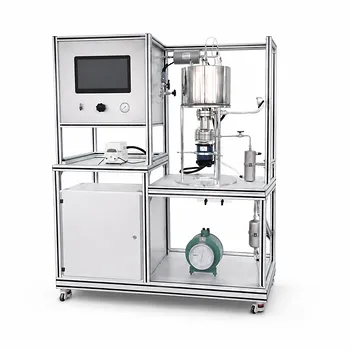
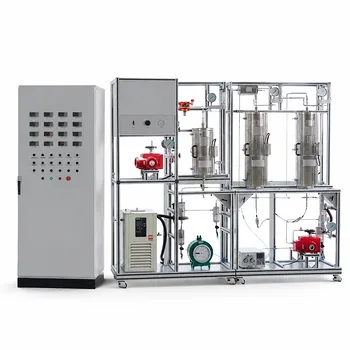
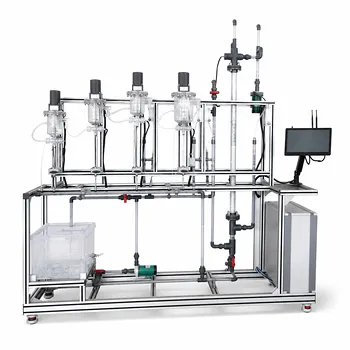
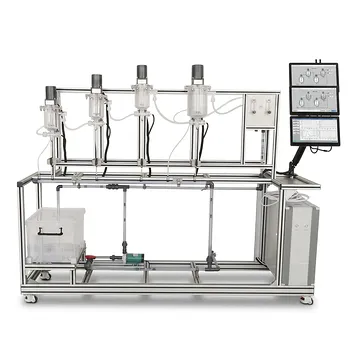
Are you looking to bridge the gap between chemical kinetics and transport phenomena in your research or curriculum? LABPARK provides state-of-the-art Educational and Vocational Unit Operations Pilot Plants in chemical engineering, bioprocess & biotech, and environmental & water treatment. Designed for universities, research institutes, and enterprises, our systems offer the hands-on data needed for reliable reactor design and scale-up.
Contact LABPARK today to discover the ideal pilot plant solution for your lab!
Related Products
- Fixed-Bed Chemical Reaction and Gas Dust Tar Removal Unit Operations Pilot Plant
- Multi-Reactor Educational Pilot Plant for Reaction Engineering Unit Operations
- 100L Continuous Loop Hydrogenation Educational Unit Operations Pilot Plant
- Fixed Bed Gas Solid Catalytic Reaction Educational Pilot Plant
- Internal Circulation Gradient Free Catalytic Reaction Educational Pilot Plant
People Also Ask
- When to transition from PID to adaptive control in pilot plants? Key process indicators.
- How do deviations in estimating latent heat impact pilot plant thermal systems? Avoid hardware mis-sizing.
- Why Compare Predicted and Experimental Excess Enthalpy? Key to Accurate Pilot Plant Scale-up
- How to study gasification in pilot plants? Compare exit gas composition & efficiency
- Why Use PTFE & Hastelloy in Chemical Pilot Plants? Prevent Corrosion & Ensure Safety