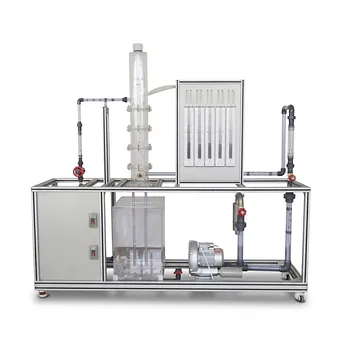
The measured operational half-life can be much longer than the enzyme’s intrinsic structural half-life because a packed bed measures reactor performance, not molecular activity directly. In a porous immobilization bead, substrate may initially reach only the outer regions because internal diffusion is limited. As exposed enzyme deactivates, substrate can penetrate deeper and use previously underutilized enzyme, allowing the column to maintain conversion even while individual enzyme molecules are losing activity.
A longer packed-bed operational half-life does not by itself prove that immobilization stabilized the enzyme molecule. It may instead reflect diffusion-limited reaction, excess internal enzyme capacity, and gradual redistribution of substrate access within the porous support.
What the Two Half-Lives Actually Measure
Intrinsic structural half-life
The intrinsic structural half-life describes how long the enzyme molecule remains catalytically competent under defined solution conditions. It is primarily a property of molecular deactivation, such as thermal or chemical inactivation.
This measurement assumes that the enzyme population is exposed relatively uniformly to the relevant solution environment and that activity loss can be related directly to molecular decay.
Operational half-life
The operational half-life describes how long the packed-bed reactor continues to meet a specified performance criterion, such as maintaining a target conversion or outlet concentration.
It therefore depends on more than enzyme stability. Flow rate, residence time, substrate transport, enzyme loading, pellet structure, and the selected performance threshold all influence the result.
Why the comparison can be misleading
A solution assay often reports the decline in activity of the available enzyme population. A packed bed reports the decline in aggregate reactor function.
Those are different observables. The column can continue performing acceptably after a substantial fraction of the enzyme has become inactive if remaining enzyme capacity is progressively brought into use.
How Diffusion Masks Enzyme Deactivation
The role of the effectiveness factor
In a porous immobilization support, the internal effectiveness factor is less than unity when diffusion resistance prevents substrate from reaching all catalytic sites at the rate required for full utilization.
The substrate concentration inside the bead can therefore be much lower than in the surrounding liquid. Enzyme located deep within the particle may initially contribute relatively little to the measured reaction rate.
The support contains an underused enzyme reservoir
High initial enzyme loading can create excess catalytic capacity relative to the amount that substrate can access during normal operation.
The outer enzyme population may dominate the initial reaction rate, while deeper enzyme remains partially underutilized. This inactive-looking capacity is not necessarily structurally protected; it is simply less involved in the initial measured reaction.
Deactivation changes substrate penetration
As enzyme near the outer surface loses activity, the local reaction rate decreases. Substrate is then consumed less rapidly in the outer region and can diffuse farther into the porous matrix.
The internal substrate concentration rises, allowing deeper enzyme to contribute more substantially. This compensates for some of the lost activity and slows the decline in overall column conversion.
Reactor performance declines more slowly than molecular activity
The result is a buffering effect: the intrinsic activity of individual enzyme molecules may decay at the expected rate, while the reactor’s measured output declines more gradually.
For example, a column appearing operationally effective for 30 days compared with a 10-day solution half-life may reflect redistribution of substrate access rather than a threefold increase in molecular stability.
Why Immobilized Enzyme Data Need Careful Interpretation
Activity is spatially distributed
In a packed bed, enzyme molecules do not contribute equally to the observed reaction rate. Their contribution depends on location within the pellet and on the local substrate concentration.
The measured column activity is therefore a spatially weighted result rather than a simple count of all remaining active enzyme molecules.
The performance threshold affects the reported half-life
Operational half-life is commonly defined by a chosen limit, such as a specified conversion loss. Changing that limit changes the reported half-life even when the enzyme and reactor are unchanged.
A column that remains above a permissive conversion threshold can appear much more durable than one evaluated against a stricter threshold.
Reactor conditions affect the apparent lifetime
Flow conditions and mass transfer resistance determine how much of the internal catalyst is used. A change in throughput or residence time can alter the balance between reaction and diffusion, changing apparent operational stability without changing enzyme chemistry.
This is why pilot-plant lifetime data should be interpreted together with transport and reactor-performance measurements.
Understanding the Trade-offs
An extended operational lifetime is still useful
A longer operational half-life can be a genuine process advantage. The plant cares about sustained conversion, productivity, and replacement frequency, so diffusion buffering may have real economic value.
However, that value should be described as improved process-level robustness unless independent evidence demonstrates intrinsic molecular stabilization.
Diffusion resistance can hide declining catalyst health
The same buffering that preserves conversion can delay detection of enzyme deactivation. When the internal reserve is eventually exhausted, performance may decline more sharply.
A single end-point measurement can therefore miss the gradual loss of intrinsic activity occurring inside the support.
High loading may not improve intrinsic stability
Adding more enzyme to a porous bead can increase the reservoir of underutilized catalytic capacity. It does not necessarily alter the deactivation rate of each enzyme molecule.
Higher loading may extend the operational lifetime while leaving the structural half-life unchanged.
Apparent stability may not transfer between reactors
Changing bead size, pore structure, loading, flow rate, or residence time can change the degree of diffusion limitation. Consequently, an operational half-life measured in a pilot column may not directly predict the lifetime of a different reactor configuration.
How to Apply This to Your Project
A reliable evaluation should separate molecular deactivation from reactor-level performance using both activity and transport evidence.
- If your primary focus is molecular stability: Measure residual enzyme activity under conditions that minimize or characterize mass transfer limitations, and compare it with the packed-bed result before claiming intrinsic stabilization.
- If your primary focus is sustained conversion: Evaluate operational half-life using the actual flow, loading, residence time, and conversion threshold that define successful plant operation.
- If your primary focus is scale-up: Characterize internal diffusion and the effectiveness factor, because changes in pellet or column design can alter the apparent lifetime.
- If your primary focus is diagnosing deactivation: Track conversion over time alongside independent activity measurements so diffusion buffering is not mistaken for preserved enzyme structure.
The key is to treat intrinsic enzyme half-life and packed-bed operational half-life as different measurements that answer different engineering questions.
Summary Table:
| Aspect | Intrinsic structural half-life | Packed-bed operational half-life |
|---|---|---|
| Measures | Molecular catalytic stability | Reactor performance over time |
| Main influences | Thermal and chemical deactivation | Flow, residence time, loading, transport, and conversion target |
| Diffusion effect | Usually minimized or characterized | Can limit access to internal enzyme sites |
| Deactivation response | Activity declines as molecules deactivate | Deeper enzyme may become active as outer enzyme loses activity |
| Interpretation | Indicates enzyme-level stability | Indicates process-level robustness, not necessarily molecular stabilization |
| Scale-up risk | More directly comparable under matched conditions | Can change with bead size, pore structure, flow rate, and loading |
Need reliable enzyme process performance at pilot or production scale? Contact LABPARK to discuss Educational and Vocational Unit Operations Pilot Plants for chemical engineering, bioprocess and biotech, and environmental and water treatment applications. LABPARK helps universities, research institutes, and enterprises evaluate enzyme loading, diffusion behavior, residence time, conversion targets, deactivation, and scale-up performance with practical pilot-plant systems. Our equipment can help you distinguish genuine molecular stabilization from diffusion-buffered reactor performance and select operating conditions that improve productivity, lifetime, and process reliability.
Related Products
- Packed Bed Absorption Educational Unit Operations Pilot Plant
- Absorption and Desorption Educational Unit Operations Pilot Plant
- Multimodal Absorption and Desorption Pilot Plant for Unit Operations Training
- High-Gravity Emulsification and Mass Transfer Educational Pilot Plant
- Micro-Scale Gas-Solid Catalytic Reaction Educational Pilot Plant
People Also Ask
- How Do Flow Regimes Transition in Packed Bed Pilot Plants? Key Scale-up Insights
- How does reactant concentration determine absorption column control? Gas-film vs. dual-film.
- How is the packing height of an absorption column calculated? Master HTU & NTU Concepts
- How does the wall effect impact packed-bed conversion? Essential pilot plant scale-up tips.
- How does static vs. operating holdup affect pilot plant calibration? Avoid Critical Scale-Up Errors