It’s a matter of survival—for the molecule. Ultrafiltration (UF) is preferred over thermal processes because it concentrates enzymes and proteins without using heat, ensuring the delicate three-dimensional structure responsible for biological activity remains intact and fully functional. Unlike thermal evaporation, which relies on phase change, UF uses ambient-temperature, pressure-driven sieving that prevents denaturation, eliminates the risk of burning the product, and uses significantly less energy while maintaining the purity required for pharmaceutical and food-grade outputs.
Thermal concentration processes introduce heat that unravels proteins and destroys enzyme active sites, rendering advanced therapies and ingredients inert. In a pilot plant, where validating functional yield is the ultimate goal, ultrafiltration solves this by trading thermal destruction for gentle, nanoscale physical sieving that keeps biomolecules alive and active from bench to batch.
The Fundamental Problem with Heat
The primary reason thermal processes fail in bioprocessing is not just about temperature; it’s about the irreversible loss of biological function. Pilot plants exist to prove that a process can scale, and a method that destroys the product is a non-starter.
How Heat Unravels Your Yield
Enzymes and proteins are held in their specific active shapes by delicate non-covalent bonds—hydrogen bonds, hydrophobic interactions, and ionic links. Applying high heat adds kinetic energy that violently shakes these bonds apart. Once a protein unfolds, or denatures, it aggregates and loses its specific catalytic or binding function permanently. You are left with dead mass, not a concentrated active ingredient.
The Destructive Power of Phase Change
Thermal concentration, like evaporation, requires boiling off water. This phase change from liquid to vapor demands immense latent heat energy and is fundamentally inefficient. For a pilot plant operator, this translates to a process that is not only biologically destructive but also economically unsustainable due to high energy costs. UF sidesteps this entirely by keeping water in the liquid phase.
The Gentle Mechanics of Sieving
Ultrafiltration replaces thermal destruction with physical intelligence. It leverages precisely sized pores and hydraulic pressure to separate molecules based on size, bypassing the fragility of thermal chemistry.
Molecular-Level Separation Without Trauma
UF membranes have pores typically ranging from 2 to 20 nm, capable of retaining solutes between 1,000 and 1,000,000 Daltons. Water and small salts pass through as permeate, while the large, active enzymes are gently pushed along the membrane surface and concentrated in the retentate. Because this happens under ambient or mild cooling, the molecule’s structure is never challenged by heat.
Processing in a Dynamic, Continuous Loop
In a pilot setting, UF integrates seamlessly into a membrane recycle reactor. Here, the enzyme acts as a mobile catalyst rather than being fixed on a solid support. Ultrafiltration modules continuously separate the product from the enzyme, recycle the active catalyst back into the reaction vessel, and maintain steady-state conditions at optimal pH. This avoids the mass-transfer limitations and rapid deactivation seen in traditional immobilized enzyme beds.
Understanding the Trade-offs
No technology is without its bottlenecks. While UF solves the thermal degradation problem, it introduces a physical phenomenon that the pilot team must master to ensure economic viability.
The Real-World Penalty: Managing Fouling
The very act of concentrating proteins brings them into close proximity with the membrane surface, causing concentration polarization and eventual membrane fouling. This buildup creates a secondary barrier that restricts flux and can alter the sieving characteristics. In a pilot plant, operators must rigorously study and optimize trans-membrane pressure (TMP) and cross-flow velocity. Running a high cross-flow velocity scrubs the membrane surface, but excessive TMP compresses the foulant layer, crashing performance.
Sanitary Regimen Is Mandatory
Unlike a thermal evaporator that self-sterilizes via heat, a UF system requires a rigorous Cleaning-in-Place (CIP) protocol. Pilot plant studies are crucial here; they define the exact chemical detergents, soak times, and temperatures needed to restore water flux without damaging the membrane’s pore structure or leaving residues that could contaminate the next batch of high-value proteins.
Making the Right Choice for Your Pilot Program
Your pilot operation isn't just concentrating a product; you are building the technical dossier for commercial scale-up. The choice of unit operation defines your product's viability.
- If your primary focus is maximizing the specific activity of enzymes: Ultrafiltration is compulsory. Thermal processes inevitably reduce the active fraction, while UF allows you to generate a concentrate with a high ratio of active protein to total protein.
- If your primary focus is steady-state catalyst recycling: A UF membrane reactor is the superior engineering solution. It decouples the hydraulic retention time from the catalyst residence time, allowing the enzyme to be reused until its natural decay, dramatically reducing the catalyst cost contribution.
- If your primary focus is designing a scalable economic model: The lower energy footprint of UF—avoiding phase change—combined with the elimination of chemical precipitants, makes it the default choice for a cost-effective, chemically pure commercial process.
By prioritizing the gentle physics of filtration over the chaotic chemistry of heat, you ensure the pilot plant’s output is not just a concentrated volume, but a concentrated proof of biological function.
Summary Table:
| Feature | Ultrafiltration (UF) | Thermal Processes |
|---|---|---|
| Separation Mechanism | Physical sieving (size exclusion) | Phase change (evaporation) |
| Operating Temperature | Ambient or mild cooling | High heat / boiling temperatures |
| Protein Structure | Preserved (no denaturation) | Disrupted (loss of biological function) |
| Energy Consumption | Low (no latent heat required) | High (requires energy for phase change) |
| Key Operational Focus | Managing membrane fouling & CIP | Preventing thermal degradation & yield loss |
Scale Up Your Bioprocess Education and Research with LABPARK
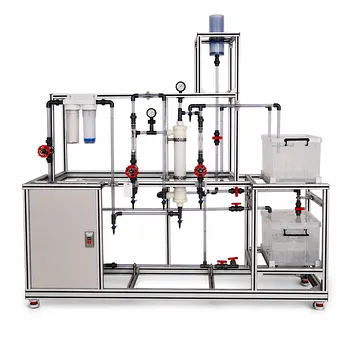
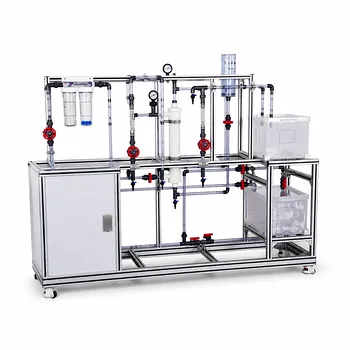
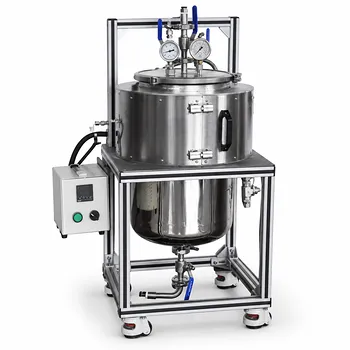
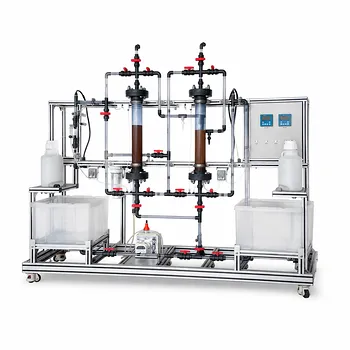
Are you looking to demonstrate advanced, damage-free separation technologies in your lab? LABPARK provides state-of-the-art Educational and Vocational Unit Operations Pilot Plants in chemical engineering, bioprocess & biotech, and environmental & water treatment.
Specially designed for universities, research institutes, and enterprises, our pilot plants help students and researchers master critical parameters like cross-flow velocity, trans-membrane pressure (TMP), and membrane fouling control in a safe, controlled environment.
Contact LABPARK today to discover how our pilot plant solutions can elevate your educational curriculum and research capabilities!
Related Products
- Ultrafiltration Membrane Separation Educational Pilot Plant
- Hollow Fiber Ultrafiltration Membrane Separation Educational Pilot Plant
- Multifunctional Membrane Separation Educational Pilot Plant with Ultrafiltration, Nanofiltration, Reverse Osmosis
- Multi-Functional Membrane Separation Educational Pilot Plant for Unit Operations Lab
- Hot Filtration Educational Unit Operations Pilot Plant Laboratory System
People Also Ask
- Pervaporation vs. Vapor Permeation: Handling Suspended Solids in Membrane Pilot Plants
- How do PEI, PVDF, and PSU membranes compare in pilot plants? Find the best fit.
- Why Use a Membrane Separation Pilot Plant vs. Lab Testing? Avoid Costly Scale-Up Failures
- Isotropic vs. Anisotropic Membranes: How to Choose the Best Pilot Plant Modules
- How do membrane pilot plants demonstrate synthetic vs biological membrane advantages?