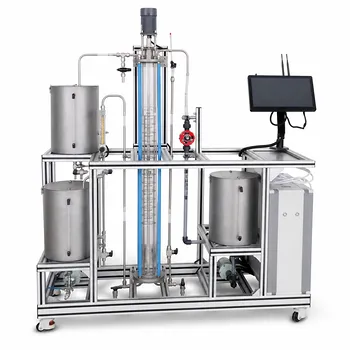
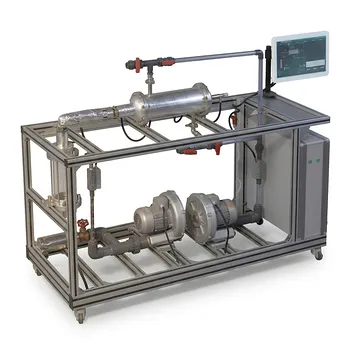
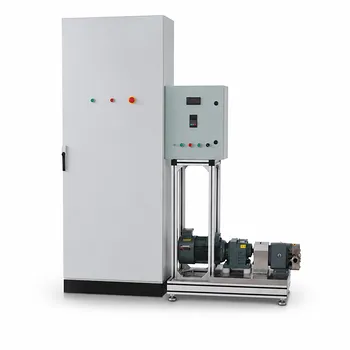
The precise selection of symbols for mixing equipment is not a drafting formality—it is a fundamental safety, operational, and educational requirement in a unit operations pilot plant. Using a generic or incorrect symbol for an inline mixer, agitator, or blender creates a dangerous disconnect between the schematic and the physical hardware. This ambiguity directly causes configuration errors during manual piping hookups and invalidates the scale-up data that the pilot plant is built to generate.
Selecting the correct symbol on a Process Flow Diagram (PFD) defines the mechanism of energy transfer—whether it's mechanical agitation in a tank or fluid shear in a pipe—which in turn dictates the residence time, heat transfer, and mixing kinetics of the entire process. In a pilot plant, where the goal is to predict commercial-scale behavior, symbolic precision prevents physical misconfiguration and ensures that data is gathered from the intended unit operation.
Decoding the Mechanical Identity
A symbol on a PFD is a shorthand for a complex mechanical reality. In a pilot plant, where hardware is frequently reconfigured, ignoring these distinctions leads to physical mistakes.
Choosing Between Tank and Pipe
An agitator symbol (typically a propeller or turbine through a vessel head) signifies a dynamic, in-tank mechanism designed for suspension or blending with residence time measured in minutes or hours. In contrast, an inline mixer symbol represents a static element or high-shear rotor housed in a pipe. The inline mixer operates with residence times measured in seconds, relying on the velocity of the pumped fluid.
Confusing Solid and Liquid Blending
The distinction between a solid blender and a liquid mixer symbol is critical. A misinterpretation here can lead to the installation of a ribbon blender where a high-shear rotor is required. The result would be a catastrophic failure to process the slurry or powder, plugging the unit and destroying the experimental run.
Why P&ID Accuracy is Non-Negotiable in Pilot Plants
A unit operations pilot plant is a bridge between lab-scale chemistry and a full-scale factory. The supplementary context clarifies that these plants exist to replicate industrial conditions, including recycling and impurities, which magnifies the impact of symbol errors.
Preventing Manual Configuration Errors
Pilot plants often rely on manual hose connections and flexible piping setups. If the PFD shows a generic "mixer" symbol, an operator might physically route two liquid lines to a T-junction assuming static mixing will suffice, when the process actually required a high-shear mechanical agitator in a vessel. The correct symbol immediately communicates the required equipment.
Ensuring the Validity of Scale-Up Data
The deep need of a pilot plant is to validate how reactions behave differently at scale. As the supplementary references note, fluid dynamics are scale-dependent. If a symbol for an inline static mixer is used where a stirred tank exists, the resulting mass transfer and residence time data will not correlate to the actual physical configuration. This corrupts the "chemical economics" and risk assessment that the pilot study was designed to provide.
The Hidden Cost of Assumptions
The most significant risk of generic symbols is the silent corruption of data. Unlike a catastrophic leak, a minor mismatch in mixing design may not stop the plant but will invalidate the research.
Impact on Heat and Mass Transfer
An agitator symbol implies a specific heat transfer coefficient based on a jacketed vessel and impeller-generated convection. An inline mixer symbol implies a heat exchanger upstream or downstream. Confusing the two means students and engineers apply the wrong mathematical model to analyze the process, misinterpreting reaction kinetics and thermal profiles.
Educational Dissonance
In a teaching pilot plant, mismatched symbols break the connection between theory and practice. A student reading a PFD with a propeller agitator symbol learns to look for a vortex and baffles. If the plant actually contains a static mixer, the visual cues don't match, undermining the core educational objective of translating a schematic into physical reality.
Making the Right Choice for Your Documentation
Selecting the mixing symbol is not just about the current experiment but about the legacy of the pilot plant data. Every mark on the PFD must enforce physical accuracy.
- If your primary focus is training operators: Ensure the PFD symbol matches the physical gear exactly, including the specific impeller type if it affects flow pattern, to build an instinctive understanding of the hardware.
- If your primary focus is replicating industrial conditions: Use the most specific inline or agitator symbol to capture the exact fluid shear profile, ensuring your scale-up data on catalyst deactivation or heat transfer is valid under commercial constraints.
- If your primary focus is data integrity for research: Audit every PFD symbol against the installed equipment before starting the run, as even a minor mismatch in the mixing mechanism will generate unmodeled variability in your critical process parameters.
The power of a pilot plant lies in its ability to de-risk millions of dollars in commercial investment, and that safety net holds only when the simple symbol on the page perfectly mirrors the complex machine in the room.
Summary Table:
| Equipment Type | Symbol Indication | Main Mechanism | Critical Scale-up Impact |
|---|---|---|---|
| Agitator | In-tank impeller/propeller | Dynamic mixing (minutes/hours) | Heat & mass transfer kinetics |
| Inline Mixer | Static/high-shear in-pipe | Fluid velocity/shear (seconds) | Residence time & pressure drop |
| Solid Blender | Powder/slurry vessel | Bulk solid displacement | Mechanical blockage & run failure |
Optimize Your Pilot Plant Design with LABPARK
Avoid critical scale-up errors and operational mismatches. LABPARK provides state-of-the-art Educational and Vocational Unit Operations Pilot Plants in chemical engineering, bioprocess & biotech, and environmental & water treatment for universities, research institutes, and enterprises. Ensure your systems are accurately documented and physically optimized—contact our engineering experts today to discuss your custom project requirements!
Related Products
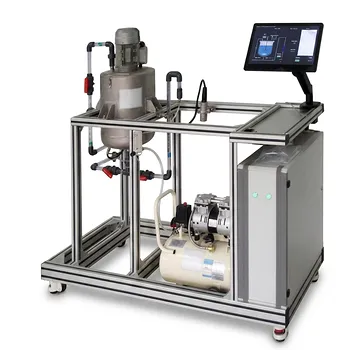
- Agitation and Mixing Educational Unit Operations Pilot Plant
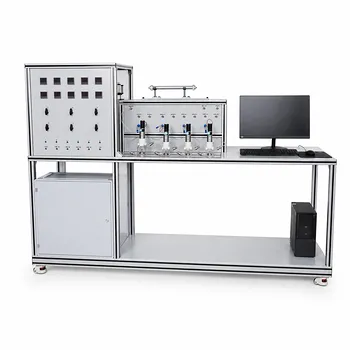
- Gas Phase Mixing and Residence Time Distribution Determination Educational Unit Operations Pilot Plant
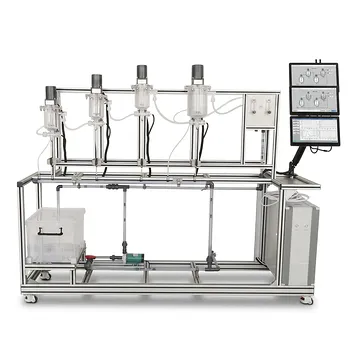
- Multi-Stage Stirred Tanks in Series Residence Time Distribution and Mixing Performance Determination Educational Pilot Plant
- Multi-Functional Special Distillation Educational Pilot Plant
- Continuous Batch Extractive Distillation Educational Pilot Plant
People Also Ask
- How do cost-capacity exponents vary across chemical equipment? Scaling insights.
- What are the primary considerations when managing and scaling up shear rates in pilot plant mixing operations? Guide
- What are the differences between set-point, servo, and program control? Master unit operations training.
- Evaluate Tablet Compaction: Force, Density & Porosity in Unit Operations Pilot Plants
- Why Switch Unit Operations Flow Configurations? Impact on Experimental Measurements