Knowledge Environmental and Water Treatment Education Why is limiting current density a key operational limit in electrochemical water treatment pilot plants?
Author avatar

Tech Team · LABPARK

Updated 1 month ago

Why is limiting current density a key operational limit in electrochemical water treatment pilot plants?


The limiting current density is the threshold that separates efficient contaminant removal from destructive side reactions in your electrochemical water treatment pilot plant. It represents the maximum rate at which ions can be transported to the electrode or membrane surface before the reaction itself starves. When you push the applied current past this limit, the system compensates by splitting water into hydrogen and oxygen—wasting energy, creating explosive gas hazards, and sharply dropping the current efficiency of your target separation process.

The limiting current density isn’t just a theoretical concept; it’s the practical ceiling for safe, efficient pilot plant operation. Cross it, and you abandon your clean‑up chemistry for uncontrolled electrolysis that threatens both process economics and physical safety.

The Physics Behind the Limit

Why Transport Becomes the Bottleneck

At the heart of any electrochemical separation—whether it’s metal deposition on an electrode or ion migration through a membrane—the reactant must move from the bulk solution to the active surface. As current increases, ions near the surface are consumed faster. Eventually, the local concentration at the surface approaches zero.

At this point, no matter how much more voltage you apply, the reaction rate cannot increase because the reactant simply can’t arrive fast enough. The current density at this concentration‑zero condition is the limiting current density ($i_{lim}$).

The Role of the Diffusion Boundary Layer

Directly at the surface, a stagnant film, called the diffusion boundary layer, acts as a transport bottleneck. This layer’s thickness dictates how steep the concentration gradient can be, and therefore how fast ions can diffuse in.

In membrane processes like electrodialysis, the empirical relationship $i_{lim} = A v^n$ is critical. Increasing the flow velocity ($v$) thins this boundary layer, raising the $i_{lim}$ with an exponent typically between $1/3$ and $1/2$. The faster the flow, the higher the current you can safely apply.

What Actually Happens When You Exceed the Limit

Unwanted Side Reactions Take Over

Once the primary ion (e.g., a heavy metal cation) is depleted at the electrode, the extra current must still go somewhere. The next easiest pathway is the electrolysis of water. Instead of removing copper or cadmium, you generate hydrogen gas at the cathode and oxygen at the anode. These parasitic reactions instantly consume electricity that was meant for treatment, slashing the current efficiency of your target reaction to uneconomic levels.

Energy Costs Spiral

Concentration polarization also raises the electrical resistance of the system. To maintain the excessive current, the voltage must increase significantly. This combination of wasted current and higher resistance means your specific energy consumption (kWh per gram of contaminant removed) skyrockets.

Physical Damage and Safety Risks

Gas evolution doesn’t just waste power. In membrane systems like electrodialysis, operating above the limiting current triggers water splitting directly within the membrane module. The resulting extreme pH shifts can irreversibly degrade expensive ion‑exchange membranes. In any enclosed pilot plant setup, the accumulation of hydrogen presents a very real explosion hazard, especially if degassing measures aren’t designed for the elevated gas production rate.

The Flow Rate Connection

Velocity as a Control Knob

Because the limiting current density scales with flow velocity (roughly $v^{0.33}$ to $v^{0.5}$), you can actively dial up or down the safe operating window by adjusting your pump speed. A pilot plant treating a dilute metal rinse water, for example, might operate at a low flow rate overnight. If an operator then increases the current without raising the flow, the limit may have shifted, pushing the plant into the dangerous side‑reaction regime without any visible alarm.

Monitoring the Right Metrics

Process control must track both the electrical variables and the hydrodynamics.

  • A stable voltage at a fixed current suggests you are below the limit.
  • A sudden, non‑linear voltage rise for a small current increase typically signals the onset of concentration polarization, warning you that the limit is near.

Understanding the Trade‑offs

Pumping Energy vs. Electrochemical Efficiency

Increasing flow velocity raises $i_{lim}$, letting you treat more water per electrode area. However, higher linear velocities directly increase the pressure drop across the system and the electrical energy consumed by the pump. The true optimum balances:

  • The capital cost of larger electrode/membrane area (if you stay at low current density).
  • The operating cost of higher pumping power (if you aggressively chase a higher limit with high flow rates).

Concentration‑Dependent Limits

The limiting current density is not a fixed number on a spec sheet. It’s a function of the feed concentration. As your treatment process successfully removes ions downstream, the bulk concentration drops, and the $i_{lim}$ falls. A current setting that worked perfectly at the inlet may be dangerously high at the outlet. Designing a multi‑stage or profiled‑current strategy is essential for long, continuous operation.

Temperature’s Unseen Influence

Warmer solutions have lower viscosity and higher ion diffusivity, which thins the boundary layer and raises $i_{lim}$. A pilot plant dialed in during the afternoon heat might unexpectedly drift past the limit when the temperature drops overnight—another reason to treat the limit as a moving target and not a static threshold.

Making the Right Choice for Your Pilot Plant

Your operational decisions should tie directly back to the limiting current density’s behavior and costs.

  • If your primary focus is maximizing contaminant removal rate: Operate just below the limiting current, and actively vary flow rates to keep the boundary layer as thin as is economically feasible. This squeezes the highest throughput from your installed hardware before side reactions set in.
  • If your primary focus is minimizing total energy use: Run at a conservative fraction of the limiting current (e.g., 70–80%). The slight loss in throughput is often more than offset by near‑100% current efficiency and lower pumping losses from excessive velocities.
  • If your primary focus is ensuring intrinsic safety in a skid‑mounted pilot plant: Never set the current control output high enough that a single pump failure could instantly push you past the limit. Interlock the DC power supply with the flow meter to cut current the moment velocity drops below a safe threshold, eliminating the risk of hydrogen buildup.

The limiting current density is the lens through which the physics of your separation process becomes an actionable engineering constraint—respect it, and you turn dilute wastewater into clean water predictably and profitably.

Summary Table:

Aspect Impact of Exceeding Limit Optimization Strategy
Side Reactions Water splitting, H2 gas hazard Keep current at 70-80% of limit
Energy & Voltage Higher resistance, high kWh/g Increase flow velocity (thin boundary layer)
Equipment Safety Membrane degradation, pH shifts Interlock DC power supply with flow meter
Feed Concentration Outflow concentration drop shifts limit Implement multi-stage current profiling

Optimize Your Water Treatment Research with LABPARK

Are you looking to build or upgrade your electrochemical research capabilities? LABPARK offers state-of-the-art Educational and Vocational Unit Operations Pilot Plants in chemical engineering, bioprocess & biotech, and environmental & water treatment. Designed specifically for universities, research institutes, and enterprises, our modular plants help you safely master critical parameters like limiting current density.

Contact LABPARK today to request a quote or discuss your custom pilot plant specifications with our engineering team!

Related Products

People Also Ask

Related Products

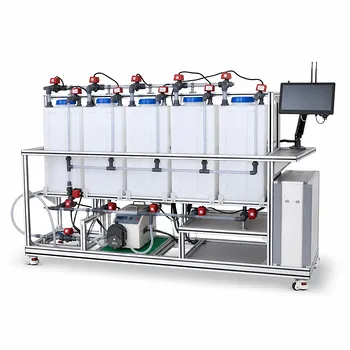
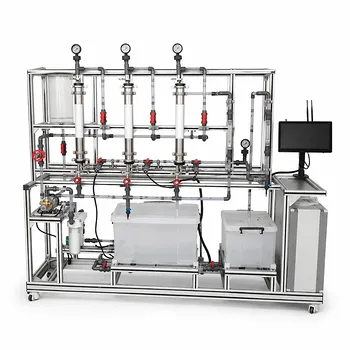
Electrochemical Water Treatment Educational Unit Operations Pilot Plant

Electrochemical Water Treatment Educational Unit Operations Pilot Plant

Enhance engineering education with this pilot-scale electrochemical water treatment plant. Designed for hands-on learning of efficient salt removal, electrolytic reactions, and real-time data acquisition. Features multi-mode control, corrosion-resistant PVC, low-voltage safety, and wireless connectivity for modern teaching labs.

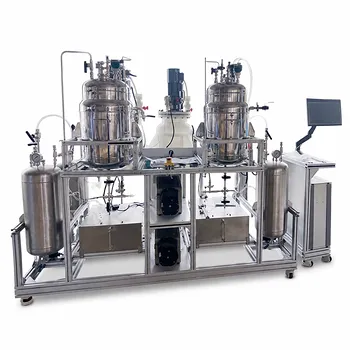
Water Electrolysis Hydrogen Production and Storage Educational Pilot Plant

Water Electrolysis Hydrogen Production and Storage Educational Pilot Plant

Integrated pilot-scale training system for higher education engineering labs. Features AWE/PEM electrolysis, adjustable DC power, PLC controls, gas-liquid separation, and pressurized hydrogen storage. Hands-on learning in green hydrogen, process control, and safety, ideal for chemical and energy departments.

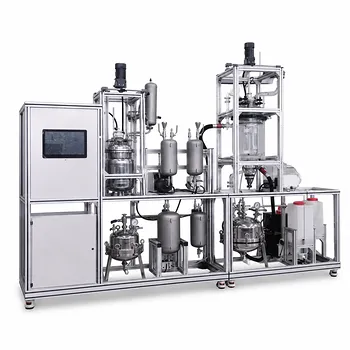
Electrolyte Distillation Purification and Formulation Educational Pilot Plant

Electrolyte Distillation Purification and Formulation Educational Pilot Plant

Integrated bench-to-pilot scale educational pilot plant for electrolyte distillation, purification, and formulation with borosilicate glass construction, PLC automation, touchscreen HMI, and advanced industrial safety features for hands-on chemical process training, ideal for chemical engineering and materials science curricula.

Electrolytic Hydrogen Production Educational Unit Operations Pilot Plant

Electrolytic Hydrogen Production Educational Unit Operations Pilot Plant

Bench-scale electrolytic hydrogen production pilot plant designed for university engineering labs. Provides hands-on training in water electrolysis, gas-liquid separation, and process safety. Fully customizable system with digital PID control, corrosion-resistant components, and hydrogen gas detector. Ideal for chemical engineering curricula.

Gallium and Indium Selective Extraction Educational Pilot Plant

Gallium and Indium Selective Extraction Educational Pilot Plant

Integrated pilot-scale laboratory system for engineering education bridging theoretical concepts with industrial practice enabling hands-on study of liquid liquid extraction reaction kinetics and mass transfer for selective gallium and indium separation featuring real-time IoT connectivity with integrated safety

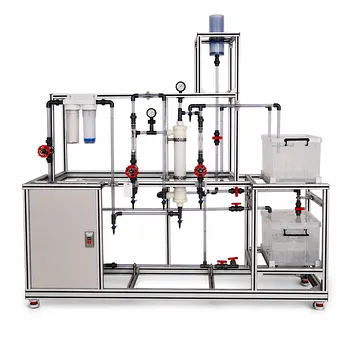
Ultrafiltration Membrane Separation Educational Pilot Plant

Ultrafiltration Membrane Separation Educational Pilot Plant

This ultrafiltration membrane separation educational pilot plant enables undergraduate students to process PVA solutions, study hollow fiber membrane dynamics, and perform quantitative analysis with spectrophotometry for hands-on learning of unit operations and industrial maintenance and membrane cleaning protocols.

Multifunctional Membrane Separation Educational Pilot Plant with Ultrafiltration, Nanofiltration, Reverse Osmosis

Multifunctional Membrane Separation Educational Pilot Plant with Ultrafiltration, Nanofiltration, Reverse Osmosis

An integrated laboratory bench-scale membrane separation system for higher education engineering labs combining Ultrafiltration, Nanofiltration, and Reverse Osmosis processes. Features industrial PLC control with touch-screen HMI, transparent piping, and academic assessment software. Ideal for chemical and environmental engineering curricula.

Multi-Functional Membrane Separation Educational Pilot Plant for Unit Operations Lab

Multi-Functional Membrane Separation Educational Pilot Plant for Unit Operations Lab

The Multi-functional Membrane Separation Educational Unit Operations Pilot Plant is an integrated bench-scale laboratory system designed for teaching undergraduate engineering education. It features Ultrafiltration, Nanofiltration, and Reverse Osmosis modules in a compact, mobile unit for practical hands-on learning.

Alkaline Membrane Water Electrolysis Educational Pilot Plant Unit Operations Training System

Alkaline Membrane Water Electrolysis Educational Pilot Plant Unit Operations Training System

Hands-on educational pilot plant for alkaline membrane water electrolysis hydrogen production, integrating unit operations training with industrial PLC control, real-time data logging, customizable design, durable 316L stainless steel construction, explosion-proof safety, and modern 5G connectivity for university laboratories.

Multi-Functional Special Distillation Educational Pilot Plant

Multi-Functional Special Distillation Educational Pilot Plant

Versatile multi-functional special distillation pilot plant for chemical engineering education. Supports continuous, vacuum, azeotropic, reactive, extractive distillation. Transparent glass columns enable real-time visual observation of hydrodynamics and separation processes.

Ion Exchange Water Purification Educational Pilot Plant for Engineering Unit Operations

Ion Exchange Water Purification Educational Pilot Plant for Engineering Unit Operations

This bench-scale ion exchange pilot plant trains engineering students in water purification. Dual transparent columns simulate industrial softening and demineralization. Students observe fluid dynamics, perform resin regeneration, and analyze breakthrough curves. The corrosion-resistant frame ensures durability in unit operations experiments.

Gas-Solid Heterogeneous Separation Demonstration Educational Unit Operations Pilot Plant

Gas-Solid Heterogeneous Separation Demonstration Educational Unit Operations Pilot Plant

Comprehensive visual transparent gas-solid separation pilot plant for chemical engineering labs. Demonstrates gravity settling inertial settling cyclone and bag filter technologies. Enables real-time analysis of fluid-particle mechanics pressure drop and collection efficiency. Ideal for undergraduate unit operations courses.

Continuous Batch Extractive Distillation Educational Pilot Plant

Continuous Batch Extractive Distillation Educational Pilot Plant

Versatile pilot plant for continuous, batch, and extractive distillation training. High-borosilicate glass column for visualizing hydraulics, 15.6-inch touchscreen with data logging, precise reflux ratio control 1-99, and durable corrosion-resistant frame. Ideal for chemical engineering education and process research.

Dual-Mode Rectification Pilot Plant for Practical Training Unit Operations

Dual-Mode Rectification Pilot Plant for Practical Training Unit Operations

Industrial-scale dual-mode rectification pilot plant for chemical engineering practical training. Features real-material and simulated-material operation modes, sieve-plate column with sight glasses for visual observation of hydrodynamics, and customizable SCADA control for safe, hands-on learning of unit operations and mass transfer.

Thermal Desorption Exhaust Gas and Tail Water Treatment Educational Pilot Plant

Thermal Desorption Exhaust Gas and Tail Water Treatment Educational Pilot Plant

Bench-scale educational pilot plant for treating thermal desorption exhaust gas and tail water integrates condensation, Fenton oxidation, precipitation, filtration, and carbon adsorption. Ideal for chemical engineering and environmental labs, teaching unit operations, process control, and real-time data analysis.

Carbon Material Thermal Pretreatment Multiphase Separation Educational Pilot Plant

Carbon Material Thermal Pretreatment Multiphase Separation Educational Pilot Plant

Educational pilot plant for carbon material thermal pretreatment and multiphase separation. Features jacketed agitated reactor, separation column, and modern controls for hands-on unit operations training in heat transfer, fluid flow, and process safety with industrial-grade materials and wireless data acquisition.

Photocatalytic Membrane Separation and Degradation Unit Operations Pilot Plant

Photocatalytic Membrane Separation and Degradation Unit Operations Pilot Plant

Bench-scale pilot plant integrating photocatalytic degradation with membrane separation for engineering education. Study advanced oxidation, microfiltration, and hybrid processes using industrial sensors. Features safety light-blocking curtain, low-noise compressor, and durable stainless-steel construction.

Potassium Salt Thermal Dissolution and Crystallization Separation Educational Unit Operations Pilot Plant

Potassium Salt Thermal Dissolution and Crystallization Separation Educational Unit Operations Pilot Plant

This educational pilot plant allows chemical engineering students to perform potassium salt thermal dissolution and cooling crystallization experiments, integrating solubility studies, supersaturation control, and solid-liquid separation in a safe, compact, and customizable laboratory system for hands-on unit operations learning.

Bench Scale Dual Column Gas Separation and Capture Educational Pilot Plant

Bench Scale Dual Column Gas Separation and Capture Educational Pilot Plant

This dual-column educational pilot plant provides hands-on teaching of gas adsorption, separation, and capture processes. It features stainless steel columns, regeneration up to 400°C, and a 15.6-inch touchscreen PLC for TSA and PSA studies in chemical engineering curricula, process simulation.

Ethyl Acetate Synthesis Unit Operations Pilot Plant for Practical Training

Ethyl Acetate Synthesis Unit Operations Pilot Plant for Practical Training

Modular and customizable pilot plant for ethyl acetate synthesis practical training. Integrates esterification reaction, liquid-liquid extraction, neutralization, and sieve-plate distillation unit operations. Bridging theory and real-world industrial processes. Designed for university chemical engineering labs


Leave Your Message