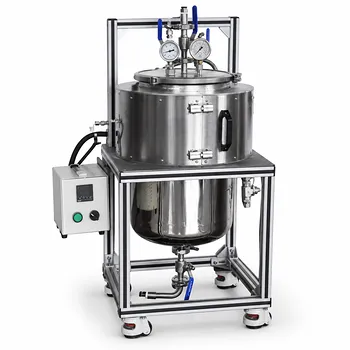
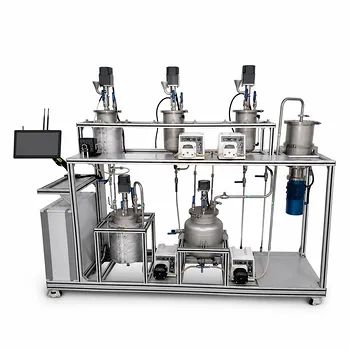
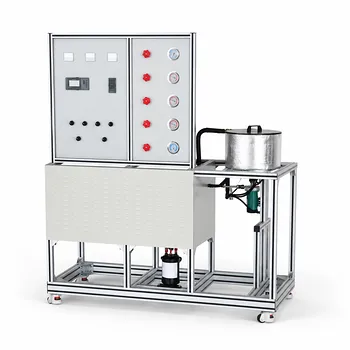
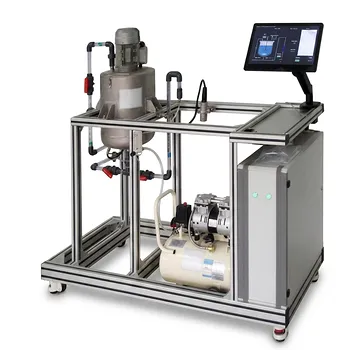
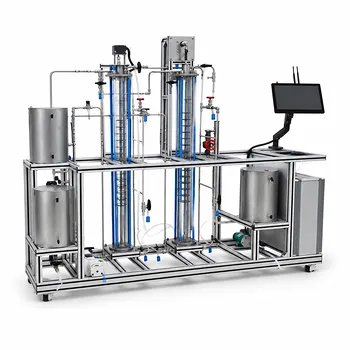
The heart of a modern process engineering curriculum beats in the ability to connect machine design to material outcome. For a laboratory-scale roller compaction pilot plant, integrating interchangeable roller surfaces and internal cooling channels is critical because it transforms the unit from a basic powder compression device into a dynamic, multi-variable learning platform. Students gain hands-on experience with two of the most influential—and often limiting—factors in industrial dry granulation: the mechanical interaction between powder and roll surface, and the thermodynamic consequences of compaction. This dual capability allows them to systematically explore how surface texture drives ribbon quality and fines generation, and how thermal management prevents material degradation, all while linking abstract theory to tangible, real-world process challenges.
The true value lies in moving beyond observation to active experimentation. Interchangeable rollers and cooling channels turn the pilot plant into a research-grade tool that teaches not just what happens during compaction, but why it happens—enabling students to investigate causality between equipment design choices, process limits, and final product attributes in a safe, controlled environment.
Unlocking the Physics of Powder-Surface Interaction with Interchangeable Rollers
A smooth roll does not grip powder the same way a grooved or patterned roll does. By making roller surfaces interchangeable, educators give students the power to witness this difference firsthand.
Demonstrating the Role of Friction and Nip Mechanics
The texture of the roller surface directly influences how powder is drawn into the compaction zone. Students can measure the nip angle, observe ribbon formation, and quantify the resulting density. With a smooth surface, low-friction powders may slip, leading to inconsistent feed and weak ribbons; switch to a grooved or knurled surface, and engagement improves dramatically. The side-by-side data turns a textbook concept into a memorable, evidence-based lesson.
Linking Surface Design to Ribbon Quality and Fines
The pragmatic outcome of surface choice is the ribbon’s integrity and the amount of unwanted fines generated. Too much fines can ruin downstream tablet compression. By running the same powder through different roll surfaces, students learn that texture is a quality control lever—not just a mechanical afterthought. This insight is essential for industries like pharmaceuticals, where consistent granule properties are non-negotiable.
Building Experimental Design Skills
Interchangeable surfaces encourage a structured, scientific approach. Students must formulate hypotheses, control variables, and analyze multivariate data. The pilot plant becomes a laboratory for process optimization, teaching them how to balance throughput, ribbon hardness, and fines generation—a direct transplant of skills needed in pilot manufacturing.
Mastering Thermal Dynamics Through Internal Cooling Channels
Compaction is never a purely mechanical event; friction and particle deformation generate significant heat. Without thermal control, temperature-sensitive materials can degrade, and the process can deviate unpredictably. Integrated cooling channels make that thermal dimension visible and manageable.
Teaching Process Thermodynamics with Real-Time Data
Internal cooling channels allow students to circulate temperature-controlled fluid and directly measure the heat removed. They can calculate energy balances, observe how compaction force correlates with temperature rise, and see the practical meaning of terms like “specific heat” and “heat transfer coefficient.” This hands-on quantification closes the gap between theoretical thermodynamics and real unit operations.
Safely Processing Temperature-Sensitive Powders
Many polymers, active pharmaceutical ingredients, and amorphous formulations will soften or melt if a critical temperature is exceeded. By demonstrating how cooling preserves material integrity, students learn the concept of a material’s processability window. They experience why every industrial dryer, mill, or compactor must respect thermal limits—and how to verify those limits in a pilot-scale setting.
Connecting Cooling to Process Safety and Scale-Up
Heat buildup that goes uncontrolled can lead to thermal runaway, even in a small-scale roller compactor. With cooling channels, students observe how varying the flow rate or coolant temperature directly prevents overheating. The lesson closely mirrors jacketed CSTR safety training: understanding that you must actively remove heat to maintain stable, safe operation. This practical safety mindset is invaluable for future engineers who will design and operate industrial granulation lines.
Understanding the Trade-offs and Added Complexity
While the educational benefits are immense, integrating these features is not without its challenges. Acknowledging them provides a complete, honest picture for any institution building or buying such equipment.
Increased Capital and Maintenance Burden
Interchangeable rollers require finely machined mounting systems and quick-release mechanisms, which add initial cost. Cooling channels introduce seals, pumps, and potential leak points. The pilot plant demands regular inspection to prevent cross-contamination and ensure thermal efficiency. These are real-world engineering constraints, and they form part of the learning experience—but they also mean a higher total cost of ownership.
The Risk of Overcomplicating Early Lessons
For first-year students, confronting eight roller surface options and a cooling system may be overwhelming. If not scaffolded properly, the complexity can obscure the core principles of compaction. Educators must design curricula that progressively introduce these variables, starting with a single surface and no cooling, then layering in complexity as comprehension grows.
Limited Direct Industrial Parallels at This Scale
Most production-scale roller compactors do use textured rolls and often water cooling, but the exact lab-scale modular designs may differ. A few students might mistakenly assume that every plant has easily swappable rollers on the production floor. The key is to frame interchangeable parts as an investigative tool, not a direct industrial copy, reinforcing the pilot plant’s role as a research and teaching instrument.
Making the Right Choice for Your Educational Goals
The decision to invest in a roller compaction pilot plant with these integrated features should align with your program’s specific learning objectives. Consider the following guidance:
- If your primary focus is deep process understanding: Ensure the plant includes at least three distinct roller surfaces. This allows statistically meaningful DOE exercises and rich discussions on powder mechanics.
- If your curriculum covers thermal processing or delicate formulations: Prioritize robust internal cooling channels with precise temperature and flow control. This makes thermodynamic concepts concrete and demonstrates material protection first-hand.
- If you need a plug-and-play demonstration unit for basic operations: A simpler, fixed-roller design without cooling may suffice. But you’ll sacrifice the ability to teach causality between equipment variables and product quality.
- If student safety and industrial best-practice training are paramount: The cooling system is non-negotiable. It ingrains a preventive mindset that no textbook can replicate.
The most effective educational pilot plants are those that force students to ask “what if?” and then give them the tools to answer. An integrated roller compaction system does exactly that, turning curiosity into competence and making the invisible forces of friction and heat tangible to the next generation of process engineers.
Summary Table:
| Feature | Key Educational Value | Target Learning Outcomes |
|---|---|---|
| Interchangeable Rollers | Simulates powder-surface friction and nip mechanics | Understand ribbon quality, density, and fines control |
| Cooling Channels | Controls thermal dynamics and compaction heat | Learn thermal limits, scale-up safety, and thermodynamics |
Ready to elevate your chemical engineering curriculum? LABPARK provides state-of-the-art Educational and Vocational Unit Operations Pilot Plants in chemical engineering, bioprocess & biotech, and environmental & water treatment. Designed specifically for universities, research institutes, and enterprises, our systems bridge the gap between classroom theory and real-world industrial practice. Contact us today to find the perfect pilot plant solution for your lab!
Related Products
- Multifunctional Membrane Separation Educational Pilot Plant with Ultrafiltration, Nanofiltration, Reverse Osmosis
- Hot Filtration Educational Unit Operations Pilot Plant Laboratory System
- High-Gravity Emulsification and Mass Transfer Educational Pilot Plant
- Educational Compression Refrigeration Performance Determination Unit Operations Pilot Plant
- Multi Functional Membrane Crystallization Educational Unit Operations Pilot Plant
People Also Ask
- How do PEI, PVDF, and PSU membranes compare in pilot plants? Find the best fit.
- Pervaporation vs. Vapor Permeation: Handling Suspended Solids in Membrane Pilot Plants
- What are the trade-offs of polymer vs inorganic membranes in teaching pilot plants? Key laboratory comparison.
- What are the advantages of membrane separation in pilot plants? Efficient Organic Vapor Recovery
- How can operators optimize operating conditions and cleaning protocols in membrane separation pilot plants to mitigate fouling?