Preparative liquid chromatography is the workhorse of biomolecule purification because it masterfully solves the central dilemma of bioprocessing: achieving high purity without destroying the delicate, three-dimensional structure of the target molecule.
The gentle, non-denaturing nature of its aqueous, room-temperature operation makes it uniquely suited for biologicals. To master its use in a pilot plant, operators must be rigorously taught to balance yield, purity, and throughput by manipulating the stationary phase chemistry, mobile phase flow dynamics, sample loading strategy, and method parameters like gradient slope and buffer strength.
While the fundamental appeal of preparative chromatography is its mild, non-destructive separation environment, the critical operational knowledge lies in understanding it as a complex, dynamic system. Teaching the interplay between stationary phase selectivity, fluid dynamics, and process economics transforms an operator from a recipe-follower into an engineer capable of designing robust, scalable purification processes.
The Fundamental Principle: Preserving Biological Function
The primary reason for choosing preparative liquid chromatography over harsher alternatives like distillation speaks to the very nature of biomolecules. Proteins, monoclonal antibodies, and peptides are built on fragile, non-covalent bonds that give them their functional shape.
Heat or harsh organic solvents cause irreversible denaturation, destroying the therapeutic product. This section explores how chromatography meets this core need.
The Gentle Separation Environment
The operational window of liquid chromatography is inherently compatible with life's building blocks. It works in the aqueous, buffered environments that proteins naturally require.
The separation occurs at room temperature and relies on controlled pH and ionic strength rather than thermal energy. This is critical because the target's higher-order structure, and therefore its biological activity, remains intact during purification, a non-negotiable requirement for biopharmaceuticals.
Beyond Gentle: The Power of Specificity
The secondary, strategic advantage is selectivity. A pilot plant must reliably isolate a single target from a soup of thousands of complex cellular components like host cell proteins and DNA.
High selectivity is not just about purity; it’s about process efficiency. A highly specific capture step, like Protein A affinity chromatography, can achieve >99% purity in a single column operation. This dramatically reduces the number of downstream polishing steps, saving time, buffer, and ultimately, cost.
The Critical Operational Factors to Master
Teaching chromatography isn't a theoretical exercise. It requires hands-on, instinctual knowledge of the physical and chemical drivers inside the column.
The goal is to learn to manipulate these drivers to maintain a delicate balance between maximizing product recovery (yield), meeting purity specifications, and processing a sufficient volume per unit time (throughput). The following are the key levers.
The Stationary Phase: The Molecular Gatekeeper
The choice of resin is the single most important design decision. It's not a generic filter but a highly engineered surface designed for a specific binding mechanism.
- Affinity Resins: These offer the ultimate "lock-and-key" fit, binding the target almost exclusively. Teaching here focuses on the ligand's critical binding affinity (ideally (10^5-10^6 M^{-1})), which must be strong enough to capture but weak enough to release the product with a mild pH shift.
- Ion Exchange Resins: These separate based on net surface charge. Operators must learn to select between anion and cation exchangers and understand how a salt gradient or pH change disrupts ionic interactions to trigger selective elution.
- Size Exclusion Chromatography (SEC): The "polishing" step, separating purely by molecular size. The teaching point is that column length and packing uniformity are fixed parameters; resolution is maximized by optimizing sample volume and flow rate.
Fluid Dynamics and Loading Strategy
Separation quality is directly governed by how the liquid and sample interact with the packed bed of resin. This is a fluid mechanics problem as much as it is chemistry.
Flow rate controls residence time—how long the molecule has to interact with the beads. A flow rate that is too high creates excessive pressure drops and limits mass transfer, reducing binding capacity and causing peak broadening. Teaching involves connecting the pump setting to the chromatogram’s baseline and peak shape.
Sample loading volume and concentration dictate the initial separation zone on the column. A small, concentrated loading plug is ideal for sharp resolution. Overloading the column, either by volume or mass, saturates binding sites and causes premature product breakthrough, lowering yield and creating tailing peaks contaminated with impurities.
Method Parameters and System Robustness
To translate a lab-scale method to a pilot plant, operators must develop a feel for how sensitive the separation is to subtle environmental changes.
Gradient slope is a rate-of-change variable. A shallower gradient (e.g., increasing salt concentration slowly) improves peak resolution but increases buffer consumption and run time. Teaching how to find the inflection point on a gradient curve translates directly to setting a cost-effective production method.
Column packing integrity is non-negotiable. A poorly packed bed with channels or voids creates non-uniform flow paths. This is seen as peak splitting or shoulder peaks. Students must learn to perform a column efficiency test using a tracer like acetone to verify plate height and asymmetry before starting any purification, as it is the root cause of countless failed runs.
Understanding the Trade-offs and Pitfalls
A core component of pilot-plant education is moving beyond a perfect textbook separation. It requires confronting the system’s inherent economic and operational constraints honestly.
The purity-yield dilemma is a zero-sum game. If you set tight collection parameters to take only the very center of a product peak, you gain extreme purity but lose the "tails" of the peak, sacrificing overall yield. Operators are taught to make this cut based on the product’s final specification and the cost of its manufacture.
Resin is a consumable with a finite lifetime. The harsh reality of affinity resins, in particular, is their high cost and inevitable degradation. Performance loss from fouling (buildup of lipids, cell debris, or irreversibly bound proteins) must be managed. Teaching rigorous cleaning-in-place (CIP) and column regeneration protocols is as fundamental as the separation itself, as it directly impacts the batch-to-batch reproducibility and long-term process economics.
Making the Right Choice for Your Goal
When training on a preparative chromatography system, your focus should shift based on the outcome you are optimizing for, and this context determines which lever you pull first.
- If your primary focus is maximizing product purity: Prioritize selectivity above all else. Choose a high-specificity ligand like Protein A and then optimize your wash steps to remove non-specifically bound impurities before a sharp, focused elution.
- If your primary focus is minimizing process cost: Shift your focus to resin lifetime and throughput. Investigate continuous multi-column setups, optimize harsh but non-damaging cleaning cycles, and push loading to the maximum dynamic binding capacity without triggering a steep breakthrough curve.
- If your primary focus is method robustness and transfer: You must map your design space by systematically varying flow rate and gradient slope. Identify the failure edges where resolution collapses, then define your operating parameters safely within the proven acceptable range.
By mastering these operational factors, you move from simply "running a column" to actively designing a scalable, economically viable, and robust purification process that protects the fragile molecule at its heart.
Summary Table:
| Operational Factor | Key Teaching/Control Point | Process Impact |
|---|---|---|
| Stationary Phase | Select ligand affinity, charge mechanisms, and media size | Dictates selectivity and purification resolution |
| Fluid Dynamics | Control flow rates, residence times, and column loading | Prevents breakthrough and peak broadening |
| Method Parameters | Optimize gradient slopes and test column packing integrity | Ensures batch reproducibility and cost efficiency |
| System Economics | Manage column regeneration and cleaning-in-place (CIP) | Extends resin lifetime and maintains purity-yield balance |
Elevate Your Bioprocess Training with LABPARK
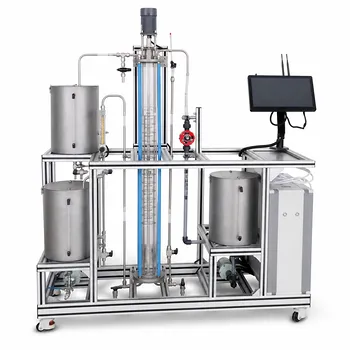
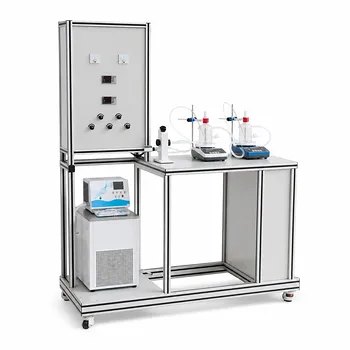
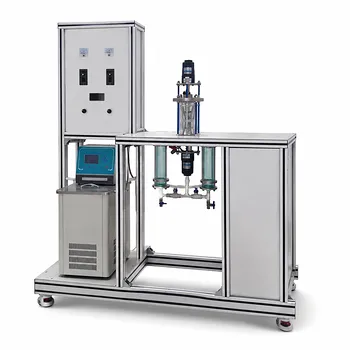
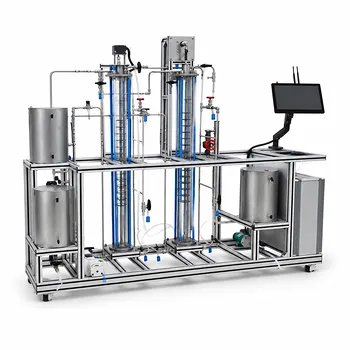
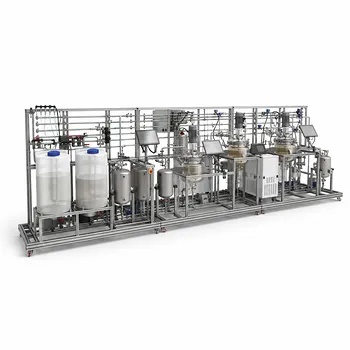
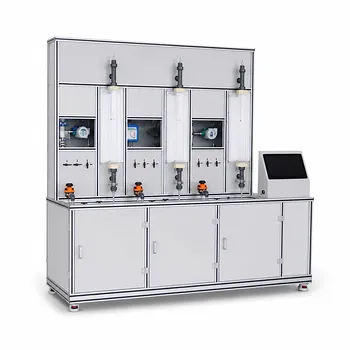
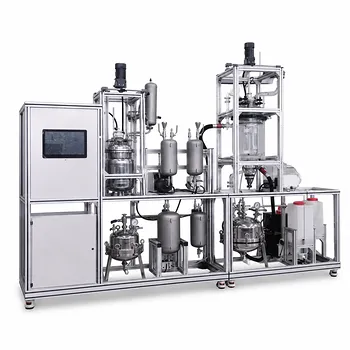
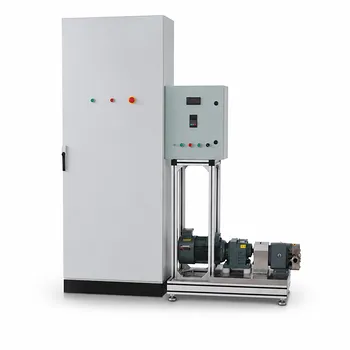
Preparing students and operators for the complexities of biomolecule purification requires hands-on experience with industry-grade equipment. LABPARK designs and manufactures high-performance Educational and Vocational Unit Operations Pilot Plants in chemical engineering, bioprocess & biotech, and environmental & water treatment.
Our custom-built pilot plants empower universities, research institutes, and enterprises to effectively teach preparative chromatography, fluid dynamics, and downstream processing in a safe, controlled environment.
Contact LABPARK today to find the perfect pilot plant solution for your educational or research facility!
Related Products
- Educational Rotary Disc Liquid-Liquid Extraction Pilot Plant
- Ternary Liquid-Liquid Equilibrium Educational Pilot Plant
- Electrolyte Distillation Purification and Formulation Educational Pilot Plant
- Liquid-Liquid Mass Transfer Coefficient Determination Educational Pilot Plant
- Continuous Batch Extractive Distillation Educational Pilot Plant
People Also Ask
- How do density and IFT affect liquid-liquid extraction pilot plants? Optimize Column Performance
- In a liquid-liquid extraction pilot plant, how is a ternary-phase diagram utilized to determine solvent feed requirements?
- How are ternary phase diagrams and LLE data applied in extraction experiments? Optimize Pilot Plant Scale-up
- How Do Selectivity & Distribution Coefficients Influence LLE Pilot Plant Solvent Choice?
- How to Validate BIPs for LLE Pilot Plants? Steps to Align Simulations with Reality